Soundtracks:  A B C D E F G H I J K L M N O P Q R S T U V W X Y Z #


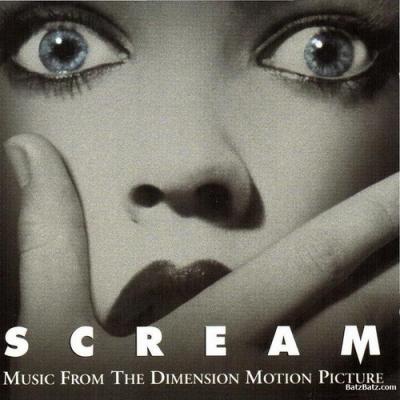
Scream Album Cover

"Scream" Soundtrack Lyrics

Movie • 1996

Track Listing


"Scream (Music From The Dimension Motion Picture)" – Album Guide to Tracks and Key Scenes

1996 Scream trailer still with Ghostface in a doorway and a ringing phone
Scream — 1996 soundtrack & score touchstones.

Overview

What if a slasher’s soundtrack winked and wounded? Scream (1996) does both: needle-drops that play like in-jokes, a nervy, modern score that keeps the floor shaking. The album Music From The Dimension Motion Picture corals the movie’s alt-rock and clubby textures, while Marco Beltrami’s orchestral score supplies the dread and the ache.

Arrival → adaptation → rebellion → collapse: the film’s arc gets mapped in music. Early cues flirt with irony, mid-film tracks swagger through curfew and parties, and the finale lets score and songs trade the last word. The effect is signature Craven—meta but muscular.

What makes it distinct is the mix: iconic syncs (Nick Cave’s “Red Right Hand,” Alice Cooper’s “School’s Out”) alongside cult-favorite placements (Moby’s “First Cool Hive,” Birdbrain’s “Youth of America”), then Beltrami’s “Sidney’s Lament” threading tragedy under the talk. As per the film’s soundtrack overview, TVT’s commercial album (Dec. 1996) spotlights licensed cuts, while the score initially surfaced later, paired with Scream 2.

Genres & themes by phase — Alt-rock & post-grunge: sardonic teen armor. Electronica/club tracks: party-as-decoy. Classic rock needle-jokes: on-the-nose bravado. Orchestral suspense (strings/low brass): the mask slips; fear speaks plainly.

How It Was Made

Composer Marco Beltrami (then a newcomer to horror) wrote an “operatic” modern score on a tight budget—small orchestra, aggressive writing, plus the franchise-defining motif often called “Sidney’s Lament.” Licensed tracks came via TVT Records for the soundtrack album; music supervision on the film is credited to Jeff Rabhan.

Beltrami’s cues avoid a killer motif (no spoilers in the music) and lean into character POV—Dewey gets a sly Western-flavored touch; Sidney’s material carries the emotional ballast. According to production notes and later interviews, the opening “Cue from Hell” sealed his hire, and “Red Right Hand” became the series’ unofficial anthem.

Trailer frame of Sidney on the phone underscored by tense strings
Phone call grammar: needle-drop tease, then Beltrami’s strings turn the screw.

Tracks & Scenes

“Don’t Fear the Reaper” — Gus Black
Where it plays: Quietly under the bedroom reunion when Billy climbs through Sidney’s window that first night—tender voices, nervous breaths, a gallows-humor love song humming in the walls. Early first act; non-diegetic, mixed low.
Why it matters: A sly horror in-joke (the original plays in Halloween) that foreshadows romance curdling into menace.

“Red Right Hand” — Nick Cave & The Bad Seeds
Where it plays: Twice: after the killer’s call at Tatum’s house (news reports blare) and again as Woodsboro locks down for curfew—streets emptying, deputies scrambling. Non-diegetic; mid-film punctuation.
Why it matters: Becomes the franchise’s unofficial theme; the bell toll that says “it’s bigger than you.”

“School’s Out” — Alice Cooper
Where it plays: Principal Himbry’s death prompts the shutdown; as word spreads, the track blasts over porch chatter at Sidney’s place and across town, pushing kids toward the fateful party. Mid-film; brazenly non-diegetic.
Why it matters: On-the-nose? Absolutely. That’s the joke—and the trap.

“Drop Dead Gorgeous” — Republica
Where it plays: At Stu’s party. Gale parks the van, plants the hidden camera, and works the crowd while the song’s lacquered pulse turns the house into a music video. Non-diegetic, bleeding from diegetic speakers at points.
Why it matters: A glittery mask for a powder-keg room.

“Youth of America” — Birdbrain
Where it plays: The kids head out—cars snaking toward either the party or trouble; Gale tails them, eyes on headlines. Non-diegetic; transition cue into the siege section.
Why it matters: Underdog swagger before the fall.

“Bitter Pill” — The Connells
Where it plays: After the garage kill, Billy appears on Stu’s porch and the night tips. The track’s college-rock ache threads through the mounting suspicion. Late-mid film; mostly non-diegetic.
Why it matters: Sweetness used as misdirection—classic Scream.

“First Cool Hive” — Moby
Where it plays: Epilogue aftermath—sirens fade, dawn threatens, and Gale Weathers files her live report over the scene. End section; non-diegetic under narration.
Why it matters: Clinical cool after carnage; lets the camera—and franchise—keep rolling.

“Whisper to a Scream (Birds Fly)” — Soho
Where it plays: First end-credits song (around 01:40:00 on the theatrical cut).
Why it matters: The exhale; the wink that says, “come back soon.”

Beltrami score: “Sidney’s Lament” & “The Cue from Hell”
Where it plays: The signature vocal line and fragile string writing recur at Sidney’s lowest points; the opening cue’s pulse, composed to win Beltrami the job, sets the film’s dread grammar.
Why it matters: The spine of the franchise’s sound—human and haunted, not just “boo.”

Trailer montage of curfew sirens, teens driving to a house party, and a hidden camera being planted
Curfew → party → pressure cooker. Songs steer the crowd; the score closes the trap.

Notes & Trivia

  • The commercial soundtrack swapped Alice Cooper’s “School’s Out” for a cover by The Last Hard Men—film and album diverge by design.
  • Beltrami’s score for Scream first appeared in 1998 paired with Scream 2; a full “Deluxe Edition” finally landed in 2011 (limited 2,000 copies).
  • “Red Right Hand” recurs across the series and is absent only in Scream 4—a running gag with teeth.
  • Moby’s “First Cool Hive” under Gale’s closing report gives the movie a chilly media-age epilogue.

Music–Story Links

When Sidney tries to trust, the bedroom scene smuggles in “Don’t Fear the Reaper”—romance framed by mortality. Curfew falls to “Red Right Hand,” a god’s-eye growl that turns a small-town lockdown into ritual. “School’s Out” barrels the teens into a single house where Republica and Birdbrain glamorize bad choices. By dawn, Beltrami and Moby take over: score for feeling, electronica for aftermath.

Reception & Quotes

Critics quickly pegged Beltrami’s debut as a fresh horror voice, and the song slate as knowingly cheeky—smart, referential, and sticky. The soundtrack itself underperformed on U.S. charts but built long shelf-life in fan memory.

“Some of the most intriguing horror scoring in years.” one early capsule assessment
“The mix of irony-laced needle-drops and operatic suspense felt shockingly new.” a retrospective noted
Trailer close-up of Sidney with tearful stare as tense strings climb
Beltrami’s “Sidney’s Lament” turned character pain into the franchise’s voice.

Interesting Facts

  • The U.S. soundtrack CD (TVT) lists 11 songs plus a Beltrami cue; the European edition uniquely includes Republica’s “Drop Dead Gorgeous.”
  • “Whisper to a Scream (Birds Fly)” by Soho is the first end-credits cut; a Beltrami cue follows in the roll.
  • Music supervisor credit: Jeff Rabhan; music consultant: Ed Gerrard (handy for collectors noting sleeve credits).
  • The 2022 multi-disc box set finally gathered Beltrami’s franchise scores in one release.
  • Beltrami intentionally skipped a Ghostface leitmotif to avoid tipping the whodunit.

Technical Info

  • Title: Scream — Music From The Dimension Motion Picture (songs); Scream / Scream 2 (original score, 1998 CD)
  • Year: 1996 (film & song album); 1998 (paired score CD); 2011 (Deluxe Edition, limited 2,000); 2022 (box set)
  • Type: Feature film soundtrack (songs) + original score
  • Composer: Marco Beltrami
  • Music Supervision (film): Jeff Rabhan
  • Label(s): TVT Records (songs); Varèse Sarabande (score/Deluxe & later box set)
  • Selected placements: Gus Black — “Don’t Fear the Reaper”; Nick Cave & The Bad Seeds — “Red Right Hand”; Alice Cooper — “School’s Out”; Republica — “Drop Dead Gorgeous”; Birdbrain — “Youth of America”; The Connells — “Bitter Pill”; Moby — “First Cool Hive.”
  • Availability / chart notes: TVT album released Dec. 17–20, 1996; modest chart impact domestically; later vinyl/box-set issues cover the scores.

Questions & Answers

Which album should I start with—songs or score?
The TVT songs album captures the movie’s cheeky personality; Beltrami’s score (Deluxe/box-set editions) is the franchise’s dramatic core.
Is “School’s Out” on the CD?
In the film you hear Alice Cooper; the U.S. soundtrack swaps in a cover by The Last Hard Men (the movie version isn’t on the U.S. CD).
What’s the song that keeps returning in the series?
Nick Cave & The Bad Seeds’ “Red Right Hand”—it recurs throughout the franchise (not in Scream 4), becoming a de facto theme.
Who handled music supervision?
Jeff Rabhan is credited as music supervisor on the film; Ed Gerrard is credited as music consultant.
Where can I hear the full score?
Look for the 2011 Deluxe Edition (limited pressing) or the 2022 multi-disc box set from Varèse Sarabande.

Canonical Entities & Relations

SubjectRelationObject
Wes CravendirectedScream (1996)
Kevin WilliamsonwroteScream (1996)
Marco Beltramicomposed score forScream (1996)
Jeff Rabhanmusic supervisedScream (1996)
TVT RecordsreleasedScream — Music From The Dimension Motion Picture (1996)
Varèse SarabandereleasedScream / Scream 2 score CD (1998), Deluxe Edition (2011), box set (2022)
Nick Cave & The Bad Seedsperformed“Red Right Hand” (featured in film)
Gus Blackperformed“Don’t Fear the Reaper” (acoustic cover; bedroom scene)
Alice Cooperperformed“School’s Out” (film; school closure)
Mobyperformed“First Cool Hive” (end reportage scene)
Republicaperformed“Drop Dead Gorgeous” (party sequence)
Birdbrainperformed“Youth of America” (drive to party)

Sources: Wikipedia overviews for soundtrack/film; Discogs & SoundtrackCollector release pages; Metacritic credits; WhatSong scene listings; ScreenRant on “Red Right Hand”; Apple Music/Varèse box set notes.

November, 26th 2025


A-Z Lyrics Universe

Lyrics / song texts are property and copyright of their owners and provided for educational purposes only.