Soundtracks:  A B C D E F G H I J K L M N O P Q R S T U V W X Y Z #


Selma Album Cover

"Selma" Soundtrack Lyrics

Movie • 2015

Track Listing


"Selma (Music from the Motion Picture)" – Album Guide to Tracks and Key Scenes

Selma official trailer frame: marchers on the Edmund Pettus Bridge under bright daylight
“Selma” — trailer imagery, 2014/2015

Overview

What does resolve sound like when the road itself fights back? Selma answers with gospel, blues, soul, and a quiet, modern score that refrains until it must rise. The soundtrack functions as communal memory — hymns and field-holler DNA braided with radio-era cuts — while the score stays near the ground, attending breath, footfall, and fear.

The film follows Dr. Martin Luther King Jr. through strategy rooms, living rooms, and the open wound of the Edmund Pettus Bridge. Songs here aren’t decoration; they are tools. The voices — Mahalia Jackson’s lineage via Ledisi, Martha Bass’s plea, Sister Gertrude Morgan’s fervor — pull people forward when laws won’t. Jason Moran’s score makes a different argument: less brass and banners, more pulse and patience.

Across two hours, the album’s selections move from spiritual reassurance to march-tempo stamina and back to lament. Phase-map: spirituals & gospel — faith and fortitude; classic R&B/soul — weariness and will; jazz-blues catalog finds — the street’s temperature; restrained orchestral score — clarity under pressure.

How It Was Made

Jazz pianist Jason Moran made his feature-scoring debut, building a restrained orchestral palette with percussion and austere strings. Director Ava DuVernay favored “choice spirituals” over on-the-nose protest anthems, and music supervisor Morgan Rhodes dug through lesser-traveled recordings to match image with lived texture. (According to LAist’s interview with Rhodes.)

The commercial soundtrack — Selma: Music from the Motion Picture — arrived digitally late December 2014 with a January 2015 retail push under Paramount Music. It interleaves catalog cuts with three Moran cues and the original end-credits anthem “Glory,” performed by Common & John Legend, later the Oscar and Golden Globe winner for Best Original Song.

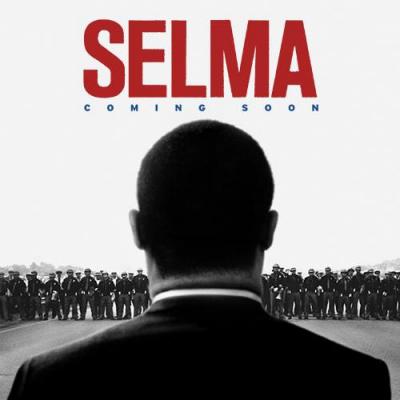
Trailer still: David Oyelowo as Dr. King, composed in a tight profile, resolving to act
Jason Moran’s score keeps close to breath and footsteps; the songs carry the crowd

Tracks & Scenes

“I’ve Got the New World in My View” — Sister Gertrude Morgan
Where it plays: As Selma residents stride toward the courthouse to attempt voter registration. Snare-light gait, tambourine like a metronome of hope. The camera reads faces; the lyric promises a city not yet seen (non-diegetic over march-to-courthouse sequence).
Why it matters: A street evangelist’s 1950s recording becomes a present-tense compass — vision before victory.

“Walk With Me” — Martha Bass
Where it plays: The “Bloody Sunday” confrontation on the Edmund Pettus Bridge. Tear gas blooms; troopers advance; the choir-backed plea threads through chaos (non-diegetic underscoring the charge and flight).
Why it matters: A spiritual used as shield — the lyric’s “tedious journey” mirrors the marchers’ endurance.

“Take My Hand, Precious Lord” — Ledisi (as Mahalia Jackson)
Where it plays: A midnight call: King asks for a voice to steady him. Jackson’s hymn arrives like a hand on the shoulder, turning private fear into a communal prayer (diegetic performance heard via phone/radio).

“Keep On Pushing” — The Impressions
Where it plays: Organizing stretches and strategic pivots. Snatches over movement between homes, meetings, and church basements (source/needle-drop in montage-style transitions).
Why it matters: Title-as-instruction — resolve scored to Curtis Mayfield’s buoyant determination.

“Ole Man Trouble” — Otis Redding
Where it plays: A bluesy cloud during setbacks — night interiors, somber travel, and the weight of the next day (non-diegetic mood bed).
Why it matters: Names the weather: trouble everywhere, yet morning comes.

“House of the Rising Sun” — Duane Eddy
Where it plays: Transitional source on radio/PA; twang and echo flicker against scenes of street-level intimidation (source).
Why it matters: Period texture with a haunted undertow.

“Why (Am I Treated So Bad)” — The Staple Singers
Where it plays: Low in the mix around scenes of public shaming and courthouse obstacles (source, background).
Why it matters: A civil-rights standard murmuring the movement’s daily refrain.

“Final Speech” — Jason Moran (score)
Where it plays: King’s concluding address. The cue stays spare, elongating time as the camera holds faces and history clicks into place (score cue, non-diegetic).
Why it matters: The restraint lets the words carry — music as respectful frame.

Non-album but heard in film: A field recording of “This Little Light of Mine” by Selma workers rolls into the finish, returning the story to the people in the pews and streets (end-credits source).

Trailer montage: police line seen through gas, marchers steady, hands locked
Key beats: registration walk → terror on the bridge → televised resolve

Notes & Trivia

  • Music supervision focused on B-sides and lesser-heard recordings to avoid cliché period needle-drops.
  • Only three cues from Jason Moran’s score appear on the retail album; most of the score exists only in-film.
  • Ledisi portrays Mahalia Jackson and performs “Precious Lord” on-screen; a different artist performed the hymn at the 2015 Grammys tribute moment before “Glory.”
  • Sister Gertrude Morgan’s track comes from a 1950s street-evangelist LP — vocals and tambourine carrying an entire procession.
  • “Glory” closed award shows and the film’s end credits, becoming the era’s crossover protest anthem.

Music–Story Links

When locals file toward the registrar, “New World in My View” reframes bureaucracy as pilgrimage — vision is the scene partner. On the bridge, “Walk With Me” does double duty: prayer and pressure, pushing the montage from chaos to meaning. In the dead-of-night phone call, “Precious Lord” turns private doubt into collective courage. Around strategy pivots, “Keep On Pushing” converts logistics into momentum — the chorus is a to-do list. Moran’s “Final Speech” lets rhetoric be rhythm; silence between phrases does the heavy lifting.

Reception & Quotes

The film’s music choices were praised for avoiding obvious anthems and for the restraint of Moran’s score. “Glory” won the major trophies and traveled far beyond the film’s walls.

“A sparingly used original score and a few choice spirituals — intelligence over obviousness.” Variety summary
“The title song makes the credits feel like a march still in motion.” awards coverage
“When the hymn enters, the room breathes again.” critic capsules
Trailer close-up: Dr. King at the pulpit, eyes up, room hushed
Critical response singled out the restrained score and purposeful song curation

Interesting Facts

  • Album makeup: 13 tracks — catalog songs + three score cues + the original song “Glory.”
  • Score debut: Jason Moran’s first feature film score; he kept the music “felt more than heard.”
  • End-credits halo: “Glory” won the Oscar and Golden Globe for Best Original Song.
  • Field recording closer: “This Little Light of Mine” (Selma workers) appears in-film but not on the retail album.
  • Label stamp: Paramount Music released the soundtrack during the U.S. theatrical run.
  • Curatorial rule: DuVernay and Rhodes leaned away from overused protest songs to protect specificity.

Technical Info

  • Title: Selma (Music from the Motion Picture)
  • Year / Type: 2014–2015 — Film soundtrack (Various Artists) + select original score
  • Composer (score): Jason Moran
  • Music Supervisor: Morgan Rhodes
  • Label: Paramount Music
  • Commercial release: Digital late Dec 2014; wide retail/streaming Jan 2015
  • Key placements highlighted: “I’ve Got the New World in My View” (Sister Gertrude Morgan); “Walk With Me” (Martha Bass); “Take My Hand, Precious Lord” (Ledisi as Mahalia Jackson); “Keep On Pushing” (The Impressions); “Ole Man Trouble” (Otis Redding); “House of the Rising Sun” (Duane Eddy); “Final Speech” / “Bloody Sunday” (Jason Moran cues); “Glory” (Common & John Legend).
  • Availability: Streaming and digital retail; some in-film songs are not on the OST.

Questions & Answers

Who scored Selma and what’s the tone of the music?
Jason Moran. The score is restrained, percussive, and intimate — it supports dialogue and bodies in motion rather than leading scenes.
Which song underscores “Bloody Sunday” on the bridge?
Martha Bass’s “Walk With Me,” chosen for its lyric about the “tedious journey.”
Is the hymn “Precious Lord” in the film the same as the Grammys performance?
In the film, Ledisi (as Mahalia Jackson) sings it; the Grammys paired a different performer with “Glory.”
Does the retail album include everything heard in the movie?
No. The album interleaves key songs and three score cues; other placements (like a field recording of “This Little Light of Mine”) are in-film only.
What did “Glory” win?
Best Original Song at the Academy Awards and Golden Globes; also a Grammy for Best Song Written for Visual Media.

Canonical Entities & Relations

SubjectVerbObject
Ava DuVernaydirectedSelma (2014/2015)
Jason Morancomposedoriginal score for Selma
Morgan Rhodessupervisedmusic for Selma
Paramount MusicreleasedSelma (Music from the Motion Picture)
Common & John Legendperformed“Glory” (original song)
LedisiportrayedMahalia Jackson; performed “Take My Hand, Precious Lord” (in film/OST)
David OyelowoportrayedDr. Martin Luther King Jr.
Varietypraisedthe selective use of spirituals and restrained score

Sources: LAist (interview with music supervisor Morgan Rhodes); Apple Music listing for album; Discogs release entry; Wikipedia entries (film & soundtrack); IMDb Soundtrack; award coverage in Pitchfork/Time.

This serious film is about Martin Luther King, who raised the national liberation wave in the greatest country in the world, both on the territory and on democracy, which today is finally installed. A lot of great acting in the film done by such notable persons as Tim Roth and Cuba Gooding Jr. The incredible strength and power of a man, who is ready to do anything for the purpose, can break the inertia of the whole country and a huge system, in spite of everything. Even if they will put him in a jail or threaten to kill his children. This is the story of a national hero who overwhelmed the most evil, vile and treacherous enemy – a government that does not want to change anything. This is a story about how the history was made and about strong people, who stood at the origins of such large-scale achievements. The musical selection for this film came out very strong too. And – most importantly – authentic. Most of the songs were written in 1950–1960 (e.g., Alabama Blues), but there are some that came even from years of 1940 (for example, You Ain't Got But One Life To Live). They allow you fully experience the atmosphere and to understand what was really going on in the movement for their rights and what caused the abolition of racial segregation in one of the most democratic societies in the world. Jason Moran wrote several songs for the collection, pleasing us with quality blues. And Sarah Vaughan well portrayed the purity of the female voice. The collection has only one song gets out of common style – it is rap named Say It Like It Really Is. We do not know with what purpose it was inserted in the collection, but the diversity has not won because of it. Lovers of good soundtrack will find this fascinating and charming.

November, 27th 2025

More about "Selma": Wikipedia, IMDb
A-Z Lyrics Universe

Lyrics / song texts are property and copyright of their owners and provided for educational purposes only.