Soundtracks:  A B C D E F G H I J K L M N O P Q R S T U V W X Y Z #


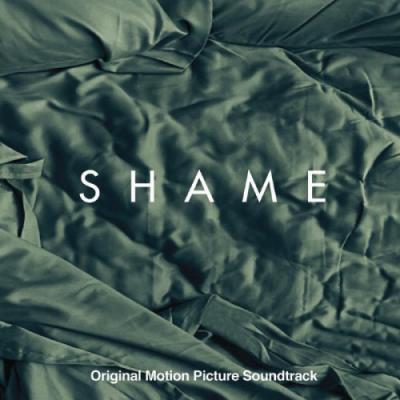
Shame Album Cover

"Shame" Soundtrack Lyrics

Movie • 2011

Track Listing


"Shame (Original Motion Picture Soundtrack)" – Album Guide to Tracks and Key Scenes

Shame (2011) official trailer still: Brandon alone in a nocturnal New York corridor
“Shame” — a city symphony of compulsion scored with pop, jazz, and Bach

Overview

What does a sex addict hear when the city goes quiet? Shame answers with contrasts — arrival, adaptation, rebellion, collapse — letting Harry Escott’s austere score and coolly curated songs map Brandon’s craving, control, and crash. The soundtrack shuttles from pristine Bach (Glenn Gould at the piano) to sweaty club staples and midnight jazz, so every relapse gets its own rhythm.

The album’s centerpiece moments are stark: Carey Mulligan’s nakedly slow “New York, New York” freezes time while Brandon tries not to cry; nuevo-disco and downtown beats swagger through predatory bar scenes; Escott’s long drones (“Brandon,” “Unravelling”) fill the spaces words can’t touch. The mix keeps McQueen’s camera floating and the drama interior.

It’s also a precise character study in sound. Blondie and Tom Tom Club sell the surfaces Brandon chases; Coltrane and Chet Baker smuggle tenderness back in; Howlin’ Wolf sneers when the night turns ugly. According to the label’s release notes, Sony handled the soundtrack rollout with Fox’s license, bundling score, classical cuts, and select source cues into one set.

Genres & themes, in phases: bar-friendly disco & downtown pop — performance and peacocking; chamber-quiet minimalism — shame and ritual; cool jazz standards — nostalgia that hurts; Bach preludes and Goldberg fragments — order as defense mechanism.

How It Was Made

Composer Harry Escott builds a spare, patiently unfolding score — long tones, pulses, and string weight that leave room for diegetic sound (footsteps, subways, breath). McQueen and editor Joe Walker place Escott’s cues like fissures between scenes, so song placements can flash as disruptions rather than wallpaper.

Music supervision draws sharp lines: pop-era downtown (Blondie’s “Rapture,” Tom Tom Club’s “Genius of Love”), prestige jazz (John Coltrane’s “My Favorite Things,” Chet Baker’s “Let’s Get Lost”), and archival Bach performed by Glenn Gould. Mulligan’s lounge performance of “New York, New York” was recorded for the film with a new arrangement and live, ache-forward tempo — a hinge the entire story turns on.

Trailer frame: Brandon on the subway, head down, lights strobing to an invisible metronome
Score architecture: Escott’s sustained tones, then a needle-drop that cuts like glass

Tracks & Scenes

“New York, New York ‘Theme’” — Carey Mulligan (arr. with piano accompaniment)
Where it plays: Mid-film, Sissy performs at a glassy rooftop lounge. The camera holds on her face; Brandon and his boss listen in silence. What begins as a standard becomes a plea. Non-diegetic mix of a diegetic performance, presented almost in real time.
Why it matters: The film’s emotional fulcrum; the slowed, trembling take collapses bravado into raw need.

“Genius of Love” — Tom Tom Club
Where it plays: Early bar sequence (~13'). David prowls, Brandon hangs back; the track’s playful bounce sells the pick-up game while the camera ping-pongs through neon and mirrors. Source music inside the bar.
Why it matters: Surface fun as camouflage — the groove papers over a meaner social calculus.

“Rapture” — Blondie
Where it plays: Same club run (~15'), switching to Debbie Harry’s rap-croon as David dances off with a woman who’d been eyeing Brandon. Source cue, hard-cut across jump edits.
Why it matters: Flirtation becomes competition; the song’s swagger mocks Brandon’s restraint.

“I Want Your Love” — Chic
Where it plays: Brandon returns home to Sissy’s too-close presence (~18'); music leaks from the bathroom as boundaries blur. Semi-diegetic: apartment playback bleeding into score space.
Why it matters: Desire + intrusion + family — the triangle that breaks him.

Bach: “Prelude in E minor, BWV 855” — Glenn Gould
Where it plays: After Brandon discovers Sissy with his boss, he bolts into a night run (~38'), the prelude’s iron order hammering against panic. Non-diegetic but cut like it’s in his head.
Why it matters: Ritual as anesthesia — metronomic Bach vs. spiral.

“Let’s Get Lost” — Chet Baker
Where it plays: Post-performance drinks (~34'). Champagne, city lights, and a hint of warmth before shame reasserts itself. Source cue under chatter.
Why it matters: A fragile exhale — the movie briefly lets romance exist.

“You Can’t Be Beat” — Howlin’ Wolf
Where it plays: Late-night backslide (~1h16'): Brandon antagonizes a couple in a bar; the Wolf’s growl matches the self-destructing swagger. Source cue, gritty and close.
Why it matters: When the persona curdles — bravado turns to spite.

“The Problem” — Mark Louque
Where it plays: The gay club stretch (~1h21'); strobes, breath, and sub-bass swallow the frame as Brandon tests new edges. Diegetic floor music that becomes a trance state.
Why it matters: The collapse phase — sensation chasing sensation.

“My Favorite Things” — John Coltrane
Where it plays: Used as an aural motif around resets and city drift; modal piano and soprano sax as a not-quite-memory of safety.
Why it matters: A classic turned mantra — yearning without resolution.

Score anchors — “Brandon,” “Unravelling,” “End Credits” — Harry Escott
Where they play: Extended, glacial cues thread opening routines, the long-night bender montage, and the final, ambiguous morning.
Why they matter: They’re the film’s weather: cold fronts rolling over bright city lights.

Trailer montage: rooftop lounge mic, subway stare, and rain-streaked windows to music
Key placements crossfade: club source, lounge torch, Bach’s strict pulse, and Escott’s hush

Notes & Trivia

  • The album couples Escott’s score with Glenn Gould’s Bach and select licensed tracks by Blondie, Tom Tom Club, Chic, Coltrane, Baker, and Howlin’ Wolf.
  • Mulligan’s “New York, New York” was recorded for the scene; the arrangement and on-screen tempo are deliberately slowed to a hush.
  • Release carried Fox’s copyright, licensed to Sony Music; some listings tag it under the Sony Classical imprint.
  • Several pieces of Bach (from Well-Tempered Clavier and Goldberg Variations) function as Brandon’s private ritual.
  • The soundtrack’s long-cue architecture (“Brandon,” “Unravelling”) mirrors McQueen’s signature extended takes.

Music–Story Links

When Brandon hunts, the movie chooses club source — “Genius of Love,” “Rapture,” “I Want Your Love.” The space is loud so he doesn’t have to be. When he feels, the film strips back: Escott’s strings and glacial pads, or Bach’s clockwork. Sissy’s “New York, New York” is the rupture — pop mythology slowed to pain. Later, the bluesy snarl of Howlin’ Wolf and the anonymous throb of the sex-club cue say the quiet part out loud: the high is getting smaller and meaner.

Reception & Quotes

Critics singled out the music’s precision — especially Mulligan’s performance — and how Escott’s score frames McQueen’s long-form gaze. According to Apple/label metadata, the album streeted December 6, 2011, in step with the U.S. rollout.

“This is a great act of filmmaking and acting. I don’t believe I would be able to see it twice.” Roger Ebert
“Mulligan’s rendition… the saddest version of this great song I’ve ever heard.” Vanity Fair
“Dynamite performances… a terrific second feature from McQueen.” The Guardian
End-card trailer still: city seen from above as strings toll toward silence
How it lands: a city’s nightlife re-scored as a private storm

Interesting Facts

  • Mulligan’s lounge set was shot with long takes to keep the room’s fragile silence intact.
  • Glenn Gould’s Bach recordings appear multiple times — a rare mainstream film to lean on that specific timbre.
  • Coltrane’s “My Favorite Things” works as counter-nostalgia, undercutting any easy romance.
  • The late bender stitches commercial club music to Escott’s most dissonant cues, blurring diegetic/non-diegetic lines.
  • The soundtrack album swaps a few heard-in-film cuts for album flow; not every source song appears on every edition.

Technical Info

  • Title: Shame (Original Motion Picture Soundtrack)
  • Year: 2011
  • Type: Film Soundtrack (Score + songs)
  • Composer: Harry Escott
  • Key featured recordings: Glenn Gould plays Bach; Tom Tom Club “Genius of Love”; Blondie “Rapture”; Chic “I Want Your Love”; John Coltrane “My Favorite Things”; Chet Baker “Let’s Get Lost”; Howlin’ Wolf “You Can’t Be Beat”
  • Signature performance: “New York, New York” — Carey Mulligan (vocal) with piano accompaniment
  • Label/rights: Twentieth Century Fox Film Corp. (©) — licensed to Sony Music for release
  • Release date: December 6, 2011
  • Availability: Streaming/digital and CD; common runtime ~80 minutes

Questions & Answers

Who scored the film?
Harry Escott — a restrained, long-form approach that leaves room for silence and city noise.
Is Carey Mulligan really singing in the club scene?
Yes. Her “New York, New York” is recorded and performed for that moment, with a slow, intimate arrangement.
Which songs anchor the bar/club sequences?
“Genius of Love,” “Rapture,” and “I Want Your Love” — bright, immediate source cues that sell surface pleasure.
Why so much Bach?
Those preludes/variations act like Brandon’s ritual — ordered, exact, and deliberately impersonal.
Does the album include everything heard in the film?
No — it mixes score, Glenn Gould’s Bach, and several cues, but some source tracks differ by edition.

Canonical Entities & Relations

SubjectVerbObject
Steve McQueendirectedShame (2011)
Harry Escottcomposedoriginal score for Shame
Glenn GouldperformedBach selections licensed for the film/album
Carey Mulliganperformed“New York, New York” (on-screen)
Tom Tom Club / Blondie / Chiccontributedsource songs to bar/club scenes
John Coltrane / Chet Baker / Howlin’ Wolffeaturedcatalog recordings on the soundtrack
Sony MusicreleasedShame (Original Motion Picture Soundtrack) (2011) under license from Fox

Sources: Official soundtrack listings and label metadata; Discogs release master; IMDb soundtrack page; Apple Music album page; Film Music Reporter album announcement; Vanity Fair and Roger Ebert reviews; The Guardian festival review; curated scene/timestamp guides.

November, 27th 2025

Learn about a British drama film 'Shame' on Wikipedia and IMDb
A-Z Lyrics Universe

Lyrics / song texts are property and copyright of their owners and provided for educational purposes only.