"Shirley" Soundtrack Lyrics
Movie • 2024
Track Listing
The Isonics
September Jones
Electric Banana
Jackie Lavant
Dyke & The Blazers
Neice Dezel
Dave Hamilton
Musi-O-Tunya
Lyn Collins
Miriam Makeba
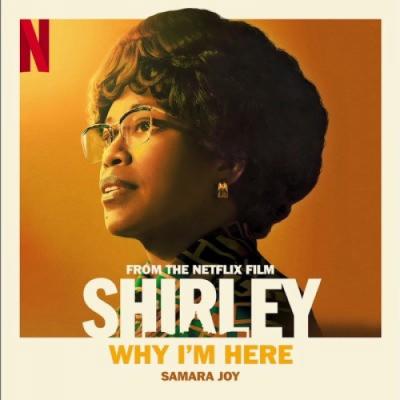
Samara Joy
“SHIRLEY (Soundtrack from the Netflix Film)” – Album Guide to Tracks and Key Scenes
Overview
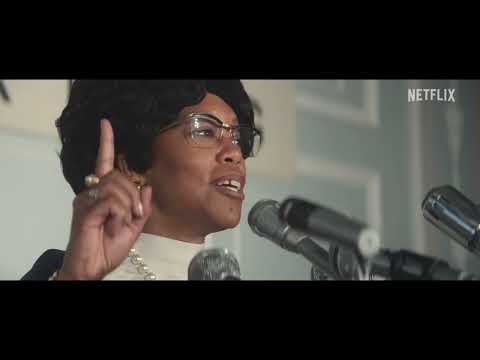
How do you score a campaign that never stops moving? Shirley answers with purposeful strings, heartbeat percussion, and needle-drops that speak in plain language. The soundtrack keeps pace with Shirley Chisholm’s 1972 run: fiery on the podium, warm at home, relentless in the field. It’s the sound of a plan becoming a movement.
Composer Tamar-kali shapes a concise, 23-minute album that functions like the campaign’s internal monologue — motifs that steady the frame, then lift as the crowds grow. Around the score, the film leans on soul and funk 45s, a Miriam Makeba cut, and a brand-new end-credits song by jazz star Samara Joy. The result is a blend of grit and uplift: organizing in minor keys, victory laps in major ones.
Arrival → adaptation → rebellion → collapse. Early cues frame arrival (Christmas kitchen-table strategy and the first signatures); mid-film adaptations juggle ballot access fights and media glare; rebellion hits as the campaign crashes old-boy gatekeeping; collapse (of the old order, not the candidate) arrives with a clarifying grace note over credits. Genre map by phase: string-led score — resolve; Detroit/Ohio/Memphis soul sides — street momentum; Afro-pop classic — global sisterhood; jazz vocal original — legacy.
How It Was Made
Writer-director John Ridley grounds the film in lived spaces — churches, diners, union halls — and lets the music carry both logistics and faith. Netflix issued the official score album, SHIRLEY (Soundtrack from the Netflix Film), on March 15, 2024 under Netflix Music; it collects 11 cues (about 23 minutes) by Tamar-kali.
Music supervision by Madonna Wade-Reed threads period-sourced tracks (regional soul, funk instrumentals, library cues) with Tamar-kali’s through-lines. According to Variety’s crafts interview, Tamar-kali wrote with determination and energy in mind — themes that could be elastic enough for debates, hallway huddles, and red-eye flights.
Tracks & Scenes
“Sugar” — The Isonics
Where it plays: ~00:02 Right after the title card, the campaign’s world warms up — neighborhood textures, phones ringing, lists starting (non-diegetic).
Why it matters: A vintage soul groove that says “we’re starting from the block.”
“The Joy of Christmas” — Dom James
Where it plays: ~00:08 Kitchen-table Christmas with Mac and Arthur dropping by; strategy meets holiday ritual (source-like warmth).
Why it matters: Domestic stakes before the storm.
“I’m Coming Home” — September Jones
Where it plays: ~00:18 January 25, 1972 title card; campaign hits the road (non-diegetic).
Why it matters: A Motown-adjacent promise underscoring return-to-community politics.
“Street Girl” — Electric Banana
Where it plays: ~00:23 Montage of reactions to Shirley’s run; voices in barbershops and on corners (non-diegetic).
Why it matters: A slightly gritty pulse that frames skepticism without sneer.
“I Don’t Mind Doin’ It” — Jackie Lavant & The Fashions
Where it plays: ~00:31 Volunteers screen-print posters and fold flyers; the office hums (non-diegetic).
Why it matters: Work song for the ground game.
“Let a Woman Be a Woman — Let a Man Be a Man” — Dyke & The Blazers
Where it plays: ~00:34 George Wallace pontificates on TV; the cut bites back (non-diegetic over broadcast).
Why it matters: Funk as rebuttal.
“Last Night” — Neice Dezel
Where it plays: ~00:44 Bar debrief — Stanley and Cam recalibrate campaign guidance (source).
Why it matters: Afterhours honesty with a bassline.
“Take Care of Your Own Business” — Dave Hamilton
Where it plays: ~00:46 A restaurant meetup with Walter; deals and boundaries (source/PA).
Why it matters: Title-as-advice baked into the scene.
“Starving Child” — Musi-O-Tunya
Where it plays: ~00:56 Diner tea while Shirley waits for her sister; the room breathes (non-diegetic).
Why it matters: A Zambian psych-soul ripple that widens the frame.
“Think (About It)” — Lyn Collins
Where it plays: ~00:59 After the diner conversation with Muriel; the breakbeat classic snaps in like a verdict (non-diegetic).
Why it matters: A signature “push back” hook — perfect punctuation.
“Four-Letter Words” — Miriam Makeba
Where it plays: ~01:21 In Los Angeles, Barbara brings Shirley to meet Diana — industry rooms, new allies (non-diegetic).
Why it matters: Pan-African sisterhood in one voice — a canny, era-true lift.
“Why I’m Here” — Samara Joy
Where it plays: ~01:49 First end-credits song; a brand-new jazz vocal written for the film (non-diegetic).
Why it matters: Articulates the film’s thesis — purpose over perfect endings.
Score selections by Tamar-kali (album highlights)
“Shirley Intro” — scene-setting pulse; “Tell Them I Said Yes” — Christmas strategy beat; “Long Day” — signatures/plane travel montage; “A Win for Robert — California” — appellate court news lands; “Trailblazing” — second end-credits lift.
Why it matters: The score is lean by design — cues that carry resolve without melodrama.
Notes & Trivia
- The official score album runs ~23 minutes with 11 tracks — intentionally compact for replays.
- Music supervision is by Madonna Wade-Reed; music editors include Jonathan Schultz and Missy Cohen.
- Miriam Makeba’s “Four-Letter Words” clears via Strut/!K7 — a pointed L.A. placement late in the film.
- Samara Joy’s original “Why I’m Here” closes the film and later earned guild-level recognition.
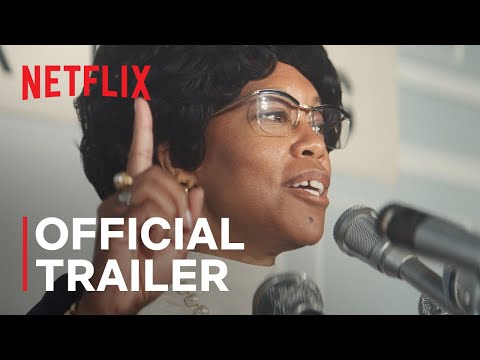
- The trailer uses a different track (“Golden” by Vonzell Solomon) than the closing credits.
Music–Story Links
When the first flyers hit tables, Jackie Lavant’s “I Don’t Mind Doin’ It” reframes volunteer labor as pride — the groove turns chores into choreography. Lyn Collins’ “Think (About It)” arrives like a rebuttal after diner doubts, rallying the character and the audience at once. And as new Hollywood doors open, Makeba’s “Four-Letter Words” pivots the geography and the stakes. The score’s “A Win for Robert — California” is the quiet payoff — the kind of cue that lets a legal victory land in the body before the brain. Finally, Samara Joy’s end-credits original speaks in first person; that’s not epilogue, it’s a thesis statement.
Reception & Quotes
Coverage highlighted the film’s craft-first musical approach — short, sturdy cues and needle-drops that feel discovered rather than obvious. According to Netflix’s notes and trades, the album date dropped a week before streaming so the score could breathe on its own.
“We wanted music that felt like determination made audible.” Variety interview, composer focus
“End credits land on a brand-new anthem — classy and clear.” Soundtrack roundups
Availability: The score album is available on major services as SHIRLEY (Soundtrack from the Netflix Film). The film’s licensed songs live on their respective labels; several are documented with on-screen times.
Interesting Facts
- The music department lists recording/mix engineer Angie Teo, with music prep by Bobby Lee Crow III — a tidy team for a tight schedule.
- Several rally/TV moments fold in library cues (APM/De Wolfe) to mimic period broadcast texture.
- “Why I’m Here” pairs Samara Joy’s voice with a stately, contemporary jazz arrangement tailored to the film.
- Trailer music credit: Vonzell Solomon’s “Golden” — separate from the score and not on the album.
- Tamar-kali previously scored political/historical drama and brought that tensile approach here.
Technical Info
- Title: SHIRLEY (Soundtrack from the Netflix Film)
- Year: 2024 (album March 15; film March 22)
- Type: Film score album + licensed songs in picture
- Composer: Tamar-kali
- Music Supervisor: Madonna Wade-Reed
- Label: Netflix Music
- Select licensed highlights: “Sugar” (The Isonics); “I’m Coming Home” (September Jones); “Street Girl” (Electric Banana); “I Don’t Mind Doin’ It” (Jackie Lavant & The Fashions); “Let a Woman Be a Woman — Let a Man Be a Man” (Dyke & The Blazers); “Starving Child” (Musi-O-Tunya); “Think (About It)” (Lyn Collins); “Four-Letter Words” (Miriam Makeba); end credits: “Why I’m Here” (Samara Joy).
- Trailer cue: “Golden” (Vonzell Solomon).
- Studios/Release: Participant / Royal Ties; distributed by Netflix.
Questions & Answers
- Who composed the score to Shirley?
- Tamar-kali, released by Netflix Music as a compact 11-track album.
- What’s the original end-credits song?
- “Why I’m Here,” performed by Samara Joy and written for the film.
- Which classic tracks stand out in the film?
- Lyn Collins’ “Think (About It),” Dyke & The Blazers’ “Let a Woman Be a Woman…,” and Miriam Makeba’s “Four-Letter Words,” among others.
- Who supervised the music?
- Madonna Wade-Reed handled supervision and clearances for the period tracks.
- Is the trailer music on the album?
- No — the trailer uses Vonzell Solomon’s “Golden,” which is not part of the Netflix score album.
Canonical Entities & Relations
| Subject | Verb | Object |
|---|---|---|
| Tamar-kali | composed | SHIRLEY (Soundtrack from the Netflix Film) (2024) |
| Netflix Music | released | the score album (2024-03-15) |
| Madonna Wade-Reed | supervised | licensed music for Shirley (2024) |
| Samara Joy | performed | “Why I’m Here” (end-credits song) |
| Miriam Makeba | performed | “Four-Letter Words” (Los Angeles scene) |
| John Ridley | wrote & directed | Shirley (feature film, 2024) |
| Participant / Royal Ties | produced | the film |
| Netflix | distributed | Shirley worldwide (streaming) |
Sources: Netflix; Variety; Film Music Reporter; IMDb (Soundtracks & Credits); Soundtracki; Apple Music; Spotify; Participant/!K7 sync note; ScreenRant (song-by-scene guide).
November, 27th 2025
A-Z Lyrics Universe
Cynthia Erivo Popular
Ariana Grande Horsepower
Post Malone Ain't No Love in Oklahoma
Luke Combs Good Riddance (Time of Your Life)
Green Day Bye Bye Bye
*NSYNC You're the One That I Wan
John Travolta & Olivia Newton-John I Always Wanted a Brother
Braelyn Rankins, Theo Somolu, Kelvin Harrison Jr. and Aaron Pierre The Power of Love
Frankie Goes to Hollywood Beyond
Auli’i Cravalho feat. Rachel House MORE ›