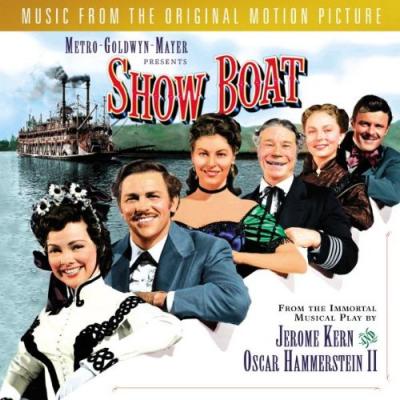
"Showboat" Soundtrack Lyrics
Musical • 2002
Track Listing
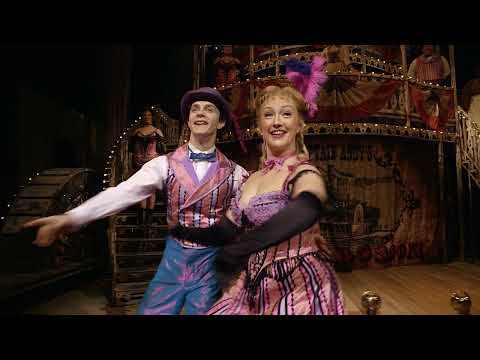
Showboat Cast
Showboat Cast
Showboat Cast
Showboat Cast
Showboat Cast
Showboat Cast
Showboat Cast
Showboat Cast
Showboat Cast
Showboat Cast
Showboat Cast
Showboat Cast
“Show Boat (26 Original Cast Recordings) — The Broadway Musicals Series (2002)” – Album Guide to Tracks and Key Scenes
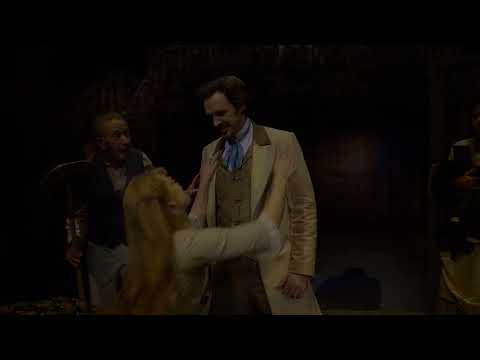
Overview
What does a “best-of” for a 1927 game-changer sound like in 2002? This UK compilation stitches together cornerstone cuts from Show Boat’s 1946 Broadway revival with period extras, letting Kern & Hammerstein’s score breathe in the voices that made it repertoire. It’s not a single-night document; it’s a time capsule you can actually play loud.
The album’s spine is the 1946 revival cast — Jan Clayton (Magnolia/Kim), Carol Bruce (Julie), Charles Fredericks (Gaylord Ravenal), and Kenneth Spencer (Joe) — singing Bennett’s plush original orchestrations. Selected 1928 London performances slip in as bonuses, so you can hear how the show traveled early on. The sequencing moves like the musical itself: riverwide choruses, two people falling too fast, a torn-velvet torch, and that rolling baritone that keeps time for everyone else.
Arrival → adaptation → rebellion → collapse. Arrival: the Cotton Blossom docks and the company floods the levee; adaptation: Magnolia and Ravenal try out domestic bliss in lilting waltzes; rebellion: Julie’s torch explodes respectability; collapse: the river keeps rolling while lives fall apart and re-knot. Styles mapped to meaning: operetta glow — romance-as-ideal; blues-spined spiritual — the river’s truth; rag/pop pastiche — showfolk sparkle; torch ballad — consequence.
How It Was Made
Issued in 2002 on Prism Leisure as part of The Broadway Musicals Series, the disc assembles 26 tracks primarily from the ten-cut 1946 Broadway revival album (recorded at the Ziegfeld Theatre) and adds early London material as context. The 1946 session is historically key — it captured the show’s post-war comeback in studio fidelity, with Jan Clayton introducing “Nobody Else but Me,” the last song Kern wrote (per the Rodgers & Hammerstein Organization’s notes).
Compilation logic is simple: keep the revival’s arc intact (overture through finale) and tuck period sides behind it so listeners can compare interpretations — the way, frankly, most fans already do. Mastering is modest; the appeal is curation and access rather than remaster fireworks.
Tracks & Scenes
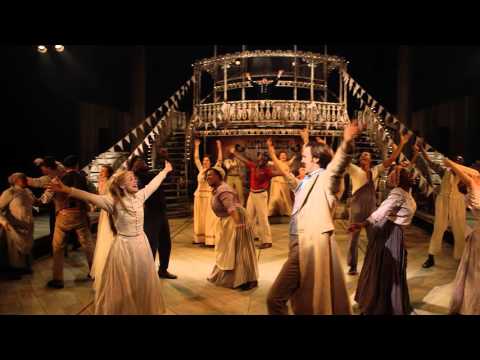
“Cotton Blossom” — Company
Where it lands in the story: The show boat arrives; the town turns out. Vendors shout, kids dart, Cap’n Andy corrals chaos while Parthy rolls her eyes.
Why it matters: Establishes the social world — white and Black choruses in counterpoint — and the work/play engine of the plot.
“Make Believe” — Magnolia & Ravenal
Where it lands: Riverside courtship under watchful eyes; promises made too quickly, too beautifully.
Why it matters: Operetta sheen meets American plain-speech; later reprises hit harder because we heard the dream first.
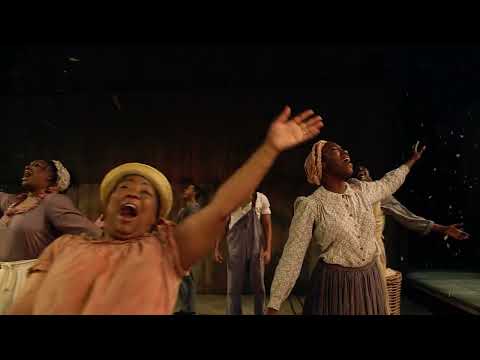
“Ol’ Man River” — Joe
Where it lands: Joe watches the levee churn and names what doesn’t stop for anyone’s heartbreak.
Why it matters: The show’s conscience — a rolling bass line that drags history into the melody.
“Can’t Help Lovin’ Dat Man” — Julie, Queenie, Joe, Magnolia
Where it lands: A back-room sing turns into a risky confession as a “tell” in the song exposes Julie’s secret heritage.
Why it matters: Plot detonator disguised as a hangout tune.
“Life Upon the Wicked Stage” — Ellie
Where it lands: A comic turn about chorus-girl myths, complete with winked-at naïveté and backstage shtick.
Why it matters: Lets the show laugh at itself while the plot gathers thunder elsewhere.
“You Are Love” — Magnolia & Ravenal
Where it lands: Wedding-pageant glow before the bills come due.
Why it matters: A curtain of silk the story will later rip — deliberately.
“Bill” — Julie
Where it lands: Post-scandal, in a lounge where the light is low and the vowels are long; Julie sings about a man who isn’t much and means everything.
Why it matters: The score’s torch peak — simple chords, devastating subtext.
“Why Do I Love You?” — Magnolia, Ravenal & Company
Where it lands: Domestic montage: prams, trunks, new addresses, old debts.
Why it matters: A tune that smiles while the book lays traps.
“Nobody Else but Me” — Kim (1946 addition)
Where it lands: Years later, Magnolia’s daughter Kim claims her own spotlight and voice.
Why it matters: A late-coming Kern/Hammerstein gem — and historically the final song Kern wrote.
Notes & Trivia
- The 2002 CD appears on Prism Leisure’s The Broadway Musicals Series; runtime is ~73 minutes — longer than the original 1946 ten-cut album.
- Core performances are the 1946 Broadway revival cast; select 1928 London sides appear as bonuses (e.g., Edith Day’s “Make Believe”).
- “Nobody Else but Me” was written for the 1946 revival and introduced by Jan Clayton as Kim; it’s Kern’s final song.
- Robert Russell Bennett’s orchestrations, captured here, are a big part of why this material still shimmers.
Music–Story Links
When Magnolia and Ravenal “make believe,” the operetta frame invites us to forgive the speed of their vows — which makes the hungry chords of “Bill” feel like real weather when it hits. Each reprise of “Ol’ Man River” resets the moral horizon; the river watches the plot’s highs and sends its bill anyway. And giving Kim the last new word in 1946 — “Nobody Else but Me” — reframes the saga as generational resilience rather than simple romance.
Reception & Quotes
The 1946 revival album has long been treated as essential listening for classic-cast flavor; the 2002 compilation’s value is accessibility and context. Fans of the piece still debate the “most complete” Show Boat on disc (the McGlinn studio set is often cited), but this one wears its theatre DNA proudly.
“No single recording reigns supreme… three versions are standouts.” Comparative cast-album survey
“Clayton’s ‘Nobody Else but Me’ is reason enough to own the 1946 set.” Label notes
Interesting Facts
- Prism’s edition pulls from multiple sources; expect slight acoustic shifts between main program and bonuses.
- Carol Bruce’s “Bill” is a reference cut for many collectors — creamy vibrato, unhurried phrasing.
- The London 1928 sides replace Paul Robeson (contract conflicts) with understudy Norris Smith; Robeson recorded “Ol’ Man River” separately that year.
- Later revivals juggle song order/usage; this disc sticks close to 1946 practice while nodding to earlier traditions.
- The 1946 tracks were recorded at the Ziegfeld Theatre over two February sessions.
Technical Info
- Title: Show Boat (26 Original Cast Recordings) — The Broadway Musicals Series
- Year: 2002 (compilation CD)
- Type: Musical theatre compilation (primarily 1946 Broadway revival + bonus 1928 London sides)
- Music & Lyrics: Jerome Kern (music); Oscar Hammerstein II (lyrics/book)
- Principal performers (1946 cuts): Jan Clayton (Magnolia/Kim); Carol Bruce (Julie); Charles Fredericks (Gaylord Ravenal); Kenneth Spencer (Joe); Colette Lyons (Ellie); Show Boat Chorus/Orchestra
- Orchestrations: Robert Russell Bennett
- Label/Series: Prism Leisure — The Broadway Musicals Series (PLATCD 733)
- Notable numbers on this disc (selection): “Cotton Blossom,” “Make Believe,” “Ol’ Man River,” “Can’t Help Lovin’ Dat Man,” “Life Upon the Wicked Stage,” “You Are Love,” “Bill,” “Why Do I Love You?,” “Nobody Else but Me.”
- Availability: Widely sold as an import in the UK/EU; digital equivalents use the 1946 master on Sony/Legacy services.
Questions & Answers
- What exactly is on the 2002 disc?
- A curated expansion of the 1946 Broadway revival recording (10 tracks) with additional historical cuts, reaching 26 total selections.
- Who sings “Ol’ Man River” here?
- Kenneth Spencer, the 1946 revival’s Joe — a resonant, authoritative take that anchors the set.
- Is “Nobody Else but Me” included?
- Yes. Written for the 1946 revival and introduced by Jan Clayton as Kim; it was Jerome Kern’s final song.
- Why are there London tracks on a Broadway-leaning album?
- They’re context bonuses — giving listeners a taste of the 1928 West End sound alongside the 1946 Broadway revival.
- Is there a single “best” Show Boat recording?
- Depends on your goal: completeness (the McGlinn studio set), theatrical punch (1994 revival), or vintage cast flavor (1946 — this set’s core).
Canonical Entities & Relations
| Subject | Verb | Object |
|---|---|---|
| Jerome Kern | composed | Show Boat (1927 musical) |
| Oscar Hammerstein II | wrote lyrics & book for | Show Boat |
| Jan Clayton | introduced | “Nobody Else but Me” (1946 revival; as Kim) |
| Carol Bruce | performed | “Bill” (as Julie) on the 1946 recording |
| Kenneth Spencer | performed | “Ol’ Man River” (1946 recording) |
| Prism Leisure | released | Show Boat (26 Original Cast Recordings) (2002) |
| Robert Russell Bennett | orchestrated | the Broadway score (heard on the 1946 cuts) |
Sources: Rodgers & Hammerstein Organization; AllMusic; Masterworks Broadway; Discogs; CastAlbums.org; IBDB; Official London Theatre.
November, 27th 2025
A-Z Lyrics Universe
Cynthia Erivo Popular
Ariana Grande Horsepower
Post Malone Ain't No Love in Oklahoma
Luke Combs Good Riddance (Time of Your Life)
Green Day Bye Bye Bye
*NSYNC You're the One That I Wan
John Travolta & Olivia Newton-John I Always Wanted a Brother
Braelyn Rankins, Theo Somolu, Kelvin Harrison Jr. and Aaron Pierre The Power of Love
Frankie Goes to Hollywood Beyond
Auli’i Cravalho feat. Rachel House MORE ›