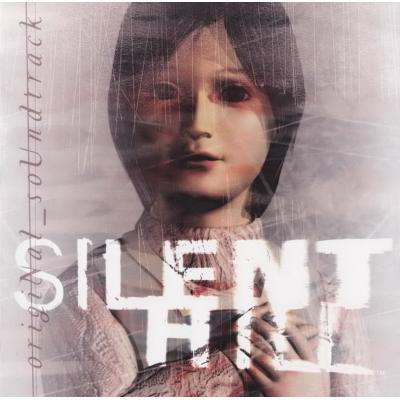
"Silent Hill" Soundtrack Lyrics
Movie • 2006
Track Listing
Akira Yamaoka
Akira Yamaoka
Johnny Cash
Akira Yamaoka
Akira Yamaoka
Akira Yamaoka
Akira Yamaoka
Akira Yamaoka
Akira Yamaoka
"Silent Hill (Music from the 2006 Film)" – Album Guide to Tracks and Key Scenes
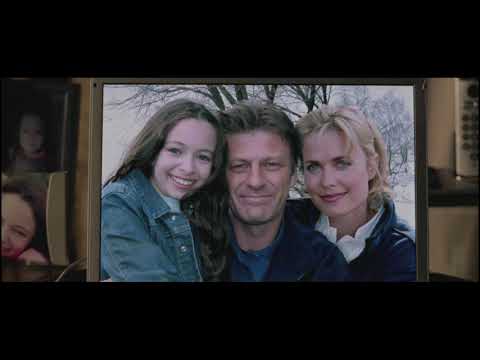
Overview
What happens when a video game’s cult soundtrack becomes a movie’s bloodstream? Silent Hill answers by importing Akira Yamaoka’s industrial lullabies almost wholesale — arrival → adaptation → rebellion → collapse — then letting them drag us into the fog, sirens and all.
The film’s sonic palette is built from the first four games: metallic grind, music-box melancholy, and Mary Elizabeth McGlynn’s haunted vocals. Jeff Danna rearranges and stitches cues so they match the movie’s shifts (gray town → Otherworld → aftermath), while a single left-field needle drop — Johnny Cash’s “Ring of Fire” — cuts through like a cruel joke. As the Silent Hill wiki notes, nearly every major cue is game-origin, simply repurposed to cinematic beats.
It works because the music doesn’t “comment” — it insists. Choirs and clanks make the town feel sentient. Guitars grieving in open chords make grief feel geographic. Genres phase like the town itself: ambient drone (disorientation), harsh industrial (pursuit), elegiac piano/strings (myth revealed), and alt-rock end credits (the curse keeps humming).
How It Was Made
Composer/producer Akira Yamaoka (series architect) supervised the use of game tracks; Jeff Danna handled arranging and additional score to fit Christophe Gans’s edit. The brief: keep sonic continuity with the games, build new transitions where needed, and spotlight McGlynn’s vocal cuts at key human moments. According to production notes and fan discographies, there was no official wide OST in 2006 — a rarity for a major genre film — though the cue list is well documented across game/film archives.
Tracks & Scenes
“Letter ~ From the Lost Days” — Akira Yamaoka feat. Mary Elizabeth McGlynn (from SH3)
Where it plays: Road to Silent Hill — Rose drives, Sharon dozes, radio on; a deceptively tender send-off before the crash. Source on car radio, early act.
Why it matters: Humanizes the mother-daughter bond; the lyric warmth will sour against the town’s cold logic.
“Waiting for You ~ LIVE at ‘Heaven’s Night’~” — Akira Yamaoka feat. Mary Elizabeth McGlynn (from SH4)
Where it plays: Gas-station mini-mart; tinny speakers leak a loungey ballad while Rose fuels and watches Sharon. Diegetic radio.
Why it matters: The world still feels normal — the music’s casual romance becomes ironic once the fog arrives.
“Killed by Death” → “Hear Nothing” → “Nothing Else” — Akira Yamaoka (from SH1)
Where it plays: First walk into town and the inaugural shift to Otherworld at Midwich Elementary. Non-diegetic montage into hard cut terror.
Why it matters: The franchise’s steel-on-steel identity snaps into place; the sound changes the air.
“Ring of Fire” — Johnny Cash
Where it plays: Bowling alley jukebox, moments after Rose escapes the Grey Children. Cheery twang in a dead room, diegetic.
Why it matters: Wicked pun and tonal fracture; warmth and hellfire in three chords.
“Wounded Warsong” — Akira Yamaoka (from SH4)
Where it plays: Rose sprints bus-stop to bus-stop, following the printed route toward Midwich. Non-diegetic chase groove.
Why it matters: Kinetic, motorik push that propels the breadcrumb quest.
“Prayer” — Akira Yamaoka (from SH3)
Where it plays: Church steps as the town swallows daylight; later, during the school’s Otherworld set-piece. Non-diegetic/choral.\
Why it matters: Sacred texture over sacrilege — a key example of the series’ pious/poisoned aesthetic.
“Promise (Reprise)” — Akira Yamaoka (from SH2)
Where it plays: Rose’s “connect-the-truth” beats — a drawing found, a story clarified. Recurrent motif.
Why it matters: The franchise’s most mournful theme becomes the film’s revelation cue.
“Last Boss (Remix)” — Akira Yamaoka (from SH3)
Where it plays: The church massacre sequence — razor-wire vengeance beneath hymnal ceilings. Non-diegetic, towering.
Why it matters: Operatic horror; the music makes the set-piece feel inevitable.
“Lost Carol” — Akira Yamaoka feat. Mary Elizabeth McGlynn (from SH3)
Where it plays: Christopher opens his front door in the final cross-fade to “home.” Quiet, post-finale breath.
Why it matters: A lullaby that doesn’t soothe — it separates worlds with a single, aching phrase.
End-credits suite: “You’re Not Here” → “Tears Of…” → “Theme of Laura” (from SH3/SH/SH2)
Notes & Trivia
- Nearly every cue comes from the games; the standout outsider is Johnny Cash’s “Ring of Fire.”
- Mary Elizabeth McGlynn is the voice on the vocal tracks (“Letter…,” “Waiting for You,” “You’re Not Here,” “Lost Carol”).
- The Japanese release swaps in Anna Tsuchiya’s “Lovin’ You” as the ending theme.
- No wide, official OST accompanied the 2006 release; fans pieced together cue lists from game albums and scene logs.
Music–Story Links
Car-radio tenderness (“Letter…”) sets up what the town will strip away. The first Otherworld shift swaps in percussive metal: fear has a timbre. Cash’s “Ring of Fire” mocks safety — the jukebox loves a pun — while “Promise (Reprise)” treats truth like a bruise you keep pressing. The church sequence crowns the score’s theology: choral awe weaponized. The end-credits run of “You’re Not Here”/“Tears Of…”/“Theme of Laura” says it plainly — you leave Silent Hill, but it keeps playing.
Reception & Quotes
Even mixed reviews called out the atmosphere; fans of the games praised how faithfully the music carried over. According to Wikipedia’s film entry, the credited composers are Jeff Danna and Akira Yamaoka, with cues largely borrowed from the series — a choice that gave the adaptation uncommon continuity.
“Major part of tracks in the film is taken from the games… arranged by Jeff Danna.” — one fan discography summarizes.
“The only song not from the games is Johnny Cash’s ‘Ring of Fire.’” — a widely cited cue log notes.
Interesting Facts
- The Tristar Pegasus logo even gets a sliver of the game music (“Silent Hill”) before the movie begins.
- The cue “Wounded Warsong” literally scores Rose following a bus route map — travel by rhythm.
- “Lost Carol” is so soft in the final moments that many viewers only notice it on repeat watches.
- Trailer music also repurposes game cues — “Promise (Reprise),” “Prayer,” and “Killed by Death” all appear in promos.
- Some collectors circulate a 2019 leak/limited post of the film arrangements; there’s still no standard retail OST.
Technical Info
- Title: Silent Hill — music & soundtrack overview (film, 2006)
- Type: Feature film (supernatural horror); soundtrack sourced primarily from game scores
- Composers / roles: Akira Yamaoka — original game music & supervision; Jeff Danna — arrangements/adaptations & additional score
- Key placements (film): “Letter ~ From the Lost Days” (car radio, en route); “Waiting for You ~ LIVE at ‘Heaven’s Night’~” (gas-station radio); “Killed by Death”/“Hear Nothing”/“Nothing Else” (first Otherworld); “Ring of Fire” (bowling-alley jukebox); “Wounded Warsong” (bus-stop sprint); “Prayer” (church steps/school Otherworld); “Promise (Reprise)” (revelation beats); “Last Boss (Remix)” (church massacre); “Lost Carol” (closing door beat); end-credits suite “You’re Not Here” → “Tears Of…” → “Theme of Laura.”
- Label/album status (2006): No wide official OST release; selections exist via game albums and documented film cue lists.
Questions & Answers
- Who composed the film’s music?
- Akira Yamaoka (series composer) supervised and supplied the original material; Jeff Danna arranged/adapted cues and added score.
- Is most of the film’s music new?
- No — nearly all cues are from the first four games, re-timed and sometimes remixed for the film.
- What’s the non-game song I hear?
- Johnny Cash’s “Ring of Fire,” playing on a jukebox in the bowling alley.
- What plays in the car on the way to town?
- “Letter ~ From the Lost Days” (SH3) on Rose’s car radio — a gentle calm before the crash.
- Is there an official soundtrack album?
- Not from the 2006 release; fans rely on game OSTs and documented cue lists to reconstruct the film order.
Canonical Entities & Relations
| Subject | Verb | Object |
|---|---|---|
| Akira Yamaoka | composed | music for Silent Hill games (used in film) |
| Jeff Danna | arranged | game cues for Silent Hill (2006 film) |
| Mary Elizabeth McGlynn | performed vocals on | “Letter ~ From the Lost Days,” “Waiting for You,” “You’re Not Here,” “Lost Carol” |
| Johnny Cash | performed | “Ring of Fire” (bowling-alley jukebox) |
| Konami | published | the original game soundtracks (sources for film cues) |
| Christophe Gans | directed | Silent Hill (2006 film) |
Sources: Silent Hill Wiki (film music page); SilentHillMemories (complete/OST listings); IMDb Soundtracks; Wikipedia (film credits).
November, 27th 2025
A-Z Lyrics Universe
Cynthia Erivo Popular
Ariana Grande Horsepower
Post Malone Ain't No Love in Oklahoma
Luke Combs Good Riddance (Time of Your Life)
Green Day Bye Bye Bye
*NSYNC You're the One That I Wan
John Travolta & Olivia Newton-John I Always Wanted a Brother
Braelyn Rankins, Theo Somolu, Kelvin Harrison Jr. and Aaron Pierre The Power of Love
Frankie Goes to Hollywood Beyond
Auli’i Cravalho feat. Rachel House MORE ›