Soundtracks:  A B C D E F G H I J K L M N O P Q R S T U V W X Y Z #


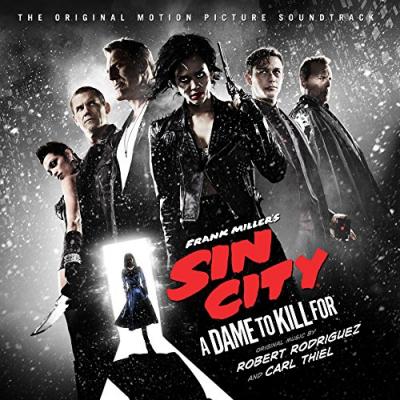
Sin City 2: A Dame to Kill For Album Cover

"Sin City 2: A Dame to Kill For" Soundtrack Lyrics

Movie • 2014

Track Listing


"Frank Miller’s Sin City: A Dame to Kill For (Original Motion Picture Soundtrack)" – Album Guide to Tracks and Key Scenes

Sin City: A Dame to Kill For trailer frame with rain-slick Basin City street and neon reflections
Sin City: A Dame to Kill For — new tales, familiar shadows, and a harder, sleeker score (2014)

Overview

When a city devours heroes and sinners alike, what does the music do — mourn, taunt, or march? A Dame to Kill For plays arrival → adaptation → rebellion → collapse with a colder pulse than the 2005 film: drum-tight noir cues, chrome-bright club sting, and a waltz that feels like bad fate in 3/4.

Composer–director Robert Rodriguez, now with Carl Thiel, streamlines Basin City’s sound into interlocking motifs: Johnny’s gambling nerve, Ava’s velvet trap, Nancy’s rope-burn grief. The score flips between brushed-steel jazz colors and prowling low-string ostinati; then the movie spikes the bloodstream with one headline needle drop — “Skin City,” fronted by Steven Tyler — for Kadie’s fiercest stage moment. According to the film’s listing and album documentation, the official release gathers 25 cuts that mirror the anthology’s arcs.

Genres & phases across the stories: noir brass and toms (stakeouts), chrome-twang guitar (Dwight’s caper beats), grim organ/bass ostinato (Roark power), and a single, swaggering rock-club hit when the house lights flare. Trailer cuts lean modern-industrial adrenaline to sell the sequel’s edge.

How It Was Made

Rodriguez and Frank Miller return to Basin City with two new threads (“The Long Bad Night,” “Nancy’s Last Dance”) folded around the title novella. The music department re-centers on Rodriguez and longtime collaborator Carl Thiel; special guests pop up on select cues (e.g., Steven Tyler’s vocal cameo). The soundtrack issued in 2014 (later on CD) with sequencing that traces Johnny’s poker feud, Ava’s seduction spiral, and Nancy’s revenge climb.

Structurally, this follow-up trades the first film’s three-composer split for one house palette: tighter thematic reprises, sharper percussion, and a neon-sleek club detour for Nancy’s performance number. As per the film credits and album notes, the cue titles match scene beats with unusual clarity — handy for re-mapping the movie by ear.

Trailer beat: poker-table close-up, rain on glass, and a silhouette under street lamps
How it was made — Rodriguez & Thiel’s unified palette, plus a high-profile club track for Kadie’s.

Tracks & Scenes

“Main Title” — Robert Rodriguez
Where it plays: Opening Basin City crawl; low brass and toms stride like boots on wet pavement.
Why it matters: Re-establishes the city’s “heartbeat” from bar one — grim, propulsive, unblinking.

“Johnny on the Spot” → “Johnny Enters Bar” — Robert Rodriguez
Where it plays: The card-sharp’s walk into Roark’s back-room table; camera glides, chips click, pulse narrows.
Why it matters: Introduces Johnny’s nerve motif — slick confidence over a slow fuse.

“Marv vs. Frat Boys” — Carl Thiel
Where it plays: “Just Another Saturday Night”: Marv’s blackout-riddled brawl and pursuit through The Projects.
Why it matters: Percussion equals impact; Thiel gives Marv’s brute justice a marching engine.

“Kadie’s” — Robert Rodriguez
Where it plays: Interior connective tissue at the club — crowd noise braided with dark, pulsing score.
Why it matters: A hinge cue: Kadie’s is where stories overhear each other.

“Skin City” — Robert Rodriguez feat. Steven Tyler
Where it plays: Nancy’s scorched-earth showcase at Kadie’s; spotlights lash the room as she dances for war.
Why it matters: The sequel’s signature needle drop — a glam snarl that turns grief into performance.

“Ava” → “Dwight Spies on Ava” → “Ava in Bed” — Robert Rodriguez
Where it plays: Silk-and-cigarette seduction, blinds slicing the light; Dwight’s POV wobbles between suspicion and surrender.
Why it matters: Velvet chords with knives inside — classic femme-fatale writing.

“Ava Seduces Mort” → “Mort’s Descent” — Rodriguez / Thiel
Where it plays: The cop’s slide from oath to obsession; strings tighten, bass drops, the room shrinks.
Why it matters: A moral collapse scored like slow strangulation.

“Sin City Waltz” — Robert Rodriguez
Where it plays: A dark three-step through Ava’s web; bodies move, doom keeps count.
Why it matters: Elegant, cruel — destiny in 3/4 time.

“The End of Ava” — Robert Rodriguez & Carl Thiel
Where it plays: Dwight’s reckoning; cold metal timbres and a final, ruthless cadence.
Why it matters: A blunt period on the film’s title story.

“I’m Lonely” — Rebecca Rodriguez
Where it plays: Johnny’s low ebb after crossing Roark; quiet voice against empty streets.
Why it matters: A rare lyrical breath — Basin City whispers.

“Nancy Visits Grave” — Robert Rodriguez
Where it plays: Conversation with a ghost; resolve hardens on the way to Roark.
Why it matters: The sequel’s aching center — devotion weaponized.

“Roark” → “End Titles” — Carl Thiel / Robert Rodriguez
Where it plays: Final compound assault and aftermath; motifs coil back into the city theme.
Why it matters: The anthology snaps shut — same streets, fresh blood.

Trailer songs: Campaign spots leaned on modern-industrial surge — notably The Glitch Mob’s “Can’t Kill Us” — to punch up the sequel’s menace.

Trailer collage: Kadie’s stage lights, Johnny’s poker table, Ava in venetian-blind light
Tracks & scenes — poker nerve, velvet traps, and a dance that becomes a threat.

Notes & Trivia

  • Composers: Robert Rodriguez and Carl Thiel; the album collects 25 cues aligned to the film’s chapter beats.
  • “Skin City” features Steven Tyler — a rare rock-vocal cameo inside this franchise’s mostly instrumental world.
  • Track titles are near one-to-one with on-screen beats (“Ava Seduces Mort,” “Nancy Visits Grave”).
  • The sequel centralizes a unified sound (vs. the 2005 film’s three-composer split).
  • Official physical release followed the August 2014 theatrical bow.

Music–Story Links

Johnny’s cues play like a gambler’s pulse — tight, clever, stalling for the perfect reveal. Ava’s palette seduces first, then curdles; when Mort tips, the harmony stops resolving. Nancy’s thread moves from elegy to fury: quiet graveside strings, then the whip-crack of “Skin City,” then a crossbow heartbeat in the compound raid. One city, different dooms; the motifs share a bloodstream.

Reception & Quotes

Critics split on the film but agreed the look and sound remained razor-precise. The album reads cleaner than the narrative: a terse, replayable noir suite with one flash of rock-club neon.

“Stylish violence intact, impact diminished.” — Variety, on the sequel’s reception
“Visually stunning, emotionally sparse — the score keeps it moving.” — The Hollywood Reporter, capsule view
Trailer beat: Nancy on Kadie’s stage, spotlight slicing smoke as the band hits
Reception — moody, muscular cues; one unforgettable stage number.

Interesting Facts

  • The club-floor cut “Skin City” appears on the official album; streaming listings credit Rodriguez and Steven Tyler.
  • Some cue authorship alternates between Rodriguez and Thiel to keep leitmotifs consistent across chapters.
  • The soundtrack sequencing lets you “watch” the anthology in your head — titles are effectively scene headers.
  • Trailer materials leaned on The Glitch Mob’s “Can’t Kill Us,” not included on the score album.
  • Compared to 2005’s score, this one dials back industrial elements in favor of tight noir orchestration.

Technical Info

  • Title: Frank Miller’s Sin City: A Dame to Kill For — Original Motion Picture Soundtrack
  • Year / Type: 2014 — Feature film; score album with select featured performances
  • Composers: Robert Rodriguez; Carl Thiel
  • Featured artist: Steven Tyler (“Skin City”)
  • Label / release: 2014 digital release; physical CD issued later in 2014
  • Selected placements (film): “Skin City” (Nancy’s Kadie’s showcase); “Marv vs. Frat Boys” (Projects beatdown); “Ava Seduces Mort” / “Mort’s Descent” (cop’s slide); “Nancy Visits Grave” (resolve set); “Roark” → “End Titles” (final assault & coda).
  • Trailer note: The Glitch Mob — “Can’t Kill Us” used in marketing.

Questions & Answers

Who composed the sequel’s score?
Robert Rodriguez and Carl Thiel.
What song scores Nancy’s big dance?
“Skin City,” with a featured vocal by Steven Tyler.
Is there an official soundtrack album?
Yes — a 25-track release that maps closely to the film’s chapter beats.
How is this different from the 2005 soundtrack?
The first film split stories among three composers; the sequel uses a unified Rodriguez/Thiel palette.
What’s the trailer banger everyone remembers?
The Glitch Mob’s “Can’t Kill Us” — used in promo spots, not on the score album.

Canonical Entities & Relations

SubjectVerbObject
Robert Rodriguezcomposedoriginal score cues for A Dame to Kill For
Carl Thielcomposedoriginal score cues for A Dame to Kill For
Steven Tylerperformedfeatured vocal on “Skin City”
The Glitch Mobperformed“Can’t Kill Us” (trailer use)
The Weinstein CompanydistributedSin City: A Dame to Kill For (2014)
Frank Millerco-directedthe film with Robert Rodriguez

Sources: Wikipedia (film overview & credits); Spotify & MusicBrainz (album details/track list); Discogs (physical release & label credits); Sin City fan wiki (cue names, trailer song callouts); IMDb Soundtracks (featured performers).

This film is worth seeing because of great quantity of famous people worked on its creation. Judge yourself. The director is Robert Rodriguez. Mickey Rourke, Jessica Alba, Joseph Gordon-Levitt, Bruce Willis, Eva Green, Ray Liotta, Christopher Lloyd, Lady Gaga and Robert Rodriguez are among the stars' cast! But on the other hand, it is probably that it is all worth proud of. Because the box office in the amount even less than USD 40 million compared to USD 65 million, spent on production. It allowed critics call it a complete failure after the first two days of enrolling of film. Well, maybe not complete, because 61% of the budget were returned. On the other hand, of course, an attempt to repeat the success of the first part failed (first, with a budget of 40, collected almost 159 million). Putting both films together, we get a total budget of 105 against the total box office of 199 million. So that's kind of a good thing. But there is only one problem – in the case of unsuccessful movies simply no one does such calculations. They only serve for complacency. In music, it is worth noting the presence of solely instrumental tracks (for example, Main Title). They are all gloomy and majestic (for example, Nancy's Kiss Of Death or Uh Huh), as well as this attempt of the film to look like black-and-white movies of old Hollywood. Only the film is made much crueler and weak in acting. There's unnatural magnifying as if we are in the theater, where gestures and facial expressions should be strengthened in order to bring meaning to the whole hall. Perhaps, if Robert Rodriguez would give Carl Thiel, the second composer, freedom in the creation of music and completely focused on directing the film, the result would be more dignified.

November, 27th 2025

'Sin City 2: A Dame to Kill For' - more info on IMDb, Wikipedia
A-Z Lyrics Universe

Lyrics / song texts are property and copyright of their owners and provided for educational purposes only.