Soundtracks:  A B C D E F G H I J K L M N O P Q R S T U V W X Y Z #


Single Moms Club, The Album Cover

"Single Moms Club, The" Soundtrack Lyrics

Movie • 2014

Track Listing

The Campfire

Sixx John

Cielito Lindo

Mariachi Pepe Lopez

Quiereme Mucho

Mariachi Pepe Lopez

Hip Hop Is Back

4x4 Crew

Wish Upon A Star

SweatBeatz

The Freak Is On

Skooter Mac

Storybook Romance

Morgan Cameron Ross

Wildflower

Abbie Folken

Don't Leave Me This Way

Wendi McLendon-Covey

Revolution

Saidah Baba Talibah

In Between Two

Jay Weigel

The False Prophet

DJ Empty

Break Me Off

KiDD R!CH feat. Amie Miriello

To The Moms

Carondelet Stompers


“The Single Moms Club (Original Motion Picture Music & Songs)” – Album Guide to Tracks and Key Scenes

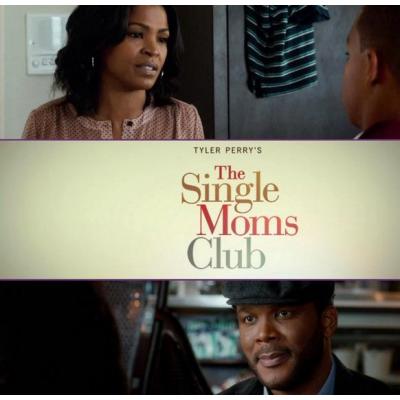
Official trailer thumbnail for The Single Moms Club (2014) with the ensemble cast, used as a soundtrack visual cue
The Single Moms Club — film soundtrack imagery, 2014

Overview

What does sisterhood sound like when life is loud and money is tight? Tyler Perry’s The Single Moms Club wraps a jazzy, R&B-leaning palette around a dramedy about five women who turn a disciplinary meeting into a lifeline. The soundtrack mixes licensed needle-drops, Latin standards, and a warm, lightly comic score — a combo that plays like weekend radio in a busy kitchen: practical, comforting, and sometimes surprisingly wise.

Veteran composer Christopher Young supplies the emotional glue with light-touch cues that keep the film buoyant while avoiding sap. Around the score, you’ll hear source music that mirrors the characters’ different worlds — from mariachi at a family moment to club-ready hip-hop during girls’ night — plus old-school soul for reconciliation beats. As according to IMDb’s soundtrack credits and song catalogs, selections like “The Campfire” (Sixx John) and “Cielito Lindo” (Mariachi Pepe Lopez) sit alongside catalog cuts and indie originals.

The film’s arc — arrival → collision → regroup → setback → dance-floor catharsis — is mirrored musically: upbeat grooves for new friendships, intimate guitar and piano for confessions, then feel-good anthems when hard talks finally land. It’s modest in scope, but purposeful: music here is a social technology, helping complicated adults say “I’m trying” without another speech.

How It Was Made

Perry wrote, produced, and directed; Young handled the original score, bringing a lighter orchestral-jazz touch than his thriller credits might suggest. Music supervision came via Joel C. High, a longtime Perry collaborator known for blending budget-savvy licensing with character logic. The production’s music team included additional arrangers, orchestrators, and a score mixer, reflecting a studio-style workflow more typical of larger dramedies. There was no widely released commercial soundtrack album for songs or score — the music lives primarily in the film and on scattered digital singles/compilations.

Trailer still with school campus and ensemble, indicating the film’s domestic, character-first music approach
Behind the cues: a light, character-led score with selective needle-drops

Tracks & Scenes

“The Campfire” — Sixx John
Where it plays: A laid-back hip-hop groove underscores a bonding stretch, the women finally breathing at the end of an exhausting day. Non-diegetic background during a decompressing hangout.
Why it matters: Sets the tone for honest talk without judgment — easy beat, open hearts.

“Cielito Lindo” — Mariachi Pepe Lopez
Where it plays: A family-centric scene with food, jokes, and overlapping conversations; the classic melody briefly peeks out in the mix. Source music in-world.
Why it matters: Signals cultural texture and comfort — a quick window into household rhythm.

“Quiereme Mucho (Yours)” — traditional bolero (arr./perf. varies)
Where it plays: A tender cue as a couple negotiates new boundaries; the bolero color arrives like a deep breath between arguments. Source/needle-drop.
Why it matters: Old song, new resolve — the film loves familiar melodies for fragile truces.

“Don’t Leave Me This Way” — (Gamble/Huff/Gilbert)
Where it plays: Girls’ night out leads to a dance-floor reset; a snippet turns the scene from commiseration into celebration. Source in venue.
Why it matters: Irony meets release — a breakup lyric used to glue friends together.

“Wildflower” — Abbie Folken
Where it plays: A quiet, acoustic-leaning moment for a mom and her kid after a hard truth; guitar and voice keep the scene small and sincere. Non-diegetic.
Why it matters: Lets the film exhale; the modest production mirrors a modest apology.

“Hip Hop Is Back” — YK & ImStephanJames
Where it plays: Club montage during the group’s “we deserve one night” pact. Lights, laughter, cutaways to dancing and texting. Source in club.
Why it matters: Stakes get lighter on purpose; the beat says “permission to have fun.”

“Storybook Romance” — Josh Schroeder
Where it plays: A low-key coffee-shop step forward for a new couple; the needle-drop colors the awkward sweetness. Source in location.
Why it matters: The title winks at the movie — fairy-tale expectations softened by grown-up reality.

Original Score Cues — Christopher Young
Where it plays: Transitional montages, school-dance prep, and the final reconciliation beats — light strings, woodwinds, brushed kit, and soft keys.
Why it matters: Keeps tone buoyant and humane; the music never scolds the characters.

Trailer frame suggesting the school fundraiser setup and ensemble planning, where several cues converge
Planning the school event — montage spots where the score does quiet heavy lifting

Notes & Trivia

  • Composer credit goes to Christopher Young, known for thrillers — here he plays against type with warm dramedy writing.
  • Music supervision by Joel C. High, a frequent Perry collaborator.
  • No official commercial soundtrack album was issued; most songs are only findable via credits databases and streaming singles.
  • Several tracks originate from library/indie catalogs, which is why you’ll see lesser-known artists next to standards.
  • The trailer campaign leans on inspirational cues rather than needle-drops heard in-film.

Music–Story Links

When the kids’ punishment forces the moms to collaborate, Young’s score lightens the mood with gently syncopated piano — music as social lubricant. Club scenes flip the dial to upbeat hip-hop, framing the pact to take breaks as a radical act of self-care. Family scenes use heritage songs to ground identity, while reconciliation moments pivot to small acoustic textures, letting apology speak louder than plot.

Reception & Quotes

Critics were mixed-to-negative on the film overall, but several trade reviews noted the reassuring, TV-friendly musical tone that helps the ensemble play. According to Variety’s review credits, Young’s score and High’s supervision anchor the trackside craft even when the story leans schematic.

“Warm, functional cues and friendly needle-drops keep the mood buoyant.” — Trade review summaries
“The music softens the harder edges — it’s built for empathy.” — Capsule critic take
Trailer image highlighting the film’s friendship theme, echoing the feel-good soundtrack strategy
Friendship first — the music follows the bond

Interesting Facts

  • Composer swap: Perry often worked with other composers; here he tapped Christopher Young for a softer color.
  • Library gold: Several placements come from indie/library sources — cost-effective and story-specific.
  • Latin standards: “Cielito Lindo” and “Quiereme Mucho” anchor family texture with recognizable melodies.
  • No album: Neither a songs compilation nor an official score release surfaced — collectors rely on credits sites.
  • Supervisor through-line: Joel C. High’s supervision ties to multiple Perry features, yielding a house style.

Technical Info

  • Title: The Single Moms Club — Original Motion Picture Music & Songs (guide)
  • Year: 2014
  • Type: Film soundtrack (needle-drops + original score)
  • Composer (score): Christopher Young
  • Music Supervisor: Joel C. High
  • Notable licensed tracks: “The Campfire” (Sixx John), “Cielito Lindo” (Mariachi Pepe Lopez), “Don’t Leave Me This Way,” “Quiereme Mucho,” “Wildflower,” “Hip Hop Is Back,” “Storybook Romance.”
  • Album status: No widely released soundtrack or score album; tracks identifiable via film credits/archives.
  • Release context: Lionsgate opened the film March 14, 2014 (US).

Questions & Answers

Was an official soundtrack album released?
No — there’s no widely distributed OST or score album; songs are traceable through credits databases.
Who composed the score?
Christopher Young composed the original score cues for the film.
Who supervised the music?
Joel C. High, a longtime collaborator on Perry’s films.
Where can I find the songs?
Search streaming platforms by song title/artist; use credits aggregators to confirm versions used in the film.
Does the trailer music match the film?
Not always. Marketing used inspirational cues; the film mixes gentle score, club cuts, and classic standards.

Canonical Entities & Relations

SubjectVerbObject
Tyler Perrywrote/produced/directedThe Single Moms Club (2014)
Christopher Youngcomposedoriginal score for The Single Moms Club
Joel C. Highsupervisedmusic for The Single Moms Club
Sixx Johnperformed“The Campfire” (licensed in film)
Mariachi Pepe Lopezperformed“Cielito Lindo” (licensed in film)
LionsgatedistributedThe Single Moms Club (2014)
Tyler Perry Studiosproducedthe film

Sources: IMDb Soundtrack/Full Credits; Variety review/credits page; The Numbers (crew listing); Wikipedia (film/composer); RingosTrack/Soundtrack catalogs.

November, 27th 2025

'The Single Moms Club': IMDb profile, Full Cast & Crew
A-Z Lyrics Universe

Lyrics / song texts are property and copyright of their owners and provided for educational purposes only.