Soundtracks:  A B C D E F G H I J K L M N O P Q R S T U V W X Y Z #


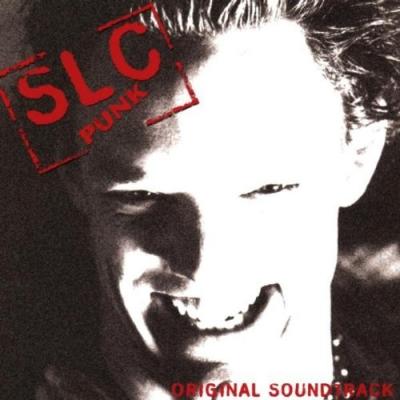
SLC Punk Album Cover

"SLC Punk" Soundtrack Lyrics

Movie • 1999

Track Listing


“SLC Punk! — Music From and Inspired by the Motion Picture” – Album Guide to Tracks and Key Scenes

SLC Punk! trailer frame — Stevo and Heroin Bob sprint through downtown Salt Lake City in punk regalia
Mid-’80s anarchy in the Land of Zion — pogo beats and bruised hearts (1999 soundtrack)

Overview

What if your rebellion came with a killer record collection — and a hangover called adulthood? SLC Punk! sets its coming-of-age in 1985 Salt Lake City, then lets the soundtrack do the preaching: classic UK/US punk, two-tone, proto-alt, and a couple of cheeky pop misses, all sequenced like a house show that got out of hand.

The commercial album (Hollywood Records, 1999) corrals era-defining cuts — Fear, Dead Kennedys, Ramones, The Stooges, The Exploited, Adolescents — plus left-turns (Blondie’s “Dreaming,” Generation X’s “Kiss Me Deadly”) and a then-new cover by The Suicide Machines. On screen, the film also threads needle-drops that aren’t on the CD (notably Spandau Ballet’s “She Loved Like Diamond”), underlining how a joke can turn into grief in one spin of the platter.

Arc in sound: arrival → posture → romance → fracture → eulogy. Genres map to meaning — UK punk (pose meets purpose), two-tone (outsider community), proto-punk (root impulse), glossy new wave (the poser mirror), and, finally, quiet. By the last reel, the playlist isn’t just taste; it’s a diary with blood on the corners.

How It Was Made

Writer-director James Merendino wanted the punk scene he lived to feel unforced. The music choices anchor mid-’80s subcultures (punks, mods, skins, rudies) with recognizable anthems. Hollywood Records handled the album side; the movie premiered at Sundance in January 1999 and opened stateside that April, while the soundtrack hit retail March 16, 1999.

The tracklist splits the difference between “canon” (Ramones, Stooges, Dead Kennedys) and local-scene texture (Moondogg), then slips in a modern contribution: The Suicide Machines’ “I Never Promised You a Rose Garden,” cut for the film and later repurposed on their 2000 album.

Trailer still: a wall of flyers and safety-pinned leather jackets as the soundtrack kicks in
Curated chaos — crate-dug essentials plus one fresh cut

Tracks & Scenes

“Sex and Violence” — The Exploited
Where it plays: Party and fight-night connective tissue; a pogo-pit needle-drop that frames Stevo and Bob’s posture scenes. Non-diegetic.
Why it matters: Smash-and-grab energy that defines the film’s early gait.

“Too Hot” — The Specials
Where it plays: Rudie color through shopfronts and bus rides; two-tone bounce between heavier moments. Non-diegetic.
Why it matters: Signals a scene ecosystem wider than the punks alone.

“1969” — The Stooges
Where it plays: Early in the film as Heroin Bob warns Stevo off acid — low, grimy churn over a don’t-do-it rant. Non-diegetic.
Why it matters: Proto-punk foreboding; the movie’s first “don’t touch the stove” cue.

“I Love Livin’ in the City” — Fear
Where it plays: Street-level montage — grit, sirens, and swagger. Non-diegetic.
Why it matters: The sneer the movie wears when it crosses Main Street.

“Cretin Hop” — Ramones
Where it plays: House-party sprints and drunken boasts; cutaways with elbows and beer foam. Non-diegetic.
Why it matters: The most reliable three-chord grin in the set.

“Dreaming” — Blondie
Where it plays: Romantic blur — Stevo’s attention wanders, then locks. Non-diegetic.
Why it matters: Pop shimmer that admits how much of punk is theater.

“Mirror in the Bathroom” — Fifi (English Beat cover)
Where it plays: Bob punches a mirror as Stevo narrates, “to look at him you’d think he was a madman.” Non-diegetic, used nearly on the lyric.
Why it matters: A two-tone classic reframed as gallows punchline; the movie’s best sync joke.

“Kiss Me Deadly” — Generation X
Where it plays: Dressing-room swagger and alley-mouth bravado. Non-diegetic.
Why it matters: Pre-Billy Idol sneer, weaponized as eyeliner.

“Amoeba” — Adolescents
Where it plays: Show-floor chaos; kids surfing elbows. Non-diegetic.
Why it matters: West-coast hardcore fizz to offset the UK lean.

“Kill the Poor” — Dead Kennedys
Where it plays: Satirical sting under a montage of Reagan-era hypocrisy. Non-diegetic.
Why it matters: The film’s politics, said out loud.

“She Loved Like Diamond” — Spandau Ballet (not on OST)
Where it plays: At the house party before Bob’s headache; sugary new-wave turns sinister as he’s handed “vitamins.” Non-diegetic/source-adjacent.
Why it matters: The most brutal irony in the movie — pop gloss cueing tragedy.

“I Never Promised You a Rose Garden” — The Suicide Machines
Where it plays: End-run energy near the film’s close and over credits; a modern (1999) roar in a period mixtape.
Why it matters: A fresh voice that rhymes with Stevo’s decision to move on.

Trailer frame: cramped house party, safety pins, and sweat — the moment before the night goes wrong
From pogo to panic — a playlist that knows exactly when to turn cruel

Notes & Trivia

  • The soundtrack CD shipped March 16, 1999 on Hollywood Records (UPC 72061621782; catalog HR-62178).
  • The film premiered at Sundance on January 22, 1999 and opened in the U.S. April 16, 1999.
  • Fifi’s “Mirror in the Bathroom” cover underscores Bob’s mirror-punch; the English Beat original isn’t used.
  • Spandau Ballet’s “She Loved Like Diamond” is a crucial in-film cue but does not appear on the album.
  • The Suicide Machines’ “Rose Garden” was cut for the movie and later appeared on their self-titled 2000 record.

Music–Story Links

Stevo’s politics sound like The Exploited until love shows up, which suddenly sounds like Blondie — telling on him. Bob’s posture cracks under a brittle pop song, not a punk anthem. And when adulthood walks in, the album stops quoting the past and lets a then-current band (The Suicide Machines) have the last word — a sly handoff from nostalgia to choice.

Reception & Quotes

The movie became a cult item; the album, a starter kit for kids who missed ’80s punk the first time. Critics and fans kept pointing out how the syncs carry character beats as much as jokes.

“A mixtape that doubles as a memoir — messy, funny, and mean.” — punk-film retrospective
“The songs don’t decorate scenes; they drive them.” — soundtrack capsule
Trailer moment: Stevo’s blue hair against the red Utah dirt — punk vs. place, on beat
Place vs. pose — and the music picks sides, scene by scene

Interesting Facts

  • Label snapshot: Hollywood Records issued the soundtrack during the late-’90s “alt boom.”
  • Two-tone twist: The OST uses Fifi’s cover of “Mirror in the Bathroom,” not The English Beat master.
  • Not on CD: “She Loved Like Diamond” (Spandau Ballet) is heard in the film but left off the album.
  • Modern ring-out: “Rose Garden” gave the period mix a 1999 roar and later migrated to The Suicide Machines’ 2000 LP.
  • House-show curation: UK and SoCal staples sit side by side — Exploited and Adolescents in one breath.

Technical Info

  • Title: SLC Punk! — Music From and Inspired by the Motion Picture
  • Year: 1999 (album)
  • Type: Film soundtrack (various artists; period selections + one new recording)
  • Label: Hollywood Records (CD; HR-62178; UPC 72061621782)
  • Selected placements highlighted: The Exploited — “Sex and Violence”; The Specials — “Too Hot”; The Stooges — “1969”; Fear — “I Love Livin’ in the City”; Ramones — “Cretin Hop”; Blondie — “Dreaming”; Fifi — “Mirror in the Bathroom”; Adolescents — “Amoeba”; Dead Kennedys — “Kill the Poor”; Spandau Ballet — “She Loved Like Diamond” (film only); The Suicide Machines — “I Never Promised You a Rose Garden.”
  • Release context: Premiered Sundance Jan 1999; U.S. theatrical April 1999; CD street date March 16, 1999.

Questions & Answers

Is the English Beat original used for “Mirror in the Bathroom”?
No — the film/album use a cover by Fifi, which plays over Bob’s mirror-punch scene.
Which in-film song is missing from the OST CD but pivotal to the plot?
Spandau Ballet’s “She Loved Like Diamond,” heard at the party before Bob’s fatal night.
Was any track recorded specifically for the movie?
Yes — The Suicide Machines cut “I Never Promised You a Rose Garden” for the film; they later included it on their 2000 album.
Who released the soundtrack and when?
Hollywood Records; March 16, 1999 (U.S.).
Does the album reflect multiple subcultures?
Absolutely — UK punk, SoCal hardcore, two-tone ska, and pop/new-wave all map to characters and scenes.

Canonical Entities & Relations

SubjectVerbObject
James Merendinowrote & directedSLC Punk! (1998; US release 1999)
Hollywood RecordsreleasedSLC Punk! soundtrack (1999, HR-62178)
The Suicide Machinesrecorded forfilm — “I Never Promised You a Rose Garden” (later on 2000 album)
Fificovered“Mirror in the Bathroom” (heard during Bob’s mirror scene)
Spandau Balletperformed“She Loved Like Diamond” (film cue; not on OST CD)
Sony Pictures Classicsdistributedtheatrically in the United States (1999)

Sources: Discogs (album release/credits), SoundtrackINFO (label/UPC/date; scene Q&A), Wikipedia (film & soundtrack overview; track examples; Spandau Ballet cue context), official trailer listings, artist/album pages (The Suicide Machines).

November, 27th 2025


A-Z Lyrics Universe

Lyrics / song texts are property and copyright of their owners and provided for educational purposes only.