Soundtracks:  A B C D E F G H I J K L M N O P Q R S T U V W X Y Z #


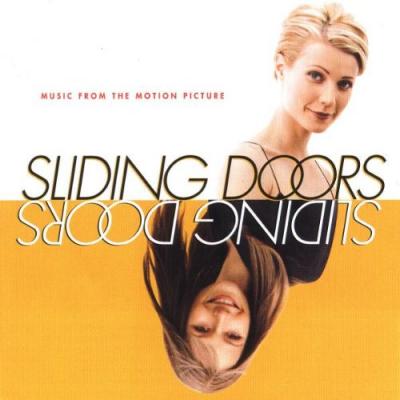
Sliding Doors Album Cover

"Sliding Doors" Soundtrack Lyrics

Movie • 1998

Track Listing


"Sliding Doors (Music from the Motion Picture)" – Album Guide to Tracks and Key Scenes

Sliding Doors (1998) official trailer still showing Gwyneth Paltrow on the London Underground as fate splits
Sliding Doors — theatrical trailer frame, 1998.

Overview

What if a love story hinges on a door that almost closes? Sliding Doors spins two lives from one near-miss and lets pop songs hold the thread between timelines. The soundtrack bottles late-’90s London—trip-hop haze, Brit-pop warmth, glossy Euro-pop—then punctuates it with Elton John deep-cuts for a cheeky, classic counterweight.

We watch Helen (Gwyneth Paltrow) live two versions of the same week: in one, she catches the train and catches her boyfriend cheating; in the other, she misses the train and misses that truth—for a while. Songs act like signals the characters can’t quite hear. Club beats sell confidence that isn’t earned yet; a wistful singer-songwriter track lingers when choices curdle; a gentle end-credits ballad promises that gratitude can follow grief.

The compilation’s distinct move is pairing scene-ready catalog (Aimee Mann, Jamiroquai, Olive) with two era-defining singles: Aqua’s down-tempo “Turn Back Time” and Dido’s “Thank You.” One became a UK No. 1 and the movie’s calling card; the other quietly rode the film to global ubiquity two years later. Genres arc with the plot: mid-tempo Brit-pop for resets, trip-hop/house for city motion, piano-folk for reckoning, and a soft-pop grace note over the credits.

How It Was Made

Composer David Hirschfelder provides the score cues, but the album is a various-artists compilation sequenced for narrative “lift.” The production pulls from UK/Euro charts of the moment—Olive, Jamiroquai, Peach Union—plus singer-songwriters (Aimee Mann, Abra Moore) and a sprinkle of Elton John for bite. According to AllMusic’s album record and library catalog notes, the official CD ran about 56 minutes and streeted in April 1998, with international editions handled by Universal/Jersey in certain territories.

Licensing stitched together scene energy (dance-floor pulses, bus-window ballads) while leaving a few in-film cuts off the retail disc—fairly common in the era. That’s why the film may feature Elton’s “Bennie and the Jets” or a Patty Larkin cover, while the CD leans on a tighter 13-track set built for home listening.

Trailer frame: split timelines intercut with London exteriors, setting up the soundtrack’s pop/trip-hop palette
How It Was Made: score by David Hirschfelder, curated songs up front.

Tracks & Scenes

“Thank You” — Dido
Where it plays: End credits. After the hospital-elevator meet-cute resets possibility, the credits roll under Dido’s soft, grateful hymn (non-diegetic).
Why it matters: The film made the song a sleeper; two years later it became a worldwide hit and the DNA of Eminem’s “Stan.”

“Turn Back Time” — Aqua
Where it plays: Featured on the film and album; widely associated with the movie’s theme in marketing and home-video era trailers. In-story, it underscores reflective, city-at-night beats between Helen’s diverging paths (non-diegetic montage feel).
Why it matters: A rare down-tempo turn from Aqua—fits the “what if” ache rather than the club’s sugar high.

“Amateur” — Aimee Mann
Where it plays: A quiet gut-check over moments when Helen stares down the emotional math—haircut, new flat, and the fragile bravado of starting again (non-diegetic, mid-film).
Why it matters: Mann’s plain-spoken mercy mirrors the film’s empathy for both timelines.

“Miracle” — Olive
Where it plays: London-in-motion montage—taxis, tubes, and chance collisions as the two versions of Helen crisscross the same city (non-diegetic).
Why it matters: Trip-hop shimmer for a story about parallel luck.

“Use the Force” — Jamiroquai
Where it plays: Bar/club stretch as confidence spikes—friends banter, plans hard-cut, and a DJ keeps the floor moving (non-diegetic).
Why it matters: Funk-acid propulsion that sells momentum in both timelines.

“Honky Cat” — Elton John
Where it plays: A cheeky needle-drop around a domestic scene that undercuts Gerry’s pose—morning swagger, shower steam, and a lie warming up (source/near-source in flat).
Why it matters: Irony with brass; the song’s grin punctures the boyfriend’s act.

“Good Enough” — Dodgy
Where it plays: Light-on-its-feet montage as “moving on” briefly feels easy—boxes, buses, and a new plan (non-diegetic).
Why it matters: Brit-pop balm; optimism you can hum.

“On My Own” — Peach Union
Where it plays: Phone calls that don’t land, a walk home that takes the long way—Helen tries out independence and finds the edges (non-diegetic).
Why it matters: Euro-pop melancholy, neat fit for the film’s lonely-crowded mood.

“Have Fun, Go Mad” — Blair
Where it plays: A celebratory stretch with friends—late-night street strut after a small win, the world briefly opening (non-diegetic).
Why it matters: The compilation’s burst of sugar; a palate-cleanser between heavier choices.

“More Love” — The Brand New Heavies
Where it plays: Restaurant/party ambience where flirtation is possible but unresolved; background groove with a hopeful tilt (source-adjacent).
Why it matters: Acid-jazz warmth that keeps the film from turning cold.

Also heard (not on every album edition): Elton John’s “Bennie and the Jets,” Those Magnificent Men’s “Got a Thing About You,” and Patty Larkin cues; these appear in-film but are absent from the core retail CD.

Parallel cuts from the trailer—streets, bars, and buses—matching the album’s club-to-folk flow
Tracks & Scenes: club pulses, bus-window ballads, and one great end-credits sigh.

Notes & Trivia

  • Aqua’s “Turn Back Time” topped the UK chart and its video mirrored the film’s dual-path conceit.
  • Dido’s “Thank You” first lived here; the film’s placement helped it bloom into a global hit years later.
  • Several in-film songs never made the retail disc—common for ’90s soundtrack rights packages.
  • The score is by David Hirschfelder, whose cues thread between dance, pop, and folk textures.
  • The soundtrack album clocks ~55:50 and shipped with different label imprints by region.

Music–Story Links

When Helen catches the train, sleek club and trip-hop cuts sell forward motion—she is literally moving. When she misses it, guitar-and-piano textures take over, honest and exposed. Jamiroquai primes a risk; Aimee Mann narrates the comedown. By the end, “Thank You” reframes both timelines as lessons—you can lose a life and still find gratitude in the next one.

Reception & Quotes

Reviews during the 1998 run often singled out the needle-drops as smart mood-setters, with Aimee Mann’s “Amateur” noted as a highlight. The album itself became a cozy late-’90s time capsule—Brit-pop optimism, trip-hop gloss, and one era-defining end-credits cut.

“Engaging soundtrack… tunes perfectly placed throughout the film.” home-video review summary
“Aimee Mann’s ‘Amateur’ is gorgeous and pinpointed.” critic capsule
Trailer end card; the credits glide over London as the music softens
Reception & legacy: an OST that outlived its moment.

Interesting Facts

  • Dido’s “Thank You” plays over the credits; later it powered Eminem’s “Stan,” sending the original song up global charts.
  • Aqua’s music video for “Turn Back Time” uses film imagery, effectively doubling as movie marketing.
  • Some prints/screenings reference Patty Larkin’s “Tenderness on the Block” in the final scene—never commercially issued in that form.
  • Different territories list Universal/Jersey or related imprints on the disc packaging; running order remains consistent at 13 tracks.
  • Elton John’s “Honky Cat” appears in-film; “Bennie and the Jets” is cited as present but not on the album.

Technical Info

  • Title: Sliding Doors — Music from the Motion Picture
  • Year: 1998
  • Type: Various-artists compilation with original score by David Hirschfelder
  • Key recordings (selection): Dido — “Thank You”; Aqua — “Turn Back Time”; Aimee Mann — “Amateur”; Jamiroquai — “Use the Force”; Olive — “Miracle”; Dodgy — “Good Enough”; Peach Union — “On My Own”; Elton John — “Honky Cat”
  • Label / editions: US release spring 1998; international library listings show Universal/Jersey catalog MCD 11715 among EU pressings
  • Runtime: ~55:50 (album)
  • Availability: Widely streamable; CD editions circulate on catalog/second-hand markets
  • Notable omissions (film-only): Elton John — “Bennie and the Jets”; Those Magnificent Men — “Got a Thing About You”; select Patty Larkin cues

Questions & Answers

Which song plays over the end credits?
Dido’s “Thank You.” It became a hit years later and was famously sampled for Eminem’s “Stan.”
Is Aqua’s “Turn Back Time” actually in the movie or just on the album?
It’s on the album and tied closely to the film’s campaign; it underscores reflective, late-night moments in the cut.
Why do some songs in the movie not appear on the CD?
’90s rights packages often split film and album clearances, so a few in-film cues (e.g., “Bennie and the Jets”) are absent from retail editions.
Who composed the original score cues?
David Hirschfelder. His cues sit between the pop placements, keeping both timelines emotionally legible.
What labels released the album?
US copies streeted in spring 1998; EU library listings show Universal/Jersey (MCD 11715) among international pressings.

Canonical Entities & Relations

SubjectVerbObject
Peter Howittwrote & directedSliding Doors (1998)
David HirschfeldercomposedOriginal score for Sliding Doors
Various ArtistsperformedTracks on Sliding Doors: Music from the Motion Picture
Didoperformed“Thank You” (end credits)
Aquaperformed“Turn Back Time” (OST single)
Jamiroquaiperformed“Use the Force”
Oliveperformed“Miracle”
Miramax FilmsdistributedSliding Doors (US)

Sources: Wikipedia (film & soundtrack section); IMDb Soundtracks; AllMusic album page; Muziekweb catalog entry; Spotify album listing; contemporary reviews noting song highlights.

Note: Scene descriptions emphasize narrative context when on-screen timestamps vary by cut and edition. Where a cue’s exact minute:second is not standardized across releases, placement is described by story beat.

November, 27th 2025


A-Z Lyrics Universe

Lyrics / song texts are property and copyright of their owners and provided for educational purposes only.