Soundtracks:  A B C D E F G H I J K L M N O P Q R S T U V W X Y Z #

List of artists: A B C D E F G H I J K L M N O P Q R S T U V W X Y Z #


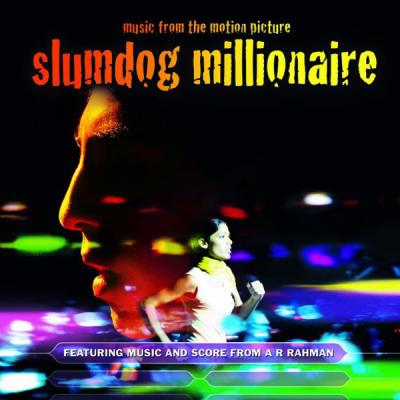
Slumdog Millionaire Album Cover

"Slumdog Millionaire" Soundtrack Lyrics

Movie • 2008

Track Listing


"Slumdog Millionaire (Music from the Motion Picture)" – Album Guide to Tracks and Key Scenes

Slumdog Millionaire official Searchlight trailer still: Jamal running through Mumbai alleys as the music surges
Slumdog Millionaire — official trailer, 2008.

Overview

What if a whole life plays back as a mixtape of luck, fear, and grace? Slumdog Millionaire answers with A. R. Rahman’s percussive pulse plus razor-smart needle-drops that sprint, sway, and finally dance the story home. It’s a rare soundtrack that feels like destiny—because the film is literally about it.

Rahman builds a kinetic engine—taiko-like drums, handclaps, sitar sparks, synth bass—then braids in Mumbai street noise and choir sighs. M.I.A.’s presence is crucial: the propulsive “O… Saya” and the world-conquering shadow of “Paper Planes” stitch global pop to local stakes. By the time “Jai Ho” erupts over the end-credits dance, the music has argued for joy as a political act.

Distinctive move? The album toggles between original score cues and era-agnostic pop with confidence. A vintage-styled Bollywood banger (“Aaj Ki Raat”) can share space with post-rock-adjacent chase writing (“Mausam & Escape”) without whiplash. The result is a city-sized heartbeat.

Genres & themes by phase: Urban percussion/hip-hop-electronica for flight and fight (opening), Bollywood retro-disco for spectacle and threat (mid-film), lyric theme for memory (Latika), then anthemic pop-classical fusion for release (finale).

How It Was Made

Composer: A. R. Rahman. He planned the score in roughly two months and completed it in about 20 days—unusually fast for a major film. Director Danny Boyle asked for “edgy, upfront” music and famously said “never put a cello in my film”; Rahman delivered a pulsing, percussive design with fewer cues than a typical studio movie. (As reported in contemporary interviews and album notes.)

Collaboration with M.I.A.: From early in production Boyle wanted M.I.A.’s “Paper Planes” in the film; Rahman and M.I.A. then built a new opener, “O… Saya,” via transcontinental file-swaps before recording at Rahman’s Chennai studios. According to Pitchfork’s release coverage, M.I.A.’s N.E.E.T./Interscope handled the U.S. release window. The official album arrived 25 Nov 2008 (digital), with physical editions following in December.

Album frame: The commercial release sequences score and songs for narrative lift (“O… Saya” to “Jai Ho”), while the film also uses other pieces (game-show theme by Keith & Matthew Strachan; Gluck at the Taj; The Ting Tings’ “Great DJ” in trailers).

Trailer frame: Mumbai trains and market streets, matching the soundtrack’s high-tempo percussion and synths
How it was made: Rahman’s percussion-forward score, with M.I.A. as a catalytic collaborator.

Tracks & Scenes

“O… Saya” — A. R. Rahman & M.I.A.
Where it plays: The film’s opening chase across slum alleys and rail yards. Kids vault fences; whistles and handclaps lock to footfalls. Titles crash in as the beat keeps running (start of film, non-diegetic swagger bleeding into street sound).
Why it matters: Declares the movie’s grammar: rhythm first, exposition later.

“Paper Planes” — M.I.A. (original) / “Paper Planes (DFA Remix)” — M.I.A.
Where it plays: A mid-film hustle montage: train tops, tourist cons, passport scams—Jamal and Salim survive by wit and nerve. Gun-clicks become percussion as the chorus turns the world into beat (non-diegetic; remix surfaces on the album).
Why it matters: Global pop folds perfectly into Mumbai street economy; the needle-drop became a calling card for the movie.

“Mausam & Escape” — A. R. Rahman (feat. Asad Khan, sitar)
Where it plays: A white-knuckle pursuit as Jamal moves through crowds and corridors—sitar arpeggios slicing through relentless drums (non-diegetic action cue).
Why it matters: One of Rahman’s signature adrenaline pieces; fuses classical timbre to thriller mechanics.

“Latika’s Theme” — A. R. Rahman (vocal: Suzanne D’Mello)
Where it plays: Visuals of Latika at windows, doorways, trains—always seen, rarely reached. The theme is simple, almost a lullaby, returning any time Jamal’s memory of her takes over (recurring, non-diegetic).
Why it matters: Gives the film its soul; two bars and you’re back on that platform.

“Aaj Ki Raat” — Sonu Nigam, Mahalaxmi Iyer & Alisha Chinai (from Don, 2006)
Where it plays: At Javed’s party on TV as Latika watches—glamour in the room, danger in the corners; the song’s neon disco sheen contrasts with her quiet plan to slip away (source, late second act).
Why it matters: A retro-disco wink that doubles as commentary: spectacle masking captivity.

“Ringa Ringa” — Alka Yagnik & Ila Arun
Where it plays: A bawdy, old-school Bollywood-style number that surfaces around a grooming/entertainment setting; the film uses it as a stylized, uneasy celebration (source-adjacent).
Why it matters: Rahman’s tribute to “Choli Ke Peeche”—nostalgia edged with menace.

“Liquid Dance” — Palakkad Sreeram & Srimathumitha
Where it plays: Brief, stylized interludes—rhythmic footwork of the city cut to a serpentine vocal and thumping backline (non-diegetic transition cue).
Why it matters: The album’s most hybrid cut: classical melisma on club-tempo chassis.

“Dreams on Fire” — Suzanne D’Mello
Where it plays: A breath after violence—Jamal’s longing surfaces as city lights blur into hope (non-diegetic; late mid-film).
Why it matters: Soft focus without sentimentality; it’s the story’s hand-on-heart moment.

“Jai Ho” — Sukhwinder Singh, Tanvi Shah, Mahalaxmi Iyer & Vijay Prakash
Where it plays: The end-credits dance staged at the grand station. After the narrative resolves, the crowd parts; a joyous, precise routine unfurls on the platform—pure release (end credits; choreographed finale).
Why it matters: Oscar-winning exhale; the movie’s promise kept.

Trailer notes: Campaign spots leaned on “Paper Planes” and on percussive score pulses; another promo needle-drop was The Ting Tings’ “Great DJ.”

Trailer montage: trains, markets, and game-show lights; the album mirrors this city-to-studio blend
Tracks & Scenes: chases, hustles, and one delirious curtain call.

Notes & Trivia

  • The soundtrack won two Oscars (Score; Song for “Jai Ho”), plus Golden Globe (Score) and BAFTA (Film Music).
  • “Aaj Ki Raat” comes from Don: The Chase Begins Again (2006) and is needle-dropped diegetically in the film.
  • Album labels include N.E.E.T./Interscope (US) alongside Celador and T-Series on various editions.
  • “Ringa Ringa” tips its hat to Laxmikant–Pyarelal’s “Choli Ke Peeche.”
  • The album peaked at #1 on U.S. Soundtrack & Dance charts and hit #4 on the Billboard 200 during awards season momentum.

Music–Story Links

Opening sprint? “O… Saya” makes fear sound fearless. Hustle montage? “Paper Planes” turns survival tactics into rhythm—gun-clicks as beat, irony as armor. When the plot narrows to Jamal and Latika, “Latika’s Theme” threads memory back through different ages. The party-scene spectacle of “Aaj Ki Raat” throws glitter over a cage. And the credits’ “Jai Ho” doesn’t tidy trauma so much as insist on joy anyway.

Reception & Quotes

The album crossed over from cinephile object to pop event—charting high in multiple territories, then selling in the millions worldwide. Critics praised the kinetic score and the cunning of the needle-drops; audiences left the theater humming the credits.

“Rahman’s percussion engine and ‘Jai Ho’ finale turn Boyle’s fairy tale into a dance.” contemporary album review
“A soundtrack that runs on rhythm and nerve.” critic capsule

Availability: Widely streamable; multiple CD pressings exist (U.S./international). “Paper Planes (DFA Remix)” appears on the album even when the film often foregrounds the original cut.

Trailer end card with game-show lights; the credits echo with Jai Ho’s dance
Reception & legacy: awards sweep, chart run, and a station-platform classic.

Interesting Facts

  • Digital street date: 25 Nov 2008 (physical copies followed in December, U.S.).
  • “O… Saya” was Oscar-nominated; “Jai Ho” won—both the score and the song took home Academy Awards the same night.
  • End-credits dance was choreographed at Mumbai’s Chhatrapati Shivaji Terminus.
  • The trailer cycle notably used The Ting Tings’ “Great DJ,” absent from the retail album.
  • “Mausam & Escape” became a fan-favorite cue for study/work playlists—propulsive, wordless focus.

Technical Info

  • Title: Slumdog Millionaire — Music from the Motion Picture
  • Year: 2008 (U.S. digital: Nov 25; physical: Dec)
  • Type: Original score & songs
  • Composer/Producer: A. R. Rahman
  • Featured artists (selection): M.I.A.; Sukhwinder Singh; Tanvi Shah; Mahalaxmi Iyer; Vijay Prakash; Alka Yagnik; Ila Arun; Sonu Nigam; Suzanne D’Mello; Palakkad Sreeram
  • Labels: N.E.E.T./Interscope (U.S.); Celador; T-Series (territorial editions)
  • Notable placements (film): “O… Saya” (opening chase); “Paper Planes” (hustle montage); “Aaj Ki Raat” (Javed’s party, TV/source); “Latika’s Theme” (recurring); “Jai Ho” (end-credits dance)
  • Awards: Oscars (Score; Song), Golden Globe (Score), BAFTA (Film Music)

Questions & Answers

Which song plays over the end-credits dance?
“Jai Ho,” performed by Sukhwinder Singh with Tanvi Shah, Mahalaxmi Iyer, and Vijay Prakash; composed by A. R. Rahman with lyrics by Gulzar.
Is the “Paper Planes” on the album the same version used in the film?
The movie features the original; the album also includes the DFA Remix alongside it.
Where does “Aaj Ki Raat” appear?
As source music during a lavish party at the gangster Javed’s place—playing on TV while Latika weighs escape.
Who released the soundtrack in the U.S.?
M.I.A.’s N.E.E.T. imprint under Interscope handled the U.S. release window; other territories list Celador/T-Series on packaging.
How fast did Rahman write the score?
He planned it in about two months and recorded the bulk in roughly 20 days—lean, per director Danny Boyle’s “keep it pulsing” brief.

Canonical Entities & Relations

SubjectVerbObject
Danny BoyledirectedSlumdog Millionaire (2008)
A. R. Rahmancomposed & producedSlumdog Millionaire (Music from the Motion Picture)
M.I.A.co-created & performed“O… Saya”; contributed “Paper Planes”
Gulzarwrote lyrics for“Jai Ho”
Sukhwinder Singh; Tanvi Shah; Mahalaxmi Iyer; Vijay Prakashperformed“Jai Ho” (end credits)
Alka Yagnik; Ila Arunperformed“Ringa Ringa”
Sonu Nigam; Mahalaxmi Iyer; Alisha Chinaiperformed“Aaj Ki Raat” (used in film)
N.E.E.T. / InterscopereleasedU.S. editions of the soundtrack

Sources: Wikipedia (soundtrack & film pages); Pitchfork (release coverage & review); Discogs (album credits); IMDb Soundtracks; SoundtrackINFO (scene Q&A for “Aaj Ki Raat”).

This film of 2008 has included several Indian stars in the cast, like Irrfan Khan & Anil Kapoor. Along with them, it gave fame to two previously unknown people: Dev Patel and Freida Pinto (she also co-starred in the major role in Rise Of The Planet Of The Apes & in the upcoming in 2018 Jungle Book, another re-make of Rudyard Kipling’s writing). A life thriller is associated with Freida Pinto, when her father was going to sell her for large amount of dollars to local Indian rich fellow, motivating it as she had become a star, so she must have been worthy of something. This film was one of those, which cause your blood to cease flowing in veins & you only hatefully or sympathetically watch after heroes’ lives & those misfortunes or adventures that cause their growing up. Someone is trapped in bad people’s hands & is deprived of vision in frightening circumstances, like Paper Planes delivers to the mind. Others steal the tourists’ shoes to sell them on the streets immediately to gain a few coins for living. Yet other kids are beaten almost to the death, when they are caught in stealing from rich people’s food table, desiring to eat not to starve to death. Therefore, this movie reflects the screaming inequity of the different social strata in the Indian society. Danny Boyle has perfectly chosen the filming background – India is the capital of contrasts, where Taj Mahal is contrasted to incredibly dirty wastewaters just right after the corner. No wonder this contrast even more shaded with locally made songs. Aaj Ki Raat & Jai Ho not only say of local themes in sound & lyrics, but have become hallmarks of this motion picture. Several instrumental songs with have here lyrics, specifically emphasizing the greatness of the moment. Here you find no great names, only locals – M.I.A. or Rahman.

November, 27th 2025


A-Z Lyrics Universe

Lyrics / song texts are property and copyright of their owners and provided for educational purposes only.