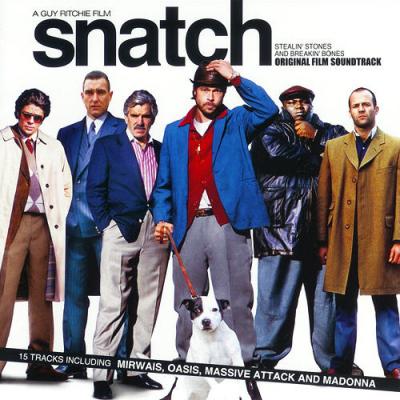
"Snatch" Soundtrack Lyrics
Movie • 2001
Track Listing
Klint
Overseer
The Johnston Brothers
Jason Statham
The Stranglers
10cc
John Murphy and Daniel L Griffiths
Dennis Farina
Maceo & the Macks
Mirwais
Alan Ford
Bobby Byrd
Madonna
The Specials
Vinnie Jones
The Herbaliser
Massive Attack
Huey Piano Smith
Dennis Farina
"Snatch — Original Film Soundtrack (2000/2001)" – Album Guide to Tracks and Key Scenes
Overview
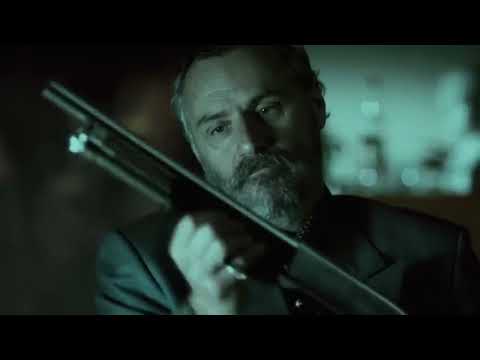
What does a turbocharged caper sound like when every character enters with a punchline and a weapon? Snatch answers with a crate-digger’s dream: funk and soul deep-cuts, punk swagger, trip-hop menace, klezmer stabs, and Brit-rock bravado stitched together by John Murphy’s percussive score. Arrival → adaptation → rebellion → collapse: the mix races from the opening diamond job to bare-knuckle chaos and the “one last twist” grin.
It’s not just needle-drops; it’s character shorthand. A few bars of Maceo & the Macks can sell an entire robbery; a Mirwais breakbeat can make a dog chase feel like runway choreography; a single Oasis instrumental can turn a boxing ring into a legend machine. As according to widely cited soundtrack rundowns, the official album collects dialogue snippets with songs, while the film itself deploys cues like a card sharp — just enough, then onto the next trick.
Genres & themes by phase: Heist propulsion (big-beat/breaks) → menace & mockery (funk, oldies, klezmer) → meltdown (electro/rock surges) → afterglow (New Orleans R&B end-credits wink).
How It Was Made
Composer & design: John Murphy supplies the score spine — terse motifs, drum-led patterns, comic stings — while the compilation leans hard on licensed sides that Guy Ritchie cuts like weapons. The album presentation folds in memorable lines (Brick Top, Avi, Bullet-Tooth Tony) as connective tissue between tracks.
Release: The primary commercial soundtrack issued internationally in late 2000 (Universal International), with U.S. audiences encountering the music alongside the 2001 rollout. A second variant collects near-identical material with minor ordering changes. The film’s most famous use-cases — “Angel,” “Golden Brown,” “Fuckin’ in the Bushes,” “Disco Science” — became shorthand for their scenes.
Tracks & Scenes
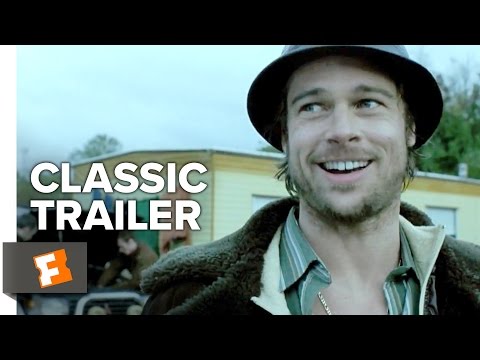
Key drops and how they play (scene-focused; not a full album tracklist). Time marks vary by cut; notes flag diegetic use when it’s in-world.
“Supermoves” — Overseer
Where it plays: Cold-open diamond heist with rabbi disguises; snap-zooms, security monitors, swagger editing. Non-diegetic.
Why it matters: Announces the film’s pace — big-beat inertia meets smash-and-grab confidence.
“Diamond” — Klint
Where it plays: Title/character cards and DVD menu vibe; interstitials between early plotlines. Non-diegetic.
Why it matters: The soundtrack’s calling card — a slick, looping pulse that glues the ensemble together.
“Hernando’s Hideaway” — The Johnston Brothers
Where it plays: Brick Top’s pig-lecture intimidation and plastic-bag demonstration. Non-diegetic (tango meets threat).
Why it matters: The straightest joke in the movie: ballroom menace for a butcher’s morality tale.
“Golden Brown” — The Stranglers
Where it plays: After Mickey one-punch KOs Gorgeous George; everyone stares like time froze.
Why it matters: Languid harpsichord as punchline — elegance landing right after chaos.
“Angel” — Massive Attack
Where it plays: Gypsy camp blaze — Mickey watches his mum’s caravan burn.
Why it matters: The film’s darkest hour; bassline as grief.
“Cross the Track (We Better Go Back)” — Maceo & the Macks
Where it plays: Sol & Vinny’s bookies caper — doors, duct tape, humiliation.
Why it matters: Funk strut for spectacular incompetence.
“Disco Science” — Mirwais
Where it plays: Dog/rabbit chase cross-cut; the edit rides the filter sweeps.
Why it matters: French electro as farce fuel — immaculate comic timing.
“Hot Pants (I’m Coming, Coming, I’m Coming)” — Bobby Byrd
Where it plays: Bullet-Tooth Tony’s ruthless “hello” — head, meet car door.
Why it matters: James Brown universe funk used like a knuckle sandwich.
“Lucky Star” — Madonna
Where it plays: Tony cruises post-beating, a head literally stuck in the window — mordant pop irony.
Why it matters: Sweetness, sour context — Ritchie’s favorite flavor.
“Ghost Town” — The Specials
Where it plays: Deadpan street drift; the film catches its breath under a haunted skank.
Why it matters: Urban melancholy under the jokes.
“Don’t You Just Know It” — Huey “Piano” Smith & the Clowns
Where it plays: Kicks off end credits.
Why it matters: A cheeky New Orleans send-off after all that blood and banter.
“Fuckin’ in the Bushes” — Oasis
Where it plays: Climactic ring match — the rope-a-dope plan, the reversal, the roar.
Why it matters: Pure ignition; crowd noise and drum loop lock like brass knuckles.
“Are You There?” — Klint
Where it plays: Mickey’s pre-fight bender — singing, swaying, bad idea of a plan.
Why it matters: Party glow as misdirection.
Notes & Trivia
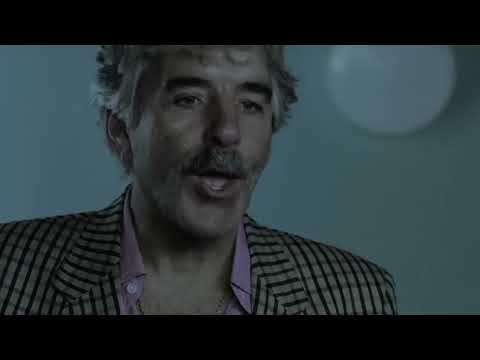
- The commercial soundtrack interleaves dialogue bites (Brick Top, Avi, Tony) with songs — a mixtape in character voices.
- “Angel” underscores the caravan fire; “Golden Brown” scores Mickey’s infamous one-punch aftermath; “Fuckin’ in the Bushes” powers the final fight.
- “Disco Science” became a trailer/TV-spot favorite beyond its on-screen chase usage.
- John Murphy’s cues add klezmer bursts (“Hava Nagila”) and crime-jazz sneers between needle-drops.
- Two near-identical soundtrack editions circulated globally around the film’s 2000–2001 release window.
Music–Story Links
When Brick Top lectures about pigs, a prim tango turns cruelty into etiquette. When Mickey’s world collapses, trip-hop turns grief into gravity. When the plan needs a myth, Oasis brings one. And when Sol & Vinny pretend to be pros, Maceo’s funk lets us enjoy the delusion before the punchline arrives. The cuts don’t just decorate; they define tone shifts — joke → threat → legend — in seconds.
Reception & Quotes
Critics split on whether style outruns substance; few denied the soundtrack’s snap. The album remains a fan gateway to everything from 10cc and The Specials to Mirwais and Overseer.
“A killer record collection attached to a caper that never sits still.” — soundtrack round-ups
“Ritchie times drops like punchlines — the music does half the character work.” — critic capsules
Interesting Facts
- The soundtrack folds in character quotes as mini-skits — uncommon, but perfect for this film’s cadence.
- Mirwais’s “Disco Science” prefigured a 2000s wave of electro in trailers and TV spots.
- “Hernando’s Hideaway” became the definitive Brick Top cue — etiquette weaponized.
- Some streaming “complete” playlists swap in soundalike recordings; stick to artist originals for the real texture.
- Different regions list small ordering tweaks; the core set of signature cues stays constant.
Technical Info
- Title: Snatch — Original Film Soundtrack
- Year: 2000 (UK film release; U.S. release 2001)
- Type: Songs compilation + original score cues
- Composer (score): John Murphy
- Key featured artists: Oasis; Massive Attack; The Stranglers; Mirwais; Maceo & the Macks; 10cc; The Specials; Bobby Byrd; Madonna; The Johnston Brothers; Klint; Overseer
- Label (OST): Universal International (primary 2000 issue)
- Signature placements: “Supermoves” (opening heist); “Diamond” (titles); “Hernando’s Hideaway” (Brick Top intimidation); “Golden Brown” (post-KO tableau); “Angel” (caravan fire); “Disco Science” (dog/rabbit chase); “Fuckin’ in the Bushes” (final fight); “Don’t You Just Know It” (credits)
- Availability: OST streaming widely; multiple “complete” fan playlists exist alongside official album.
Questions & Answers
- What song powers the last boxing match?
- Oasis’ instrumental “Fuckin’ in the Bushes,” which turns the bout into a mythic beatdown.
- Which track plays as Mickey watches the caravan burn?
- “Angel” by Massive Attack — a slow, crushing bassline for the film’s heaviest scene.
- What’s that elegant tune right after Mickey drops Gorgeous George?
- “Golden Brown” by The Stranglers — the ironic harpsichord calm after the storm.
- What’s the electro track during the dog/rabbit chase?
- “Disco Science” by Mirwais, whose filter sweeps match the quick-cut pursuit.
- Does the official album include dialogue?
- Yes — it sprinkles character quotes between songs, matching the film’s comic rhythm.
Canonical Entities & Relations
| Subject | Relation | Object |
|---|---|---|
| Guy Ritchie | wrote & directed | Snatch (2000) |
| John Murphy | composed | original score cues for Snatch |
| Universal International | released | primary 2000 soundtrack album |
| Oasis | performed | “Fuckin’ in the Bushes” (final fight) |
| Massive Attack | performed | “Angel” (caravan fire) |
| The Stranglers | performed | “Golden Brown” (post-KO tableau) |
| Mirwais | performed | “Disco Science” (dog/rabbit chase) |
| Maceo & the Macks | performed | “Cross the Track (We Better Go Back)” (bookies robbery) |
| Huey “Piano” Smith & the Clowns | performed | “Don’t You Just Know It” (end credits) |
| SKA Films / Sony Pictures | produced / distributed | Snatch (film) |
Sources: primary soundtrack listings and scene-by-scene placement guides; official film/album pages; industry databases for label/date information.
November, 27th 2025
A-Z Lyrics Universe
Cynthia Erivo Popular
Ariana Grande Horsepower
Post Malone Ain't No Love in Oklahoma
Luke Combs Good Riddance (Time of Your Life)
Green Day Bye Bye Bye
*NSYNC You're the One That I Wan
John Travolta & Olivia Newton-John I Always Wanted a Brother
Braelyn Rankins, Theo Somolu, Kelvin Harrison Jr. and Aaron Pierre The Power of Love
Frankie Goes to Hollywood Beyond
Auli’i Cravalho feat. Rachel House MORE ›