Soundtracks:  A B C D E F G H I J K L M N O P Q R S T U V W X Y Z #


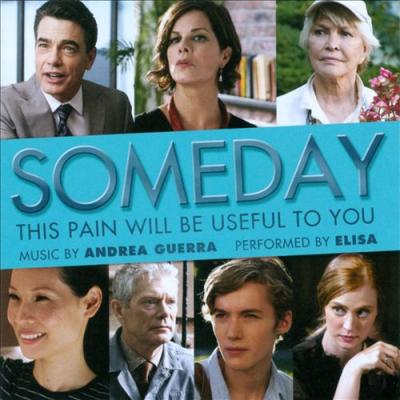
Someday This Pain Will Be Useful to You Album Cover

"Someday This Pain Will Be Useful to You" Soundtrack Lyrics

Movie • 2012

Track Listing

Apologize

Elisa

Someday

Elisa

Love Is Requited

Elisa

Nanette

Andrea Guerra

Endless Night

Elisa

Rhythm For James (Instrumental)

Andrea Guerra

Drifting

Elisa

Night Museum

Andrea Guerra

Think You're Free

Elisa

Nothing Ever None

Kathryn Gallagher

Apologize (Instrumental) (Instrumental)

Andrea Guerra

Adagio For The Past (Instrumental)

Andrea Guerra

Just As One

Elisa


"Someday This Pain Will Be Useful to You — Original Motion Picture Soundtrack (2012)" – Album Guide to Tracks and Key Scenes

Someday This Pain Will Be Useful to You trailer still: James Sveck crosses a Manhattan street at dawn as a piano theme hovers
Someday This Pain Will Be Useful to You — Official Trailer imagery

Overview

What does a coming-of-age sound like when the hero would rather be alone? This soundtrack answers with hushed electronics, small-room strings, and a clear, unfussy voice: Italian pop auteur Elisa sings original songs inside Andrea Guerra’s intimate score for Roberto Faenza’s New York story. Arrival → adaptation → rebellion → collapse: James Sveck’s summer of avoidance is framed by gentle themes that refuse melodrama.

Released by Decca in 2012, the album blends vocal cuts (“Love Is Requited,” “Apologize,” “Drifting,” “Think You’re Free”) with character-titled cues (“Rhythm for James,” “Nanette,” “Night Museum”). It’s a compact listen — piano motifs, brushed percussion, light synth beds — that keeps the film’s point-of-view close to the chest. According to album and trade listings, Guerra composed the music with English lyrics by Michele Von Büren, performed largely by Elisa; a few diegetic-style songs appear from other artists (e.g., Kathryn Gallagher).

Genres & themes by phase: quiet indie pop (interior monologue) → chamber score (therapy & family beats) → soft electronica (city drift) → ballad bloom (reckoning/acceptance).

How It Was Made

Composer & song build: Guerra wrote a gentle, motif-driven score; Elisa tracked multiple originals to serve as James’s “near-diary” voice. The package was issued spring 2012 to accompany the film’s release cycle in Europe and the U.S.

Supervision & selections: Beyond Elisa’s material, the film sprinkles a handful of sourced or cameo songs (notably Kathryn Gallagher’s contributions) to create believable room-tone — café speakers, party background — without breaking the intimacy of the main score.

Trailer frame: a therapist’s office lamp; piano and brushed drums suggest a private space
How it was made — small ensemble textures, pop songs folded into score.

Tracks & Scenes

Scene-anchored highlights (not a full tracklist). Time stamps vary by cut; diegetic = heard in-world.

“Love Is Requited” — Elisa
Where it plays: Late-film reflection leading into/over end credits. A steady pulse and lifted chorus close James’s arc with earned warmth. Non-diegetic/credits.
Why it matters: The album’s flagship single — acceptance stated without syrup.

“Apologize” — Elisa
Where it plays: Early montage as James cycles through obligations he’s avoiding — college talk, parental check-ins. Non-diegetic.
Why it matters: Defines the push-pull of retreat vs. connection in three minutes.

“Rhythm for James” — Andrea Guerra (score)
Where it plays: City-walking interludes; the camera paces James across downtown blocks. Non-diegetic.
Why it matters: A light ostinato — the film’s walking-and-thinking engine.

“Nanette” — Andrea Guerra (score)
Where it plays: Quiet conversations with James’s grandmother (Nanette). A gentle string figure sits under small-talk and life advice. Non-diegetic under dialogue.
Why it matters: The score’s softest center — respect and tenderness in miniature.

“Night Museum” — Andrea Guerra (score)
Where it plays: After-hours museum wander; James moves through cool galleries, words failing him. Non-diegetic.
Why it matters: Ambient hush that lets the city feel like a sanctuary.

“Think You’re Free” — Elisa
Where it plays: Post-argument solitude; James tests the idea of going it alone. Non-diegetic.
Why it matters: The lyric’s challenge mirrors the film’s thesis.

“Nothing Ever None” — Kathryn Gallagher
Where it plays: Party/loft ambiance cut; the mix tucks behind chatter. Diegetic/source.
Why it matters: A believable teen-scene texture that doesn’t hijack tone.

“Drifting” — Elisa
Where it plays: Subway window sequences; the city blurs. Non-diegetic.
Why it matters: Title says it — the cue earns its name without a single big gesture.

Trailer frame: James on a nearly empty subway car as an airy synth bed floats
Tracks & scenes — city drift, therapy hush, and a quiet credits bloom.

Notes & Trivia

  • Label & date: Decca released the album April 24, 2012; total runtime ~40 minutes.
  • Artists: Songs performed primarily by Elisa; score by Andrea Guerra; lyrics credited to Michele Von Büren.
  • Several song titles double as scene signposts (“Nanette,” “Night Museum,” “Rhythm for James”).
  • The film adapts Peter Cameron’s 2007 novel; the screen version was shot in English with an Italian production spine.
  • At least one edition includes additional vocal cameos (e.g., Kathryn Gallagher); retail listings vary slightly by region.

Music–Story Links

When James resists everyone’s plans, the music refuses melodrama — short phrases, small rooms, honest pace. “Rhythm for James” keeps us in step with his wandering mind; “Nanette” and “Night Museum” let spaces do the talking; the pop entries (“Apologize,” “Drifting,” “Think You’re Free”) feel like inner monologues rather than radio drops. And when the story exhales, “Love Is Requited” offers a modest light instead of a parade.

Reception & Quotes

The film’s reviews were mixed, but the album drew kind notices for restraint and cohesion; the Elisa single became the calling card in press blurbs and retailer write-ups.

“A soft-spoken set whose best trick is simply staying out of the way.” — soundtrack capsules
“Elisa’s voice threads Guerra’s cues with journal-entry clarity.” — album notes
Trailer frame: end-credits city skyline as a gentle piano figure resolves
End-credits glow — the single closes the loop without fireworks.

Interesting Facts

  • The album pairs vocal tracks and score into one sequence instead of splitting releases — unusual but fitting for a first-person story.
  • Retail pages highlight Elisa on multiple cuts; some platforms list 14 tracks while others show condensed selections.
  • Guerra’s cue titles read like scene headings, making it easy to map moments on first listen.
  • The film’s New York setting is Italian-financed; the cross-Atlantic team leans into universals: small rooms, big questions.
  • The trailer circulated widely online and helped the single find non-film listeners.

Technical Info

  • Title: Someday This Pain Will Be Useful to You (Original Motion Picture Soundtrack)
  • Year: 2012 (album)
  • Type: Songs + original score
  • Composer: Andrea Guerra
  • Primary vocalist: Elisa (Elisa Toffoli)
  • Other featured vocals: Kathryn Gallagher (select editions/tracks)
  • Key cues/songs: “Love Is Requited,” “Apologize,” “Rhythm for James,” “Nanette,” “Night Museum,” “Drifting,” “Think You’re Free,” “Nothing Ever None.”
  • Label: Decca Records
  • Availability: Streaming and digital retail; track ordering varies slightly by territory/edition.

Questions & Answers

Who wrote the score and who sings the main songs?
Andrea Guerra composed the score; most songs are performed by Elisa with lyrics by Michele Von Büren.
Is there a separate “songs” album?
No — the commercial release combines Elisa’s songs and Guerra’s cues into one soundtrack.
What’s the end-credits song?
“Love Is Requited” by Elisa — the film’s signature single.
Are all tracks the same on every platform?
Most lineups match, but some digital listings differ slightly (e.g., inclusion/order of a Kathryn Gallagher track).
Does the music play diegetically?
Mostly non-diegetic. A few songs are used as believable background sources in party/café settings.

Canonical Entities & Relations

SubjectRelationObject
Roberto FaenzadirectedSomeday This Pain Will Be Useful to You (film)
Andrea Guerracomposedoriginal score for the film
Elisa (Elisa Toffoli)performedlead vocals on multiple soundtrack songs
Michele Von BürenwroteEnglish lyrics for the soundtrack songs
Decca Recordsreleasedoriginal motion picture soundtrack (2012)
Kathryn Gallagherperformedadditional vocals on select tracks/editions
Peter Cameronwrotethe 2007 novel on which the film is based

Sources: album/label announcements, soundtrack trade listings, retail pages with full track details, and film databases (credits & music).

November, 27th 2025

'Someday This Pain Will Be Useful to You': movie profile on IMDb and Rotten Tomatoes
A-Z Lyrics Universe

Lyrics / song texts are property and copyright of their owners and provided for educational purposes only.