Soundtracks:  A B C D E F G H I J K L M N O P Q R S T U V W X Y Z #


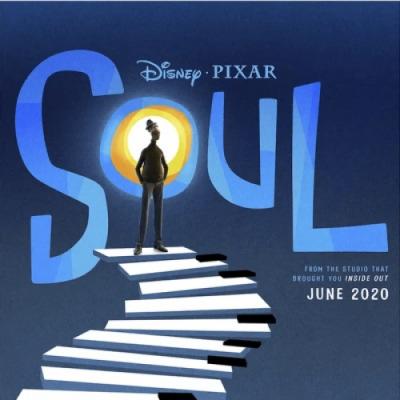
Soul Album Cover

"Soul" Soundtrack Lyrics

Cartoon • 2020

Track Listing


"Soul (Original Motion Picture Soundtrack)" – Album Guide to Tracks and Key Scenes

Disney and Pixar’s Soul official trailer still, used here as a visual proxy for the soundtrack guide
Pixar’s Soul — trailer imagery, 2020

Overview

What gives life its spark — talent, purpose, or the tiny stuff between? Soul (2020) answers with a two-world score: New York’s street-level jazz swagger colliding with the Great Before’s weightless, synth-washed calm. The soundtrack builds that paradox — arrival → adaptation → rebellion → collapse — by letting two musical languages argue and finally agree.

Trent Reznor and Atticus Ross paint the metaphysical with prismatic, hovering textures; Jon Batiste writes and performs the human-side jazz that Joe Gardner breathes like air. It’s a genuine split-screen: club pianos and brass on one side; gentle pulses and glassy harmonies on the other. As Wikipedia summarizes, Disney released a single digital album that collects both worlds, while vinyl editions split the material into Soul: Original Score (Reznor & Ross) and Music From and Inspired by Soul (Batiste). The result won Best Original Score at the Oscars and Golden Globes — deserved.

Genres & themes in phases: bop-informed, “user-friendly” jazz (arrival & identity); brushed-ballad warmth (adaptation); urgent modal grooves (rebellion); ambient/new-age color with luminous pads (collapse/epiphany). Jazz language = agency and community; ambient architecture = perspective and humility.

How It Was Made

Director Pete Docter paired Jon Batiste for Earth-bound jazz (he recorded real piano takes, captured as MIDI so animators could map exact fingerings) and Trent Reznor & Atticus Ross for the Great Before’s incorporeal spaces. The music teams traded motifs so cues could morph at scene boundaries — you hear them “blend the two worlds” as Joe slips between planes. End titles fold in Batiste’s arrangement of “It’s All Right” (originally by The Impressions).

Trailer still hinting at the film’s two-world design — New York jazz and the Great Before’s ethereal palette
Two worlds, two palettes: live jazz meets luminous synths.

Tracks & Scenes

Timestamps approximate to the 101-minute cut; “diegetic” = heard by characters.

“Things Ain’t What They Used to Be” — Mercer Ellington (instrumental)
Where it plays: Opening classroom (~00:01). Joe conducts his middle-school band through a halting, off-kilter rendition; a lone student catches the groove and Joe lights up. Fully diegetic, in-room performance.
Why it matters: Day-one thesis: music is messy until it isn’t — and Joe’s identity lives in that spark.

“Born to Play” — Jon Batiste
Where it plays: Joe’s audition and the Half Note Club payoff. Batiste’s hands (captured to MIDI) map directly to Joe’s animated performance; camera drifts to glistening cymbals and a bass smile. Diegetic; later reprises as transitions.
Why it matters: It’s Joe’s voice. The theme is the film’s heartbeat, returning whenever he remembers why he plays.

“Rappin Ced” — Daveed Diggs
Where it plays: A swaggering subway ad/earworm that 22 parrots back on the streets of Manhattan. Diegetic source, cut like a city sting.
Why it matters: A comic texture in Joe’s New York — proof that even throwaway music shapes a day.

“Parting Ways” — Cody ChesnuTT
Where it plays: Subway platform encounter: a busker serenades Joe and 22; commuters pause, the melody hangs in the tiled air. Diegetic performance.
Why it matters: The film’s softest mirror — a street song reframing “purpose” as presence.

“We Get Along” — Sharon Jones & The Dap-Kings
Where it plays: NYC source music (barbershop/urban interiors); warm horns, vinyl grit, and chatter blend under dialogue. Diegetic background.
Why it matters: Drops the needle on community — the neighborhood score that steadies Joe.

“II B.S.” — Charles Mingus
Where it plays: An in-world needle-drop underscoring bustle and attitude during New York exteriors. Diegetic texture, briefly foregrounded then swallowed by city noise.
Why it matters: A tart jazz citation that grounds the film in the canon Joe worships.

“Epiphany” — Trent Reznor & Atticus Ross
Where it plays: Late-film pivot: Joe quietly reviews “regular old living” — leaves, light, a slice of pie — and time slows. Non-diegetic, near-silence with glass-tone chords.

Why it matters: The metaphysical sound finds flesh; purpose reframed as attention.

“It’s All Right” — Jon Batiste (end-credits arrangement)
Where it plays: End credits (~01:35). Batiste’s buoyant take on The Impressions classic ushers you out; a duet with Celeste surfaced in marketing but not on the main OST.
Why it matters: A benediction — joy as a daily practice.

Trailer still echoing the Half Note Club’s amber glow — where Batiste’s jazz cues come alive on screen
Half Note glow: Batiste’s cues are performed as if you’re at the table.

Notes & Trivia

  • The digital album bundles both worlds; vinyl splits them into Original Score (Reznor/Ross) and Music From and Inspired by Soul (Batiste).
  • Animators used captured MIDI from Batiste’s sessions so Joe’s fingers match every note you hear.
  • Cody ChesnuTT appears on screen as the subway busker singing his own track, “Parting Ways.”
  • End credits’ “It’s All Right” nods to The Impressions; a duet version with Celeste promoted the film but isn’t on the core OST.
  • The score and songs team won the 2021 Academy Award for Best Original Score — Pixar history in stereo.

Music–Story Links

When Joe coaxes his students through “Things Ain’t What They Used to Be,” the clumsy swing seeds his calling — teaching as ignition. The subway ad (“Rappin Ced”) and a busker’s “Parting Ways” reframe New York as a chorus of tiny scores, each tugging 22 toward curiosity. Inside the Half Note, “Born to Play” becomes a ritual: same notes, new meaning. And in the turning-point montage, “Epiphany” suspends time so Joe hears the world he’s been playing over.

Reception & Quotes

Critics and awards bodies treated the soundtrack as half the movie: the ambient-meets-jazz concept won the Oscar and Golden Globe for Best Original Score, and the album dropped alongside the film’s holiday launch. According to Apple Music’s listing, the digital set runs ~42–45 tracks depending on region.

“Two scores in conversation — one corporeal, one cosmic — and both generous.” — as summarized from album write-ups
“Batiste’s piano gives the animators rhythm to draw to; Reznor/Ross give the cosmos room to breathe.” — according to production notes
Epiphany is the movie’s hush: strings of light you can hear.” — fan reviews
Trailer image echoing Joe’s quiet realization sequence underscored by the cue “Epiphany”
Quiet awe: the “Epiphany” cue reframes purpose as presence.

Interesting Facts

  • Split release: One digital album combines both palettes; vinyl issues separate Original Score and Jazz Compositions.
  • Subway cameo: The busker scene uses Cody ChesnuTT’s original, written for the film.
  • Trailer note: Early marketing mixed in non-OST music; some fans ID’d AJR’s “Overture” in a teaser cut.
  • Jazz elders: Sharon Jones & The Dap-Kings and Charles Mingus appear as source cuts in-film (not the headline OST focus).
  • Awards sweep: The score took the Oscar, Globe, and tied for the Grammy (Score Soundtrack) in the cycle.
  • End-titles heritage: “It’s All Right” traces back to Curtis Mayfield’s group, The Impressions.
  • Animator’s trick: MIDI capture let the team animate exact voicings, not just “piano-ish” hands.

Technical Info

  • Title: Soul (Original Motion Picture Soundtrack)
  • Year: 2020
  • Type: Combined digital album (score + jazz); separate vinyl issues for score and jazz selections
  • Composers: Trent Reznor & Atticus Ross (score); Jon Batiste (jazz compositions & arrangements)
  • Executive music production: Walt Disney Records team led by Tom MacDougall
  • Label / Release: Walt Disney Records — December 18, 2020 (digital); vinyl editions the same day
  • Notable placements: “Things Ain’t What They Used to Be” (classroom); “Born to Play” (audition/club); “Parting Ways” (subway busker); “Epiphany” (life-montage pivot); “It’s All Right” (end credits)
  • Availability: Streaming widely; region editions list ~42–45 tracks (~64–71 minutes)
  • Awards: Academy Award & Golden Globe — Best Original Score (Reznor/Ross/Batiste)

Questions & Answers

Why does the music sound so different between New York and the Great Before?
Two teams: Batiste’s acoustic jazz for Earth, Reznor/Ross’s ambient-leaning electronics for the metaphysical zones.
Is the busker’s song an original for the movie?
Yes — Cody ChesnuTT wrote and performs “Parting Ways,” and he appears on screen as the singer.
Which version of “It’s All Right” is in the film?
Jon Batiste’s arrangement plays over the end credits; a Batiste–Celeste duet promoted the movie but isn’t on the core OST.
Are there separate albums?
Digitally, a single set bundles everything. On vinyl, Original Score (Reznor/Ross) and Batiste’s jazz selections issued as companion LPs.
How accurate are Joe’s piano hands?
Animators tracked Batiste’s performances (via MIDI and video), so fingerings and rhythms match note-for-note.

Canonical Entities & Relations

SubjectVerbObject
Trent Reznor & Atticus RosscomposedSoul electronic/ambient score cues
Jon Batistecomposed & performedjazz pieces for New York sequences
Walt Disney RecordsreleasedSoul (Original Motion Picture Soundtrack) (digital & vinyl)
Pete DocterdirectedSoul (feature film)
Tom MacDougallexecutive-producedsoundtrack albums
Cody ChesnuTTwrote & performed“Parting Ways” (busker scene)
Daveed Diggsperformed“Rappin Ced” (in-world promo)
The Impressionsoriginated“It’s All Right” (end-titles arrangement by Batiste)

Sources: Wikipedia (film & soundtrack); Apple Music album page; ScreenRant’s “Every Song & When They Play”; IMDb soundtrack; Pixar Post review; official Disney/Pixar YouTube uploads.

November, 27th 2025


A-Z Lyrics Universe

Lyrics / song texts are property and copyright of their owners and provided for educational purposes only.