Soundtracks:  A B C D E F G H I J K L M N O P Q R S T U V W X Y Z #


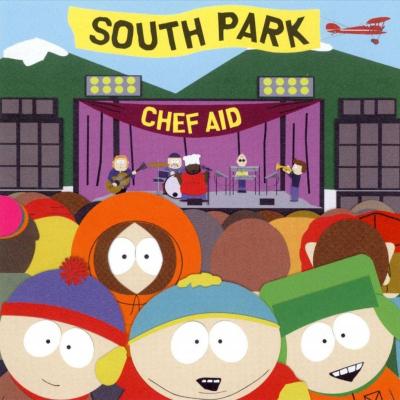
South Park Album: Television Compilation Album Cover

"South Park Album: Television Compilation" Soundtrack Lyrics

TV • 1998

Track Listing


"Chef Aid: The South Park Album (Television Soundtrack, 1998)" – Album Guide to Tracks and Key Scenes

1998 TV ad for Chef Aid: The South Park Album showing animated Chef on stage with the four boys
Chef Aid: The South Park Album — 1998 TV ad still

Overview

Can a charity gig inside a cartoon double as a major-label compilation and still feel like a party? Chef Aid: The South Park Album says yes — loudly, messily, gloriously. Born from a season-two storyline and expanded into a full-bodied television soundtrack, the record corrals A-list names (Ozzy Osbourne, DMX, Elton John, Joe Strummer, Ween, Primus) around Chef’s velvet baritone, with skits and character cameos threading it all into a stage-in-your-head.

As a listening arc, the album walks a comic tightrope: bawdy Chef soul numbers, slam-pit punk, prankish alt-rock, and star-powered rap crossfade like quick-cut gags. Jokes land, but the musicianship sticks — fuzzed-out breakbeats on “Nowhere to Run (Vapor Trail),” Rancid’s clenched-jaw “Brad Logan,” and the UK-conquering novelty-funk of “Chocolate Salty Balls.” The hook is simple: take the world’s most impolite TV show in ’98 and hand it a festival mainstage.

Genres & themes in phases: comic soul — Chef’s croon sells innuendo with warmth; punk/hardcore — attitude and speed for slapstick chaos; alt/industrial & big-beat rap — menace and spectacle for on-screen “benefit gig” mayhem; classic-rock karaoke — Cartman’s “Come Sail Away” weaponizes commitment as a joke that turns into character study.

How It Was Made

Conceived alongside the season-two episode “Chef Aid,” the album was executive-produced around the show’s creators with Rick Rubin steering the sessions and clearances. The conceit: present the album as a Chef-hosted concert, then invite real artists to either extend songs from the series or contribute show-inspired originals. Music supervision wrangled an unusually mixed bill — from System of a Down cameos on a Puff Daddy posse cut to Ween, Primus, and Devo wiring their aesthetics into the South Park gag machine.

Behind-the-menu mockumentary framing of the Chef Aid project used to promote the album
“Behind the Menu”–style promos framed the album’s ‘live’ conceit

Tracks & Scenes

“Chocolate Salty Balls (P.S. I Love You)” — Chef (Isaac Hayes)
Where it plays: Season 2’s marketplace madness turns into a Chef showpiece (episode focused on Chef’s cooking hustle), with the song surfacing as a diegetic performance and then reborn as the album’s breakout single; the TV version hits mid-episode (~00:12–00:16), single mix runs ~3:55.
Why it matters: Hayes’s silky soul wraps a triple-entendre in wholesome groove — the quintessential South Park “filthy yet affectionate” tone-setter.

“Nowhere to Run (Vapor Trail)” — Ozzy Osbourne, DMX & Ol’ Dirty Bastard; music by The Crystal Method with Fuzzbubble
Where it plays: Folded into the Chef Aid gig montage near the back half of the episode (~00:18–00:21), non-diegetic overlay hyping crowd chaos as the benefit peaks.
Why it matters: Cross-genre stunt that actually bangs; industrial guitars + big-beat + three snarling vocal styles sell the “anything can show up in South Park” ethos.

“Brad Logan” — Rancid
Where it plays: Performed as part of the on-screen benefit lineup (diegetic), quick-cut onstage shots around the final act of the concert (~00:19–00:21).
Why it matters: Short, serrated punk palate cleanser — pure kinetic energy between star turns.

“Wake Up Wendy” — Elton John (with Chef)
Where it plays: A marquee cameo staged for the benefit set (diegetic) as the kids rally A-listers to help Chef; heard across the episode’s “big save” momentum (~00:20+).
Why it matters: The hoariest joke — an earnest arena ballad in South Park — lands because Elton sings it straight, lifting the gag into genuine uplift.

“The Rainbow” — Ween
Where it plays: Used within the episode as a concert cue (diegetic), appearing as quick stingers tying cutaways (~late-episode, around the stage run of acts).
Why it matters: Ween’s candy-weird psych-pop sweetens the show’s mean streak, proof that tonal whiplash is a feature, not a bug.

“It’s a Rockin’ World” — Joe Strummer (feat. a guerrilla alt-rock band)
Where it plays: Slotted among the charity set pieces; a montage and title-card–style needle that marks Chef’s community rally (~00:17–00:20).
Why it matters: Clash DNA in a TV cartoon: Strummer’s bark adds grown-up stakes to the kids’ absurd plan.

“Mephisto and Kevin” — Primus
Where it plays: Appears as a thematic sting tied to Dr. Mephesto’s scenes across early seasons; in the album context it functions as a character motif reprise (non-diegetic on record).
Why it matters: Primus’s wiry oddness equals South Park’s weird-science energy — an underscore that became lore.

“Love Gravy” — Chef with Rick James & Ike Turner
Where it plays: Originates in an early-season gag performance (diegetic); on album it’s expanded, playing like the sauciest lounge act that ever aired on cable.
Why it matters: A time-capsule funky duet that doubles as meta-commentary on R&B slow jams and TV standards & practices.

“Tonight Is Right for Love (With Meredith Baxter-Birney)” — Chef & Meat Loaf
Where it plays: Originally tied to “An Elephant Makes Love to a Pig” era tone; the album turns it into a full comic-soul torch song (non-diegetic on record).
Why it matters: Hayes and Meat Loaf treat silliness with operatic sincerity — that contrast is the punchline.

“Come Sail Away” — Eric Cartman
Where it plays: Season 2 bit where Cartman must finish any snippet of the Styx classic he starts — a running diegetic gag that becomes a full album cut (~variously mid-episode in “Cartman’s Mom Is Still a Dirty S***”).
Why it matters: The joke reveals character obsession: petty tyrant meets power ballad, and he will see it through.

“Kyle’s Mom Is a Big Fat Bitch (in D Minor)” — Eric Cartman
Where it plays: First-season choir-room eruption turned canonical; the album version is the “concert” take, blowing a kid’s gripe into faux-symphonic spectacle.
Why it matters: The series’ first great musical earworm — weaponized immaturity as show tune.

Onstage montage from the Chef Aid concert as depicted in the TV episode and album concept
Key placements: benefit-gig diegesis meets non-diegetic montage

Notes & Trivia

  • The UK singles chart crowned “Chocolate Salty Balls” at year’s turn — South Park’s cheekiest Christmas miracle.
  • Three retail variants existed: Clean, Explicit (still censored in spots), and Extreme (fully uncensored).
  • Cartman’s “Come Sail Away” started as a throwaway gag and became a requested album cut.
  • Guest list on TV and disc overlap by design — the episode was built to introduce the album’s roster.
  • Primus, who perform the series theme, also sneak character cues (“Mephisto and Kevin”) into the set.

Music–Story Links

When the boys spin up a benefit to rescue Chef’s reputation, the album mirrors the plot: each guest track marks a rung on the “friends show up” ladder. “Nowhere to Run” scores the concert’s point-of-no-return — swagger becomes solidarity. Elton’s “Wake Up Wendy” plays the reversal, pivoting the joke into genuine sentiment. Chef’s own numbers (“Simultaneous,” “Love Gravy”) function as character interiority: exaggerated libido equals exaggerated heart. Cartman’s compulsive “Come Sail Away” punctures pathos on cue, keeping the benefit from ever turning too sincere.

Reception & Quotes

Fans embraced the whiplash; critics called it a glorious jumble. According to Entertainment Weekly, the best bits were “funnier than anything released in 1998.” As AllMusic frames it, the draw is the collision of comedy/spoken-word with stage-and-screen gloss. And per the Official Charts Company, “Chocolate Salty Balls” literally topped the holidays.

“Like a comedy album, you may not return once the jokes are known — but the best moments truly hit.” — Entertainment Weekly
“A hodgepodge… but the benefit-gig framing device is inspired.” — Classic Rock / Louder
“A novelty that actually slaps: industrial crunch, rap bravado, big-beat bombast.” — album guide commentary
1998 retail TV spot card for the Chef Aid album compilation
Retail TV spot confirmed the compilation’s multi-version release

Interesting Facts

  • Licensing quirks meant some TV edits differ from album takes; the Extreme version removes broadcast-friendly bleeps.
  • “Chocolate Salty Balls” single included Cartman holiday snippets as B-sides in certain regions.
  • “Will They Die 4 U?” folds System of a Down members into a shiny-suit rap posse cut — peak 1998 crossover energy.
  • Rancid’s contribution doubled as punk scene cred for a mainstream cable cartoon.
  • Joe Strummer’s cut connected the show to punk’s elder statesmen, not just ’90s alt radio.
  • Retail pressings credit dedicated music supervisors — unusual for a TV cartoon tie-in then.
  • Streaming versions may differ in order/availability by region and label control.

Technical Info

  • Title: Chef Aid: The South Park Album
  • Year/Type: 1998 — Television soundtrack/compilation
  • Producers (exec.): Rick Rubin; Trey Parker; Matt Stone
  • Music Supervision: Mary Ramos; Michelle Kuznetsky (credited on retail pressings)
  • Label: American Recordings / Columbia
  • Release context: Issued weeks after the “Chef Aid” episode (Season 2), with TV promos and a mockumentary segment
  • Notable placements: “Chocolate Salty Balls,” “Nowhere to Run (Vapor Trail),” “Brad Logan,” “Wake Up Wendy,” “The Rainbow,” “Come Sail Away”
  • Chart notes: Album reached notable positions globally; the single “Chocolate Salty Balls” hit UK No. 1 at year’s end
  • Availability: Streaming (regional variants); CD pressings in Clean/Explicit/Extreme

Questions & Answers

Is this a TV soundtrack or a straight various-artists compilation?
Both — it’s a concept “live” show tied to a Season 2 episode, mixing in-series songs with star contributions.
Which version should I hear first: Clean, Explicit, or Extreme?
Go Extreme if available; it preserves the original profanity rhythm and joke timing.
Did any track break out beyond the show?
Yes. “Chocolate Salty Balls” became a UK and Ireland No. 1 single over the holidays.
Are the TV mixes the same as the album cuts?
Often expanded — verses, intros, and bridges were grown from their TV snippets.
Where do these songs land inside the episode?
Most appear diegetically during the benefit concert’s back half; others function as montage cues or character stings.

Canonical Entities & Relations

SubjectRelationObject
South Park (TV series)created byTrey Parker; Matt Stone
Chef Aid: The South Park Albumexecutive produced byRick Rubin; Trey Parker; Matt Stone
Chef Aid: The South Park Albumreleased byAmerican Recordings; Columbia
Chef (Isaac Hayes)performs“Chocolate Salty Balls (P.S. I Love You)”
Primusperforms“South Park Theme”
Rancidperforms“Brad Logan”
Elton Johnperforms“Wake Up Wendy”
Ozzy Osbourne; DMX; Ol’ Dirty Bastard; The Crystal Methodcollaborate on“Nowhere to Run (Vapor Trail)”
Joe Strummerperforms“It’s a Rockin’ World”
Mary Ramos; Michelle Kuznetskymusic supervisedChef Aid retail album

Sources: Wikipedia; South Park Studios; Discogs; MusicBrainz; AllMusic; Entertainment Weekly; Official Charts Company; Classic Rock / Louder; Apple Music.

November, 27th 2025


A-Z Lyrics Universe

Lyrics / song texts are property and copyright of their owners and provided for educational purposes only.