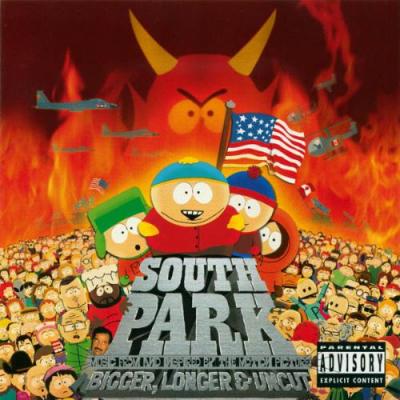
"South Park: Bigger, Longer & Uncut" Soundtrack Lyrics
Movie • 1999
Track Listing
South Park: Bigger, Longer & Uncut Cast
South Park: Bigger, Longer & Uncut Cast
South Park: Bigger, Longer & Uncut Cast
South Park: Bigger, Longer & Uncut Cast
South Park: Bigger, Longer & Uncut Cast
Howard McGillin and the People of South Park
Michael McDonald
Suddam Hussein
Big Gay Al
South Park: Bigger, Longer & Uncut Cast
Isaac Hayes
South Park: Bigger, Longer & Uncut Cast
South Park: Bigger, Longer & Uncut Cast
D.V.D.A.
South Park: Bigger, Longer & Uncut Cast
South Park: Bigger, Longer & Uncut Cast
South Park: Bigger, Longer & Uncut Cast
Kyle and Stan
Micheal McDonald
Bruce Howeld
"South Park: Bigger, Longer & Uncut — Music From and Inspired by the Motion Picture (1999)" – Album Guide to Tracks and Key Scenes
Overview
Can a foul-mouthed cable cartoon turn into a legit Broadway-style musical and still be funnier than most “serious” film comedies? This soundtrack answers with tap-danced farts, Disney send-ups, and power-ballad sincerity — often in the very same number. South Park: Bigger, Longer & Uncut — Music From and Inspired by the Motion Picture bottles the movie’s gleeful blasphemy and formal control: airtight pastiche dressed like a food fight.
Arrival → adaptation → rebellion → collapse: the album follows that arc. We arrive in “Mountain Town,” adapt to a world where kids learn swears from Asses of Fire, rebel with “Uncle F***a” and “Blame Canada,” then watch the moral order collapse into Hell’s showstoppers before the finale braids everything together. What makes it distinct is precision — every cue lampoons a Golden Age template without breaking character. Genres in phases: Broadway pastiche — optimism and exposition; novelty march — mob thinking; torch & villain songs — interior need (Satan) and toxic self-help (Saddam); Les Mis–style medley — plot threads fuse and detonate.
How It Was Made
Songwriting is a two-hander: Trey Parker (lyrics/performances) and Marc Shaiman (score/co-composer). The brief was shameless: parody Hollywood-musical grammar with the show’s exacting comic timing. Studio clearances yielded an “inspired by” back half on the retail album (alternate artists/versions), while the film mix kept the cast takes tight for pacing. Shaiman’s pit-orchestra chops and TV-born sound library fuse — yes, there’s a literal tap-dance break built from fart sounds — into a score that sells spectacle while punching censorship in the nose.
Tracks & Scenes
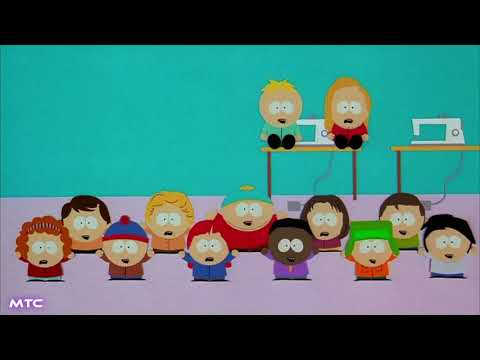
“Mountain Town” — Ensemble
Where it plays: Opening number (~00:01–00:05). A storybook morning in South Park: kids hustle to the cinema, harmonies stack, the town gleams — and the last rhyme swerves naughty as they enter Asses of Fire. Pure diegetic-as-narration musical theater.
Why it matters: Establishes the film’s joke engine: Rodgers & Hammerstein glow with a sulfur burn.
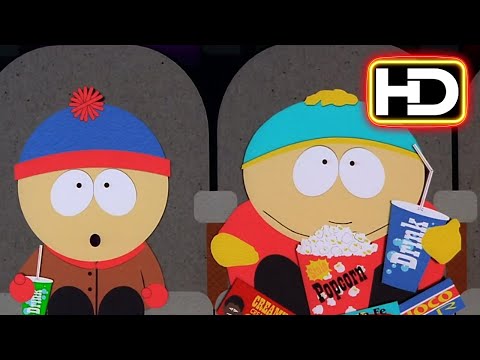
“Uncle F***a” — Terrance & Phillip
Where it plays: Early in the boys’ moviegoing (~00:07). A vaudeville patter song explodes into a tap-break of weaponized sound effects; the kids howl, adults gasp.
Why it matters: The inciting incident — a showstopper that literally corrupts the town’s children and ignites the ratings war.
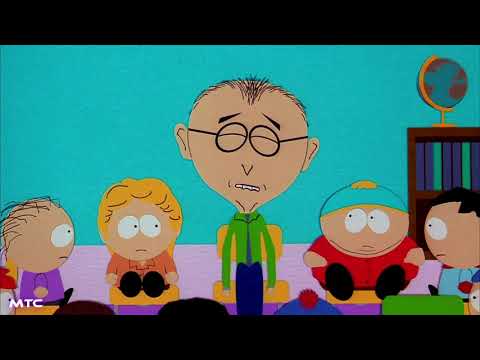
“It’s Easy, M’Kay” — Mr. Mackey & Class
Where it plays: After the swearing outbreak (~00:15). Classroom intervention turns into a peppy self-help routine with spelling choreography and Mackey’s nasal belt. Diegetic, within a school assembly vibe.
Why it matters: Education as tinny show tune — the comedy is how musical uplift can’t fix real panic.
“Blame Canada” — Sheila & Parents
Where it plays: Moms’ rally (~00:22). A marching-band showpiece with key changes and finger-pointing as choreography; the town picks an easy villain.
Why it matters: Satire of scapegoating that later stormed the Oscars — a civic anthem sung with a straight face for maximum sting.
“Kyle’s Mom’s a B***h” — Cartman
Where it plays: A cutaway tantrum (~00:25) that escalates into an over-produced fantasia as Cartman global-izes the insult.
Why it matters: Character micro-portrait: petty rage, Broadway staging, massive laugh.
“Up There” — Satan
Where it plays: Kenny descends; in Hell (~mid-film, ~00:35). A sincere, almost Disney power ballad — Satan dreams of a better life “up there,” lit by lava and longing.
Why it matters: The film’s heart. The joke only works because the melody is lovely.
“I Can Change” — Saddam (with Satan)
Where it plays: Hell’s toxic-romance pivot (~00:45). A needy, manipulative promise song with a key-smile and knife underneath.
Why it matters: Villain song as gaslighting — timing and rhyme weaponize denial.
“I’m Super” — Big Gay Al
Where it plays: U.S. war-prep montage (~00:55). Color-guard camp smashes into boot-camp brass; choreography turns logistics into spectacle.
Why it matters: A splashy Be Our Guest wink that deflates martial bluster.
“La Résistance (Medley)” — Ensemble
Where it plays: Build to the climax (~01:05–01:12). A Les Mis–style braid of motifs — kids plot, parents march, Hell yearns, army drills, rhythms interlock.
Why it matters: Craft on display: every earlier tune pays off inside one oversized showpiece.
“Eyes of a Child” — Michael McDonald
Where it plays: End credits (first cue). Studio-smooth soft-rock balm after the finale’s cannonade.
Why it matters: A wry palate cleanser — the album’s “inspired by” crossover that actually plays in the film credits.
“Hell Isn’t Good” — (feat. James Hetfield, uncredited)
Where it plays: Kenny’s arrival in Hell (~mid-film). Metal growl drops under infernal establishing shots.
Why it matters: Texture switch — a head-bang gust that snaps the movie out of Broadway mode at just the right moment.
Trailer needle-drops
Where it plays: Theatrical trailers mix instrumental stabs of the main tunes with trailer-house hits; tempos are upcut to sell chaos (non-album).
Why it matters: Packaging: the campaign taught audiences this wasn’t a tie-in — it was a full musical comedy.
Notes & Trivia
- The retail album splits: first dozen tracks from the film; later cuts are “inspired by” alternates and guest versions.
- “Blame Canada” landed a Best Original Song Oscar nod — performed on air with mischievous staging.
- An uncredited James Hetfield voice shows up snarling in “Hell Isn’t Good.”
- The score’s most infamous tap break is literally edited from the show’s archive of fart effects (no, really).
- Title gags the ratings board: the film’s name reads like a dirty joke while passing standards.
Music–Story Links
When the boys learn new vocabulary at the movies, “Uncle F***a” chooses vaudeville brightness — innocence wearing dynamite. “Blame Canada” converts panic into policy: a brassy march turns groupthink into choreography. Satan’s “Up There” reframes the A-plot as a love story, softening the final war tableau so “La Résistance” can slam the threads together. And “I Can Change” makes personal toxicity the fuse under the finale; its faux-uplift keys echo through the medley until the lie can’t hold.
Reception & Quotes
Critics widely credited the soundtrack with real musical smarts. According to Entertainment Weekly, it plays like a wickedly faithful cast album; the showtune craftsmanship is the joke. The Academy agreed in part — “Blame Canada” hit the Best Original Song lineup, even as a Disney ballad took the statuette. And as reported in a 1999 profile, the movie’s most notorious tap routine was engineered with… gaseous percussion.
“A cast album that gleefully sends up Hollywood musical conventions.” — Entertainment Weekly
“‘Blame Canada’ at the Oscars was the year’s chaos agent.” — awards coverage recap
“Yes, we built a tap break from farts.” — composer anecdote
Interesting Facts
- Album design: Atlantic issued the soundtrack with “music from & inspired by” framing; liner notes flag which cuts are actually film versions.
- Credits play-in: Michael McDonald’s “Eyes of a Child” rolls right at credits, one of the few “inspired” tracks heard onscreen.
- Parody map: “Mountain Town” echoes Oklahoma! and Belle; “La Résistance” channels Les Misérables; “I’m Super” winks at mid-century showstoppers.
- Metal in Hell: The Hell entrance uses a James Hetfield vocal burst — uncredited in the film, long a fan trivia favorite.
- Clean vs. explicit: TV promos stitched safer medleys; the disc preserves saucier rhyme schemes.
- Album sequence vs. film: The movie’s tight cues often run shorter than the retail tracks.
- Chart note: The album cracked the Billboard 200 Top 30 in 1999.
- Legacy: Time later hailed the score as a high-water mark for modern movie musicals.
Technical Info
- Title: South Park: Bigger, Longer & Uncut — Music From and Inspired by the Motion Picture
- Year / Type: 1999 — Film soundtrack (cast album + “inspired by” cuts)
- Composers / Songwriters: Trey Parker; Marc Shaiman
- Score: Marc Shaiman
- Label: Atlantic Records
- Album release: late June 1999 (retail date varied by region; liner notes emphasize first 12 cues are in-film takes)
- Notable placements: “Blame Canada” (Oscar-nominated); “La Résistance (Medley)” (finale braid); “Up There” (Satan ballad); “I Can Change” (villain song); “Eyes of a Child” (end credits)
- Availability: CD/digital; streaming catalogues (regional differences may affect running order)
- Supervision / album production: Music supervisor credited on film: Marylata Elton; soundtrack album producer: Darren Higman
Questions & Answers
- Why does the album say “Music From and Inspired by”?
- Because only the early tracks are the movie’s actual cast versions; the back half features guest/alternate takes built around the film’s tunes.
- Which song got the Oscar love?
- “Blame Canada” — performed at the Academy Awards in a cheekily censored live rendition.
- Is “Eyes of a Child” actually in the film?
- Yes — it plays over the end credits even though it’s labeled “inspired by” on the disc.
- What’s the big finale number that mashes everything together?
- “La Résistance (Medley)” — it interweaves motifs and plot threads right before the last battle.
- Who handled the score’s Broadway polish?
- Marc Shaiman, whose orchestrations and pastiche savvy lock the parody into proper musical-theater form.
Canonical Entities & Relations
| Subject | Relation | Object |
|---|---|---|
| South Park: Bigger, Longer & Uncut (film) | music by | Marc Shaiman |
| South Park: Bigger, Longer & Uncut (film) | songs by | Trey Parker; Marc Shaiman |
| Soundtrack album | released by | Atlantic Records |
| “Blame Canada” | nominated for | Academy Award — Best Original Song |
| “La Résistance (Medley)” | features motifs from | earlier film numbers |
| Marylata Elton | music supervised | South Park: Bigger, Longer & Uncut (film) |
| Darren Higman | produced | Soundtrack album |
| Michael McDonald | performs | “Eyes of a Child” (end credits) |
| James Hetfield | appears (uncredited) on | “Hell Isn’t Good” |
Sources: Wikipedia; Entertainment Weekly; The New Yorker; MusicBrainz; Discogs; IMDb.
November, 27th 2025
A-Z Lyrics Universe
Cynthia Erivo Popular
Ariana Grande Horsepower
Post Malone Ain't No Love in Oklahoma
Luke Combs Good Riddance (Time of Your Life)
Green Day Bye Bye Bye
*NSYNC You're the One That I Wan
John Travolta & Olivia Newton-John I Always Wanted a Brother
Braelyn Rankins, Theo Somolu, Kelvin Harrison Jr. and Aaron Pierre The Power of Love
Frankie Goes to Hollywood Beyond
Auli’i Cravalho feat. Rachel House MORE ›