Soundtracks:  A B C D E F G H I J K L M N O P Q R S T U V W X Y Z #


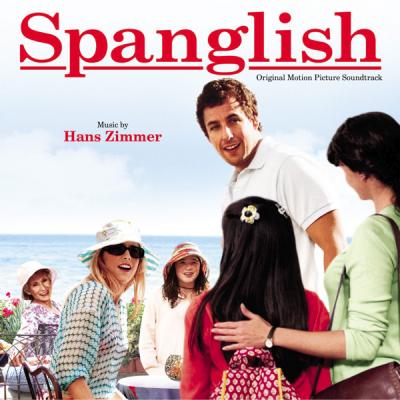
Spanglish Album Cover

"Spanglish" Soundtrack Lyrics

Movie • 2005

Track Listing


"Spanglish — Original Motion Picture Soundtrack (2004/2005)" – Album Guide to Tracks and Key Scenes

Official Spanglish trailer frame with Flor and Cristina arriving in Los Angeles
Border crossings of every kind — family, language, kitchen, love

Overview

What does a bilingual heart sound like? Spanglish — Original Motion Picture Soundtrack answers with Hans Zimmer’s sun-bleached, guitar-and-strings score that moves like ocean air through a Los Angeles kitchen. The music charts Flor and daughter Cristina’s arrival, the Clasky family’s adaptation, and a slow rebellion against comfortable lies — then lets everything collapse into a quiet, stubborn grace.

Arrival → adaptation → rebellion → collapse: early cues glow with seaside warmth and promise; mid-film, the palette tightens around domestic friction and culinary ritual; by the third act, themes thin to plucked guitar, brushed percussion, and small, decisive cadences. Styles mapped to meaning: acoustic guitar & chamber strings — tenderness and restraint; Latin-tinged percussion — motion and work; solo piano — doubt; light swing standards — memory and humor.

How It Was Made

Zimmer wrote a compact, character-first score (about 38 minutes on album), recorded with a small ensemble and frequent nylon-string lead. The physical CD arrived via Varèse Sarabande in January 2005; digital storefronts also carry a studio-rights edition dated December 2004. According to label listings and discographies, the album closes with a diegetic cast performance of Gershwin’s “They Can’t Take That Away from Me,” capturing the film’s wink of old-Hollywood romance.

Trailer moment hinting at the film’s kitchen-and-family focus that the score keeps intimate
Zimmer goes small: nylon guitar, brushed drums, sunlit strings

Tracks & Scenes

“Spanglish” — Hans Zimmer
Where it plays: Opening montages from coastal Mexico into Los Angeles. Cristina narrates their crossing; the melody walks beside them rather than in front (non-diegetic).
Why it matters: Introduces the score’s voice — hopeful, light, never sentimental.

“The Beach” — Hans Zimmer
Where it plays: Early seaside sequences with Flor and Cristina, and later as a reflective reprise when choices feel dangerous but necessary (non-diegetic suite; several minutes underscore).
Why it matters: The film’s spine — a long cue that breathes; waves in music form.

“Welcome to the Claskys” — Hans Zimmer
Where it plays: First days in the Clasky household. Doors open, routines collide; pizzicato strings track misunderstandings like comic footfalls.
Why it matters: Comedy in rhythm, empathy in harmony — it smiles without judging.

“Drunk and Disorderly” — Hans Zimmer
Where it plays: A late-night spiral turns the home inside out; the cue jitters with clipped figures and uneasy pauses.
Why it matters: The album’s first hard shadow — restraint gives way to worry.

“John Comes Home” — Heitor Pereira (as credited)
Where it plays: Chef John returns from service to a house that’s not quite the same; a gentle figure surfaces and retreats, like deciding whether to speak.
Why it matters: A hush in the middle of the storm — co-composed moment credited on album.

“Learning English” — Hans Zimmer
Where it plays: Cristina’s classroom and practice beats (and Flor’s brave first tries). The cue stays small, like handwriting getting steadier.
Why it matters: Scores agency, not montage — the tempo of teen resolve.

“No Left” — Hans Zimmer
Where it plays: A deadpan driving rule becomes a running joke; rhythm section “turns right” around a circling guitar motif.
Why it matters: Micro-gag turned musical idea — classic Brooks-Zimmer timing.

“Malibu / Cooking” — Hans Zimmer
Where it plays: Sun-washed exteriors give way to the line-cook trance of mise en place; knives, flame, breath. The chords relax as John finds honesty in work.
Why it matters: Food as truth. The music tastes like salt and thyme.

“Bus Stop” — Hans Zimmer
Where it plays: Mother–daughter rupture and repair at a curb at dusk; the cue holds a long inhale, then forgives.
Why it matters: The album’s emotional summit — small notes, huge choice.

“They Can’t Take That Away from Me” — Cloris Leachman & Ian Hyland
Where it plays: A tender, in-story performance late in the film turns a standard into a family memory (diegetic).
Why it matters: The film briefly becomes a living-room standard — and it fits.

Not on the score album but heard in the film or marketing: “100 Years” — Five for Fighting (needle-drop); “Let’s Get It Started” — Black Eyed Peas (source cue); trailer used “Show You Love” — Jars of Clay.

Trailer montage echoing beach light, kitchen heat, and a bus stop at dusk — the score’s main emotional stations
Key beats: arrival → kitchen ritual → late-night fracture → bus-stop grace

Notes & Trivia

  • The album runs 11 tracks (~38 minutes) and often appears with two different rights lines depending on territory (Varèse Sarabande CD; Madison Gate/Columbia digital).
  • Heitor Pereira is credited on “John Comes Home” — a gentle interlude inside Zimmer’s palette.
  • The closing Gershwin standard is performed on-screen by cast, then preserved on the album.
  • Several pop cues heard in the film/trailers are not on the score CD, a common practice for Brooks releases.

Music–Story Links

When Flor sets boundaries, the score tightens — short phrases, no grand gestures. John’s honesty finds a home in Cooking; the cue’s patient groove makes culinary craft feel like confession. The long arc from The Beach to Bus Stop mirrors Cristina’s letter-voice: waves to breath. And the Gershwin coda reframes everything we’ve seen as a story people will tell each other — not just something that happened.

Reception & Quotes

Reviews called the album “minor-key Zimmer” in the best sense — intimate writing that resists melodrama. As one soundtrack review put it, the highlights are the extended suite “The Beach” and the disarming Bus Stop finale; discographies peg the CD as a tidy, re-listenable chamber set rather than a cues dump.

“Sun on wood, salt on strings — Zimmer in miniature.” — album capsule
“A family story scored with restraint, not violins.” — review line
Trailer end card with the film’s title over beach light — the score’s visual echo
A bilingual lullaby for messy humans

Interesting Facts

  • Suite logic: “The Beach” (≈9:46) is one of Zimmer’s loveliest long cues of the 2000s.
  • Album closer: the Gershwin tune is credited to actors Cloris Leachman and Ian Hyland on the official release.
  • Off-album needles: Five for Fighting and Black Eyed Peas appear in-film but not on the score disc.
  • Kitchen realism: the Cooking cue’s easy swing mirrors knife rhythm and station flow instead of “big chef triumph.”
  • Two dates, one record: CD streeted January 11, 2005; some digital listings carry a December 17, 2004 date.

Technical Info

  • Title: Spanglish — Original Motion Picture Soundtrack
  • Year / Type: 2004/2005 — Film score album
  • Composer: Hans Zimmer (with Heitor Pereira contribution on one cue)
  • Performers (album cuts): Studio ensemble; Cloris Leachman & Ian Hyland on the Gershwin closer
  • Labels / Rights lines: Varèse Sarabande (CD); Columbia Pictures/Madison Gate (digital)
  • Key cues highlighted: “Spanglish,” “The Beach,” “Welcome to the Claskys,” “Drunk and Disorderly,” “John Comes Home,” “Bus Stop,” “They Can’t Take That Away from Me”
  • Not on album (in film/marketing): “100 Years” (Five for Fighting); “Let’s Get It Started” (Black Eyed Peas); trailer: “Show You Love” (Jars of Clay)
  • Availability: CD and major streaming storefronts

Questions & Answers

Is the album songs or score?
Score — Zimmer’s cues, plus a cast performance of “They Can’t Take That Away from Me.”
Why are some pop songs missing from the CD?
Licensing and album design; the official release focuses on the score, with pop/source cues left to their original albums.
What’s the longest cue?
“The Beach,” an almost ten-minute suite that anchors the album.
Who’s credited on “John Comes Home”?
Heitor Pereira — a gentle interlude inside the score’s sound world.
When was the album released?
Physical CD January 11, 2005; digital listings also show December 17, 2004 in some regions.

Canonical Entities & Relations

SubjectRelationObject
Spanglish (film, 2004)music byHans Zimmer
Spanglish — Original Motion Picture Soundtrackreleased byVarèse Sarabande (CD); Madison Gate/Columbia (digital)
Heitor Pereiracredited on“John Comes Home”
Cloris Leachman & Ian Hylandperform“They Can’t Take That Away from Me” (album/film)
Five for Fightingsong heard in film“100 Years” (not on album)
Black Eyed Peassong heard in film“Let’s Get It Started” (not on album)

Sources: Discogs; Apple Music; Spotify; SoundtrackCollector; SoundtrackINFO; AllMusic; official trailers.

November, 27th 2025


A-Z Lyrics Universe

Lyrics / song texts are property and copyright of their owners and provided for educational purposes only.