Soundtracks:  A B C D E F G H I J K L M N O P Q R S T U V W X Y Z #


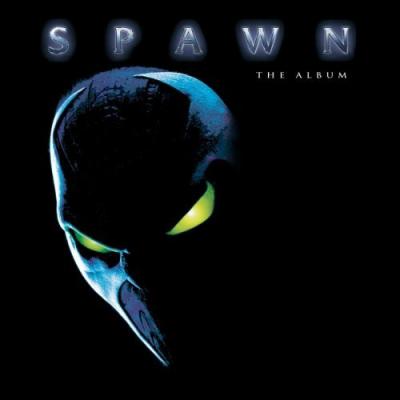
Spawn Album Cover

"Spawn" Soundtrack Lyrics

Movie • 1997

Track Listing


"Spawn: The Album (1997) — Music From and Inspired by the Motion Picture" – Album Guide to Tracks and Key Scenes

Spawn 1997 official trailer frame showing Michael Jai White’s Spawn emerging from hellfire
Industrial crunch meets big-beat adrenaline — a 90s crossover time capsule

Overview

What happens when late-90s metal and club culture get locked in the same room? Spawn: The Album answers with 14 hybrid bangers — rock bands fused to DJs/producers — wrapped around a comic-book noir. The film’s sonic world leans hard into distortion, breakbeats, and apocalyptic swagger; the record takes that aesthetic and turns it into a start-to-finish “from and inspired by” statement.

Arrival → adaptation → rebellion → collapse: the listen “arrives” on industrial pulse and big-beat menace, adapts into glossy singles, rebels via crossover pairings that shouldn’t work (but slap), then collapses into end-credits catharsis. Style-to-meaning map: big-beat/electro — hellfire propulsion; industrial/alt-metal — rage and armor; trip-hop & dark pop — seduction and rot; orchestral score (separate album) — tragic heroism between the needles.

How It Was Made

This is the crown jewel of the 90s “mash-up soundtrack” era: executive-produced by Happy Walters, pairing marquee rock/metal acts with electronica heavyweights — Filter × The Crystal Method, Marilyn Manson × Sneaker Pimps, Korn × The Dust Brothers, Slayer × Atari Teenage Riot, Metallica (source) reworked by DJ Spooky, Silverchair × Vitro, and more (as per Discogs credits and storefront listings). The film’s original score — a separate release — is by Graeme Revell.

Trailer montage of green-black palette, alley fights and burning capes that the album’s hybrids echo
Two lanes: needle-drops & singles on the album; Revell’s score on a separate disc

Tracks & Scenes

“Satan (Spawn Version)” — Orbital with Kirk Hammett
Where it plays: Opening credits — a mutated breakbeat and siren synths cut through flames as titles rip across the screen (non-diegetic, main titles).
Why it matters: One cue and you’re inside the boiler room; it brands the movie’s pulse from frame one.

“(Can’t You) Trip Like I Do” — Filter & The Crystal Method
Where it plays: End credits — the re-worked Vegas standout hits as the film exhales; also the album’s lead track and breakout single.
Why it matters: The project’s thesis: guitar + big-beat = arena-scale comedown and a radio crossover.

“Long Hard Road Out of Hell” — Marilyn Manson & Sneaker Pimps
Where it plays: Prominently in the album cycle and marketing; a signature single tied closely to the film’s themes (self-loathing, clawing toward light).
Why it matters: The gloss-dark anthem that framed the movie for MTV audiences.

“For Whom the Bell Tolls (The Irony of It All)” — Metallica (DJ Spooky Remix)
Where it plays: Album cut — heavy canon repurposed into an ominous, sample-driven grind.
Why it matters: Prestige crossover: classic thrash DNA through an avant-electronic lens.

“Kick the P.A.” — Korn & The Dust Brothers
Where it plays: Album cut; a grimy, head-nodder that mirrors alley-fight energy even when not on screen.
Why it matters: Nu-metal swagger sanded with collage-style production.

“No Remorse (I Wanna Die)” — Slayer & Atari Teenage Riot
Where it plays: Album cut; digital-hardcore chaos over Slayer riffs — pure Goon Squad energy.
Why it matters: Proof the experiment goes to extremes — and survives.

“Spawn” — Silverchair & Vitro
Where it plays: Album cut; a fuzzed-out chant tailored to the IP.
Why it matters: Title track by design — teen-angst crunch with club undertow.

Score call-out: For the film’s tragic beats and quieter turns, the separate Graeme Revell score album supplies the brooding orchestral thread — cape billows, alley rain, angel/demon push-pull.

Trailer stills echoing album energy: infernal vistas, club-dark alleys, and end-credits fire
Key beats: hell pact → street war → end-credits comedown

Notes & Trivia

  • The opening credits use Orbital’s “Satan” — re-cut with Metallica’s Kirk Hammett for the soundtrack.
  • “(Can’t You) Trip Like I Do” plays over the end credits and leads the retail album.
  • Happy Walters (also behind Judgment Night) executive-produced the set, pairing bands with DJs/producers.
  • The score is by Graeme Revell and was issued separately from the “from & inspired by” album.
  • Label line on major services: ℗ 1997 Sony Music Entertainment; original CDs were issued via Immortal/Epic/Columbia imprints.

Music–Story Links

“Satan” makes the titles feel like a club floor under siege — the film’s hell-soldier origin becomes a rhythm problem, not just a plot beat. The hybrid singles sell Spawn’s duality: man and monster, analog rage and digital noise. By the time “Trip Like I Do” lands on the credits, the record has done what the movie tries to do — fuse worlds that don’t naturally mix and make them move.

Reception & Quotes

The film’s reviews were lukewarm, but the album quickly carved out a cult lane. It’s the rare 90s tie-in that still plays like a vision, not a merch table. According to compilations and label notes, it’s a peak “rock × electronic” document of its year.

“A crossover clinic — riffs and breakbeats welded for maximum sneer.” — retrospective album note
“Whatever you think of the film, the soundtrack rips.” — fan capsule

Interesting Facts

  • Opener/closer symmetry: Orbital’s “Satan” opens the movie; the album’s lead single “Trip Like I Do” closes it.
  • Video era: “Trip Like I Do” and “Long Hard Road Out of Hell” had heavy MTV rotation with bespoke videos.
  • Metal royalty: Kirk Hammett’s guitar threads through Orbital’s breakbeat hailstorm version of “Satan.”
  • Title cameo: Silverchair’s track is literally called “Spawn.”
  • Two discs, two jobs: Revell’s score album handles myth and melancholy; the compilation handles heat.
  • Legacy pairings: Slayer × Atari Teenage Riot and Korn × The Dust Brothers showcase the project’s range.

Technical Info

  • Title (songs): Spawn: The Album — Music From and Inspired by the Motion Picture
  • Type / Year: Compilation soundtrack (various artists), 1997
  • Labels: Immortal / Epic / Columbia (℗ 1997 Sony Music Entertainment)
  • Executive producer (soundtrack): Happy Walters
  • Score: Spawn — Original Motion Picture Score by Graeme Revell (separate release)
  • Key collaborations: Filter × The Crystal Method; Marilyn Manson × Sneaker Pimps; Korn × The Dust Brothers; Slayer × Atari Teenage Riot; Orbital × Kirk Hammett; Silverchair × Vitro; Metallica (DJ Spooky remix)
  • Notable placements: Opening credits — “Satan”; End credits — “(Can’t You) Trip Like I Do”
  • Availability: 14-track, ~62 minutes on major services; multiple 1997 CD pressings

Questions & Answers

What song plays over the opening credits?
Orbital’s “Satan” (Spawn version with Kirk Hammett).
What’s the end-credits song?
“(Can’t You) Trip Like I Do” by Filter & The Crystal Method.
Is the film’s orchestral music on this album?
No. Graeme Revell’s score is a separate release focused on the dramatic cues.
Who put the rock/electronic pairings together?
Executive producer Happy Walters oversaw the collaborations.
Does the album use Metallica?
Yes — DJ Spooky remixes Metallica for “For Whom the Bell Tolls (The Irony of It All)” on the album.

Canonical Entities & Relations

SubjectRelationObject
Spawn (1997 film)score byGraeme Revell
Spawn: The Albumreleased byImmortal / Epic / Columbia (Sony Music)
Happy Waltersexecutive-producedSpawn: The Album
Orbital (with Kirk Hammett)performs“Satan (Spawn Version)” — opening titles
Filter & The Crystal Methodperforms“(Can’t You) Trip Like I Do” — end credits
Marilyn Manson & Sneaker Pimpsperforms“Long Hard Road Out of Hell” — album single
Slayer & Atari Teenage Riotperforms“No Remorse (I Wanna Die)” — album cut
Korn & The Dust Brothersperforms“Kick the P.A.” — album cut
Silverchair & Vitroperforms“Spawn” — album cut
Trailer end card with flaming Spawn logo — a visual twin to the album’s aesthetic
Singles for MTV, score for myth — together, they define 1997’s Spawn

Sources: Discogs release credits; Apple Music & Spotify listings; Wikipedia entries for key singles; opening/closing placement logs and scene clips; SoundtrackCollector listing for the separate Graeme Revell score; official trailers.

November, 27th 2025


A-Z Lyrics Universe

Lyrics / song texts are property and copyright of their owners and provided for educational purposes only.