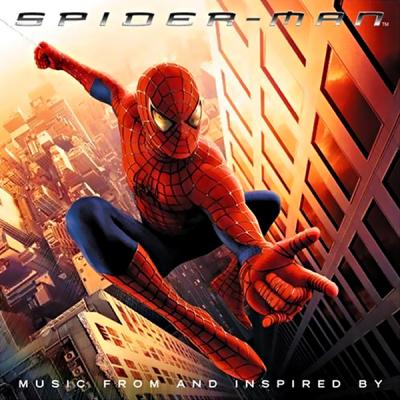
"Spider-Man" Soundtrack Lyrics
Movie • 2002
Track Listing
Chad Kroeger (feat. Josey Scott)
Sum 41
Black Lab
Bleu
Alien Ant Farm
Default
Corey Taylor
Greenwheel
The Strokes
The Hives
Theory Of A Dead Man
Pete Yorn
Macy Gray (feat. Angie Stone and Mos Def)
Injected
Jerry Cantrell
Danny Elfman
Danny Elfman
Aerosmith
"Spider-Man: Music from and Inspired by the Motion Picture" – Album Guide to Tracks and Key Scenes
Review
Can a superhero soundtrack be both a time capsule and a straight-up banger mixtape? The Spider-Man: Music from and Inspired by the Motion Picture album leans into that paradox. It has to serve Sam Raimi’s earnest, slightly pulpy origin story of Peter Parker while also selling early-2000s rock to teens who might never buy a score album. The result is a compilation where big feelings about power and responsibility collide with crunchy guitars and moody post-grunge.
On screen, Danny Elfman’s orchestral score handles the heavy lifting of fate, guilt and masks. The songs from the album drop in as flashes of contemporary life: car radios, a chaotic New York parade, and the feel-good catharsis of the end credits. You never get wall-to-wall needle drops the way later comic-book movies would do; instead, the soundtrack functions like the world outside Peter’s window — loud, slightly messy, and steeped in alt-rock radio.
Genre-wise, the record moves in distinct phases. Classic TV-style superhero kitsch in the “Theme from Spider Man” sets up the mythology; post-grunge and alternative rock (Chad Kroeger, Corey Taylor, Black Lab, Default) stand in for angst and wounded heroism; garage-rock and punk energy (The Strokes, The Hives, Sum 41) capture teenage bravado and Queens grit; R&B-leaning pop via Macy Gray adds gloss and corporate showmanship to the Times Square spectacle. The mix says: surface swagger — inner crisis; big riffs — bigger feelings.
How It Was Made
The soundtrack was assembled as a cross-label project, with Columbia Records, Roadrunner, Island Def Jam and Sony Music Soundtrax pooling artists under a Marvel-friendly banner. Executive producers and A&R figures like Will Botwin, Jonas Nachsin, Lyor Cohen, Julie Greenwald, Spring Aspers, Glen Brunman, Denise Luiso and Lia Vollack curated a line-up of early-2000s rock names around Danny Elfman’s score cues. “Hero” (Chad Kroeger featuring Josey Scott) and Sum 41’s “What We’re All About (The Original Version)” were commissioned and pushed as singles, while Elfman contributed “Main Titles” and “Farewell” alongside the original 1967 “Theme from Spider Man” and a new Aerosmith cover of that theme. Macy Gray’s Tom Morello-remixed “My Nutmeg Phantasy” sits at the center of the album’s corporate synergy, doubling as both a featured track and an in-film performance.
Tracks & Scenes
Only a slice of the album actually turns up in the film, but the moments it does are vivid. Below are the key placements in the movie, plus some important trailer and album-only cuts that define how this soundtrack works.
“Hero” (Chad Kroeger feat. Josey Scott)
- Where it plays:
- “Hero” kicks in over the main end credits, right after the bittersweet cemetery farewell and Peter’s “this is my gift, my curse” monologue. Roughly 1:52:00 into the film, Elfman’s orchestral end-credits cue hands off to the song as stylized red-and-blue graphics, webs and cityscapes glide past. It plays non-diegetically, running for several minutes before later credit songs and score cues take over.
- Why it matters:
- The lyrics about sacrifice and standing above the crowd mirror Peter’s decision to reject Mary Jane to keep her safe. The post-grunge power-ballad sheen makes the movie feel huge and radio-ready, turning Peter’s lonely choice into something teenagers could blast on repeat in 2002.
“What We’re All About (The Original Version)” (Sum 41)
- Where it plays:
- Early in the movie, around the mid-30-minute mark, Uncle Ben drives Peter into Manhattan for what Peter claims is a library trip. The Sum 41 track hums from the car stereo at very low volume, a diegetic cue you mainly feel rather than clearly hear while Ben makes his “with great power comes great responsibility” speech. A version of the song later returns over the end credits, following “Hero,” as the music shifts into a more punk-leaning energy.
- Why it matters:
- It is essentially the soundtrack’s rowdy id briefly brushing against the film’s moral spine. A party-ready punk song scores the car ride that ends with Peter storming off, setting in motion Uncle Ben’s death. The contrast between carefree music and the impending tragedy gives the scene a bitter, ironic edge in hindsight.
“When It Started” (The Strokes)
- Where it plays:
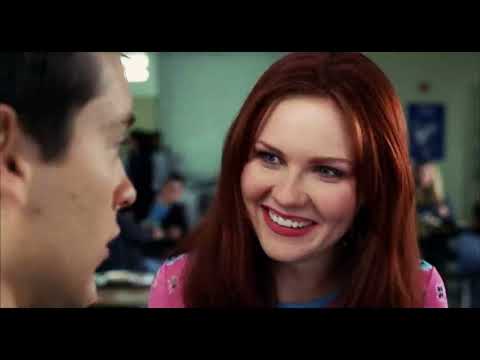
- Around 00:31:00, Peter waits on the sidewalk outside school, arms full of trash, as Mary Jane leaves with her new rich-kid friends. “When It Started” plays quietly on the car radio as her friend pulls up, doors slam, and they drive off without even really seeing Peter. The track is diegetic, mixed low under dialogue and background noise, easy to miss unless you are listening for it.
- Why it matters:
- The scruffy, urban cool of The Strokes underlines how far Peter feels from MJ’s world. Musically, it is all detached swagger; visually, he is stuck on the curb in oversized glasses. It perfectly captures that painful teenage moment when you realize the people you love are accelerating away from you.
“My Nutmeg Phantasy (Morello Mix)” (Macy Gray feat. Angie Stone & Mos Def)
- Where it plays:
- At the Unity Day parade in Times Square, roughly around the one-hour mark, Macy Gray appears as herself on a giant outdoor stage. “My Nutmeg Phantasy” blasts diegetically as floats roll past, confetti falls, and MJ, Harry and Norman mingle on the balcony above the crowd. The performance continues right up until the Green Goblin’s glider swoops in, explosions rip through the street, and panicked screams overwhelm the mix.
- Why it matters:
- The song turns the parade into peak 2002 spectacle — slick, funky, corporate, broadcast-ready. That sheen makes the Goblin’s attack feel even more shocking, as the music of brand synergy is literally blown apart. It is also a neat example of early-2000s Sony vertical integration: their recording artist performing in their superhero blockbuster.
“Theme from Spider Man” (original TV theme & Aerosmith cover)
- Where it plays:
- The album opens with the original 1967 cartoon “Theme from Spider Man,” heard in the film as a playful nod to Spidey’s TV roots. Over the end credits, after “Hero” and “What We’re All About,” Aerosmith’s distorted, big-arena cover of the same theme crashes in, tying the film back to its pop-culture history while the credits roll on.
- Why it matters:
- The vintage theme is all campy heroism; the Aerosmith version reframes it as stadium rock. That evolution mirrors the movie itself: a comic-book character moving from animation into full-scale Hollywood spectacle without losing the sing-along hook fans grew up with.
“Main Titles” (Danny Elfman)
- Where it plays:
- Right at the start of the film, over the web-laced title sequence, Elfman’s “Main Titles” introduces the score’s core motif. Stylized CG webs and morphing faces of the main cast stretch across the screen as the orchestra surges through bold brass, swirling strings and choir. The cue runs for the length of the opening credits, fully non-diegetic.
- Why it matters:
- This is the musical DNA of Raimi’s Spider-Man universe. The cue lays out the duality between Peter’s shy, nervous life and the operatic scale of his new powers, and it became one of the most recognizable superhero themes of the 2000s.
“Alone” & “City Montage” (Danny Elfman)
- Where it plays:
- “Alone” turns up around 00:50:00, when Peter comes home after Uncle Ben’s murder. He rejects food, retreats to his room, and quietly breaks down as Aunt May worries behind the door. “City Montage” appears later, around 00:53:00, over a sequence of Spider-Man cleaning up New York — thwarting robberies, snagging crooks in webs, becoming an urban legend in tabloid headlines.
- Why it matters:
- These two cues form a miniature emotional arc: private grief followed by public heroism. The melancholy of “Alone” gives weight to Peter’s guilt, while “City Montage” twists the main theme into something more playful and triumphant. Together, they show the score doing the work the rock songs cannot: tracking Peter’s inner life beat-by-beat.
“Parade Attack” & “Revelation” (Danny Elfman)
- Where it plays:
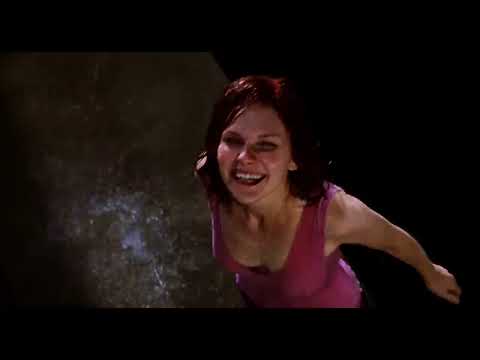
- “Parade Attack” underscores the Unity Day chaos around 1:04:00 — sirens, screaming crowds, Goblin cackling as he hurls razor bats into the sky. The music darts between jagged brass and pounding percussion as Spider-Man rescues MJ and anchors that collapsing balcony. “Revelation” arrives near 1:18:00, first under the rain-soaked upside-down alleyway kiss, then again as Aunt May lies in her hospital bed and Peter weighs how much of himself he can reveal.
- Why it matters:
- “Parade Attack” is Elfman in full horror-movie mode, leaning into Raimi’s Evil Dead instincts; “Revelation” is the romantic and spiritual counterpoint. They frame the film as a story about intimacy under pressure — lovers and family members caught in the crossfire of a superhero narrative.
“My Nutmeg Phantasy” vs. “Shelter,” “Hate To Say I Told You So,” “Invisible Man” & others (album highlights)
- Where it plays:
- Greenwheel’s “Shelter,” The Hives’ “Hate To Say I Told You So,” Theory of a Deadman’s “Invisible Man,” Alien Ant Farm’s “Bug Bytes,” Bleu’s “Somebody Else,” Injected’s “I-IV-V,” Jerry Cantrell’s “She Was My Girl,” and Black Lab’s “Learn To Crawl” all live primarily on the album and in promotional use. In the film itself, many of them only surface, if at all, as barely audible background in diners, radios or TV spots.
- Why it matters:
- Collectively, these tracks define the soundtrack’s persona as a rock sampler. Even when you cannot point to a clean on-screen moment, the moods are aligned: “Learn To Crawl” echoes Peter’s awkward early heroics; “Shelter” fits the push-pull of romance and danger; “Hate To Say I Told You So” and “I-IV-V” embody cocky, riff-driven adrenaline Spider-Man rarely gets to express in dialogue.
“My Nutmeg Phantasy” (Morello Mix) vs. non-album film songs
- Where it plays:
- Outside the official album, the film also uses Laibach’s “Panorama,” Oleander’s “Jimmy Shaker Day” and a brief burst of the nursery rhyme “Itsy Bitsy Spider.” These tend to crop up in club interiors or background environments, while the Morello-remixed “My Nutmeg Phantasy” is foregrounded in the Unity Day parade performance.
- Why it matters:
- This split underlines how the album functions as a branded extension of the film rather than a complete document of every cue. The rock compilation sells a particular mood; the movie sprinkles in other tracks wherever the story needs local color.
Trailer music: “Hell Above the Water” (Curve) & “(Can’t You) Trip Like I Do” (The Crystal Method & Filter)
- Where it plays:
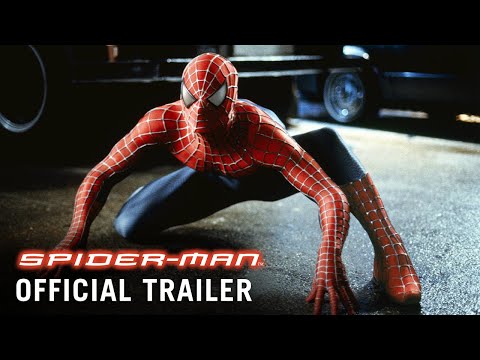
- The early trailers — including the famous “Twin Towers” teaser — lean on non-album tracks. “Hell Above the Water” by Curve drives at least one early trailer, its grinding bass and guitar loop powering shots of Spider-Man web-swinging between skyscrapers and diving toward street-level. Another piece of trailer advertising uses “(Can’t You) Trip Like I Do,” best known from the Spawn soundtrack and The Matrix marketing, over quick-cut action imagery.
- Why it matters:
- These songs never appear in the film or on the official album, but they shaped people’s first impressions. Their darker electronic-rock textures made Raimi’s New York feel more ominous and modern, before audiences ever heard Elfman’s full theme.
Notes & Trivia
- The album opens with the original 1967 cartoon theme and closes with Aerosmith’s revamped version, turning the whole record into a loop of Spider-Man nostalgia.
- Macy Gray’s parade cameo is less a random stunt and more an in-universe music video for “My Nutmeg Phantasy,” captured mid-set right as the Green Goblin attacks.
- The Strokes’ “When It Started” and Sum 41’s “What We’re All About” are both technically in the movie but mixed at “blink and you’ll miss it” levels, which has frustrated soundtrack completists for years.
- Elfman’s score album, Spider-Man: Original Motion Picture Score, was released separately and later expanded by specialty labels, after some critics complained the song compilation overshadowed his work.
- For many fans, their first exposure to bands like Black Lab, Greenwheel or Theory of a Deadman came via this disc tucked into a Spider-Man DVD bundle or a big-box store endcap.
Reception & Quotes
The soundtrack landed hard in 2002. Commercially it debuted high on the Billboard 200, topped the U.S. soundtrack chart for several weeks, and later won the American Music Award for Favorite Soundtrack. “Hero” became a radio staple, topping rock charts and ranking among the year’s biggest hit singles. Critically, reactions were mixed: some praised the record as a snapshot of early-2000s rock culture tied to a landmark superhero movie, others felt the “inspired by” padding dulled the impact of the songs actually used on screen.
“A mixed bag of an album; essential for Spider-Man die-hards or post-grunge nostalgics, optional for everyone else.” Sputnikmusic user review
“Elfman’s score is a superhero icon in its own right, even as the rock compilation tries to steal the spotlight.” Zanobard soundtrack review
“Once again this is a score album delayed and obscured by a song compilation.” MusicWeb International on Elfman’s Spider-Man score
“The soundtrack cuts that do appear in the film are just as baffling: The Strokes, Sum 41 and Macy Gray show up at near-inaudible volume or in one awkwardly tacked-on scene.” Flood Magazine feature on the Spider-Man albums
Physically, the album appeared on CD worldwide, including lenticular 3D-cover editions and “clean lyrics” variants. Today it is widely available on streaming services and as digital download; original CDs remain easy to find on the secondary market.
Interesting Facts
- “Hero” won Best Video from a Film at the 2002 MTV Video Music Awards and became one of Chad Kroeger’s signature songs outside Nickelback.
- Corey Taylor’s “Bother” appears on the album under his own name, not Slipknot or Stone Sour, helping position him as a solo rock voice.
- The soundtrack’s American Music Award win put it in the same category lineage as huge compilations like Titanic and later Black Panther: The Album.
- Tom Morello’s involvement on “My Nutmeg Phantasy” quietly connects Spider-Man to the lineage of politically charged rock, even in a glossy pop context.
- Some international editions reshuffled tracks and added region-specific bonuses, making the Spider-Man CD one of those early-2000s records where collectors chase multiple pressings.
- The success of this album helped justify similar “music from and inspired by” discs for Spider-Man 2 and Spider-Man 3, turning the trilogy into a mini-series of rock compilations.
- Decades later, the original “Theme from Spider Man” keeps resurfacing — from punk covers by the Ramones to crooner versions by Michael Bublé — partly because this movie put it back into heavy rotation.
Technical Info
- Title: Spider-Man: Music from and Inspired by the Motion Picture
- Year: 2002
- Type: Song-driven film soundtrack compilation (with select score cues)
- Primary film: Spider-Man (feature film directed by Sam Raimi)
- Composers (score excerpts): Danny Elfman (“Main Titles,” “Farewell,” additional cues)
- Key songwriters: Chad Kroeger & Josey Scott (“Hero”); Sum 41 (“What We’re All About”); Macy Gray, Tom Morello & collaborators (“My Nutmeg Phantasy” remix); J. Robert Harris & Paul Francis Webster (“Theme from Spider Man”)
- Producers / music supervision: Produced and overseen by Will Botwin, Jonas Nachsin, Lyor Cohen, Julie Greenwald, Spring Aspers, Glen Brunman, Denise Luiso, Lia Vollack and others in coordination with Sony/Marvel music departments
- Labels: Columbia Records, Roadrunner Records, Island Def Jam Music Group, Sony Music Soundtrax
- Notable singles: “Hero,” “It’s What We’re All About,” “Bother” (promoted from the album)
- Release context: Issued April 30, 2002, shortly before the film’s theatrical debut as part of a coordinated marketing push
- Running time: Approximately 65 minutes on standard editions
- Formats: CD (including lenticular and “clean” versions), digital download, major streaming services
- Chart notes: Debuted in the U.S. top five, topped the Billboard soundtrack chart for several weeks, and appeared on year-end album tallies in North America
- Awards: American Music Award for Favorite Soundtrack (2003)
- Related releases: Spider-Man: Original Motion Picture Score (full Elfman score); later expanded score editions from specialty labels
Key Contributors
| Subject | Relation | Object |
|---|---|---|
| Sam Raimi | directed | Spider-Man (2002 film) |
| Danny Elfman | composed score for | Spider-Man (2002 film) |
| Danny Elfman | wrote and produced | “Main Titles” and “Farewell” (score cues) |
| Chad Kroeger | wrote and performed | “Hero” for the Spider-Man soundtrack |
| Josey Scott | featured on | “Hero” (vocals alongside Chad Kroeger) |
| Sum 41 | wrote and performed | “What We’re All About (The Original Version)” |
| Macy Gray | performed | “My Nutmeg Phantasy” diegetically at the Unity Day parade |
| Tom Morello | remixed | “My Nutmeg Phantasy (Morello Mix)” for the album |
| The Strokes | contributed | “When It Started” to the album and film |
| Aerosmith | recorded | rock cover of “Theme from Spider Man” for the soundtrack |
| J. Robert Harris & Paul Francis Webster | wrote | original 1967 “Theme from Spider Man” |
| Columbia Records | released | Spider-Man: Music from and Inspired by the Motion Picture |
| Roadrunner Records | co-released | the soundtrack with Columbia and partners |
| Island Def Jam Music Group | co-released | the soundtrack in selected territories |
| Sony Music Soundtrax | branded | film-music arm associated with the album |
Questions & Answers
- Does every song on the Spider-Man soundtrack appear in the movie?
- No. Only a core group of tracks — including “Hero,” “What We’re All About,” “When It Started,” “My Nutmeg Phantasy,” the TV “Theme from Spider Man,” Aerosmith’s cover and selected Elfman cues — are clearly used. Many other songs are album-only or buried as faint background ambience, which is why the record feels more like a curated rock compilation than a strict document of the film’s soundscape.
- How is this album different from the Spider-Man score release?
- This album mixes songs by various rock and pop artists with a handful of Elfman tracks and theme versions. Spider-Man: Original Motion Picture Score is a separate release devoted almost entirely to Elfman’s orchestral music, presented in narrative order and with far more cues. Think of the compilation as the movie’s radio-friendly face, and the score album as its emotional spine.
- Why is Macy Gray actually in the movie instead of just on the soundtrack?
- Macy Gray was a major Sony-signed artist at the time, and putting her on a Times Square stage in the Unity Day parade let the studio turn a set-piece into a live performance of “My Nutmeg Phantasy.” It works both as diegetic entertainment for the in-story crowd and as cross-promotion for the album, right before the Green Goblin shatters the party.
- Where does “Hero” play in the film, and why did it become so big?
- “Hero” takes over the main end credits after the final cemetery scene, giving viewers one last dose of catharsis as they process Peter’s choice to put responsibility over romance. The combination of constant radio play, a rooftop-performance music video full of Spider-Man footage, and award recognition (including an MTV VMA win) turned it into one of 2002’s defining rock ballads.
- Is Spider-Man: Music from and Inspired by still easy to find today?
- Yes. The album streams widely on major platforms, and digital versions mirror the 19-track CD configuration. Original CDs — including lenticular-cover and “clean” editions — are common on resale sites, so it is one of the easier early-2000s soundtrack discs to track down physically.
Sources: AllMusic; Wikipedia; Grokipedia; MusicBrainz; Discogs; Apple Music; Spotify; WhatSong; Soundtrakd; SoundtrackINFO; Flood Magazine; Zanobard Reviews; MusicWeb International; American Music Awards coverage; Billboard chart summaries; interviews and commentary about Spider-Man (2002) and its soundtrack.
November, 27th 2025
A-Z Lyrics Universe
Cynthia Erivo Popular
Ariana Grande Horsepower
Post Malone Ain't No Love in Oklahoma
Luke Combs Good Riddance (Time of Your Life)
Green Day Bye Bye Bye
*NSYNC You're the One That I Wan
John Travolta & Olivia Newton-John I Always Wanted a Brother
Braelyn Rankins, Theo Somolu, Kelvin Harrison Jr. and Aaron Pierre The Power of Love
Frankie Goes to Hollywood Beyond
Auli’i Cravalho feat. Rachel House MORE ›