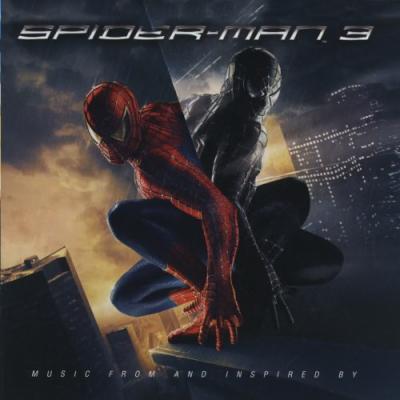
"Spider-Man 3" Soundtrack Lyrics
Movie • 2007
Track Listing
Snow Patrol
The Killers
Yeah Yeah Yeahs
Wolfmother
The Walkmen
Black Mountain
The Flaming Lips
Simon Dawes
Chubby Checker
Rogue Wave
Coconut Records
Jet
Sounds Under Radio
Wasted Youth Orchestra
The Oohlas
"Music from and Inspired by Spider-Man 3" – Album Guide to Tracks and Key Scenes
Review
How do you score a superhero movie where the hero’s biggest enemy is his own bad haircut and a sentient goth goo? Spider-Man 3’s soundtrack leans into that chaos. Instead of a single anthemic “Hero” or “Vindicated”-style theme, Music from and Inspired by Spider-Man 3 plays like a mixtape of 2007 alt culture, stitched around Sam Raimi’s most melodramatic, soap-operatic Spider-story.
The film follows Peter Parker at his most complacent. He is beloved by New York, ready to propose to Mary Jane, and then blindsided by the symbiote, Sandman, and Eddie Brock all at once. The album mirrors that emotional swing. Snow Patrol’s “Signal Fire” gives the series a tender closing curtain call, while The Killers, Yeah Yeah Yeahs, Wolfmother and others color in the jealousy, ego, and uglier impulses that the black suit drags out of Peter. Around the songs, Christopher Young’s score does the heavy dramatic lifting, especially for Sandman and Venom, even though none of that orchestral material appears on this commercial song album.
Genre-wise, the record moves through a few big moods. Indie and alternative rock stand in for Peter’s bruised idealism and 2000s-era angst. Harder rock and fuzzed guitars echo the symbiote’s aggression. Retro soul, twist-era rock-and-roll, standards, and jazz—in the film itself—become the language of irony and nostalgia: Chubby Checker’s “The Twist” for a fake domestic idyll, James Brown’s funk for Peter’s infamous sidewalk swagger, and smoky jazz standards underscoring Mary Jane’s career struggles. The mix is messy, but so is the movie. That’s kind of the point.
How It Was Made
The brief for Music from and Inspired by Spider-Man 3 was unusually tight: almost every track had to be written specifically for the film. Producer Dave Sardy and the Record Collection team assembled an indie-leaning roster—Snow Patrol, The Killers, Yeah Yeah Yeahs, Black Mountain, The Flaming Lips, Rogue Wave and more—rather than repeating the post-grunge radio-rock vibe of the first two movies. The only true oldie on the album is Chubby Checker’s 1960 hit “The Twist,” which was grandfathered in because Raimi builds a whole domestic montage around it.
Meanwhile, the score took a different path. Danny Elfman, who defined the musical sound of the first two films, did not return after creative clashes on Spider-Man 2. Raimi turned to frequent collaborator Christopher Young, who wrote new themes for Sandman, Venom, and the black suit while still quoting Elfman’s original Spider-Man motif. Fans now speak about “Birth of Sandman” in the same breath as classic superhero cues, but the full score never received a wide official release; for years it existed mostly as promo discs and bootleg sets passed around collectors. The song album also launched a deluxe “black suit” edition—hardcover book, replica symbiote-suit box, and a Flaming Lips cover of the 1960s Spider-Man cartoon theme as a bonus track—cementing its status as a big piece of the film’s marketing push.
Tracks & Scenes
This is not a full track list. Think of it as a tour through the most interesting musical moments in the film—album cuts, standards, score cues, and the odd missing song fans still argue about.
“They Say It’s Wonderful” (Kirsten Dunst / Doris Day)
- Where it plays:
- Early in the film, during Mary Jane’s Broadway performance from Annie Get Your Gun, Peter sits in the audience beaming while she sings this Irving Berlin standard on stage. The song continues over their backstage reunion and through his walk out into Times Square, fully diegetic at first, then drifting toward underscore as Peter basks in the feeling that life is finally working out.
- Why it matters:
- The lyric about how “they say” love is wonderful fits MJ’s fragile, second-hand confidence. It plants her career as the dream Peter idolizes—making later humiliation and breakup scenes hurt more.
“The Twist” (Chubby Checker)
- Where it plays:
- Around the first act’s midpoint, after Harry’s bout of amnesia, Peter and Mary Jane visit him at his penthouse. In a sunny kitchen, Harry cooks omelets and flips pancakes while “The Twist” blares from the stereo. The three of them dance around the room, spinning dish towels and laughing. The cue is diegetic, loud enough that you feel it bouncing off the tiles, and it runs for most of the scene until Harry’s memories start to glitch.
- Why it matters:
- The retro dance craze song sells the illusion of a simpler, happier life—three friends goofing off like it’s the early 60s. When Harry’s resentment returns, that bubble pops, and the track becomes a cruel contrast.
“People Get Up And Drive Your Funky Soul – Remix” (James Brown with The J.B.’s & Fred Wesley)
- Where it plays:
- The infamous “cool Peter” sidewalk strut. Roughly halfway through the movie, once the symbiote has fully bonded with Peter, he steps out into Manhattan in an all-black suit, hair swooped forward. This extended montage follows him finger-gunning strangers, sliding across car hoods, and hamming it up for a group of unimpressed women. The James Brown track plays non-diegetically but mixed as if it’s blasting from a dozen store-front speakers, funk horns punching every hip thrust.
- Why it matters:
- Raimi leans fully into camp here. The track’s joyous, strutting groove highlights the disconnect between how Peter feels—sexy, unstoppable—and how everyone else sees him: a weird guy blocking the sidewalk.
“Spider-Man Drum Cadence” (Port Chester High School Marching Band)
- Where it plays:
- At roughly 00:43 into the film, the key-to-the-city parade kicks off with a real marching band from Port Chester, New York. The cadence is performed on screen by the band as fire trucks, floats, and Spider-Man banners roll down the street. The drummers hold the camera’s focus while spectators chant Spidey’s name. Fully diegetic, the cue anchors the parade in a tangible New York street sound.
- Why it matters:
- The track literalizes how commercialized Spider-Man has become. He’s now a mascot with his own drumline groove, far away from the desperate vigilante of the first film.
“Mechanized Infantry” (Port Chester High School Marching Band)
- Where it plays:
- Still during the parade, around the 00:47 mark, this more martial tune plays as Spider-Man watches from a distance, perched above the street. As he swings into the procession, the brass-heavy arrangement matches his acrobatics, cutting between the band, the cheering crowd, and Gwen waving from a float.
- Why it matters:
- There’s a tongue-in-cheek military flavor to the title and sound. It underscores how the city has turned Spider-Man into a symbol, almost a marching mascot for law and order.
“Theme from Spider Man” (Port Chester High School Marching Band)
- Where it plays:
- A variation of the 1960s cartoon theme, again performed by the Port Chester band, surfaces as Spider-Man swings down into the parade proper. Kids wave homemade signs while the band belts out the tune; Raimi cuts to a proud city official presenting Spidey with the ceremonial key.
- Why it matters:
- It’s one of the few times the cheeky “Spider-Man, Spider-Man…” melody appears inside the story world. The scene winks at fans and highlights how commercial branding has swallowed Peter’s heroism.
“Minuet” (arranged by Gayle Levant, after Mozart)
- Where it plays:
- As Peter arrives at the French restaurant to propose to Mary Jane, a small ensemble plays a genteel minuet in the background. The camera glides through white tablecloths and clinking glasses while the maitre d’ rehearses the ring-hidden-in-champagne bit with Peter. The cue is diegetic: we see the musicians framed behind them as the scene unfolds.
- Why it matters:
- The polite, courtly feel of the music contrasts with the emotional mess about to hit. It sells Peter’s fantasy of a perfect storybook proposal that absolutely does not happen.
“Piano Concerto No. 2 in C Minor, Op. 18 – 2nd Movement (Adagio sostenuto)” (Sergei Rachmaninoff)
- Where it plays:
- Late in the film, Rachmaninoff’s lush Adagio underpins a reflective stretch as Peter sits alone, rethinking the damage done by the symbiote, Harry, and his own ego. The camera lingers on him framed against the city, then on Mary Jane in parallel shots. The cue functions as non-diegetic score rather than source music, giving the superhero chaos a classic romantic tragedy sheen.
- Why it matters:
- It’s a surprising choice in a comic-book film. The concerto’s aching, surging phrases make Peter’s inner turmoil feel closer to a doomed romance than a standard hero crisis.
“Fever” (jazz club arrangement)
- Where it plays:
- When black-suited Peter swaggers into the Jazz Room with Gwen on his arm, the house combo slides through a slinky take on “Fever.” The camera tracks past tables, low lamps, and unimpressed regulars as the rhythm section lays down a smoky groove. The music shifts seamlessly into the brassy, hopped-up chart that Peter hijacks for his infamous table-top dance.
- Why it matters:
- The standard’s sultry feel feeds Peter’s delusion that he’s become irresistible. It also sets up the tonal whiplash when his showboating turns hostile and humiliates Mary Jane.
“I’m Through with Love” (Mary Jane Watson / standard)
- Where it plays:
- Near the end, after the final battle, Mary Jane returns to the Jazz Room and sings “I’m Through with Love” on stage. The club is quieter now, almost empty. Peter arrives mid-song, hesitant in the doorway, as her vocal hangs on the line about being “through” but clearly not done feeling. The performance is diegetic, accompanied by piano and soft brushes on snare.
- Why it matters:
- It’s MJ’s emotional thesis statement and a mirror of Peter’s journey. The standard frames their relationship not as comic-book destiny, but as something bruised, adult, and uncertain.
“Signal Fire” (Snow Patrol)
- Where it plays:
- “Signal Fire” starts over the first end-credit cards, about 2 hours and 15 minutes into the film, right after the wordless reconciliation in the Jazz Room. The camera fades from Peter and MJ’s hesitant embrace to titles while the song builds from soft guitar to full-band crescendo. It’s entirely non-diegetic, playing out over the crawl.
- Why it matters:
- Marketed as the de facto “theme song” for the movie, it pulls the trilogy’s emotional threads together—loneliness, second chances, and the sense that being Spider-Man will always cost Peter something.
“Move Away” (The Killers)
- Where it plays:
- Immediately after “Signal Fire” fades, “Move Away” kicks in as the second song over the end credits, around the 2:17 mark. By this point the credits have shifted into the long scroll of stunt teams and visual-effects houses, while the track’s driving guitars and drums keep the theater energy up for anyone still in their seat.
- Why it matters:
- It’s pure bonus for fans: a muscular, non-album Killers track that mirrors the film’s themes of escape and self-sabotage without having to sync to specific on-screen action.
“Summer Day” (Coconut Records / Jason Schwartzman)
- Where it plays:
- Used toward the tail-end of the credits in some versions and featured on the soundtrack album, “Summer Day” brings a lo-fi, sun-drenched indie-pop feel after the heavier rock cuts. By then the visuals are down to the final production logos and copyright notices, so the song functions as a gentle comedown.
- Why it matters:
- Its breezy, almost casual tone is a reminder that the album was built as a 2007 alt-rock sampler as much as a strict “music from the movie” document.
“Pleased to Meet You” (Wolfmother)
- Where it plays:
- In the extended soundtrack ecosystem, Wolfmother’s riff-heavy track is associated with Gwen Stacy’s modeling world. It plays over a fashion shoot sequence in tie-in promos and is positioned on the album as a counterpoint to Peter’s earnestness—pure swagger, flashing bulbs, and glam-rock attitude.
- Why it matters:
- It leans into the Venom side of the story: vanity, surface-level cool, and power with no sense of responsibility. It also gives the record some much-needed crunch.
“Birth of Sandman” / “Sandman in the Streets” (Christopher Young – score)
- Where it plays:
- During Flint Marko’s transformation, the film briefly abandons songs and lets Christopher Young take over. In a wordless sequence, Marko’s body disintegrates and reforms as sand inside a particle-physics experiment. Strings and choir surge as he struggles to stand, his new form collapsing with every step. Later, a related motif returns when he stumbles through the city streets, trying to understand what he has become.
- Why it matters:
- Even though these cues aren’t on the commercial soundtrack album, fans often cite them as the musical highlight of the film—tragic, grand, and almost completely divorced from superhero bombast.
Notes & Trivia
- The song album deliberately omits Christopher Young’s orchestral score. For casual listeners, Spider-Man 3 “sounds” like a wall of guitars and indie vocals, even though the most dramatic scenes rely on strings and choir.
- James Brown’s “People Get Up And Drive Your Funky Soul” and several jazz-club cues never appear on the official soundtrack, despite being among the movie’s most talked-about musical moments.
- Kirsten Dunst recorded versions of both “They Say It’s Wonderful” and “I’m Through with Love” specifically for the film. Those full takes have never been released commercially; fans mostly know them from isolated clip uploads and TV spots.
- “Signal Fire” was first pitched to the Shrek the Third team. When they passed, Snow Patrol re-homed it to Spider-Man, where it became the soundtrack’s lone single and quasi-theme song.
- The special-edition box for the album is literally wrapped in a replica of the black symbiote suit’s texture. Inside sits an embossed photo book and collectible cards—very 2007, very “buy this at FYE with your student discount.”
- The Flaming Lips’ wonderfully titled “The Supreme Being Teaches Spider-Man How to Be in Love” only appears on certain editions and digital releases, making it a minor deep-cut for both Lips completists and Spidey fans.
- While the first two films leaned heavily on radio-rock acts like Train and Dashboard Confessional, this album shifts toward more indie-adjacent names—part of a broader trend of superhero movies chasing “cred” via soundtrack lineups.
Reception & Quotes
Commercially, Music from and Inspired by Spider-Man 3 had a solid if unspectacular run. It debuted inside the top 40 of the U.S. Billboard 200 and climbed to the upper tier of the soundtrack chart. Snow Patrol’s “Signal Fire” performed especially well in the UK and Ireland, becoming one of the band’s biggest singles and a familiar radio staple in 2007. Critical reaction to the album itself, however, was more muted—many reviewers found it pleasant but scattershot, with a handful of standout tracks buried in what felt like a generic indie-rock compilation.
Retrospectives tend to be kinder to Christopher Young’s unreleased score than to the song album. Film-music writers often single out the Sandman material as some of the most emotionally effective music in any Spider-Man film, while pop critics treat the soundtrack as a time capsule of mid-2000s taste: slightly moody, heavily guitar-driven, and eager to mix “cred” acts with big-tent blockbusters.
As a listening experience, the song album feels more like a decent indie sampler than a focused superhero soundtrack.— paraphrased from PopMatters and AllMusic coverage
Snow Patrol’s “Signal Fire” stands out as the emotional spine; most of the other tracks could have scored any mid-2000s drama.— paraphrased from UK single reviews
Christopher Young’s unreleased score for Spider-Man 3 has quietly become a fan favorite, especially the aching Sandman cues.— paraphrased from Movie Music UK and fan forums
When people remember Spider-Man 3’s music, they quote the funk street-walk and the jazz-club fiasco, not necessarily the official album.— paraphrased from soundtrack retrospectives
Interesting Facts
- On paper, the album’s genre tags lean heavily on “indie rock,” but the wider film weaves in classical, funk, big-band, and jazz standards in ways the CD never fully reflects.
- Snow Patrol released “Signal Fire” on a special web-shaped vinyl single in the UK, turning the Spider-Man branding into a physical collectible.
- Because the James Brown and jazz cues never made the album, fan-made “complete Spider-Man 3 playlists” have become a mini cottage industry online.
- The Flaming Lips later chopped and reworked their Spider-Man 3 contribution into another track for their own compilation, a strange afterlife for a superhero love song.
- Several cues from Young’s score—including “Poison”—have appeared individually on digital platforms, teasing listeners with pieces of a score that still lacks a straightforward, widely available album release.
- In some territories, different pressings and regional “international versions” of the album shuffle track order or add bonus songs, so the phrase “canonical” track list is a little fuzzy.
- Because the movie leans so hard on music inside the story world—bands on screen, MJ performing, jazz clubs—the line between “soundtrack album” and “diegetic sound design” is blurrier than in many superhero films.
Technical Info
- Title: Music from and Inspired by Spider-Man 3
- Year: 2007 (album release coinciding with the film’s theatrical run)
- Type: Various-artists soundtrack album (songs written for or tied to the film; no original score cues included)
- Primary film: Spider-Man 3, directed by Sam Raimi
- Label: Record Collection (with distribution through major partners such as Warner-affiliated imprints)
- Producer (album): Dave Sardy (overall compilation and production oversight)
- Executive music supervision: Lia Vollack and the Sony/Columbia music team (music clearances, artist coordination, album assembly)
- Lead single: “Signal Fire” by Snow Patrol — recorded at Grouse Lodge in Ireland; released April 2007; a top-five hit in the UK and top-two in Ireland
- Key featured artists: Snow Patrol, The Killers, Yeah Yeah Yeahs, Wolfmother, Black Mountain, Rogue Wave, The Flaming Lips, Coconut Records (Jason Schwartzman), Chubby Checker
- Score composer (film, not on album): Christopher Young, building on thematic material originally created by Danny Elfman for the first two films
- Notable placements (film): “The Twist” for the Harry/MJ/Peter kitchen dance; James Brown’s “People Get Up And Drive Your Funky Soul” for the sidewalk strut; MJ’s performances of “They Say It’s Wonderful” and “I’m Through with Love”; Rachmaninoff’s Piano Concerto No. 2 during a reflective late-film sequence; Port Chester High School Marching Band cues for the key-to-the-city parade; “Signal Fire” and “Move Away” over the end credits.
- Runtime (standard edition): Just under 60 minutes of music, depending on region and sequencing.
- Formats: CD, digital download, and multiple vinyl editions (including colored 2×LP sets and limited promotional picture discs).
- Special editions: Website-exclusive box with 32-page hardcover art book, collectible film cards, and a Flaming Lips Spider-Man theme cover as a bonus track, packaged in a replica black-suit box.
- Chart highlights: Debuted on the U.S. Billboard 200 and reached the top tier of the Top Soundtracks chart; “Signal Fire” reached the UK singles top five and charted in several international markets.
- Score release status: Christopher Young’s full score has never had a wide, official commercial album; only promo discs, limited/collectors’ releases, and scattered digital tracks exist as of the mid-2020s.
- Digital availability: The song album is widely available on major streaming platforms (often labeled as Spider-Man 3: Music From and Inspired By or similar regional variants).
Questions & Answers
- Is “Signal Fire” the official theme song of Spider-Man 3?
- Functionally, yes. It was the soundtrack’s lead single, used in trailers and over the end credits, and is often treated as the movie’s pop theme, even though Christopher Young’s orchestral motifs carry the on-screen drama.
- Why isn’t Christopher Young’s score on the main soundtrack album?
- The commercial album was conceived as a “music from and inspired by” compilation focused on contemporary bands. Rights issues around Danny Elfman’s original themes and the commercial risk of an expensive orchestral release also contributed to the score remaining largely unreleased.
- Which songs heard in the movie are missing from the soundtrack CD?
- Most notably, James Brown’s “People Get Up And Drive Your Funky Soul,” several jazz standards and club arrangements, MJ’s sung numbers, and some classical excerpts like Rachmaninoff and Purcell cues are absent. Fans usually add these manually in their own playlists.
- Can I hear Mary Jane’s versions of “They Say It’s Wonderful” and “I’m Through with Love” outside the film?
- There’s no official audio release. What circulates are scene rips and occasional promo clips. Kirsten Dunst did record the vocals for the film, but the takes remain locked up in the vault.
- How many different editions of the Spider-Man 3 soundtrack exist?
- At minimum: a standard CD, an “international” variant with slightly different sequencing, multiple vinyl pressings, and the limited black-suit deluxe box. Digital storefronts sometimes mirror the special edition by adding the Flaming Lips track.
Key Contributors
| Entity | Type | Relationship (S–V–O) |
|---|---|---|
| Sam Raimi | Person | Sam Raimi directed the film that this soundtrack supports. |
| Christopher Young | Person | Christopher Young scored the film with new themes for Sandman and Venom. |
| Danny Elfman | Person | Danny Elfman created the original Spider-Man themes quoted in Young’s score. |
| Dave Sardy | Person | Dave Sardy produced the Music from and Inspired by Spider-Man 3 album. |
| Lia Vollack | Person | Lia Vollack supervised the music and oversaw the soundtrack’s assembly. |
| Record Collection | Organization | Record Collection released the soundtrack through its label imprint. |
| Snow Patrol | MusicGroup | Snow Patrol performed “Signal Fire,” the album’s lead single. |
| The Killers | MusicGroup | The Killers contributed “Move Away” as a prominent end-credits track. |
| Chubby Checker | Person | Chubby Checker performed “The Twist,” used in the Harry/MJ/Peter kitchen dance. |
| James Brown | Person | James Brown supplied “People Get Up And Drive Your Funky Soul” for Peter’s sidewalk strut. |
| Port Chester High School Marching Band | MusicGroup | Port Chester High School Marching Band performed the parade cues heard on screen. |
| Spider-Man 3 | Movie | The film uses these songs and score cues to tell Peter Parker’s story. |
| Music from and Inspired by Spider-Man 3 | MusicAlbum | The album collects songs tied to the film’s marketing and narrative moods. |
Sources: Wikipedia and Grokipedia entries for Spider-Man 3 and its soundtrack; PopMatters, Pitchfork, AllMusic, and AlbumOfTheYear reviews; Snow Patrol and label discographies; WhatSong, Soundtrakd, IMDb and MoviesOST cue listings; Movie Music UK and other film-music commentary; label and retail listings for the CD, vinyl, and special editions.
November, 27th 2025
A-Z Lyrics Universe
Cynthia Erivo Popular
Ariana Grande Horsepower
Post Malone Ain't No Love in Oklahoma
Luke Combs Good Riddance (Time of Your Life)
Green Day Bye Bye Bye
*NSYNC You're the One That I Wan
John Travolta & Olivia Newton-John I Always Wanted a Brother
Braelyn Rankins, Theo Somolu, Kelvin Harrison Jr. and Aaron Pierre The Power of Love
Frankie Goes to Hollywood Beyond
Auli’i Cravalho feat. Rachel House MORE ›