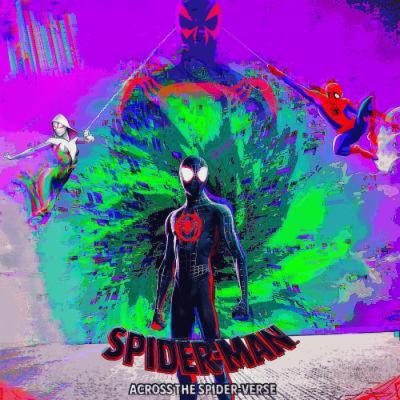
"Spider-Man: Across the Spider-Verse" Soundtrack Lyrics
Movie • 2023
Track Listing
Metro Boomin, Coi Leray
Dominic Fike
Metro Boomin
Pop Money
Metro Boomin
Offset
Metro Boomin
EI8HT
Metro Boomin
Metro Boomin
Metro Boomin
Don Toliver
Metro Boomin
Cut The Lights
Metro Boomin
Metro Boomin
Post Malone
Nucleya
Becky G
Shenseea
Big Boss Vette
Rakim
"Metro Boomin Presents Spider-Man: Across the Spider-Verse (Soundtrack from and Inspired by the Motion Picture)" – Album Guide to Tracks and Key Scenes
Review
What happens when a superhero soundtrack refuses to stay in the background and instead tries to tell its own multiverse story? In Metro Boomin Presents Spider-Man: Across the Spider-Verse, the album and the film wrestle for the spotlight — and, surprisingly, they mostly end up tag-teaming. The movie follows Miles Morales and Gwen Stacy as they swing across parallel universes, chase a glitchy villain called the Spot and collide with the rules-obsessed Spider-Society. Metro’s record sits on top of Daniel Pemberton’s hyperactive score, layering trap drums, woozy R&B hooks and bursts of hard-edged rap over sequences that already pulse with visual noise. On paper it should be too much; in practice, the chaos feels like the point.
The soundtrack’s biggest wins happen when character and song fuse. “Self Love” frames Gwen’s lonely walk through New York; “Annihilate” turns Miles and Gwen’s Brooklyn swing into a victory lap; “Hummingbird” tucks Miles into bed after a rough night, all bittersweet echo and exhaustion. The album is not a tidy collection of “songs from the movie” so much as an alternate comic issue — sometimes on-panel, sometimes off to the side, always orbiting Miles’s coming-of-age. A few tracks barely surface in the film or show up only in marketing, which can make the record feel like its own standalone Metro Boomin project that occasionally crashes into the narrative rather than strictly serving it.
Genre-wise, the album moves in phases that map cleanly to the story. Sleek trap and modern rap — Metro’s home turf — underline Miles’s swagger and the weight of expectation. Dreamy R&B and alt-pop touches (“Mona Lisa,” “Hummingbird”) spell out vulnerability and self-doubt. When the film pivots into canon-event dread and multiversal bureaucracy, Pemberton’s glitchy orchestral-hip-hop score takes over, all scratched vinyl, heavy synths and chanting choirs, signaling that the stakes now sit beyond any one playlist. Classical-style motifs and operatic voices in the score give surface polish, but the ever-present bass and turntable scars remind you that underneath the superhero myth there is still a messy, confused teenager trying to keep his family safe.
How It Was Made
The music for Across the Spider-Verse splits into two intertwined branches. Sony brought back composer Daniel Pemberton, who spent roughly two years experimenting with sounds, building different palettes for each universe and character — scratched orchestral recordings, distorted synths for Miguel O’Hara, whalelike tones for the Spot, Indian instruments for Pavitr, punk guitar for Hobie, plus the return of Miles’s signature three-note motif and Gwen’s expanded theme built around live drums. In parallel, Metro Boomin was announced in late 2022 as the soundtrack’s architect, gradually revealing a roster that includes Future, Lil Uzi Vert, James Blake, Coi Leray, Don Toliver, JID, Nas and more. The main album dropped day-and-date with the film in June 2023, with a deluxe edition adding extra tracks and a later “MetroVerse” instrumental release spotlighting Metro’s production. Pemberton’s score album landed the same day under Sony Classical, giving fans two full-length ways to live in this universe with headphones on.

Tracks & Scenes
This section zeroes in on specific songs — both Metro Boomin cuts and licensed tracks — and how they hook into key moments of the film. Spoilers ahead.
“Self Love (Spider-Man: Across the Spider-Verse)” (Metro Boomin & Coi Leray)
- Where it plays:
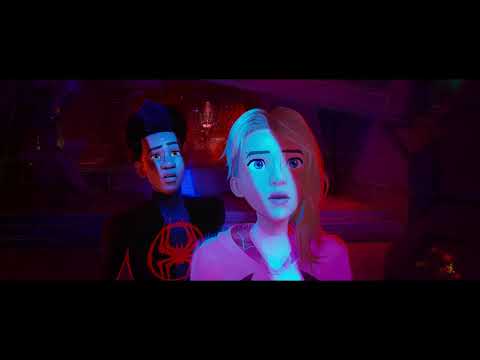
- Early in the film, Gwen walks alone through a watercolor-washed New York, wrestling with the fallout of her secret life and the distance from her father. “Self Love” lays under her narration as she moves across bridges and rooftops, the city blurred like a half-remembered dream. The track is non-diegetic, sliding in and out of the sound design so her drum kit and the vocal hooks feel like the same emotional noise in her head.
- Why it matters:
- The song makes Gwen’s isolation feel contemporary and intimate rather than operatic. Trap-leaning drums and glossy vocal runs frame her not as a tragic heroine but as a young musician who happens to be a superhero — a kid scrolling, ghosting, trying to self-soothe. It quietly sets up the album’s central tension: how do you love yourself when the multiverse thinks it already knows your “canon” story?
“Annihilate (Spider-Man: Across the Spider-Verse)” (Metro Boomin, Swae Lee, Lil Wayne & Offset)
- Where it plays:
- “Annihilate” kicks in when Gwen returns to Miles’s dimension and the two swing through Brooklyn together. Visually it is pure wish fulfilment — skyscraper dives, tandem web-slinging, neon sunset skies — and the track rides that momentum with a triumphant hook and stacked verses. The music is non-diegetic but synced tightly to the movement: snares snap on web-shoots, bass hits line up with building swings, turning the scene into a music video that just happens to advance the plot.
- Why it matters:
- The song sells the feeling that Miles has finally grown into his powers. Lyrical references to leveling up and refusing to fold mirror his new confidence, while Swae Lee’s melodic lines echo the giddy thrill of being seen and chosen — by Gwen, by the Spider-Society, by the audience. It is also a sly callback to “Sunflower” from the first film, positioning this as his bigger, louder second-album moment.
“All The Way Live (Spider-Man: Across the Spider-Verse)” (Metro Boomin, Future & Lil Uzi Vert)
- Where it plays:
- This track scores a montage of Miles trying — and failing — to balance school, family expectations and his Spider-Man duties. We watch him sprint between classes, ditch important meetings, and web up petty criminals while answering phone calls from his parents. The song is non-diegetic but mixed loud; the vocals and ad-libs bleed around dialog, turning the whole sequence into a frantic juggling act where the beat never quite lets him rest.
- Why it matters:
- “All The Way Live” leans into the idea that Miles’s life is constantly at max volume. Future and Uzi’s flexes underline how impossible it is to be present in one role when another constantly demands attention. It becomes the sound of burnout — high-energy, fun, and a little exhausting, just like Miles’s overstretched week.
“Mona Lisa” (Dominic Fike)
- Where it plays:
- Released alongside the film but ultimately living outside the main album in most territories, “Mona Lisa” drops in as Gwen walks Miles through some of the Spider-Verse basics. They drift through the city together, perched on walls, hanging from webs under bridges. The song sits non-diegetically over their conversation, its mellow groove smoothing out the information dump as the visuals whip through stylized cityscapes.
- Why it matters:
- Fike’s laid-back delivery makes a heavy exposition stretch feel like a late-night wander with someone you like. Lyrically it hints at idealized images and the pressure to live up to what others see in you, which mirrors both Miles’s burden as “the anomaly” and Gwen’s fear of breaking her father’s expectations.
“Guess Who’s Back (Buckwild Remix)” (Rakim)
- Where it plays:
- This classic-leaning hip-hop cut appears early, shortly after Gwen’s father learns she is Spider-Woman. The revelation shatters their relationship, and as Gwen swings away from home and into the wider conflict, “Guess Who’s Back” plays over her return to spider-duty. The track is non-diegetic, hitting just as the scene snaps from domestic confrontation to superhero action.
- Why it matters:
- Using a Rakim track grounds the film in hip-hop history, linking Gwen’s story to an older lineage of New York street culture. The title phrase becomes a bitter joke — she is “back” as a hero but out in the cold as a daughter, underscoring how every cool action beat costs her something.
“Gotta Keep Movin On” (Marc Cotterell)
- Where it plays:
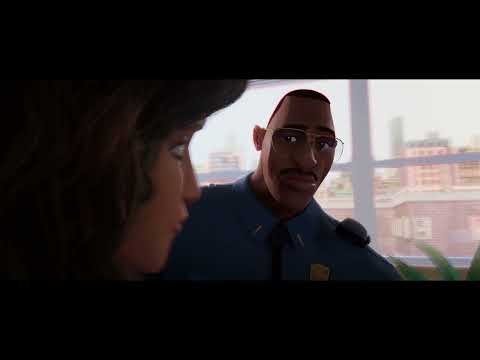
- Later in the first act, a deep-groove house track fades in while Spider-Man and Officer Jefferson Morales share an awkwardly heartfelt talk about life and responsibility. Miles, masked, hangs upside-down or clings to a ledge while his dad vents about his son, not knowing he is talking to him. The music plays non-diegetically but matches the rhythm of their pacing and the city lights behind them.
- Why it matters:
- The smooth, looping beat underlines how the same conversation keeps happening between father and son — just in different masks. The title “Gotta Keep Movin On” mirrors the emotional stalemate; they circle the real topic but never reach it, so all either of them can do is keep moving.
“Essa Mina” (Disfreq)
- Where it plays:
- During Jefferson’s rooftop promotion party in Brooklyn, “Essa Mina” spills out over the crowd as families mingle, kids run between chairs and Miles tries to juggle normal teenage behavior with sneaking off. It plays diegetically through the party speakers, blending with laughter and chatter, before the sound gets sliced up when Miles has to slip away to chase new trouble.
- Why it matters:
- The track’s dance-floor bounce sells the party as a real neighborhood celebration, not just a plot waypoint. That grounded, local energy makes the later Spider-Society drama feel larger; Miles is not just protecting a universe, he is protecting this specific community and this kind of no-stakes joy.
“Silk & Cologne (Spider-Verse Remix)” (Ei8ht & Offset)
- Where it plays:
- Also tied to the promotion party, “Silk & Cologne” kicks in during the rooftop sequence, swirling around the speeches and dancing. The beat feels slick but slightly woozy, and the song is diegetic, beaming from the DJ setup as Miles tries to be physically present at the event while mentally tracking spider-sense triggers and the looming conversation with his parents.
- Why it matters:
- The track’s luxurious feel plays against the improvised string lights and shaky folding tables, highlighting the Morales family’s attempt to make a big moment out of modest tools. It also creates a sonic memory — when the music cuts as things go wrong, the silence hits harder.
“Givin’ Up (Not The One)” (Don Toliver, 21 Savage & 2 Chainz)
- Where it plays:
- “Givin’ Up (Not The One)” plays while Miles races to make it back to Jefferson’s promotion after getting sidetracked by Spider-Man duties. We see him sprinting, web-swinging through traffic, apologizing into his phone, and arriving late and flustered. The song is non-diegetic, riding over quick cuts between heroic saves and missed family beats.
- Why it matters:
- The hook about refusing to give up hits ironically — Miles never stops trying, but he is still failing the people he loves. The tension between the track’s confidence and his visible panic captures that very teenage feeling of believing you can handle everything right up until you obviously cannot.
“Hummingbird” (Metro Boomin & James Blake)
- Where it plays:
- After the party night goes sideways, Miles retreats to his bedroom. “Hummingbird” washes in as he lies on his bed, headphones on, staring at the ceiling and at the sketches on his wall. The track is non-diegetic from our perspective but clearly mirrors what he would choose to hear — soft vocal loops, echoing chords, the sense of being suspended rather than asleep.
- Why it matters:
- James Blake’s voice turns the scene into a confessional. The song leans into themes of fragility and hovering in place, which dovetails with Pemberton’s score cue “My Name Is… Miles Morales” that surrounds other parts of his interior life. Together, they chart the distance between the public hero and the kid alone with his thoughts.
“Bakar Bakar” (Nucleya)
- Where it plays:
- When Miles pursues Gwen through a portal and drops into Mumbattan, “Bakar Bakar” erupts under the chaos. As the camera whips past traffic, billboards and tangled webs over an Indian-inflected skyline, the track’s percussive energy and vocal samples mesh with Pemberton’s Mumbattan score cues. It plays as a stylized, non-diegetic bridge, capturing Miles’s sensory overload.
- Why it matters:
- The song anchors Mumbattan in contemporary Indian club culture rather than generic “exotic” scoring. That choice keeps the Spider-Verse ethos intact — each universe is hyper-specific, not a vague stereotype — and it makes Pavitr’s introduction feel plugged into a real musical world.
“The Sloth” (Roundhead)
- Where it plays:
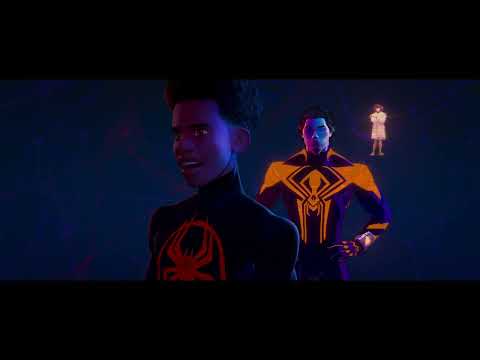
- Inside the Spider-Society HQ, “The Sloth” sneaks in during Miguel O’Hara’s heavy explanation of canon events and the rules he believes must never be broken. The track loops during scenes where he describes how he once broke the canon and lost everything, and again when Miles considers defying the same laws. The song sits almost subliminally under dialog, non-diegetic but present enough to add a grimy pulse.
- Why it matters:
- The slightly off-kilter groove keeps these exposition-heavy scenes from feeling sterile. It reinforces Miguel’s intensity — this is not a distant administrator but someone whose trauma still hums under his skin. When the same musical texture returns as Miles chooses a different path, it underlines the fork in the road between them.
“Ain’t No Love in the Heart of the City” (Bobby “Blue” Bland)
- Where it plays:
- In the Earth-42 final stretch, Miles finds himself tied up in his uncle Aaron’s apartment, facing a universe where his father is dead and he never became Spider-Man. “Ain’t No Love in the Heart of the City” plays as a source track, drifting in over the room and the wider, harsher skyline outside. The bluesy vocal lines hang in the air while Aaron sizes him up and the Prowler twist tightens.
- Why it matters:
- This needle-drop reaches back to classic soul and R&B, suggesting an older, more worn-down world. The lyric about the absence of love in the city transforms from metaphor to fact in this timeline, underlining how losing Jefferson turned Brooklyn into something colder — and hinting at what Miles is fighting to prevent back home.
“Nonviolent Communication” (Metro Boomin, James Blake, A$AP Rocky & 21 Savage)
- Where it plays:
- “Nonviolent Communication” appears as Miles steels himself to protect his family at any cost, even as the Spot threatens to turn his parents into collateral damage. The song plays non-diegetically over a tense build-up, cutting between the villain gaining power and Miles arguing with the Spider-Society about whether his father’s death is a “fixed” point in time.
- Why it matters:
- The title references a philosophy of empathy and de-escalation, which clashes starkly with what is actually happening on screen. That friction is the whole point: the track sounds smooth and introspective, but the lyrics and guest verses bristle with threat and defiance, mirroring Miles’s refusal to accept a supposedly inevitable tragedy.
“Am I Dreaming” (Metro Boomin, A$AP Rocky & Roisee)
- Where it plays:
- Near the film’s cliffhanger, after the canon rules have shattered and everyone scatters to prepare for the next battle, “Am I Dreaming” floats in. We see Gwen assembling her rescue team, glimpses of Miles stranded on Earth-42, and other Spider-variants gearing up. The track is non-diegetic, leaning into reverb and layered vocals as the movie slows down before its final sting.
- Why it matters:
- The song’s hazy, almost suspended feel sells the sense that Miles is living in a nightmare that still looks like his life. The repeated questions in the lyrics mirror the characters’ doubts about fate, destiny and whether they can really rewrite the script — setting up the third film as both a sequel and a possible jailbreak from canon.
“Calling (Spider-Man: Across the Spider-Verse)” (Metro Boomin, Swae Lee, Nav & A Boogie wit da Hoodie)
- Where it plays:
- “Calling” rolls over the end credits, following the “To Be Continued” card. As names scroll, the track moves through romantic hooks, guest verses and callbacks to film imagery. It is pure non-diegetic soundtrack mode here, designed for streaming playlists as much as for theaters, but it still carries the afterglow of Miles and Gwen’s complicated bond.
- Why it matters:
- The credit placement formalizes “Calling” as the record’s flagship single. Thematically it folds the whole film into one idea — someone out there is calling to you, whether that is a person, a responsibility, or a universe that insists you play your role. It is the sonic bridge straight into replaying the album on your phone as you leave the cinema.
Score Spotlight: “My Name Is… Miles Morales” (Daniel Pemberton)
- Where it plays:
- This cue underscores Miles’s self-introduction and parts of his everyday routine early on. Record-scratched orchestra hits, Latin percussion, and his three-note motif collide with city sound effects that are literally scratched like DJ samples. The sequence cuts between school, family life and spider duties, with the music constantly remixing itself.
- Why it matters:
- Pemberton uses this track as the score’s thesis statement. It insists that Miles’s inner soundtrack is as much hip-hop as it is traditional superhero brass, and it establishes a musical language the film can warp whenever the story crosses into another universe.
Notes & Trivia
- The Metro Boomin album and Pemberton’s score were released the same day, turning the film into a two-disc listening experience — one song-driven, one purely instrumental.
- “Mona Lisa” was initially tied to the deluxe soundtrack before being pulled and folded into Dominic Fike’s own studio album, which is why it feels half inside, half outside the Spider-Verse canon.
- “Hummingbird” samples the vintage song “Tonight You Belong to Me,” tying a nostalgic lullaby to Miles’s late-night anxiety spiral.
- Several Metro tracks include hidden backing vocals from the film’s voice cast, including Shameik Moore, Hailee Steinfeld, Brian Tyree Henry and Oscar Isaac, blurring the line between diegetic dialog and album ad-libs.
- Marketing for the film previewed “Link Up” in a Hyundai spot before the full tracklist was even public, using the car ad as an unofficial early single drop.
- “Nas Morales” uses samples from French and American songs, mirroring the way the Spider-Verse itself is a mashup of visual and musical influences.
- The score’s “goose scratch solo” — yes, an actual scratched goose sound — appears in “My Name Is… Miles Morales” and represents the film’s playful approach to sound design.
Reception & Quotes
Critical response split slightly along the album/score line. Daniel Pemberton’s work was widely praised in film-music circles as an inventive, dense continuation of his Into the Spider-Verse ideas, with reviewers singling out the expanded themes for Miles and Gwen and the way each universe gets its own sonic fingerprint. The Metro Boomin album drew more mixed but generally positive reactions — lauded for star power and high points like “Annihilate” and “Self Love,” questioned when it drifted too far from the on-screen story.
“Pemberton’s score expands the Spider-Verse sound into something even wilder, without ever losing Miles’s beating heart.” — Soundtrack World
“A thunderously enjoyable continuation of one of the most distinctive superhero scores in recent memory.” — Zanobard Reviews
“Metro Boomin’s tie-in plays more like a straight rap album than a traditional soundtrack, with synergy that hits in flashes rather than wall to wall.” — Pitchfork
“High-energy beats and slower, methodical rhythms help give the franchise a fresh, unmistakable identity.” — Screen Rant
On the awards front, Pemberton’s score showed up on major year-end shortlists, including recognition from film critics and a nomination for the Ivor Novello Best Original Film Score, and it factored into best-score conversations around the same time as Oppenheimer and Poor Things. The film itself landed prominent best-animated-feature nods, often with the music called out as a key reason it stood apart. Commercially, Metro’s album debuted in the top ten of the Billboard 200 and topped R&B/hip-hop album charts, while both soundtrack and score quickly landed on streaming platforms worldwide alongside CD and vinyl editions.
Interesting Facts
- Each major Spider-person effectively gets a musical “home universe”: Gwen with drums and emotional synths, Miles with scratched hip-hop-orchestra hybrids, Pavitr with Indian-inflected grooves, Hobie with jagged punk.
- The soundtrack’s deluxe edition quietly smuggles in more global flavors — reggaeton, Afro-fusion, Latin trap — reflecting how wide the Spider-Verse fanbase has become.
- Some fans built “movie-order” playlists combining Metro tracks, licensed songs and the score, turning the entire film into a beat-by-beat audio journey you can follow without visuals.
- “Nas Morales” essentially casts Nas as a mentor voice from Miles’s own record collection, giving him a legendary Queensbridge co-sign inside a Brooklyn-centric story.
- The MetroVerse instrumental release gives cosplayers, editors and streamers clean versions of the beats, which has helped the music live on in fan edits and TikToks far beyond the cinema run.
- Pemberton has joked that he will never reveal all the hidden tricks in the score — from unusual recording locations (including a London cemetery for reverb) to tucked-away motifs that only appear for a few bars.
- Because the film ends on a cliffhanger, some cues in the score function as unresolved musical sentences, designed to pick up again in Beyond the Spider-Verse.
Technical Info
- Title (album): Metro Boomin Presents Spider-Man: Across the Spider-Verse (Soundtrack from and Inspired by the Motion Picture)
- Film: Spider-Man: Across the Spider-Verse (animated feature)
- Year of release: 2023
- Type: Curated original soundtrack album (Metro Boomin) + original motion picture score (Daniel Pemberton)
- Primary producers / composers: Metro Boomin (soundtrack executive producer and primary producer); Daniel Pemberton (original score composer)
- Music supervision / curation: Soundtrack executive production by Metro Boomin, with additional production from Dr. Luke, Mike Dean, Dre Moon, Honorable C.N.O.T.E. and others; score supervised and mixed across multiple studios for Sony Pictures Animation.
- Key soundtrack artists: Swae Lee, Lil Wayne, Offset, Future, Lil Uzi Vert, A$AP Rocky, Roisee, James Blake, Don Toliver, Wizkid, Beam, Toian, Coi Leray, 21 Savage, 2 Chainz, Nas, Dominic Fike and more.
- Notable placements (album tracks): “Self Love” over Gwen’s New York walk; “Annihilate” during Miles and Gwen’s Brooklyn swing; “Hummingbird” in Miles’s bedroom; “Link Up” and “Silk & Cologne” at Jefferson’s rooftop promotion; “Am I Dreaming” near the cliffhanger; “Calling” over the end credits.
- Notable placements (licensed songs): “Guess Who’s Back (Buckwild Remix)” after Gwen’s identity reveal; “Gotta Keep Movin On” during the Spider-Man / Officer Morales rooftop talk; “Bakar Bakar” as Miles enters Mumbattan; “The Sloth” during Miguel’s canon speech; “Ain’t No Love in the Heart of the City” while Miles is held by Aaron on Earth-42.
- Score highlights: “Across the Spider-Verse (Intro)”; “Spider-Woman (Gwen Stacy)”; “My Name Is… Miles Morales”; “Spider-Man India (Pavitr Prabhakar)”; “Spider-Punk (Hobie Brown)”; “Canon Event”; “All Stations – Stop Spider-Man”; “Across the Spider-Verse (Start a Band)”.
- Release context: Both Metro’s soundtrack and Pemberton’s score released June 2, 2023, alongside the film’s wide theatrical rollout.
- Labels: Boominati Worldwide and Republic Records (soundtrack); Sony Classical (original score).
- Formats: Digital streaming (major platforms), download, CD and vinyl editions for both soundtrack and score; later “MetroVerse” instrumental edition for key soundtrack tracks.
- Chart notes: Soundtrack debuted in the top ten of the Billboard 200 and hit number one on the Top R&B/Hip-Hop Albums chart, with strong showings in multiple international album charts.
- Awards & recognition (music): Score shortlisted and discussed in major best-original-score races and nominated for an Ivor Novello Award; the film itself received significant best-animated-feature nominations where the music was frequently cited as a standout element.
Key Contributors
| Subject | Relation | Object |
|---|---|---|
| Metro Boomin | produced and curated | Metro Boomin Presents Spider-Man: Across the Spider-Verse (Soundtrack from and Inspired by the Motion Picture) |
| Daniel Pemberton | composed | Spider-Man: Across the Spider-Verse (Original Score) |
| Joaquim Dos Santos, Kemp Powers, Justin K. Thompson | directed | Spider-Man: Across the Spider-Verse (film) |
| Sony Pictures Animation | produced | Spider-Man: Across the Spider-Verse (film) |
| Marvel Entertainment & Arad Productions | co-produced | Spider-Man: Across the Spider-Verse (film) |
| Columbia Pictures & Sony Pictures Releasing | distributed | Spider-Man: Across the Spider-Verse (film) |
| Republic Records & Boominati Worldwide | released | Metro Boomin soundtrack album |
| Sony Classical | released | original score album by Daniel Pemberton |
| Shameik Moore | voiced | Miles Morales / Spider-Man in the film and appears as a sampled voice on several soundtrack tracks |
| Hailee Steinfeld | voiced | Gwen Stacy / Spider-Woman and contributes to select vocal textures on soundtrack tracks |
| Oscar Isaac | voiced | Miguel O’Hara / Spider-Man 2099 and adds additional vocals on some Metro Boomin tracks |
| James Blake | performed and co-produced | “Hummingbird” and “Nonviolent Communication” on the soundtrack |
| Nas | performed | “Nas Morales” on the soundtrack |
Questions & Answers
- Who actually made the Spider-Man: Across the Spider-Verse music?
- The film’s music splits in two: Daniel Pemberton composed the original score, while Metro Boomin curated and produced the companion hip-hop-driven soundtrack album with a long list of featured artists.
- What is the main difference between the Metro Boomin soundtrack and the original score?
- The Metro album behaves like a modern rap and R&B record that occasionally syncs to scenes, whereas Pemberton’s score is woven under almost every frame, using motifs and sound design tricks to track character arcs and universe jumps.
- Which songs play during Miles and Gwen’s big swing through Brooklyn?
- The standout is “Annihilate,” which turns their shared swing sequence into a full-blown victory montage, with Pemberton’s score textures still peeking through underneath to keep Miles’s established motifs in play.
- What tracks carry the ending and credits?
- “Am I Dreaming” plays around Gwen assembling a rescue team and the film’s cliffhanger, while “Calling” rolls over the main end credits; other album cuts like “Nas Morales” are more associated with the album’s epilogue vibe and promotional use than specific on-screen beats.
- Where can I listen to the soundtrack and the score?
- Both the Metro Boomin soundtrack and Daniel Pemberton’s original score are on major streaming platforms, with CD and vinyl editions available; Metro later released a MetroVerse instrumental version focusing on the beats, while the score album gathers the full orchestral-electronic cues.
Sources: Wikipedia – Spider-Man: Across the Spider-Verse (soundtrack); Maplehorst – Across the Spider-Verse soundtrack guide; Soundtracki – Spider-Man: Across the Spider-Verse Soundtrack; The Credits – Daniel Pemberton interview; Soundtrack World review; Zanobard Reviews; Pitchfork album review; Uproxx soundtrack review; awards coverage from Pitchfork, The Guardian and Critics Choice reporting.
November, 27th 2025
A-Z Lyrics Universe
Cynthia Erivo Popular
Ariana Grande Horsepower
Post Malone Ain't No Love in Oklahoma
Luke Combs Good Riddance (Time of Your Life)
Green Day Bye Bye Bye
*NSYNC You're the One That I Wan
John Travolta & Olivia Newton-John I Always Wanted a Brother
Braelyn Rankins, Theo Somolu, Kelvin Harrison Jr. and Aaron Pierre The Power of Love
Frankie Goes to Hollywood Beyond
Auli’i Cravalho feat. Rachel House MORE ›