Soundtracks:  A B C D E F G H I J K L M N O P Q R S T U V W X Y Z #


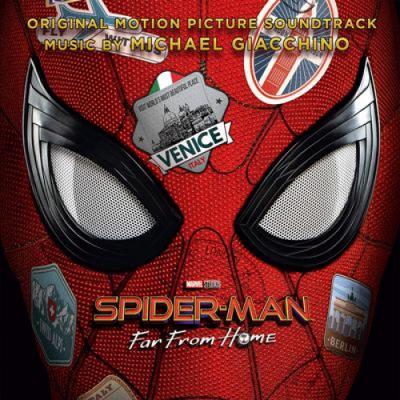
Spider-Man: Far From Home Album Cover

"Spider-Man: Far From Home" Soundtrack Lyrics

Movie • 2019

Track Listing


"Spider-Man: Far From Home (Original Motion Picture Soundtrack)" – Album Guide to Tracks and Key Scenes

Spider-Man: Far From Home official trailer frame with Peter Parker in his suit overlooking a European city
Spider-Man: Far From Home movie and score artwork, 2019

Review

How do you score a superhero movie that is secretly about jet lag, grief and a very messy study-abroad crush? Spider-Man: Far From Home (Original Motion Picture Soundtrack) answers with a mix of glossy orchestral writing, sly genre jokes and a suitcase full of needle drops. The film sends Peter Parker and his classmates on a European trip in the shadow of Tony Stark’s death, only to throw in monsters made of “Elementals” and a charming fraud named Mysterio. Michael Giacchino’s score stitches all of that together: a bold, brassy Spider-Man theme, a noble but suspicious Mysterio motif, and little echoes of earlier MCU music that keep Tony’s ghost in the room. Around it, Italian pop songs, ’70s punk, classic rock and Euro-cheese fill in the travelogue vibe.

The soundtrack plays a double game. On one level it sells the vacation fantasy — Vespa-ready Italian tunes in Venice, opera and café music in Prague, a ska classic hiding in the post-credits. On another, it keeps reminding you that Peter cannot escape his responsibilities, no matter how many postcards he collects. Big action cues like “World’s Worst Water Feature” and “Gloom and Doom” slam brass against churning percussion as the fake Elementals attack, while more intimate pieces like “It’s Perfect” and “Taking the Gullible Express/Spidey Sensitive” give his awkward romance with MJ and his guilt over Tony some breathing room. The needle drops are clever, but it is Giacchino’s ability to pivot from goofy to sincere in a bar or on a bridge that really keeps the story glued together.

Stylistically, the album moves through clear phases that mirror Peter’s headspace. Bright, slightly kitschy European pop and cha-cha cues score the early “school trip” chapter — Stella stai, Bongo cha cha cha, Amore di tabacco — all sunshine and sightseeing. Classic rock and punk (AC/DC’s “Back in Black,” the Ramones’ “I Wanna Be Your Boyfriend”) kick in whenever the film lines Peter up next to Tony’s legacy or pushes his love life forward. Giacchino’s orchestral adventure writing supplies the surface polish, while synths, ghostly choir and warped motifs sneak in whenever Mysterio’s illusions take over, hinting that the glamorous superhero fantasy is literally fake. By the time the score reaches its London climax, the music has shifted from “holiday playlist” to full-on identity crisis.

How It Was Made

Michael Giacchino returned from Spider-Man: Homecoming to score Far From Home, bringing back his main Spider-Man theme and reshaping it for a post–Endgame Peter who now carries Tony Stark’s legacy on his shoulders. He wrote a full orchestral score with electronics, recording for Sony with his usual team, while weaving in winking track titles like “World’s Worst Water Feature,” “Praguenosis: BAD” and “The Magical Mysterio Tour.” The score album dropped via Sony Classical on June 28, 2019, just before the film’s wide release, running about 80 minutes and collecting 25 cues from the movie. Alongside Giacchino’s work, the music department licensed a run of European and American songs — from Whitney Houston and AC/DC to Caterina Valente and the Ramones — plus a Japanese end-theme, “Neighbormind” by Ling Tosite Sigure, used for the Japanese dub. Together they built a soundtrack that feels like a slightly chaotic playlist Peter’s classmates might actually share.

Behind-the-scenes style image of Spider-Man swinging over European landmarks at sunset
Giacchino’s score balances holiday vibes with superhero stakes

Tracks & Scenes

Below are key songs and score cues — plus a few trailer tracks — and where they land in the story. Time to replay the European trip in your head.

“I Will Always Love You” (Whitney Houston)

Where it plays:
The film opens on the Marvel Studios logo, but instead of thunderous fanfare we hear Houston’s power ballad drifting in over a low-res student-made “In Memoriam” video. At Midtown High’s news broadcast, photos of Tony Stark, Steve Rogers, Natasha Romanoff and Vision cross-fade with clip-art doves and Comic Sans titles. The song runs non-diegetically across the logo and diegetically as part of the school tribute video, then cuts off abruptly when the presenters lose their composure.
Why it matters:
Starting with a melodramatic ’90s ballad as a joke immediately sets the tone: this is a story about grief filtered through teenage cringe. The choice underlines how Peter’s classmates process world-shaking events with the tools they have — PowerPoint, stolen Getty images and one of the most famous breakup songs ever recorded. It also frames Tony Stark as both fallen hero and slightly embarrassing dad figure.

“If You’re Snappy And You Know It” (Mick Giacchino)

Where it plays:
In a flashback explaining “the Blip,” the school band performs a chaotic, off-key version of this kids’ song in the gym. Brass wobbles, a snare comes in late and the whole thing feels like a bad assembly performance. Midway through, half the musicians vanish as Thanos’s snap hits. Five years later they reappear mid-song, colliding with a new game on the court while everyone screams. The track is diegetic, coming from the band’s instruments, and it cuts sharply with the visual jump.
Why it matters:
The goofy piece, written by Giacchino’s brother Mick, turns cosmic annihilation into a surreal school anecdote. It shrinks an enormous event down to something Peter’s peers can joke about on TikTok, which makes Peter’s heavier feelings about Tony’s death stand out even more.

“Stella stai” (Umberto Tozzi)

Where it plays:
On the flight to Venice, Peter’s exhausted classmates sprawl across airplane seats while a cheerful slice of late-’70s Italian pop hums underneath. We see MJ reading, Ned getting way too invested in the flight, and Peter nervously trying to plan his big romantic gesture with a Black Dahlia necklace. The song is non-diegetic, but it blends so smoothly with the cabin ambience that it feels like the kind of track an airline playlist would actually spin.
Why it matters:
The track sells the fantasy that this is just a normal school trip. It roots the movie in a specific European mood and lets us sit with Peter as a lovestruck kid before Mysterio, drones and Elementals crash the itinerary.

“Bongo Cha Cha Cha” (Caterina Valente & Werner Müller and His Orchestra)

Where it plays:
As the plane lands and the group heads from the airport into Venice, this 1959 cha-cha hit kicks in. We watch their bus weave through traffic and over causeways, cutting between canals, tourists and Peter’s classmates pressed against the windows. The rhythm bounces along with the vehicle; the song is non-diegetic first, then appears again as a diegetic source in local speakers and cafés as they arrive at the hotel.
Why it matters:
The track instantly paints Venice as a postcard version of itself — retro, sunny, a little kitschy. Because Giacchino’s score mostly stays out of the way here, the song gets to define Peter’s first impression of Europe. That contrast makes the later water-monster attack feel even more shocking.

“Amore di tabacco” (Mina)

Where it plays:
A montage shows Peter’s class wandering through Venice’s alleys and squares; souvenir stands blur past, pigeons explode into flight, and MJ hangs back with her camera. Mina’s smoky Italian pop tune floats over the images, lightly romantic but tinged with wistfulness. The track is non-diegetic, cross-fading with city ambience and short bursts of dialog as teachers try (and fail) to wrangle the group.
Why it matters:
The song casts Venice as a place of flirtations and missed chances. Its relaxed groove underlines Peter’s hope that this trip will finally let him confess to MJ, which makes the later destruction and illusions feel like the universe rudely interrupting his plans.

“It’s Perfect” (Michael Giacchino)

Where it plays:
This short cue appears when Peter spots the Black Dahlia necklace in a shop window and decides it’s the ideal gift for MJ. Strings and woodwinds play a gently romantic variation of his main theme while he debates the price, agonizes over timing and finally commits. The music is non-diegetic, almost like a little rom-com flourish hiding inside a superhero movie.
Why it matters:
The piece shows how Giacchino treats Peter’s love life as seriously as the big battles. The melody is sweet but not syrupy, signaling that this relationship matters to the story and not just as comic relief.

“World’s Worst Water Feature” (Michael Giacchino)

Where it plays:
When the Water Elemental erupts from the canal and attacks Venice, this long action cue powers the sequence. Brass blasts, pounding percussion and swirling strings follow Peter as he ditches his classmates, scrambles over rooftops and tries to help without his suit. The track ramps up further when Mysterio arrives, blasting green energy at the creature while Notre Dame–style bell towers topple. It is fully non-diegetic but tightly synced to punches, jumps and collapsing masonry.
Why it matters:
Beyond being a showpiece action track, it introduces Mysterio’s pseudo-heroic sound — noble brass lines that later twist darker once we know the truth. The slightly tongue-in-cheek title also reminds us that Giacchino is in on the joke.

“Multiple Realities” (Michael Giacchino)

Where it plays:
After the Venice battle, Peter finally sits down with Nick Fury and Quentin Beck. In a dim safe house, Beck explains the supposed story of the Elementals and the multiverse. The cue underpins his speech with mysterious strings, a gentle choir and the first full statement of his soaring “hero” theme. The camera slowly circles the table, and the music feels like it is inviting us to trust this guy.
Why it matters:
This is the musical version of a con. Giacchino writes Beck as a classic MCU savior, then later reuses and distorts this material once the illusion drops, so your ears feel betrayed right alongside Peter.

“Town Called Malice” (The Jam)

Where it plays:
In Prague, Peter and Beck duck into a cozy bar while the rest of the class enjoys a carnival outside. “Town Called Malice” plays over the speakers as they chat, share a beer (for Peter, reluctantly) and bond about responsibility and sacrifice. The song is diegetic, filtering through the bar’s sound system and muffling slightly when the camera cuts to Peter’s introspective close-ups.
Why it matters:
The punchy, bittersweet track adds a layer of British cool to Beck’s performance. Lyrically it hints at disillusionment with small-town life, which fits a guy who claims to have lost his whole world. Once we know he staged the whole meeting, the song retroactively feels like part of the show.

“Praguenosis: BAD” (Michael Giacchino)

Where it plays:
This score cue appears as Peter and MJ piece together that the Elementals are faked using projection drones. In a quiet room in Prague, MJ confronts Peter with a piece of Mysterio tech she picked up, and the music tightens: pizzicato strings, wary woodwinds and a nervous heartbeat of percussion. As they both realize how deep the deception goes, the cue ramps into more urgent variations of the Spider-Man motif.
Why it matters:
It is the sound of Peter’s holiday turning into a horror story. The playful pun in the title hides the fact that this is one of the score’s key tension pieces, pivoting the movie from “class trip gone wrong” to full-on conspiracy.

“The Magical Mysterio Tour” (Michael Giacchino)

Where it plays:
After Peter travels to Berlin and meets who he thinks is Fury, Mysterio springs his trap. This cue fuels the brutal illusion sequence: the school hallway that turns into rubble, zombie Iron Man crawling out of a grave, endless corridors of mirrors and multiple Becks. The music blends orchestra, eerie choir and glitched electronics, surging and collapsing as Peter loses all sense of what’s real. It is fully non-diegetic but drives the hallucination like a horror attraction.
Why it matters:
Here the score finally embraces the psychedelic side of the MCU. Giacchino warps his own themes and throws in sound-design elements, making the music feel as unreliable as the visuals. It is one of the film’s most memorable set-pieces, and the cue is a big reason why.

“Taking the Gullible Express / Spidey Sensitive” (Michael Giacchino)

Where it plays:
After Mysterio tricks Peter into stepping in front of a train, we cut to Peter waking up bruised in a Dutch jail cell, then calling Happy Hogan for help. The cue carries him onto Happy’s jet and into a quiet heart-to-heart about Tony. Soft piano and strings support Peter admitting that he feels like he has failed everyone; then the music swells into a determined, heroic build as he starts designing a new suit at the holo-table. It plays non-diegetically over the entire emotional arc.
Why it matters:
This is Peter’s real “I am Spider-Man” moment, and the cue treats it as such. It echoes Tony’s armor-building montages but leans harder into Peter’s theme, musically passing the torch while still acknowledging the weight of the legacy.

“Back in Black” (AC/DC)

Where it plays:
On Happy’s jet, Peter cues up music while he works on his suit. AC/DC’s “Back in Black” blasts out, and Happy smiles at the callback to his time with Tony. Peter, oblivious, says, “I love Led Zeppelin!” over the opening riff. The song is diegetic, roaring from the jet’s speakers while holo-displays flicker and Peter tests web combinations.
Why it matters:
It is a direct musical bridge back to the first Iron Man, where the same track scores Tony’s arrival in Afghanistan. Using it here connects Peter to Tony’s DIY engineer energy while also reminding us that Peter is still a kid who gets the band name wrong.

“Gloom and Doom” (Michael Giacchino)

Where it plays:
As Mysterio arrives in London and fuses all the Elementals into one giant fake threat, this cue drives the build-up. Low brass and ominous choir roll under sweeping shots of Tower Bridge, panicked crowds and shield agents scrambling. The track then slides into more frenetic action writing as Peter dives into the illusion cloud and battles the drones inside.
Why it matters:
It gives the final act a sense of MCU-scale menace, even as the story keeps reminding us everything on screen is fabricated. The music sells the danger so the eventual reveal — that it is all weaponized theatricality — lands harder.

“I Wanna Be Your Boyfriend” (Ramones)

Where it plays:
Back home in Queens, after London and the truth about Mysterio, Peter and MJ officially become a couple. As they walk through the city hand-in-hand, this sweet Ramones track kicks in, wrapping their awkward but sincere romance in jangly punk. It continues over classmates returning to normal life and teachers debriefing the “science trip.” The song is non-diegetic, functioning almost like a mini end-credits celebration before the actual credits.
Why it matters:
Peter’s love of the Ramones already showed up in Homecoming, so using another track here makes the relationship feel grounded in his own tastes. It is a small, human reward after two films of near-misses and interrupted confessions.

“Swinging Set” (Michael Giacchino)

Where it plays:
This cue scores Peter’s big swing with MJ through New York right before the mid-credits stinger. Over a bright, propulsive version of his theme, we watch MJ scream, cling to him, then start to maybe enjoy the ride as they arc between skyscrapers. The music hits all the classic web-swinging beats, finishing on a triumphant cadence as they land.
Why it matters:
It is pure superhero wish-fulfilment, but with a twist: Giacchino keeps little comic stabs and rhythm switches in the brass, matching MJ’s terror and Peter’s slightly chaotic style. It is the “friendly neighborhood” theme dialed up to first-date intensity.

“Vacation” (The Go-Go’s)

Where it plays:
During the main end credits, “Vacation” kicks into full pop mode. After all the Elementals, illusions and mid-credits identity reveal, the song feels almost sarcastically upbeat. Animated postcards and maps flip by as names roll, echoing the early travelogue but now with the knowledge that Peter’s life is anything but a holiday.
Why it matters:
The song wraps the film’s original marketing hook — this is the “European vacation” Spider-Man movie — into a punchline. It also cements the movie’s love of slightly left-field ’80s and ’90s pop, which helps differentiate its sonic identity from more serious MCU entries.

“A Message to You, Rudy” (The Specials)

Where it plays:
In the post-credits scene, we cut to space and discover that “Nick Fury” and “Maria Hill” were actually Skrulls Talos and Soren all along. As Fury walks around a cosmic simulation of a beach and takes a call, this ska classic plays, relaxed and sly. It is diegetic in the scene’s beach illusion, then fades under Marvel’s end cards.
Why it matters:
Choosing a laid-back ska tune for a reveal that recontextualizes the whole film is very on-brand for Marvel. It says, “Yes, the stakes are huge, but we are still having fun,” and leaves you with a grin instead of dread.

“Neighbormind” (Ling Tosite Sigure)

Where it plays:
For the Japanese release, this alt-rock track serves as the theme for the Japanese-dubbed version, used in local marketing and tied to the film’s credits there. Over urgent guitars and TK’s sharp vocals, we see flashes of Peter’s European journey and Mysterio’s illusions cut into Japanese trailers and promos.
Why it matters:
It underlines how global the Spider-Man brand is. Musically, it sits closer to anime opening themes than to the American needle drops, giving the same story a different emotional accent for Japanese audiences.

Trailer songs: “I Wanna Be Sedated” (Ramones), “Tambourine” (Mr Gabriel), “Free Rider” (Spirit City)

Where they play:
The teaser trailer leans hard on “I Wanna Be Sedated,” cutting between Peter’s school life and European chaos in time with the Ramones’ classic rush. Other marketing spots use “Tambourine” and “Free Rider,” pairing breezy indie-pop hooks with shots of web-slinging over Prague and London, and quick glimpses of Mysterio’s “heroic” entrances.
Why they matter:
These tracks do not appear in the finished film, but they set expectations for a lighter, travel-comedy tone and tied the movie to a playlist-friendly, guitar-driven sound. They helped position Far From Home as a fun epilogue to the heavier Endgame.

Score Spotlight: “Far From Home Suite Home” (Michael Giacchino)

Where it plays:
This end-credits suite appears after the mid-credits and post-credits scenes. It acts as a medley, weaving Peter’s theme, Mysterio’s motif and variations on the romantic material over one long, eight-minute track. Stylized graphic credits and graffiti-like illustrations of Spidey’s adventures scroll underneath.
Why it matters:
The piece is Giacchino’s summary of the whole film in musical form — grief, travel, deception, first love and a cliffhanger. It also functions as the album’s calling card, giving you the main ideas in one satisfying listen if you are not a full-score nerd.
Spider-Man swinging between London landmarks during the climactic battle in Far From Home
Key cues like “Gloom and Doom” and “Bridge and Love’s Burning” turn London into a musical battleground

Notes & Trivia

  • Giacchino sneaks little Iron Man–style harmonic progressions into several cues, especially “Taking the Gullible Express/Spidey Sensitive,” to underline how strongly Tony still shapes Peter’s choices.
  • Whitney Houston’s “I Will Always Love You” became a mini-meme after release; fans kept cutting their own fake memorial videos in the style of the film’s hilariously bad school news segment.
  • “Bongo Cha Cha Cha” blew up on TikTok in 2021 partly because users rediscovered it through Far From Home, turning an old Italian cha-cha into a summer trend.
  • The Venice sequence essentially runs on three different musical layers: old Italian pop, Giacchino’s action score and the diegetic sounds of street performers and café music.
  • “Town Called Malice” in the bar scene plays like a reward for British viewers who grew up with The Jam, while also doubling as a sly comment on Beck’s very British brand of faux modesty.
  • Back in Black’s return makes Peter look like he is following in Tony’s footsteps, but the script undercuts that idea later by having him reject the idea of becoming “the next Iron Man.”
  • The Ramones have now soundtracked two MCU Spider-Man films — “Blitzkrieg Bop” in Homecoming and “I Wanna Be Your Boyfriend” here — making them a quiet through-line for this version of Peter.

Reception & Quotes

Among film-music writers, Spider-Man: Far From Home generally landed as a strong, slightly darker continuation of Giacchino’s Homecoming work. Reviews praised the confident use of established themes, the playful track titles and the more elaborate action writing for Venice and London. Some listeners did wish for a more radically new Spider-Man theme, but most agreed that the existing motif deepened nicely in a story focused on stepping out of Tony Stark’s shadow.

The needle drops drew their own attention. Fans and outlets highlighted the smart use of Whitney Houston’s ballad in the opening and singled out AC/DC and Ramones cuts as the rock anchors in an otherwise pop-and-score-heavy soundscape. The surprise revival of “Bongo Cha Cha Cha” became a talking point in European and Italian press, especially once the song started trending again online. Meanwhile, Japanese music sites and J-rock fans latched onto Ling Tosite Sigure’s “Neighbormind” as a neat crossover between anime-adjacent rock and the MCU.

“Most of the thematic ideas are presented in the opening ‘Far From Home Suite Home,’ which plays like a mini-concerto for Spider-Man and Mysterio.” — MovieMusicUK
“The highlights lie in lengthy, propulsive set-pieces like ‘World’s Worst Water Feature’ and ‘Gloom and Doom,’ where Giacchino’s Spider-Man theme really gets to soar.” — Soundtrack World
“Taking the Gullible Express/Spidey Sensitive opens with a particularly dark Mysterio variation before blooming into one of the score’s most emotional, hopeful statements.” — Zanobard Reviews
“Not his most groundbreaking Marvel score, but a stylish, satisfying sequel that smartly deepens the musical links between Spider-Man and the wider MCU.” — Filmtracks

The score picked up a nomination at the Hollywood Music in Media Awards for best original score in a sci-fi/fantasy film and sits comfortably in discussions of Giacchino’s better blockbuster work. On streaming platforms, the album has racked up tens of millions of plays, with “Far From Home Suite Home” and “World’s Worst Water Feature” among the most replayed cues.

Stylized Far From Home end credits artwork with bright colors and Spider-Man graffiti
End credits pair “Far From Home Suite Home” with postcard-style graphic design

Interesting Facts

  • The score album’s track titles are full of puns — “Praguenosis: BAD,” “Tower of Cower,” “Mr. One Hundred and One” — matching the script’s fondness for dad jokes and teacher humor.
  • “Neighbormind” ties Far From Home to Ling Tosite Sigure’s world; vocalist TK also sang the Japanese theme for Into the Spider-Verse, so the animated and live-action films share a musical bridge in Japan.
  • Several classical pieces appear diegetically: Debussy’s “Arabesque No. 1” and an opera excerpt from Smetana’s The Devil’s Wall give the Prague sequences a very old-world texture before the drones crash the party.
  • The music in the opera house scene keeps playing while Peter and MJ sneak away to investigate; when the illusion attacks kick in, Giacchino’s score and the staged opera collide into a weird, unsettling mash-up.
  • The soundtrack’s European deep cuts — Czech pop like “Slnko” and “Snad jednou ti dám,” folk-flavored “Moravian Polka” — help sell the idea that Peter is genuinely far from New York, not just in front of generic postcard backdrops.
  • Giacchino’s Spider-Man theme now runs across three MCU films, making it one of the more stable musical through-lines in a franchise that often rotates composers and motifs.
  • Because Far From Home closes out Phase Three of the MCU, its score quietly recaps that era’s big emotional beats — namely Tony’s sacrifice — while nudging Peter into a more independent musical identity for the next phase.

Technical Info

  • Title (album): Spider-Man: Far From Home (Original Motion Picture Soundtrack)
  • Film: Spider-Man: Far From Home
  • Year of release (film / album): 2019 (film premiered June 26, 2019; soundtrack album released June 28, 2019)
  • Type: Original motion picture score (with additional licensed songs used in the film and marketing)
  • Primary composer / producer: Michael Giacchino (composer, score producer)
  • Key score personnel: Orchestration by Jeff Kryka; conducting by Marshall Bowen; recording and mixing by Peter Cobbin and Kirsty Whalley; additional score preparation by Pierre Derycz, Ian Gottlieb and Curtis Green.
  • Label: Sony Classical (worldwide release of the score album)
  • Runtime (album): Approximately 79–80 minutes over 25 tracks.
  • Notable score cues: “Far From Home Suite Home,” “World’s Worst Water Feature,” “Multiple Realities,” “Brad to the Drone,” “Praguenosis: BAD,” “The Magical Mysterio Tour,” “Taking the Gullible Express/Spidey Sensitive,” “Gloom and Doom,” “Swinging Set.”
  • Notable licensed songs in the film: “I Will Always Love You” (Whitney Houston); “Stella stai” (Umberto Tozzi); “Bongo Cha Cha Cha” (Caterina Valente); “Amore di tabacco” (Mina); “Town Called Malice” (The Jam); “Back in Black” (AC/DC); “I Wanna Be Your Boyfriend” (Ramones); “Vacation” (The Go-Go’s); “A Message to You, Rudy” (The Specials); various European tracks including “Slnko,” “Snad jednou ti dám,” and “Moravian Polka.”
  • Japanese theme song: “Neighbormind” by Ling Tosite Sigure, used as the theme for the Japanese-dubbed release.
  • Release formats: Digital download and major streaming platforms (Spotify, Apple Music and others), plus CD and limited vinyl editions.
  • Franchise context: Follows Spider-Man: Homecoming (2017) and precedes Spider-Man: No Way Home (2021); part of the broader Sony/Marvel Spider-Man soundtrack chronology.
  • Awards & recognition (music): Michael Giacchino received a Hollywood Music in Media Awards nomination for best original score in a sci-fi/fantasy film; the score is often cited as a strong sequel to his Homecoming work.
  • Streaming / popularity notes: The album has accumulated tens of millions of plays across platforms, with “Far From Home Suite Home” and “World’s Worst Water Feature” among its most-streamed tracks.

Key Contributors

Subject Relation Object
Michael Giacchino composed and produced Spider-Man: Far From Home (Original Motion Picture Soundtrack)
Jon Watts directed Spider-Man: Far From Home (film)
Kevin Feige & Amy Pascal produced Spider-Man: Far From Home (film)
Columbia Pictures & Marvel Studios co-produced Spider-Man: Far From Home (film)
Sony Pictures Releasing distributed Spider-Man: Far From Home (film)
Sony Classical released Spider-Man: Far From Home (Original Motion Picture Soundtrack) album
Tom Holland portrayed Peter Parker / Spider-Man, whose themes dominate the score
Jake Gyllenhaal portrayed Quentin Beck / Mysterio, associated with a distinct deceptive motif in the score
Zendaya portrayed MJ, whose relationship with Peter drives several romantic cues
Whitney Houston performed “I Will Always Love You,” used in the film’s opening memorial sequence
Caterina Valente performed “Bongo Cha Cha Cha,” used during the class’s arrival in Venice
AC/DC performed “Back in Black,” played while Peter builds his new suit on Happy’s jet
Ramones performed “I Wanna Be Your Boyfriend,” heard as Peter and MJ return home as a couple
The Go-Go’s performed “Vacation,” featured over the end credits
Ling Tosite Sigure performed “Neighbormind,” the Japanese theme for the film’s local release

Questions & Answers

Is the Spider-Man: Far From Home album mostly songs or mostly score?
The official album is almost entirely Michael Giacchino’s orchestral score. Most of the pop and rock songs used in the movie — Whitney Houston, AC/DC, the Ramones, Go-Go’s, Italian tracks — are not on the score album and are instead available on their own releases or fan-made playlists.
Why isn’t “I Will Always Love You” on the official soundtrack?
Whitney Houston’s song belongs to a different label and catalog, so it is licensed for the film but sits outside Sony Classical’s score release. That kind of separation is normal: big pop songs in movies often stay on their original albums rather than appearing on a composer-focused score album.
What’s the Italian song when Peter’s class first arrives in Venice?
The early travel stretch uses a mini-run of Italian tracks, but the most recognizable are Caterina Valente’s “Bongo Cha Cha Cha” when the bus heads to the hotel and Mina’s “Amore di tabacco” over the sightseeing montage. “Stella stai” by Umberto Tozzi also plays on the plane on the way to Italy.
Which song is playing when Peter builds his new suit with Happy?
That scene uses AC/DC’s “Back in Black” on Happy’s jet — a deliberate callback to the first Iron Man film. Peter thinks it is Led Zeppelin, which is both a joke and a reminder that he is still figuring things out even while stepping into Tony’s shoes.
What is the Japanese theme song for Far From Home, and where can I hear it?
The Japanese-dubbed release uses “Neighbormind” by Ling Tosite Sigure as its theme. It was issued as part of the band’s Neighbormind / laser beamer single and is available on major streaming platforms and Japanese music stores as its own release, not on Giacchino’s score album.

Sources: Spider-Man: Far From Home (soundtrack) – Wikipedia; Spider-Man: Far From Home – film page and box-office data; MoviesOST cue-by-cue song list; Looper soundtrack breakdown; Loudwire AC/DC/Ramones feature; IMDb soundtrack listing; Bongo Cha Cha Cha – Wikipedia & coverage of its Far From Home and TikTok revival; VGMdb and Japanese music news on Ling Tosite Sigure’s “Neighbormind”; Soundtrack World, Zanobard Reviews, MovieMusicUK and Filmtracks score reviews; streaming and label data from Spotify, Apple Music, Discogs and Sony Classical listings.

November, 27th 2025


A-Z Lyrics Universe

Lyrics / song texts are property and copyright of their owners and provided for educational purposes only.