Soundtracks:  A B C D E F G H I J K L M N O P Q R S T U V W X Y Z #


Spider-Man: Into the Spider-Verse Album Cover

"Spider-Man: Into the Spider-Verse" Soundtrack Lyrics

Cartoon • 2018

Track Listing


"Spider-Man: Into the Spider-Verse (Soundtrack From & Inspired by the Motion Picture)" – Album Guide to Tracks and Key Scenes

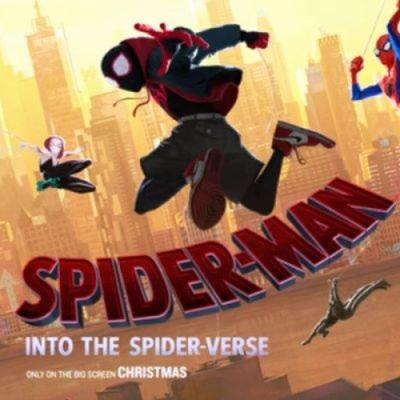
Spider-Man: Into the Spider-Verse main theatrical trailer artwork with Miles Morales falling through the city
Spider-Man: Into the Spider-Verse – theatrical trailer key art and soundtrack mood, 2018

Review

What happens when a superhero soundtrack sounds exactly like the kid underneath the mask? Into the Spider-Verse answers that in about two bars of “Sunflower.” The album takes Miles Morales’ story — a Brooklyn teen suddenly saddled with cosmic responsibility — and scores it with music that feels like his actual playlist: sleepy morning bedroom jams, subway-bumping hip-hop, woozy R&B, and end-credits flex anthems. The result is a soundtrack that doesn’t sit on top of the movie; it lives inside Miles’ headphones and leaks out into the world around him.

The pop/rap compilation and Daniel Pemberton’s original score constantly trade off the spotlight. Songs like “Sunflower,” “Hide” and “Scared of the Dark” handle the coming-of-age feelings: crushes, grief, impostor syndrome. “What’s Up Danger,” “Start a Riot” and “Elevate” punch in when the film shifts into full comic-book splash page mode. Pemberton then glues it together with scratched-orchestra textures, glitched electronics, and big heroic brass, so the line between score cue and Spotify banger keeps blurring — especially in the famous “leap of faith” sequence.

Genre-wise, the album moves in phases. Modern hip-hop and trap underline Miles’ present tense — nervous, funny, restless. Old-school East Coast rap samples and breakbeats nod to the history of both hip-hop and Spider-Man, connecting Miles to the heroes before him. R&B hooks and melodic pop give us vulnerability and romance, while Pemberton’s orchestral swells and eerie synths signal fate, multiversal stakes, and the weight of the mask. It’s not just a cool playlist; it’s a map of who Miles is at every step of the story.

How It Was Made

The Spider-Verse project was split in two main musical pillars: a curated song soundtrack from Republic Records and an original score on Sony Classical. Music executives Spring Aspers and music supervisor Kier Lehman pulled together an unusually star-heavy lineup — Post Malone, Swae Lee, Nicki Minaj, Lil Wayne, Vince Staples, Jaden and more — with a brief to build “what a kid like Miles would really be listening to.” At the same time, Daniel Pemberton was asked to invent a new Spider-Man sound world, fusing orchestral writing with DJ scratching, trap beats, pen clicks, keyboard clacks and even processed animal sounds for the Prowler’s scream. The songs were written and licensed with specific scenes in mind, then woven into Pemberton’s cues so that moments like the “leap of faith” literally morph from a Blackway & Black Caviar banger into full-blown superhero score.

Into the Spider-Verse trailer frame with Miles Morales jumping off a skyscraper at night
The “leap of faith” sequence — the film’s iconic fusion of “What’s Up Danger” and Daniel Pemberton’s score

Tracks & Scenes

This section walks through the key songs and how they’re used in specific moments. Timestamps are approximate, but the emotional beats are the important part.

“Sunflower” (Post Malone & Swae Lee)

Where it plays:
Around the opening minutes, Miles sits at his desk in his Brooklyn apartment, drawing homemade graffiti name-tags with headphones on, mumbling the words to “Sunflower” and getting half the lyrics wrong. Later, a quieter reprise plays while he’s stuck to the ceiling in his dorm room, panicking about his new powers and trying to calm down. It’s diegetic both times — we hear it exactly the way Miles does, slightly tinny and intimate through his headphones.
Why it matters:
“Sunflower” instantly ties Miles to the audience: he’s not a myth yet, just a kid vibing to a dreamy pop-rap hit. The mis-sung lyrics are funny, but they also soften the superhero spectacle into a slice-of-life moment. By the time the song became a real-world mega-hit, it was already emotionally hard-wired to the image of Miles doodling and stalling before school.

“Capullito de Alelí” (bolero classic)

Where it plays:
Right after the “Sunflower” bedroom beat, a classic Spanish-language bolero drifts from his mother Rio’s room as Miles moves through their apartment getting ready for school, around the four-minute mark. It’s background, diegetic music, as if coming from a radio or a playlist she’s listening to while she dresses for work.
Why it matters:
The cue quietly plants Miles’ Afro–Latino heritage. The contrast between his contemporary playlist and his mom’s old-school bolero sketches a family with overlapping but distinct cultures — something the soundtrack returns to in “Familia.”

“Familia (Spider-Man: Into the Spider-Verse)” (Nicki Minaj & Anuel AA feat. Bantu)

Where it plays:
About five minutes in, “Familia” rides in over a mini-montage of Miles rolling his suitcase through Brooklyn streets, saying goodbye as he’s dropped off at the elite Visions Academy and later tagging stickers around the neighborhood. The song mostly plays non-diegetically, sitting over the cut as a kind of street-level theme for Miles’ world.
Why it matters:
The bilingual lyrics and reggaeton bounce mirror Miles’ Dominican–Puerto Rican roots and foreshadow the story’s focus on family loyalty and betrayal. Even without subtitles, the mood says: home is loud, loving, and complicated.

“Invincible” (Aminé)

Where it plays:
Early on, Jefferson drives Miles to school in a cramped NYPD squad car. “Invincible” plays on the car stereo around the six-minute mark as Miles sulks in the backseat, embarrassed by the cop car drop-off and his dad’s relentless attempts at conversation. The track is diegetic, coming from the radio.
Why it matters:
The smooth, slightly melancholic rap undercuts the bravado of “Invincible.” In the moment, Miles definitely doesn’t feel invincible; the song ironically scores his sense of being trapped between his dad’s expectations and his own fears.

“Memories” (Thutmose)

Where it plays:
As Miles’ dad drives him past the city toward Visions Academy, roughly nine minutes in, “Memories” plays over a car ride that already feels like a goodbye. Miles stares out of the window, watching his old neighborhood slip away while the campus looms ahead. It’s diegetic, filling the car with low, reflective energy while father and son awkwardly talk.
Why it matters:
The track’s nostalgic tone gives weight to a basic carpool scene. You feel that moving schools — and class strata — will become one of Miles’ big internal conflicts, before the spider ever bites.

“Chemical Calisthenics” (Blackalicious feat. Cut Chemist)

Where it plays:
In the Visions Academy montage, around ten minutes in, Miles sprints from class to class while a teacher rattles off assignments and he struggles to keep up. “Chemical Calisthenics” plays in the background, with its rapid-fire “-ology” rhymes matching the blur of science lectures and hallways. The cue is non-diegetic but cut tightly to the rhythm of his frantic day.
Why it matters:
The track is almost comically dense and academic, mirroring how overloaded Miles feels. It turns a simple school montage into a hip-hop stress dream about gifted education and imposter syndrome.

“Hypnotize” (The Notorious B.I.G.)

Where it plays:
That night, Miles heads to his uncle Aaron’s apartment rather than finishing his essay. As he enters, Aaron’s old-school sound system is booming “Hypnotize.” The track fills the apartment as they catch up, then fades into background as Aaron shows Miles the “shoulder touch” flirting move. It’s fully diegetic — the record is literally spinning in the room.
Why it matters:
Biggie’s classic ties Aaron to Brooklyn’s hip-hop lineage and makes his place feel cooler, freer, a little dangerous. Compared to his dad’s car-radio picks, this is rebel music, signalling why Miles idolizes Aaron.

“Buss This” (Ghetto Philharmonic)

Where it plays:
Still in Aaron’s apartment, “Buss This” takes over the speakers while Aaron gives Miles that hilariously awful tutorial on how to talk to girls. The camera cuts between Aaron’s exaggerated moves and Miles’ mortified reactions as the track’s groove bumps along in the background.
Why it matters:
The song underlines Aaron’s role as the “fun uncle” — a playful, slightly chaotic force who encourages Miles to break rules. This makes the later Prowler reveal hurt even more.

“The Number Song (Cut Chemist Remix)” (DJ Shadow) and graffiti tunnel medley

Where it plays:
In the abandoned subway tunnel sequence, Aaron and Miles sneak in to paint a huge piece on a hidden wall. DJ Shadow’s “The Number Song (Cut Chemist Remix)” kicks off the session, then a rapid sequence of classics — “The Choice Is Yours” (Black Sheep), “Apache” (Incredible Bongo Band), “Mary, Mary” (Run–D.M.C.), and “Because I Got It Like That” (Jungle Brothers) — cycle through as Miles climbs, sprays, and fills in the mural. The whole set is diegetic via Aaron’s boombox and runs over several minutes leading right up to the spider bite.
Why it matters:
This is the film’s pure hip-hop love letter: crate-digger favorites backing a street-art origin story. The music stitches Miles into a continuum of Black creativity long before he puts on a mask, making the spider bite feel like just one more layer on his existing identity.

“Scared of the Dark” (Lil Wayne, Ty Dolla $ign & XXXTENTACION)

Where it plays:
Roughly thirty minutes in, news reports confirm Peter Parker’s death. A city-wide vigil, TV screens, and stunned faces fill the frame while “Scared of the Dark” plays over a montage. The song is non-diegetic but mixed loud, almost like a music video sequence inside the film.
Why it matters:
The track doubles as a tribute — to Peter, to fallen heroes, even to XXXTentacion, whose posthumous verse is haunting here. For Miles, it’s the moment the myth of “someone else will handle it” dies, and the darker tone of the song pushes that home.

“Mumble Rap” (Belly)

Where it plays:
Later, around the 40-minute mark, Miles and Peter B. Parker ride a bus on their way to infiltrate Alchemax. They pass a kid on the bus wearing headphones, nodding along to “Mumble Rap.” We hear the track bleed slightly into the mix as a diegetic detail.
Why it matters:
This tiny moment reminds you the movie’s New York is still full of regular kids with their own lives and playlists. Not everyone is in on the multiverse drama; some are just vibing on the bus.

“St. Elmo’s Fire (Man in Motion)” (John Parr)

Where it plays:
A bit later, Peter and Miles sit in a burger joint hashing out a plan. As they finish eating and hop on a bus to Alchemax, “St. Elmo’s Fire (Man in Motion)” plays over the transition, roughly mid-film. It plays lightly under dialogue then pushes forward as montage music.
Why it matters:
It’s a wonderfully goofy needle drop — a ‘80s inspirational anthem used with just enough irony. It underscores Peter’s washed-up mentor energy and gives their plan a half-joking, half-sincere “training montage” vibe.

“To the End” (Elliphant)

Where it plays:
“To the End” appears around the time Gwen Stacy fully enters the story and the Spider-people begin to converge. Over shots that introduce her as Spider-Woman and fold her into the team dynamic, the track plays mostly non-diegetically, adding a punchy, rebellious feel to her arrival.
Why it matters:
The song’s attitude leans more punk-pop than straight rap, mirroring Gwen’s drumming, messier emotional interior, and the sharp, angular look of her home dimension that we’ll see more of in the sequel.

“Hide” (Juice WRLD feat. Seezyn)

Where it plays:
Around 1 hour 6 minutes in, Miles leaves the rest of the Spider-crew and returns home, overwhelmed by the responsibility they’re placing on him. “Hide” plays over him walking alone, checking voice messages, and trying to process the latest betrayals and revelations. The track is non-diegetic but mixed as a full-on emotional bed for the scene.
Why it matters:
Juice WRLD’s vulnerable delivery matches Miles’ lowest point. The song frames his retreat not as cowardice, but as a scared teenager wanting to disappear — which makes his eventual decision to step up more powerful.

“Want It Here” (Xenia Pax)

Where it plays:
During the “goober” repair sequence (around 1:09), Peni Parker tinkers with tech while the Spider-team regroups. “Want It Here” plays under the scene, with shots of cables, circuitry, and quick character beats bouncing along to the groove.
Why it matters:
The cue keeps the energy up during a plot-necessary, slightly talky sequence. It gives Peni her own little sonic spotlight and nods to the more electronic, glitch-pop palette that Spider-Ham, Peni and Noir bring into the movie.

“Start a Riot” (Duckwrth & Shaboozey)

Where it plays:
At about 1 hour 17 minutes, Miles’ roommate Ganke walks into their dorm wearing headphones, blasting “Start a Riot” while oblivious to the multiverse meeting happening inches away. We hear the track as if from his earbuds, slightly muffled but still aggressive.
Why it matters:
The song’s title is almost a joke — Miles is literally about to “start a riot” against Kingpin, but his roommate’s biggest concern is his own playlist. It’s another reminder of how small and giant Miles’ problems feel at the same time.

“What’s Up Danger” (Blackway & Black Caviar)

Where it plays:
The film’s signature music moment hits around 1 hour 23 minutes. After a pep talk from his dad, Miles decides to own the mask. He sprays his black-and-red suit, runs up the skyscraper, then jumps. “What’s Up Danger” starts low as he climbs, then explodes when he dives off the roof. Halfway through, the song begins to blend with Pemberton’s orchestral theme as Miles swings through neon reflections and upside-down skylines.
Why it matters:
This is the thesis statement: a trap-infused superhero anthem about leaning into fear, welded to lush strings and brass. The fusion of song and score literally scores Miles’ transformation from anxious kid to Spider-Man.

“Elevate” (DJ Khalil feat. Denzel Curry, YBN Cordae, SwaVay & Trevor Rich)

Where it plays:
“Elevate” kicks in during the mid-credits, shortly after the main story resolves and the film starts celebrating its own weirdness. Over stylized credits and snippets of comic-book art, the track keeps the adrenaline going while viewers process what they just saw.
Why it matters:
The song acts like a victory lap: a posse cut celebrating Miles’ glow-up and the film’s success. It’s less tied to a specific plot beat and more to the feeling of walking out of the theater ready to swing between skyscrapers.

“Way Up” (Jaden)

Where it plays:
Near the tail end of the credits (around 1:50), “Way Up” lands as one of the final musical statements. It plays over rendered credits and logos, a kind of epilogue anthem following “Elevate” and “Home.”
Why it matters:
The uptempo, slightly spacey production matches the film’s multiverse aesthetic and Jaden’s lyrics mirror Miles’ headspace: still climbing, still figuring things out, not done yet.

“Home” (Vince Staples)

Where it plays:
“Home” plays in the final stretch of the credits and was also used prominently in trailers. Over the last visuals and tags, it closes the movie on a grounded, West Coast–meets–Brooklyn mood.
Why it matters:
The track’s hook — about coming back home through chaos — dovetails with Miles’ arc: after all the multiverse madness, he ends up back in his own room, but changed. It’s a perfect “turn your phone back on and step into the night air” song.

Japanese theme: “P.S. RED I” (TK from Ling Tosite Sigure)

Where it plays:
In the Japanese release, “P.S. RED I” is used as the localized theme song, heard over promotional materials and credits for the dub. It’s not part of the main Republic Records album, but lives alongside it as a regional counterpart.
Why it matters:
The track reinforces how adaptable Spider-Verse’s musical concept is. Each territory can plug in artists that feel native to local scenes, without breaking the film’s core aesthetic of glitchy, emotional, youth-centric music.

Score highlights (Daniel Pemberton)

Where it plays:
Pemberton’s cues thread through everything above. “Into the Spider-Verse” and “Only One Spider-Man” set up the glitchy, distorted main title. “Green Goblin Fight” mixes EDM growls with orchestral hits in the collider sequence. The Prowler motif — a terrifying, pitch-shifted scream built from processed animal sounds — shrieks through every chase. Later cues like “Kingpin Fight” and “Shoulder Touch” lean harder into brass fanfares as Miles grows into the suit.
Why it matters:
The score doesn’t just support the songs; it samples itself like a DJ, scratches recorded orchestral performances, and turns sound design into theme music. It’s the invisible glue that makes the soundtrack feel like one holistic, glitchy mixtape rather than a random compilation.

Notes & Trivia

  • Miles mis-sings a key “Sunflower” line (“she wanna drive me…” instead of “ride me like a cruise”) — a tiny lyric tweak that keeps a suggestive line out of a PG-rated movie while staying in character.
  • The Prowler’s iconic scream isn’t a synth preset; Pemberton built it from heavily processed animal recordings, then treated it like a leitmotif that follows Aaron around even before the reveal.
  • Kingpin’s musical motif is literally a clicky pen — an anxious, tiny sound scaled up to match his giant visual design, turning a nervous habit into villain iconography.
  • Several old-school hip-hop tracks in the graffiti tunnel montage never appear on the main OST album, which keeps the official record focused on contemporary artists even though the film itself roams across decades of rap history.
  • The Christmas songs sung by Chris Pine, Shameik Moore, Jake Johnson and Jorma Taccone started as throwaway jokes about Peter Parker cashing in on holiday albums, then spun out into the separate EP A Very Spidey Christmas.
  • In the Japanese dub, TK’s “P.S. RED I” functions as a kind of alternate “Sunflower” — a local, emotional rock track that still fits Miles’ aesthetic of angsty, melodic youth music.
  • Live Spider-Verse in-concert screenings tour with orchestras playing Pemberton’s score under the film, but the show still leans heavily on the famous song moments like “What’s Up Danger” and “Sunflower.”

Reception & Quotes

The Spider-Verse soundtrack and score were both embraced almost instantly. The song album debuted high on the Billboard 200 and topped the soundtrack charts, powered by “Sunflower” becoming one of the most certified singles in RIAA history. Critics singled out the way the film wove licensed hip-hop into orchestral score, rather than treating songs as disconnected needle drops.

Fans, meanwhile, turned the album into a long-term comfort listen. For many people, “What’s Up Danger” and “Sunflower” now trigger instant mental images of Miles falling (and rising) through the New York skyline, or doodling at his desk with headphones on. Whole essays and radio segments have been dedicated just to the soundtrack’s role in re-centering Black and Latino kids inside superhero music.

“A seamless blend of licensed hip-hop and Daniel Pemberton’s sprawling score… the music sounds like Miles Morales’ actual world.”

— paraphrased from contemporary soundtrack reviews

“‘Sunflower’ is now basically shorthand for Into the Spider-Verse.”

— various critics on the song’s cultural takeover

“What’s Up Danger is the apex of not just the soundtrack, but the movie itself.”

— campus radio feature on Spider-Verse music

“Pemberton’s score is a fantastic blend of hip-hop and traditional superhero writing.”

— film score review

Physically, the soundtrack has turned into a collector’s favorite: gatefold LP editions, reissues, and deluxe formats circulate alongside digital and CD releases of both the song compilation and the 44-track original score. Regionally, the Japanese edition and the A Very Spidey Christmas EP add extra layers for completists.

Stylized still from Into the Spider-Verse with Miles Morales suited up against a neon cityscape
Critics often point to the “What’s Up Danger” leap as a modern classic music-and-picture moment.

Interesting Facts

  • “Sunflower” didn’t just chart well — it reached double-diamond status and became one of the highest-certified singles ever, long after the film left theaters.
  • Music supervisor Kier Lehman came into Spider-Verse off acclaimed work on Insecure, which is why the film feels like a cinematic version of a carefully curated playlist.
  • Spring Aspers, Sony’s head of music, personally pushed for Post Malone and Swae Lee to collaborate on “Sunflower” after seeing early footage of Miles.
  • Daniel Pemberton had orchestral recordings pressed to “virtual vinyl” so DJs could scratch the orchestra into cues — a rare case of a composer literally sampling his own score.
  • The soundtrack later inspired live “Spider-Verse in Concert” events where a DJ and orchestra perform the score while the movie plays, complete with live Prowler shrieks.
  • Some tracks — like “Home” by Vince Staples — were used both in trailers and end credits, helping the marketing campaign feel like an extension of Miles’ world rather than a separate ad.
  • The music strategy proved so successful that the sequel brought in Metro Boomin to curate its own companion soundtrack, continuing the “album as extension of character” idea.
  • A separate holiday vinyl release of A Very Spidey Christmas turned the in-movie gag about Spider-Man’s cheesy Christmas LP into an actual record on people’s shelves.

Technical Info

  • Title: Spider-Man: Into the Spider-Verse (Soundtrack From & Inspired by the Motion Picture) & Spider-Man: Into the Spider-Verse (Original Score)
  • Year: 2018
  • Type: Film song compilation (various artists) plus original motion picture score
  • Primary composers (score): Daniel Pemberton
  • Key song artists: Post Malone & Swae Lee, Blackway & Black Caviar, Jaden, Nicki Minaj, Anuel AA, Bantu, Lil Wayne, Ty Dolla $ign, XXXTENTACION, Juice WRLD, Vince Staples, DUCKWRTH & Shaboozey, Aminé, Thutmose and others
  • Music supervision & creative: Music supervisor Kier Lehman; Spring Aspers (Sony Pictures music executive) leading artist outreach and single strategy
  • Notable placements (songs): “Sunflower” (Miles’ bedroom and ceiling scenes), “Familia” (Brooklyn sticker run and school send-off), “Hypnotize” & “Buss This” (Uncle Aaron’s apartment), graffiti tunnel medley (DJ Shadow, Black Sheep, Run–D.M.C., Jungle Brothers, etc.), “Scared of the Dark” (Peter Parker memorial montage), “Hide” (Miles’ lowest point), “What’s Up Danger” (leap of faith), “Elevate” / “Way Up” / “Home” (end credits suite)
  • Score style & techniques: Orchestral writing blended with trap beats, DJ scratching of orchestral stems, electronic sound design, pen-click and keyboard motifs, processed animal sounds for Prowler’s scream
  • Release context: Soundtrack album released December 14, 2018 to coincide with the film’s US theatrical release; score album released a few days later. Japanese dub features “P.S. RED I” as a localized theme.
  • Labels / album status: Song soundtrack released by Republic Records; original score released by Sony Classical. Multiple CD, digital and vinyl editions exist, including gatefold LP pressings and reissues.
  • Chart / award notes: Soundtrack reached the top tier of the US Billboard 200 and topped soundtrack charts. “Sunflower” hit No. 1 on the Hot 100 and later achieved multi-diamond certification.
  • Related releases: A Very Spidey Christmas EP (5-track cast Christmas record), plus future companion soundtrack and score albums for Across the Spider-Verse.

Key Contributors

Subject Relation Object
Daniel Pemberton composed score for Spider-Man: Into the Spider-Verse (Original Score)
Various Artists performed songs on Spider-Man: Into the Spider-Verse (Soundtrack From & Inspired by the Motion Picture)
Post Malone & Swae Lee performed single “Sunflower (Spider-Man: Into the Spider-Verse)”
Blackway & Black Caviar performed single “What’s Up Danger”
Lil Wayne, Ty Dolla $ign & XXXTENTACION performed track “Scared of the Dark”
Nicki Minaj, Anuel AA & Bantu performed track “Familia (Spider-Man: Into the Spider-Verse)”
Vince Staples performed track “Home” (credits and trailer song)
TK from Ling Tosite Sigure performed Japanese theme “P.S. RED I” for the Japanese dub
Republic Records released soundtrack album Spider-Man: Into the Spider-Verse (Soundtrack From & Inspired by the Motion Picture)
Sony Classical released score album Spider-Man: Into the Spider-Verse (Original Score)
Sony Pictures Animation produced film Spider-Man: Into the Spider-Verse (2018)
Kier Lehman served as music supervisor on the film
Spring Aspers oversaw music for Sony’s film division and spearheaded key singles like “Sunflower”

Questions & Answers

Why does this soundtrack feel so different from other superhero albums?
Because it starts with Miles’ character, not the marketing. The songs sound like a teen’s real playlist, then the score is built to mesh with that world instead of sitting apart from it.
Is every song in the movie on the main soundtrack album?
No. The album focuses on original and contemporary tracks. Several older hip-hop cuts and background pieces (like parts of the graffiti tunnel medley) only live in the film and on scene-based playlists.
What’s the correct order to experience the music: soundtrack first or score first?
If you want the “Miles experience,” start with the song soundtrack — especially “Sunflower,” “Hide,” “What’s Up Danger” and “Elevate” — then dive into the score for all the thematic details and experimental textures.
How does the music connect to the later Spider-Verse films?
Daniel Pemberton’s score ideas, especially Miles’ three-note motif and the Prowler textures, carry into Across the Spider-Verse. The idea of a curated, contemporary song album returns there too, just with a new set of artists and producers.
Where can I legally listen to all of this?
Both the soundtrack and the original score are widely available on major streaming platforms, with physical CD and vinyl editions also in circulation. The A Very Spidey Christmas EP and regional releases like “P.S. RED I” are separate but easily findable companion pieces.

Sources: official soundtrack and score credits; scene-by-scene soundtrack breakdown sites; studio press releases; interviews with Daniel Pemberton, Kier Lehman and Spring Aspers; contemporary soundtrack and film score reviews; RIAA and chart data; Japanese and holiday companion release documentation.

November, 27th 2025


A-Z Lyrics Universe

Lyrics / song texts are property and copyright of their owners and provided for educational purposes only.