Soundtracks:  A B C D E F G H I J K L M N O P Q R S T U V W X Y Z #


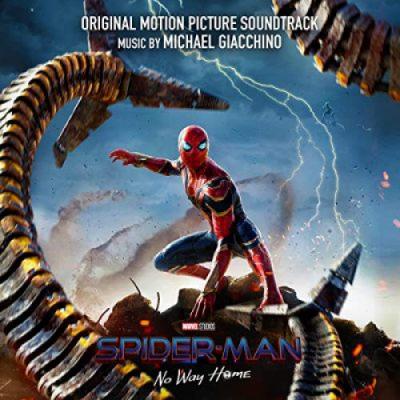
Spider-Man: No Way Home Album Cover

"Spider-Man: No Way Home" Soundtrack Lyrics

Movie • 2021

Track Listing


"Spider-Man: No Way Home (Original Motion Picture Soundtrack)" – Album Guide to Tracks and Key Scenes

Spider-Man: No Way Home official trailer still with Spider-Man in mid-swing
Spider-Man: No Way Home – film score & soundtrack moments, 2021

Review

What happens when one superhero score has to carry three generations of Spider-Men, half a dozen villains, and the weight of nostalgia all at once? Michael Giacchino’s Spider-Man: No Way Home (Original Motion Picture Soundtrack) answers by turning the multiverse into a musical mash-up: his bright, youthful MCU Spider-theme collides with Danny Elfman’s operatic angst, James Horner’s yearning lyricism, and Hans Zimmer’s glitchy villain sonics. Over the film’s arc, that playful collage slowly hardens into something bruised and grown-up, mirroring Peter Parker’s journey from overexposed teenager to anonymous, lonely hero.

The score starts with the bouncy brass and rhythmic swing familiar from Homecoming and Far From Home, then gradually lets in darker orchestral colours as the film piles on consequences. Needle-drops — post-punk Talking Heads, disco Odyssey, classic hip-hop from De La Soul and Beastie Boys, even Vivaldi’s baroque fireworks — stitch New York attitude and comic-book energy into the soundscape. By the time the closing cues “Shield of Pain” and “Forget Me Knots” arrive, the music has shifted into tragic, almost elegiac territory, folding in old Spider-themes as if the whole franchise is saying goodbye.

Genre-wise, the soundtrack moves in phases. Early on, restless post-punk and no-wave textures underline media chaos and teenage panic; disco and soft-rock touches lean into New York’s romantic, slightly cheesy side for Peter and MJ. In the middle stretch, EDM-inflected villain motifs and muscular action scoring frame the multiverse brawls. Classical baroque — that Vivaldi double concerto — plays up surface refinement while the plot frays underneath. Finally, big choir-and-orchestra statements fuse traditional superhero grandeur with mournful harmony, signalling that the “friendly neighborhood” days are over, replaced by a lonelier, heavier myth.

How It Was Made

Giacchino returned after scoring Homecoming and Far From Home, recording with the Hollywood Studio Symphony and weaving in a whole family tree of Spider-themes from Elfman, Horner, Zimmer and Christopher Young. Two showcase cues — “Arachnoverture” and “Exit Through the Lobby” — dropped as singles before the film, telegraphing the new “responsibility” motif that anchors the back half of the score. Music supervisor Dave Jordan handled the aggressively curated song choices: New York disco, downtown post-punk, holiday standards and legacy score cues that wink at Sam Raimi and Marc Webb’s earlier films. Behind the scenes, the trick was balance — honoring iconic motifs from past movies without turning the whole thing into a greatest-hits medley.

Doctor Strange and Spider-Man facing a glowing portal in the No Way Home trailer
No Way Home trailer imagery – magic, portals and multiverse chaos

Tracks & Scenes

“I Zimbra” (Talking Heads)

Where it plays:
Roughly one minute into the film, this jittery post-punk cut explodes over the cold open as news footage paints Spider-Man as “public enemy number one.” Peter and MJ swing through Manhattan, weaving between billboards and gawking pedestrians while helicopters track them. The track keeps chattering on the soundtrack as they duck into an apartment building, breathless, with phones pointed at them from every angle. Non-diegetic, it feels like the city itself having an anxiety attack.
Why it matters:
The nervous percussion and chanting vocals mirror the sudden chaos of Peter’s life. It sets the tone for a movie where public noise and surveillance never really stop humming in the background.

“Native New Yorker” (Odyssey)

Where it plays:
This lush disco classic turns up early when Peter, still reeling from the identity leak, tries to talk things through with Happy and Aunt May in their apartment. The song plays in-world as Happy’s ringtone and background source music, floating in from the living space while Peter and May argue over lawyers, college applications, and what a “normal” life could even look like now. The groove feels slightly at odds with the tense conversation, which is exactly the point.
Why it matters:
Using a love letter to New York as diegetic wallpaper slyly underlines Peter’s roots: he’s not just any hero, he’s this city’s hero. The irony is that he suddenly feels like a stranger in his own hometown.

“Scraper” (Liquid Liquid)

Where it plays:
Around twelve minutes in, jagged bass and percussion score Peter, MJ and Ned’s arrival at Midtown High. Reporters swarm the front steps, microphones jabbing forward as if they’re weapons. The cue keeps pulsing while Betty Brant broadcasts a breathless school-news segment about Spider-Man’s return, intercut with Peter being marched through hostile hallways. Fully non-diegetic, but it feels like the clang of lockers and camera shutters turned into music.
Why it matters:
Liquid Liquid’s downtown no-wave vibe sells the idea that even school — the one mundane refuge in earlier films — has become a circus. It’s the sound of privacy being shredded.

“Flashpoint” (Eugene Thompson)

Where it plays:
Midway through the early act, in the café where Peter, MJ and Ned open their MIT letters, Flash barges in celebrating his own acceptance. He launches into “Flashpoint,” essentially a cringey in-universe hype track, half chant and half brag. The moment is diegetic — Flash is performing it at the table, phone out, desperate to record content — and the surrounding patrons glance over with a mix of confusion and second-hand embarrassment.
Why it matters:
The song doubles as a meta-joke about DC’s Flashpoint storyline while embodying social-media narcissism. Musically, it undercuts Peter’s heartbreak with smug, bouncy bravado from a kid who benefited from the scandal.

“No Sleep ’Til Brooklyn” (Beastie Boys)

Where it plays:
Just after the rejection emails hit, Flash hijacks the mood in the café by yelling a spoofed version of the hook — “No sleep ’til Boston!” — over the original track. The classic hip-hop cut blares from his phone speakers while Peter, MJ and Ned sit stunned, their own futures suddenly blurry. The moment is short, mostly diegetic, and the sound drops out almost as fast as it crashes in, leaving awkward silence behind.
Why it matters:
The sample leans into New York hip-hop heritage, but Flash’s clumsy parody makes it a punchline. It neatly sums up how other people turn Peter’s life-ruining drama into throwaway content.

“Concerto for Two Violins in G Major, RV 516: III. Allegro” (Antonio Vivaldi – Béla Banfalvi, Zsuzsa Németh, Budapest Strings)

Where it plays:
Later in the first act, Peter calls Flash for intel on an MIT mixer. The scene cuts to a fancy party full of future elites, and Vivaldi’s finale cascades over the images, either as live chamber music or high-end background audio. The bright strings chatter away while Peter awkwardly negotiates with Flash, promising to spin Spider-Man clout in exchange for help. The cue bridges Peter’s street-level world with the polished, privileged spaces he’s trying to break into.
Why it matters:
Baroque virtuosity here is all surface polish. Underneath, Peter’s plan is messy and desperate, which plays nicely against the music’s clockwork perfection.

“Deck the Halls” (Thomas Oliphant)

Where it plays:
During the mirror-dimension chase between Doctor Strange and Spider-Man, a snatch of “Deck the Halls” briefly surfaces, an almost absurd holiday jingle amid kaleidoscopic cityscapes. It flickers in as Strange manipulates reality, skyscrapers folding and fracturing into impossible spirals. The cue is non-diegetic and quickly swallowed by Giacchino’s score again, like a radio station you accidentally flick past while falling through space.
Why it matters:
The holiday needle-drop underlines how close the film sits to Christmas, but also adds a slightly mocking edge — it’s supposed to be cosy season, but Peter’s world is literally folding in on itself.

“The Magic Number” (De La Soul)

Where it plays:
As the main story resolves and the first set of end credits roll, De La Soul’s playful track takes over. Graphics highlight the three cinematic Spider-Men, multicoloured webs and comic-book typography bouncing in time to the beat. The song runs over the mid-credits build-up, fading just before the symphonic stinger kicks in.
Why it matters:
The hook — “three, that’s the magic number” — is a winking celebration of the film’s central gimmick: three Peters sharing the screen. It’s pure fan-service and totally earned.

“Bailando Cumbia” (Danny Osuna)

Where it plays:
In the mid-credits scene, we cut to a seaside bar in Mexico where Eddie Brock grills a bartender about this bizarre universe’s heroes. “Bailando Cumbia” plays diegetically from the venue’s speakers, its relaxed groove contrasting with Eddie’s increasingly bewildered interrogation. When the symbiote vanishes and leaves a drop of black goo behind, the music just keeps going, oblivious to the cosmic weirdness.
Why it matters:
The track instantly places us outside Peter’s New York bubble and makes the scene feel like a casual detour — right up until it quietly seeds the next Spider-story.

“I’m Electro” (Hans Zimmer, Pharrell Williams & The Magnificent Six)

Where it plays:
About forty-plus minutes in, Electro manifests in a storm of blue lightning at a power substation. As he pulls energy from the lines, his techno-industrial theme from The Amazing Spider-Man 2 pulses through the mix: distorted voices, synthetic choirs, and heavy electronic beats. The cue weaves with Giacchino’s action writing as Holland’s Spidey grapples with a villain who, musically, belongs to an entirely different franchise.
Why it matters:
Reintroducing Zimmer’s soundscape without apology makes the multiverse idea tangible. You hear a different cinematic era crash into the MCU in real time.

“Doc Ock Is Born” & “Spider-Man 2 Main Title” (Danny Elfman)

Where it plays:
During the highway battle with Doctor Octopus and later conversations with Tobey Maguire’s Peter, fragments of Elfman’s themes ride underneath Giacchino’s music. When Otto first strides into frame, metallic arms clanging against asphalt, you catch the sinister rising motif from “Doc Ock Is Born.” Later, on the scaffolding above the Statue of Liberty, a warmer orchestral swell nods to the Spider-Man 2 main title as Otto recognizes “his” Peter and reconciles.
Why it matters:
Those musical quotations function like emotional name tags. Even without seeing his original films, the audience feels that this is a man with a past being given a second chance.

“Main Title – Young Peter” (James Horner)

Where it plays:
Late in the film, as Andrew Garfield’s Peter 3 talks quietly with Electro, a gentle, ascending motif from Horner’s score sneaks into the orchestration. The conversation happens amid the chaos of the final battle, but the mix softens around them: strings trace Horner’s melody while city lights flicker in the background.
Why it matters:
It’s a small grace note that reframes Electro not just as a monster but as someone from Peter 3’s painful past. The cue helps turn what could be a cameo into genuine closure.

“Damage Control” (Michael Giacchino)

Where it plays:
Early in the film, the Damage Control agents interrogate Peter, MJ and Ned in a sterile office. “Damage Control” underscores the scene with uneasy strings, subdued brass and fragments of the main Spider-theme trying — and failing — to break through. As Peter’s usual heroic motif gets clipped and interrupted, the camera lingers on legal forms, handcuffs and dead-eyed officials.
Why it matters:
The cue signals a new kind of threat for Peter: bureaucracy and public opinion, not aliens or killer drones. Musically, it’s his hero theme being put on trial.

“All Spell Breaks Loose” (Michael Giacchino)

Where it plays:
In the Sanctum, as Doctor Strange attempts the memory-altering spell, “All Spell Breaks Loose” rides a churning ostinato under Peter’s frantic add-ons: “Oh, except MJ. And Ned. And Aunt May…” The strings spiral upward, choir murmurs in the background, and each revision jolts the harmony into something more unstable. When the spell finally ruptures, the orchestra crashes with it, before collapsing into stunned silence.
Why it matters:
This is the sonic birth of the multiverse problem. It translates Peter’s inability to let go — his emotional fine print — into literal, breaking magic.

“No Good Deed” (Michael Giacchino)

Where it plays:
After the apartment showdown with the Green Goblin, Aunt May collapses and delivers the “with great power…” line. “No Good Deed” unfolds beneath the scene in waves of strings and low brass, gradually introducing the new “responsibility” theme on piano. Sirens wail in the distance as the cue swells, then falls away into a numb, hollow cluster of chords when Peter realizes she’s gone.
Why it matters:
This track is the emotional fulcrum of the whole score. It marks the moment when Giacchino’s previously playful Spider-motif hardens into something haunted.

“Sling vs Bling” (Michael Giacchino)

Where it plays:
During the mirror-dimension chase, Spider-Man and Doctor Strange battle over the fate of the Box of Cagliostro. “Sling vs Bling” juggles Strange’s spinning, mystical theme with Peter’s agile brass figure, tossing them back and forth as the two heroes out-maneuver each other. When Peter uses geometry to trap Strange in his own spellwork, the Spider-theme lands in a triumphant, if slightly cheeky cadence.
Why it matters:
It’s a musical argument between science kid and sorcerer. The moment the Spider-theme “wins,” you feel Peter step into a more proactive, clever version of himself.

“Exit Through the Lobby” (Michael Giacchino)

Where it plays:
As the multiverse begins to tear open near the end, portals crack in the sky and cosmic silhouettes loom over New York. “Exit Through the Lobby” introduces the full statement of the new responsibility theme, starting as a fragile piano solo and building into full orchestra. The cue carries us through Peter’s realization of what needs to be done — asking Strange to make everyone forget him — and the heartbreaking hugs that follow.
Why it matters:
This is the emotional thesis of the album: heroism as self-erasure. It’s also one of the most musically complete pieces on the record, basically a miniature tone poem about letting go.

“Shield of Pain” & “Forget Me Knots” (Michael Giacchino)

Where it plays:
“Shield of Pain” underscores the Statue of Liberty fight, its giant Captain America shield looming over the action. As the three Spider-Men swing together, the cue braids Giacchino’s theme with nods to Elfman and Horner, brass and choir punching hard against Goblin’s chaos. “Forget Me Knots” then closes the film: Peter watches MJ and Ned from afar in the coffee shop, chooses not to reintroduce himself, and swings into a snowy night. Here the responsibility theme and the classic Spider-melodies merge, then fade into a quiet, unresolved cadence.
Why it matters:
Together, these tracks function as a musical goodbye to the trilogy and a soft hand-off to a more solitary Spider-Man. It’s bittersweet, not bombastic, which is why it lingers.
Spider-Man swinging past Times Square billboards in the No Way Home trailer
Big city lights, bigger emotions – key soundtrack moments in No Way Home

Notes & Trivia

  • Giacchino’s new “responsibility” theme is deliberately introduced after Aunt May’s big speech, so the music itself only fully blossoms once Peter has lost his moral anchor.
  • The score quotes at least four separate Spider-franchises: Raimi’s films (Elfman), Webb’s duology (Horner, Zimmer), and the previous MCU entries, plus the Doctor Strange theme.
  • “I Zimbra” and “Scraper” together sketch Peter’s media nightmare: the first track scores the city-wide panic, the second narrows it down to the hostile school hallway.
  • “Native New Yorker” pulls double duty as a gag (Happy’s ringtone) and a quiet reminder that Peter is, at heart, just another kid from Queens.
  • Electro’s theme is one of the only villain motifs kept almost intact from a non-MCU film, a subtle nod of respect to the earlier iteration of the character.
  • Several reused motifs — like Horner’s “Young Peter” and Elfman’s main title — are mixed low enough that many casual viewers just “feel” the nostalgia without explicitly hearing it.

Reception & Quotes

Critics and fans generally embraced Spider-Man: No Way Home as one of Giacchino’s most ambitious Marvel scores, praising how it honours legacy themes while telling a new emotional story. Classical outlets latched onto its “musical melting pot” quality, pointing out the way Beastie Boys, De La Soul and Vivaldi comfortably share space with dense orchestral writing. Among soundtrack listeners, the long suite “Arachnoverture” quickly became a favourite, winning awards and functioning as a kind of compressed greatest-hits of the film’s motifs.

Commercially, the album landed modestly on soundtrack charts but lives a long tail on streaming platforms, especially in playlists that collect themes across all Spider-films. Vinyl pressings from Sony Classical — including limited coloured variants — helped solidify its reputation among collectors. Within Giacchino’s own filmography, fans often bracket it with Up and The Batman as a career highlight, largely because of how deftly it juggles nostalgia and genuine pathos.

“A musical melting pot where Beastie Boys collide with baroque violins and still make emotional sense.” – Film & classical outlet

“Giacchino braids decades of Spider-music into one grown-up goodbye for Peter Parker.” – Soundtrack reviewer

“Arachnoverture feels like a curtain call for three entire franchises in ten minutes.” – Fan commentary

“The closing cues hit harder because they carry everyone else’s Spider-themes on their shoulders.” – Online film critic

Three Spider-Men facing villains on the Statue of Liberty scaffolding in the trailer
Final battle energy – where Giacchino’s themes and legacy motifs collide

Interesting Facts

  • Two cues from the album, “Arachnoverture” and “Exit Through the Lobby,” were released as singles before the full soundtrack dropped, teasing fans with the new themes.
  • Giacchino’s suite “Arachnoverture” later picked up a major film-music award for best composition, effectively validating the score’s dense thematic architecture.
  • The soundtrack briefly charts in Belgium’s Ultratop album rankings, a rare feat for a modern superhero score album.
  • Because of long-running sampling and rights issues, “The Magic Number” took on extra symbolic weight for fans once it finally resurfaced properly in a Marvel film context.
  • Many of the needle-drops — especially “I Zimbra” and “Scraper” — come from New York-centric bands, quietly reinforcing the story’s local, street-level identity even as the plot goes cosmic.
  • Giacchino’s own Doctor Strange theme appears so often in tracks referencing magic that some fans jokingly refer to them as mini–Strange crossovers.

Technical Info

  • Title: Spider-Man: No Way Home (Original Motion Picture Soundtrack)
  • Year: 2021
  • Type: Film score for feature film
  • Primary composer: Michael Giacchino
  • Additional music: Curtis Green, Griffy Giacchino and others (for select cues)
  • Music supervisor: Dave Jordan
  • Orchestra: Hollywood Studio Symphony, conducted by Marshall Bowen
  • Label / album status: Sony Classical digital and physical release; standard and limited vinyl editions.
  • Release context: Digital album released 17 December 2021 to coincide with the film’s wide theatrical run.
  • Genre tags: Film score, orchestral, hybrid soundtrack with pop/rock, hip-hop and classical needle-drops.
  • Selected notable placements: “I Zimbra” over the opening media chase; “Native New Yorker” as Happy’s ringtone; “No Sleep ’Til Brooklyn” spoof during MIT celebration; De La Soul’s “The Magic Number” in the first end-credits sequence; “Bailando Cumbia” in the mid-credits bar scene.
  • Legacy themes reused: Doctor Strange theme (Giacchino), Electro motif (Zimmer & collaborators), Horner’s “Young Peter,” Elfman’s Doc Ock and main Spider-themes, plus Sandman and Goblin references.
  • Running time: Approximately 74 minutes across 23 tracks.
  • Availability: Streaming on major platforms (Spotify, Apple Music and others); widely available on CD and multiple vinyl pressings.

Questions & Answers

Is the No Way Home soundtrack mostly songs or mostly score?
It’s primarily an orchestral score album by Michael Giacchino. The memorable songs you hear in the film — Talking Heads, Odyssey, De La Soul, Beastie Boys — are mostly not on the official album.
Who is actually responsible for the music choices in the movie?
Michael Giacchino composed the score, while music supervisor Dave Jordan oversaw the licensed songs and legacy Spider-themes, making sure old motifs lined up with new story beats.
Why are tracks like “I Zimbra” or “The Magic Number” missing from the main album?
The score release focuses on Giacchino’s compositions. Licensing pop tracks and older film cues often involves separate deals, so they’re usually cleared for the film but not bundled into the score album.
Which cues should I hear if I just want the “multiverse” flavour?
Start with “Otto Trouble,” “Sling vs Bling,” “Shield of Pain,” and “Arachnoverture.” They showcase how Giacchino braids his Spider-theme with Elfman, Horner and Zimmer’s legacy material.
Is the soundtrack available on vinyl or only on streaming?
It’s on all major streaming platforms and has physical editions on CD and vinyl, including limited coloured pressings that are popular with collectors.

Key Contributors

Entity Role / Type Relation (S–V–O)
Michael Giacchino Person – Composer Michael Giacchino composed the film score for Spider-Man: No Way Home.
Dave Jordan Person – Music Supervisor Dave Jordan supervised song placements and licensed music for the film.
Hollywood Studio Symphony Organization – Orchestra Hollywood Studio Symphony performed the score for the soundtrack album.
Sony Classical Organization – Record label Sony Classical released the official soundtrack album.
Columbia Pictures Organization – Film studio Columbia Pictures co-produced the film Spider-Man: No Way Home.
Marvel Studios Organization – Film studio Marvel Studios co-produced the film and integrated it into the Marvel Cinematic Universe.
Jon Watts Person – Director Jon Watts directed Spider-Man: No Way Home, shaping how music interacts with the visuals.
Tom Holland Person – Actor Tom Holland portrays Peter Parker / Spider-Man, whose emotional arc the score tracks closely.
Zendaya Person – Actor Zendaya plays MJ, often framed by the score’s softer romantic variations.
Benedict Cumberbatch Person – Actor Benedict Cumberbatch’s Doctor Strange brings his existing musical theme into the score.
Willem Dafoe Person – Actor Willem Dafoe’s Green Goblin is underscored with new material and sly nods to Elfman’s original motif.
Alfred Molina Person – Actor Alfred Molina’s Doctor Octopus scenes trigger quotes from “Doc Ock Is Born” within the new score.
James Horner Person – Composer James Horner’s “Young Peter” theme is briefly quoted in late-film conversations with Electro.
Danny Elfman Person – Composer Danny Elfman’s themes for Doc Ock and the Raimi Spider-films are referenced throughout the score.
Hans Zimmer Person – Composer Hans Zimmer’s Electro motif reappears when the character enters the MCU timeline.
De La Soul Music group – Artists De La Soul perform “The Magic Number,” used over the first end-credits sequence.
Beastie Boys Music group – Artists Beastie Boys’ “No Sleep ’Til Brooklyn” is parodied in an MIT celebration scene.
Odyssey Music group – Artists Odyssey’s “Native New Yorker” underscores early apartment scenes and Happy’s ringtone gag.
Talking Heads Music group – Artists Talking Heads’ “I Zimbra” scores the frantic opening swing through Manhattan.
Spider-Man: No Way Home Work – Feature film The film provides the narrative and visual framework for the soundtrack’s cues.

Sources: Wikipedia; Marvel Cinematic Universe Wiki; Vague Visages – “Soundtracks of Cinema: Spider-Man: No Way Home”; Classic FM feature on the soundtrack; Soundtrakd – Spider-Man: No Way Home soundtrack guide; Soundtrack World review; official Spotify and Apple Music album pages; IMDb film entry.

November, 27th 2025


A-Z Lyrics Universe

Lyrics / song texts are property and copyright of their owners and provided for educational purposes only.