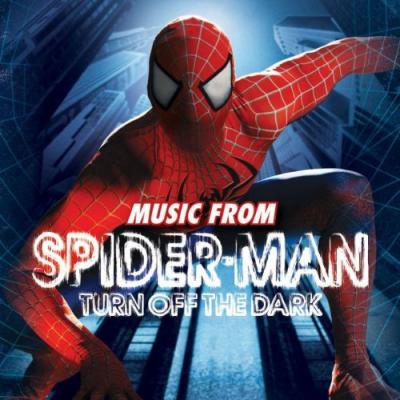
"Spider-Man: Turn Off The Dark" Soundtrack Lyrics
Musical • 2011
Track Listing
Spider-Man: Turn Off The Dark Cast
Reeve Carney
Reeve Carney feat. Bono and The Edge
Bono And The Edge
Reeve Carney
Reeve Carney
Patrick Page
Reeve Carney
Patrick Page
Jennifer Damiano
The Edge
Patrick Page
Reeve Carney, Jenifer Damiano, Original Cast
T.V. Carpio
"Music From Spider-Man: Turn Off the Dark" – Album Guide to Tracks and Key Scenes
Review
Can a superhero musical that became Broadway shorthand for “disaster” still leave behind a soundtrack worth hearing on its own terms? Music From Spider-Man: Turn Off the Dark suggests the answer is “sort of.” Written by Bono and The Edge and performed by Reeve Carney, Jennifer Damiano, Patrick Page and the Broadway company, the album tilts more toward U2-flavoured concept record than traditional cast album. The songs chase Peter Parker from high-school misery and genetic tampering to aerial battles and mythic visions of Arachne, trying to reconcile comic-book pulp, Greek tragedy and rock-opera angst. When it locks in — especially on “Boy Falls From the Sky” and the “Rise Above” material — the music catches that mix of teenage romance and skyscraper-sized responsibility the show was always reaching for.
It is also a weirdly split personality. Some tracks are full-on stadium-rock anthems dressed up for Broadway, others are unapologetic show tunes, and a few land in an uncanny valley between. The concept album cherry-picks highlights, reshuffles arrangements, and omits a clutch of stage-only songs, so it doesn’t document the running order audiences actually heard. What you get instead is a glossy, sometimes overproduced snapshot: Green Goblin camp, Mary Jane ballads, Arachne art-pop, and Peter’s earnest laments all shoved into the same sonic comic book panel. It can feel uneven, but when the melodies soar you hear why fans still defend the score long after the harness malfunctions stopped making headlines.
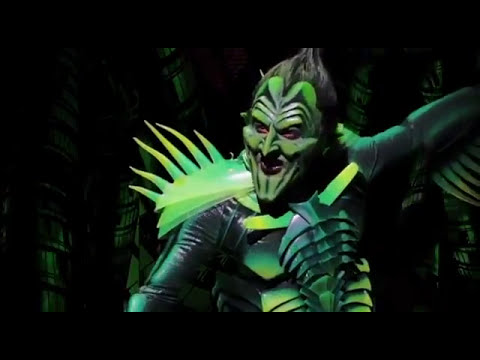
Genre-wise, the score moves through clear phases. Early numbers lean into rock musical language — chiming guitars, driving drums — to paint Peter’s teenage restlessness and bullying (“No More,” “Bouncing Off the Walls”). The lab and Oscorp material slides toward industrial rock and corporate pop sheen, matching Norman Osborn’s DIY transhumanism. Arachne’s music tilts closer to art-pop aria, something like alt-rock meeting opera, underscoring her role as mythic conscience rather than typical villain. Goblin songs chew the scenery with glam-rock and cabaret camp. By the finale, big anthemic rock collides with Broadway-style choral writing, turning “Rise Above” and “Finale – A New Dawn” into oversized statements about sacrifice and second chances.
How It Was Made
The score grew out of a long, messy development process. Bono and The Edge started sketching songs in the 2000s as Julie Taymor built a “rock-and-roll circus drama” around Spider-Man, the films, and the myth of Arachne. The Broadway production opened in June 2011 after a record-breaking preview period and endless rewrites. The album that arrived that same month is very much a concept recording: producer Steve Lillywhite brought the Broadway leads into the studio, layered in Bono and The Edge on select tracks, and reshaped arrangements that differ from what played at the Foxwoods Theatre. Some show numbers never made it to disc at all, while others — like “Rise Above 1” with Bono and The Edge — were clearly sculpted as singles for radio and TV performances.
Tracks & Scenes
“No More” (Reeve Carney & Jennifer Damiano)
- Where it plays:
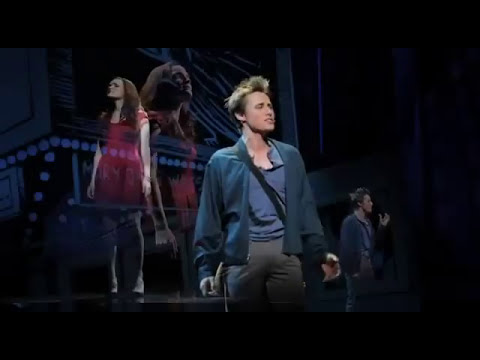
- Early in Act I, “No More” lets Peter and Mary Jane sing in parallel about how badly they want out of their broken homes and miserable school life. The staging crosscuts between Peter’s cramped Queens apartment and MJ’s house with her abusive father, the two of them never sharing the same space but clearly echoing each other. It is a classic “dual I-want” number: lights soften, the choreography calms down, and the music pulls away from comic-book spectacle to sit with two kids staring at their ceilings, plotting escape.
- Why it matters:
- The song grounds the whole show. Before spiders, Goblins and Arachne, it reminds you that Spider-Man’s story starts with ordinary frustration and pain — which makes the later heroics feel earned instead of just flashy.
“D.I.Y. World” (Patrick Page, Isabel Keating, company)
- Where it plays:
- On the class trip to Oscorp’s genetics lab, Norman and Emily Osborn unveil their vision of a world they can rebuild at the molecular level. “D.I.Y. World” plays like a slick corporate presentation gone slightly unhinged: lab coats dance with clipboards, projections flash DNA helices and military logos, and Norman sells his bio-engineered future to investors and students at the same time. Late in the number, alarms blare as a modified spider escapes, the cheerful sales pitch curdling into panic.
- Why it matters:
- Musically it blends pulsing rock with sardonic showbiz, capturing how the story treats genetic “progress” as both seductive and terrifying. It also sets up the moral collision between Peter’s accidental gift and Norman’s deliberate self-experimentation.
“Bouncing Off the Walls” (Reeve Carney & ensemble)
- Where it plays:
- Right after the spider bite, Peter staggers back into school and realizes his body has changed. “Bouncing Off the Walls” turns the hallway into a comic-book panel come to life: Peter backflips onto lockers, runs straight up the set, and humiliates bully Flash Thompson in a gravity-defying fistfight. The band leans hard on choppy guitar riffs and drum hits that match each leap and swing, while the ensemble literally ricochets around him.
- Why it matters:
- It’s the first time the score truly syncs with the show’s infamous aerial tech. The track sells pure exhilaration — and hints at how quickly that rush can tip into arrogance.
“Rise Above” / “Rise Above 1 / 2” (Reeve Carney, T.V. Carpio, Bono & The Edge)
- Where it plays:
- Onstage, “Rise Above” first surfaces after Uncle Ben’s death, when Arachne appears to Peter as a spectral presence, urging him to use his powers for something larger than revenge. Peter stands among projected webs and city skylines while ropes and silks suspend Arachne high above him, the vocal lines literally crossing in space. In later iterations and reprises, the melody returns as the show’s overarching anthem of falling, failing and choosing to climb back up. On the album, “Rise Above 1” and “Rise Above 2” spin that moment into radio-ready rock ballads, complete with Bono and The Edge’s vocals and studio polish.
- Why it matters:
- This is the musical’s thesis statement in song form. It tries to fuse superhero resilience, teenage grief and mythic destiny into one hook — and for many listeners, it is the tune that lingers once everything else fades.
“NY Debut” (Instrumental)
- Where it plays:
- “NY Debut” underscores Peter’s first real outings in the Spider-Man suit. The stage becomes a three-dimensional comic frame as he swings over the audience, flips from balconies and lands on rooftops that slide in and out. The instrumental leans on propulsive guitar and string figures, looping as transitions between early web-slinging set-pieces and Daily Bugle headlines about the new hero.
- Why it matters:
- It functions like an overture stitched into the middle of the show, gathering themes and textures into a single adrenaline spike. On album, it’s one of the clearest showcases of Bono and The Edge’s attempt to write underscoring, not just songs.
“Pull the Trigger” (Patrick Page, Laura Beth Wells & company)
- Where it plays:
- “Pull the Trigger” plays in corporate boardrooms and war rooms, as Viper executives push Norman to weaponize his research. The choreography turns suits and lab assistants into a kind of militarized chorus line, marching in rigid patterns while projections show fighter jets and genomes. Norman vacillates between scientific ethics and financial pressure, the music pounding in 4/4 like a ticking clock.
- Why it matters:
- The number makes the Green Goblin’s birth feel like the logical end point of a bad business decision, not just a mad-science accident. It’s corporate rock in the most literal way.
“Picture This” (Reeve Carney, Jennifer Damiano, Patrick Page, Laura Beth Wells)
- Where it plays:
- “Picture This” crosscuts between Peter and Mary Jane planning their futures and Norman and Emily grappling with the moral cost of their work. Onstage, split-screen lighting keeps the couples in separate zones, but the song’s rising melody links them emotionally: two visions of what a “better life” could mean. As the number progresses, Oscorp’s ambitions start to feel more ominous, while Peter and MJ’s daydreams look fragile by comparison.
- Why it matters:
- It is one of the score’s more traditional theatre songs and a rare moment where Bono and The Edge really lean into character counterpoint. The tune also anchors the album, where its studio version feels closest to a classic U2 ballad blown up for Broadway.
“A Freak Like Me Needs Company” (Patrick Page & ensemble)
- Where it plays:
- At the top of Act II, Green Goblin sits amid the wreckage of his lab and literally builds his own Sinister Six, crowing through “A Freak Like Me Needs Company.” The number plays like a villainous variety show: Goblin struts down staircases, sings at the audience, and introduces each newly mutated henchperson with grotesque delight. The band leans into cabaret-rock swagger, horns punching through guitar licks as the stage floods with neon toxic greens.
- Why it matters:
- This is Patrick Page’s showstopper and the clearest example of the musical embracing camp. It also gives the album some badly needed dark humor, turning supervillainy into a twisted showbiz act.
“If the World Should End” (Jennifer Damiano & Reeve Carney)
- Where it plays:
- Later in Act II, Mary Jane and Peter finally have a quiet night together after the chaos of Goblin’s attacks. “If the World Should End” unfolds in MJ’s apartment, the set closing in as the rest of New York falls away. She treats the possibility of looming disaster almost calmly, confessing that being with Peter makes the risk worth it. The orchestration strips back to guitar and strings before the full ensemble joins in as an invisible chorus of fear.
- Why it matters:
- It is the heart of the romantic plot and one of the score’s most durable standalone ballads. On the album and in later choral arrangements, it showcases Damiano’s voice and the show’s surprisingly tender side.
“Sinistereo” (Company)
- Where it plays:
- “Sinistereo” scores a montage of media and mayhem as the Sinister Six rampage through New York. Reporters shout headlines into cameras, citizens flee across moving platforms, and villains strike poses atop digital billboards while the band drives a distorted, riff-heavy groove. Screens fill with tabloid graphics and live feeds, turning the stage into a noisy collage of catastrophe.
- Why it matters:
- The song literalizes one of the show’s big ideas: that Spider-Man’s battles are always mediated, always refracted through screens and spectacle. It’s noisy, messy, and intentionally overstimulating.
“Spider-Man!” (Company)
- Where it plays:
- After Spidey swiftly takes down the Sinister Six, the citizens of New York break into “Spider-Man!”, a tongue-in-cheek celebration of their new celebrity saviour. Onstage, extras brandish homemade signs, J. Jonah Jameson blusters into microphones, and Aunt May, MJ and Flash weave through the crowd. The music nods to pep rallies and fight songs while Spider-Man swings above, half enjoying, half overwhelmed by the adoration.
- Why it matters:
- The number shows the downside of becoming a brand. It sets up the later realization that the public will turn on Spider-Man just as quickly when things go wrong.
“Turn Off the Dark” (T.V. Carpio & Reeve Carney)
- Where it plays:
- In the back half of Act II, Arachne returns in a dreamlike vision. “Turn Off the Dark” suspends Peter in a web of aerial silks while Arachne circles above, promising power, transcendence and a kind of cosmic companionship. Visuals of constellations and looms swirl around them as she insists that he cannot outrun who he is. The song sits halfway between lullaby and seduction, with harmonies that never quite resolve.
- Why it matters:
- This is the purest expression of Taymor’s original mythic concept. On album, T.V. Carpio’s version plays like a moody art-pop track dropped into a superhero record, and that dissonance is part of its charm.
“I Just Can’t Walk Away (Say It Now)” (Reeve Carney & Jennifer Damiano)
- Where it plays:
- After yet another missed milestone in MJ’s career, Peter tries to explain himself in “I Just Can’t Walk Away (Say It Now).” The scene plays out on a night-time New York street and then in a club, with the pair moving between lampposts and doorways as if caught between two lives. Peter’s verses are full of half-truths; MJ’s lines slice through with frustration. Choreography keeps them literally circling each other without quite touching.
- Why it matters:
- The number catches the classic superhero problem in micro: love and duty can’t share a time slot. On the album, its duet structure and hooky chorus make it one of the more replayable tracks.
“The Boy Falls From the Sky” (Reeve Carney)
- Where it plays:
- Late in Act II, after breaking up with Mary Jane to protect her, Peter wanders the city alone. “The Boy Falls From the Sky” starts as a solitary reflection as he walks past silhouetted skyscrapers and fire escapes, then escalates into a literal climb. Scenic pieces tilt vertical as he scales the set, the band pushing harder with each verse. Depending on the version, Arachne’s voice may shadow him, but the focus is very much on Peter choosing the mask over the boy underneath.
- Why it matters:
- It is the show’s big “11 o’clock number” and effectively Spider-Man’s definitive “I am” song. On record it also carries the closest thing to a full-band U2 credit, which fans hear immediately in the harmonic language.
“I’ll Take Manhattan” (Patrick Page)
- Where it plays:
- Near the climax, Green Goblin sits at a piano high atop the Chrysler Building, crooning “I’ll Take Manhattan” to the audience like a deranged lounge singer. Below him, projections map the island as a target, and tiny light dots mark the people he plans to transform or destroy. Spider-Man arrives mid-song; the music keeps going even as the two trade blows across the set’s art-deco ledges and gargoyles.
- Why it matters:
- The number lets Page mix genuine menace with Broadway ham. For soundtrack listeners, it is one of the most theatrical tracks — sadly absent from the concept album, which skips this particular Goblin showpiece.
“Finale – A New Dawn” (Company)
- Where it plays:
- After Goblin’s plunge and Mary Jane’s rescue, “Finale – A New Dawn” reprises “Rise Above” as a city-wide chorus. Citizens fill the stage, morning light floods the set, and Peter and MJ imagine a future together on a quieter street corner. Sirens and distant news choppers intrude just as Spider-Man swings away again, leaving MJ staring up into the rafters while the last notes ring out.
- Why it matters:
- It closes the circle: the same musical language that framed Peter’s grief now frames a tentative hope. Onstage it is cathartic; on album, its absence is keenly felt, one of several reasons the disc feels more like a companion piece than a full document of the show.
Notes & Trivia
- The concept album omits several stage favorites, including early Arachne material and the full company finale, so fans often build custom playlists that follow the show order more closely.
- “Boy Falls From the Sky” and “Rise Above” were promoted heavily outside the theatre, with TV performances on Good Morning America, American Idol and late-night shows helping the songs find listeners who never saw the production live.
- Because the album mixes cast vocals with Bono and The Edge’s guide tracks, listeners sometimes joke that it feels half Broadway recording, half stealth U2 side project.
- Green Goblin’s music, especially “A Freak Like Me Needs Company,” has outlived the show itself as a cult favourite villain song, often circulating online completely divorced from the musical’s reputation.
- Mary Jane’s ballads — “No More” and “If the World Should End” — have become popular audition and concert pieces, thanks in part to published vocal selections that emphasise their pop-theatre crossover style.
- In the 2011 Macy’s Thanksgiving Day Parade medley, the show stitched together “Bouncing Off the Walls,” “A Freak Like Me Needs Company,” and “Spider-Man!” to sell both the stunts and the score in a tight TV package.
Reception & Quotes
The musical itself became infamous for injuries, delays and wildly mixed reviews, but the album carved out a slightly different reputation. Rock and guitar-press outlets sometimes praised it as a brave, if uneven, experiment — a U2-adjacent record trying to play in Broadway’s sandbox. Theatre critics tended to be harsher, arguing that the songs lacked character specificity and too often felt like generic anthems dropped onto comic-book plot points. Fan communities, especially U2 and Broadway die-hards, settled into a middle ground: they traded playlists of favourite cuts, while admitting that the full listen can feel like a concept record searching for a tighter show.
Commercially, Music From Spider-Man: Turn Off the Dark landed modestly, nudged along by “Rise Above 1,” which entered the Billboard Hot 100 and adult-top-40 charts, and by the curiosity factor of the most expensive Broadway show in history. Over time, the album’s legacy has become less about chart stats and more about what it represents: a moment when mainstream rock royalty tried to crash Broadway and ended up making something fascinating, flawed and very specific to the early-2010s superhero boom.
“A supreme triumph of sweaty-palms derring-do, with Bono and The Edge marching through a forest with no compass and somehow arriving home with an album.” – rock & guitar press review
“Equal parts solid and outrageously mediocre… the score reminds us that there’s a thin line between interesting music and self-indulgence.” – online album review
“Bono and The Edge’s songs emerge relatively unscathed from the wreckage of the show itself, even if the big ballads feel like U2 sketches blown up for Broadway.” – mainstream music magazine
“Murky, turgid, too concerned with atmosphere and narrative to reel in a listener.” – negative AllMusic-style assessment
Interesting Facts
- Bono has described the show’s style as “pop-up, pop-art opera,” while The Edge once admitted he wasn’t sure whether to call it rock musical, circus, opera or something else entirely.
- The Broadway run ultimately became the most expensive production in Broadway history and still closed at a huge loss, which only increased fascination with the cast recording and concept album.
- “Rise Above 1” gave Reeve Carney his first Hot 100 chart entry, a rare crossover for a Broadway-linked track in that era.
- Because the album was produced quickly during the show’s troubled previews, some arrangements capture an earlier version of the score that had already changed by the time of the official opening.
- Televised performances on American Idol and Late Show with David Letterman used the same music to sell very different moods: tortured heroism for “Rise Above,” gleeful villainy for “A Freak Like Me Needs Company.”
- A planned Las Vegas or arena re-mount of the musical never materialised, so the album has effectively become the most widely accessible remnant of the project.
- The phrase “Turn Off the Dark” was originally coined as a kind of Bono-esque inversion — not “turn on the light,” but the same idea made to sound more mythic and strange.
Technical Info
- Title: Music From Spider-Man: Turn Off the Dark
- Year: 2011
- Type: Broadway musical concept album / soundtrack
- Primary songwriters: Bono, The Edge
- Book (stage show): Julie Taymor, Glen Berger, Roberto Aguirre-Sacasa
- Primary vocalists on album: Reeve Carney (Peter Parker / Spider-Man), Jennifer Damiano (Mary Jane Watson), T.V. Carpio (Arachne), Patrick Page (Norman Osborn / Green Goblin), with members of the original Broadway cast and guest vocals by Bono and The Edge.
- Album producer: Steve Lillywhite
- Label / album status: Interscope / Mercury Records (Universal) single CD and digital release; positioned as a concept album rather than a complete original cast recording.
- Release context: Issued June 2011 to coincide with the show’s delayed official opening at the Foxwoods Theatre on Broadway.
- Notable singles: “Rise Above 1” (Reeve Carney feat. Bono & The Edge), with associated music video and multiple TV performances.
- Selected notable placements: “Boy Falls From the Sky” as Peter’s late-show transformation anthem; “If the World Should End” as the key MJ–Peter love ballad; “A Freak Like Me Needs Company” as Green Goblin’s Act II entrance; “Turn Off the Dark” for Arachne’s dream visitation; “Finale – A New Dawn” as the ensemble curtain call built on “Rise Above.”
- Key omissions on album vs stage: Several early Arachne and ensemble pieces, along with “Spider-Man!”, “I’ll Take Manhattan” and the full finale, do not appear on the concept recording.
- Premiere venue for show: Foxwoods Theatre (later renamed the Lyric Theatre), New York City, 14 June 2011.
- Chart / reception notes: “Rise Above 1” entered the Billboard Hot 100 and Adult Top 40; critical response to the album ranged from polite praise for the big anthems to very negative overall assessments of the score.
Questions & Answers
- Is Music From Spider-Man: Turn Off the Dark a full original cast recording?
- No. It is a concept album built around the Broadway cast, Bono and The Edge, with altered arrangements and an incomplete song list compared to what played on stage.
- How different is the album from the music heard in the Broadway production?
- The album drops several numbers, reshuffles the running order, and often uses more polished, rock-oriented mixes. Some songs — especially the big anthems — feel tighter and more radio-friendly than their stage counterparts.
- Where should I start if I just want to sample a few key tracks?
- For most listeners, the core sampler is “Boy Falls From the Sky,” “Rise Above 1” or 2, “If the World Should End,” “A Freak Like Me Needs Company,” and “Turn Off the Dark.” Together they cover Peter, MJ, Arachne and Goblin.
- Is there any way to hear the songs that aren’t on the concept album?
- Some missing numbers circulate in bootleg audio or TV clips (like parade medleys and Letterman performances), but there is no official full original cast recording that preserves every song in show order.
- Did the musical’s rocky reputation hurt the soundtrack’s legacy?
- In one sense, yes — many people wrote the album off sight unseen. In another, the drama surrounding the production actually helped the songs become cult objects, especially among U2 fans and musical-theatre completists.
Key Contributors
| Entity | Role / Type | Relation (S–V–O) |
|---|---|---|
| Bono (Paul David Hewson) | Person – Composer / Lyricist | Bono co-wrote music and lyrics for Spider-Man: Turn Off the Dark and appears on select album tracks. |
| The Edge (David Howell Evans) | Person – Composer / Lyricist | The Edge co-wrote the score with Bono and performs guitar and vocals on some recordings. |
| Reeve Carney | Person – Actor / Vocalist | Reeve Carney originated Peter Parker / Spider-Man on Broadway and sings many of the lead vocals on the album. |
| Jennifer Damiano | Person – Actor / Vocalist | Jennifer Damiano originated Mary Jane Watson and features prominently on ballads like “If the World Should End.” |
| T.V. Carpio | Person – Actor / Vocalist | T.V. Carpio originated Arachne and provides lead vocals on “Turn Off the Dark” and related material. |
| Patrick Page | Person – Actor / Vocalist | Patrick Page originated Norman Osborn / Green Goblin and anchors villain numbers such as “A Freak Like Me Needs Company.” |
| Julie Taymor | Person – Director / Co-book writer | Julie Taymor co-wrote the book and conceived the show’s original visual and mythic framework. |
| Glen Berger | Person – Co-book writer | Glen Berger co-wrote the book for the musical and documented its troubled history in later writings. |
| Roberto Aguirre-Sacasa | Person – Co-book writer | Roberto Aguirre-Sacasa revised the script during the show’s retooling period before official opening. |
| Steve Lillywhite | Person – Record producer | Steve Lillywhite produced Music From Spider-Man: Turn Off the Dark for Interscope / Mercury Records. |
| Interscope Records | Organization – Record label | Interscope Records released the album in the United States. |
| Mercury Records | Organization – Record label | Mercury handled international releases of the soundtrack under the Universal Music umbrella. |
| Marvel Entertainment | Organization – Rights holder | Marvel provided the Spider-Man intellectual property and partnered on the musical’s development. |
| Foxwoods Theatre / Lyric Theatre | Venue – Broadway theatre | The Foxwoods Theatre hosted the Broadway run where the score was first fully staged. |
| Spider-Man: Turn Off the Dark | Work – Stage musical | The musical serves as the primary narrative and staging context for all songs on the album. |
Sources: Wikipedia – Spider-Man: Turn Off the Dark; U2Songs – “Spider-Man: Turn Off the Dark” soundtrack album; Discogs and CastAlbums.org release entries; MusicRadar album review; Sputnikmusic review; JK’s TheatreScene CD review; Billboard and chart coverage for “Rise Above 1”; Spider-Man Turn Off the Dark Fandom and related song pages.
November, 27th 2025
Playwright Behind 'Spider-Man: Turn Off the Dark' Explains Why the Musical Failed. For additional info visit Wikipedia pageA-Z Lyrics Universe
Cynthia Erivo Popular
Ariana Grande Horsepower
Post Malone Ain't No Love in Oklahoma
Luke Combs Good Riddance (Time of Your Life)
Green Day Bye Bye Bye
*NSYNC You're the One That I Wan
John Travolta & Olivia Newton-John I Always Wanted a Brother
Braelyn Rankins, Theo Somolu, Kelvin Harrison Jr. and Aaron Pierre The Power of Love
Frankie Goes to Hollywood Beyond
Auli’i Cravalho feat. Rachel House MORE ›