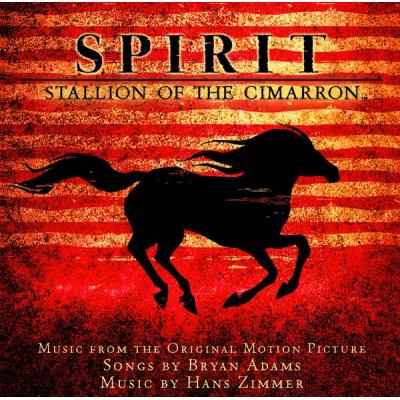
"Spirit: Stallion of the Cimarron" Soundtrack Lyrics
Movie • 2002
Track Listing
Bryan Adams
Bryan Adams
Bryan Adams
Bryan Adams
Bryan Adams
Bryan Adams
Bryan Adams
Bryan Adams (feat. Sarah McLachlan)
Bryan Adams
Bryan Adams
Bryan Adams
Bryan Adams
Bryan Adams
Bryan Adams
Bryan Adams
"Spirit: Stallion of the Cimarron (Music from the Original Motion Picture)" – Album Guide to Tracks and Key Scenes
Review
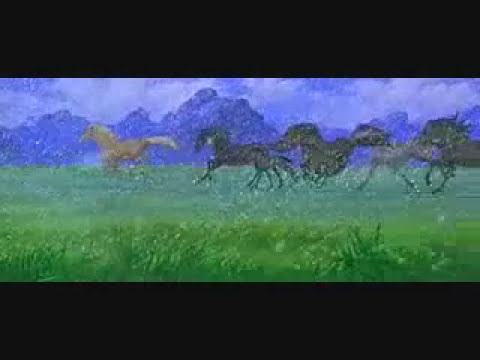
What happens when the main character never sings, never talks, but the music never stops talking for him? That is the trick Spirit’s soundtrack pulls off. With the horses largely silent on screen, Bryan Adams’ voice and Hans Zimmer’s orchestral writing step in as the film’s inner monologue, arguing, sulking and soaring on the stallion’s behalf.
Across the film, the songs move in lockstep with the plot. Early tracks like “Here I Am” and “This Is Where I Belong” sketch a bright, wide-open West and a colt still convinced the world is simple. Mid-film cuts — “You Can’t Take Me”, “Get Off My Back”, “Sound the Bugle” — drag the music into captivity, humiliation and near-defeat. By the finale, “I Will Always Return” and the surging score cues turn the soundtrack into a liberation anthem, mirroring Spirit’s escape and homecoming. Love story, anti-conquest fable, and road movie all get braided together in the music, which is why many fans remember the album almost more vividly than specific shots.
Stylistically the record lives in a neat three-phase arc. The front half is rock and soft-rock — crunchy guitars and Adams’ gravelly delivery telegraphing defiance and stubborn pride. Then come adult-contemporary ballads like “Don’t Let Go” and “Nothing I’ve Ever Known”, whose pianos and gentle strings carry loyalty, grief and first love. Underneath, Zimmer’s Western-flavoured orchestral cues (“Homeland”, “Run Free”, “Canyon Chase”) add the sense of landscape and myth. Rock equals resistance, ballads equal vulnerability, and the score is the land itself — that is basically the emotional map of this album.
How It Was Made
The soundtrack is a deliberate hybrid: songs by Bryan Adams, score by Hans Zimmer, conceived as one continuous narrative for DreamWorks’ 2002 animated Western. Adams performs the English (and French) vocals across the album, while Zimmer’s team — including Gavin Greenaway, Steve Jablonsky and others — handle the instrumental backbone and orchestral arrangements. Recording ran through 2001–2002 at studios such as AIR Lyndhurst in London and The Warehouse in Vancouver, with A&M Records releasing the album in May 2002 as both a film soundtrack and, effectively, Adams’ ninth studio record. Music supervisor Marylata E. Jacob oversaw the soundtrack package, and international dubs drafted local stars (Zucchero in Italian, Hartmut Engler in German, Raúl Malo and Erik Rubin on Spanish versions) to re-voice Adams’ songs while keeping Zimmer’s score intact.
Tracks & Scenes
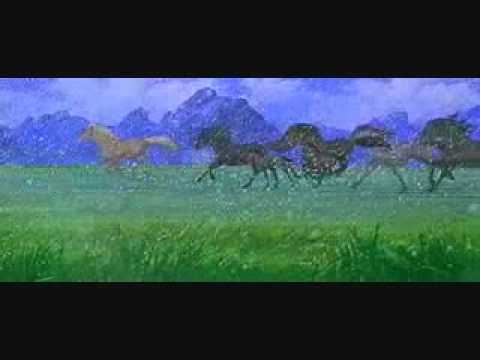
Because Spirit and the other horses never speak on screen, the songs effectively become a sung narration. The album also splits the listening experience in two: front-loaded vocal tracks, then a run of Zimmer score cues. Below is a track-by-track walk through of key moments — including a few trailer and score-only cues — without turning this into a dry tracklist dump.
“Here I Am” (Bryan Adams)
- Where it plays:
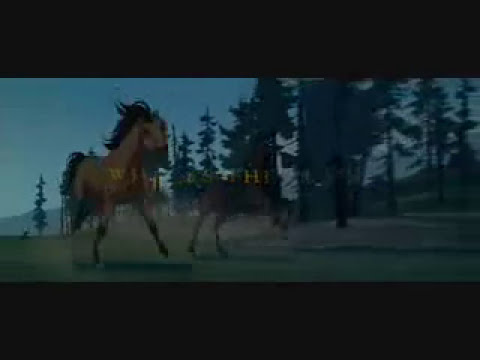
- In the opening minutes (roughly 00:01:00–00:04:00), as we watch Spirit’s birth and early life in the Cimarron, this song runs over sweeping views of canyons, rivers and eagles. Young Spirit races his herd, stumbles, gets back up and learns what it means to be a leader. The song is non-diegetic; it functions like a voiceover in song form, framing the whole story as a memory.
- Why it matters:
- This track sets the emotional thesis: Spirit is rooted in home and family, but already feels a restless pull toward the horizon. Musically it introduces the album’s bright rock sound and the “I am who I am” refrain that later songs will fight to protect.
“This Is Where I Belong” (Bryan Adams)
- Where it plays:
- Early in the film, after the prologue, this song underscores a montage of Spirit as a grown stallion patrolling and playing across his valley. We see him climbing ridges, racing the wind and asserting himself with other horses while sunrises and thunderstorms roll across the plains. It is non-diegetic, timed to wide shots and long camera sweeps rather than specific dialogue.
- Why it matters:
- The lyrics and gently pulsing rhythm underline how deeply Spirit identifies with his homeland. When later tracks rip him away from that landscape, the contrast hurts more because this song already taught us what “home” sounds like.
“You Can’t Take Me” (Bryan Adams)
- Where it plays:
- Roughly around 00:18:00–00:20:40, wranglers rope Spirit at night, drag him out of his valley and haul him toward the U.S. Cavalry fort. The song starts as the sun rises over mesas and the herd fades into the distance. Spirit thrashes against ropes, digs his hooves into the dirt and repeatedly throws himself to the ground as the riders press on. The track is non-diegetic but synced tightly with the cutting and slow-motion shots of his capture and journey.
- Why it matters:
- This song is basically Spirit’s protest letter. The simmering guitars and rising chorus turn the sequence from a simple capture scene into an argument about freedom, identity and refusal to be “broken”, echoing the film’s broader critique of conquest.
“Get Off My Back” (Bryan Adams)
- Where it plays:
- A little later in the fort sequence (around 00:23:20–00:25:20), the Colonel orders his men to “break” Spirit in the corral. A saddle is thrown on, soldiers cheer and bet on the outcome, and the song launches as the Colonel climbs on. For the next couple of minutes the action plays like a rodeo: Spirit bucks, spins and slams himself into fences, throwing rider after rider in the dust before going head-to-head with the Colonel. It is non-diegetic but matches the rhythm of every buck and cut.
- Why it matters:
- This is the soundtrack’s most overtly “fun” rock moment, but it is also cruelty seen from the horse’s point of view. The swaggering southern-rock feel pushes the tension between spectacle and violence — the crowd hears entertainment, the audience hears Spirit’s fury.
“Sound the Bugle” (Bryan Adams)
- Where it plays:
- Mid-film, after Rain is gravely injured during the cavalry raid and Spirit is recaptured, he ends up locked in a train boxcar. As the locomotive rattles through the night, we see him standing motionless in the gloom, staring out at a moonlit landscape that looks nothing like home. A human worker briefly strokes his muzzle and speaks kindly, then leaves him alone again. The song unfolds over this sequence — Spirit’s lowest point — with no dialogue, just the visuals of a defeated horse and the rattling of chains.
- Why it matters:
- The soundtrack briefly drops the defiant tone and lets despair in. The hymn-like melody, distant bugle motif and inward-looking lyrics capture trauma and survivor’s guilt, marking the emotional turning point before the big escape and railroad sequence.
“Nothing I’ve Ever Known” (Bryan Adams)
- Where it plays:
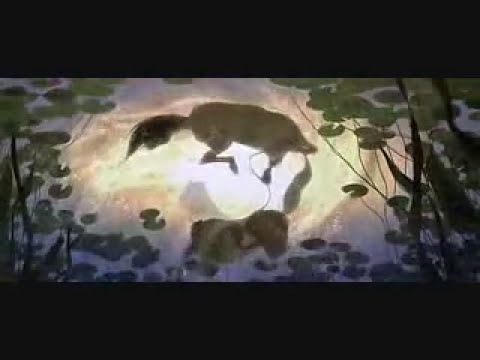
- In the romantic mid-section, after trust has grown between Spirit and Rain and they escape the fort, this song plays over a long, lyrical montage. They swim together in a lake at dusk, chase each other along ridgelines and graze quietly in forest clearings while Little Creek watches from a distance. The music is non-diegetic and stretches over several short vignettes rather than one contained scene, with only ambient sounds of water and wind under it.
- Why it matters:
- This is the emotional opposite of the fort sequences. Instead of fights and fences, the arrangement leans on piano and strings, framing love as a kind of sanctuary. It also deepens the sense of what Spirit will risk — and lose — once the railroad intrudes again.
“Run Free” (Hans Zimmer)
- Where it plays:
- Late in the film, once Spirit and Little Creek have sabotaged the railroad camp and freed the work horses, Zimmer’s cue takes over as they race away from explosions and flying debris. The track spans the sequence of Spirit outrunning a forest fire, diving off a collapsing cliff with Rain and finally cresting a ridge as the flames die behind them. There is no singing here, only pounding percussion, galloping string ostinatos and brass that mimic hooves and heartbeats.
- Why it matters:
- This is Zimmer’s big action showcase and the payoff to all the quieter instrumental motifs. It turns the escape into a full-body adrenaline rush and makes the idea of “running free” literal, just before the story returns home.
“I Will Always Return” (Bryan Adams)
- Where it plays:
- In the finale, after Spirit and Rain have been granted their freedom, we follow them on the ride back to the Cimarron. As Spirit crests the final ridge and sees his herd again, this song swells in. The camera circles his reunion with his mother, the younger horses and the familiar valley, while Little Creek watches from afar and says goodbye. The song then continues into the beginning of the end credits in an extended “Finale” version.
- Why it matters:
- Where “Here I Am” said “this is who I am now”, this track says “this is who I keep choosing to be”. It closes the character arc, turning survival into a promise of return — to people, places and principles.
“Don’t Let Go” (Bryan Adams feat. Sarah McLachlan)
- Where it plays:
- This duet enters over the closing credits after the narrative has wrapped. On screen we have a mixture of stylised artwork and last glimpses of the West, while the song’s piano-driven arrangement and McLachlan’s harmonies shift the mood from triumphant to reflective. It does not accompany a specific story beat; instead it acts as a coda about holding on to the bonds we have seen tested in the film.
- Why it matters:
- As a stand-alone song it might feel like a classic early-2000s adult-contemporary ballad, but in context it belongs to Rain and Little Creek as much as to Spirit, broadening the emotional fallout to the human characters.
“Brothers Under the Sun” (Bryan Adams)
- Where it plays:
- As the credits roll on, this becomes the final song we hear. After the more intimate “Don’t Let Go”, the tone widens again: lyrics about shared skies and journeys accompany the last credit cards. The visuals are simple; the track is doing most of the work now, sending the audience out of the cinema with a feeling of broad, almost spiritual camaraderie between humans, horses and the landscape.
- Why it matters:
- The soundtrack quietly reframes the whole film here as a story about kinship, not only between Spirit and his herd, but between every being under the same sun. It is the album’s gentlest thesis statement.
“Homeland” / Main Title (Hans Zimmer)
- Where it plays:
- In the film’s orchestral main title, often combined with “Here I Am”, Zimmer lays out the core musical DNA: broad horn lines, open-fifth harmonies and rhythms that resemble a canter. We hear this material under the studio logos and first sweeping aerials of the prairie before the vocal fully takes over.
- Why it matters:
- This cue gives the film its Western “bigness”. Even when Adams is singing over rock backing, echoes of this theme keep anchoring everything to a specific place rather than generic power-ballad land.
Trailer & non-album cues
- Where they appear:
- The theatrical and later festival trailers juggle album songs (“Here I Am”, “I Will Always Return”) with extra score and some library trailer music to emphasise the epic angle. These snippets do not always match exact film edits; sometimes you hear a chorus over shots from several different parts of the story.
- Why it matters:
- Trailers tilt the soundtrack toward sweeping inspiration and away from the darker mid-film material, which is why first-time viewers are often surprised by how bruised and melancholy the middle third of the actual score feels.
Notes & Trivia
- Composer Hans Zimmer and Bryan Adams built the songs together so that melodic cells could pass back and forth between the vocal tracks and the orchestral score, especially in “Homeland” and “The Long Road Back”.
- The album doubles as Bryan Adams’ ninth studio release; its mix of rock songs and film cues means it sits oddly but fondly in his discography compared to his more straightforward rock records.
- DreamWorks originally pursued Garth Brooks to write and sing the songs. When that deal collapsed, the studio pivoted to Adams, who had just come off other major soundtrack hits.
- International dubs kept Zimmer’s score but swapped Adams’ voice for local stars — for instance, Italian rocker Zucchero and German singer Hartmut Engler recorded entire translated versions.
- Songwriter and producer Trevor Horn co-wrote “Sound the Bugle”, which may explain its slightly different, more British-art-rock colour compared to Adams’ usual writing.
- Fans and collectors trade an expanded, score-only promo for Spirit with cues like “Canyon Chase”, “Train Escape” and “Reunion (Love Found Us)” in film order, distinct from the commercial songs-plus-score album.
- The fort “breaking” sequence is so tightly cut to “Get Off My Back” that the cue is sometimes taught in film-music classes as an example of how to structure action around song form.
- The soundtrack’s second half, dominated by instrumental tracks, helped Spirit show up on lists of serious animated film scores, even among listeners who are ambivalent about Adams’ pop material.
Reception & Quotes
At release the soundtrack divided critics more than the film itself. Some listeners loved the fusion of Adams’ radio-ready rock with Zimmer’s widescreen Western scoring; others felt the pop writing dominated the movie, turning certain scenes into music videos. Over time it has settled into cult-favourite status: not a consensus classic, but a touchstone album for a generation who grew up with the DVD on repeat.
The album starts like a rock record, then glides into big Zimmer score cues — a surprisingly smooth journey from pop to pure soundtrack.
Student review, Dexter Squall online
One film-music critic argued the songs feel like fully formed singles first and film cues second, as if the movie had to wrap itself around the album.
Filmtracks.com overview
Retail reviewers often highlight how Adams’ voice and the melodies “capture the spirit of the stallion” and make the film’s landscapes feel even larger.
Customer impressions on online stores
Among Zimmer fans, the consensus is that cues like “Homeland”, “Canyon Chase” and “Run Free” are underrated gems hiding behind the pop tracks.
Film-score fan discussions
Commercially, the album charted solidly in Europe and spawned “Here I Am” as a standalone single, which picked up award nominations and extra airplay. Various editions followed — including a special-edition CD with additional tracks and a separate, more score-focused release — and the album remains widely available on streaming platforms in both its original and remastered forms.
Interesting Facts
- Because the horses never talk, some viewers casually call Spirit a “non-musical musical”: the songs comment on the story, but no one sings in-world.
- “Sound the Bugle” has taken on a life of its own online, turning up on fan playlists about burnout, grief and recovery far outside the context of the film.
- “Run Free” is frequently recommended in soundtrack forums as a headphone test track thanks to its slow-build structure and huge dynamic swings.
- New orchestral and “epic” cover versions of “Here I Am” and “Nothing I’ve Ever Known” keep appearing on streaming platforms, keeping the melodies in circulation for listeners who have never seen the movie.
- The soundtrack’s multi-language strategy means you can assemble a kind of “world tour” playlist where every track is the same cue sung by a different artist in a different language.
- Zimmer later revisited some of the rhythmic and harmonic tricks from Spirit in other historical and Western-adjacent projects, which is why seasoned listeners sometimes get flashbacks to this score in unexpected places.
- Several Spirit trailers and TV spots used alternative trailer-library music in their intros, leading longtime fans to spend years hunting for those short cues on forums.
Technical Info
- Title: Spirit: Stallion of the Cimarron (Music from the Original Motion Picture)
- Year: 2002 (album release aligned with the film’s May 2002 theatrical run)
- Type: Feature-film soundtrack album (songs and score); also counted as Bryan Adams’ ninth studio album
- Primary composers: Hans Zimmer (score), Bryan Adams (songs)
- Songwriters (selected): Bryan Adams, Gretchen Peters, Robert John “Mutt” Lange, Gavin Greenaway, Trevor Horn, Jimmy Jam & Terry Lewis
- Performers: Bryan Adams (lead vocals on English and French versions), with guest vocals by Sarah McLachlan on “Don’t Let Go”
- Score & additional music: Hans Zimmer, with additional arrangements and cues by Steve Jablonsky, Rupert Gregson-Williams, James Dooley and others
- Music supervision: Marylata E. Jacob (soundtrack/record release), with Jason Bentley credited in some film materials
- Label: A&M Records / UMG; commercial CD and digital releases, plus later special editions and regional variants
- Recording period: 2001–2002, including sessions at AIR Lyndhurst Studios (London) and other major facilities
- Running time: Approximately 60 minutes for the standard 15-track soundtrack edition
- Key songs used in film: “Here I Am”, “This Is Where I Belong”, “You Can’t Take Me”, “Get Off My Back”, “Sound the Bugle”, “Nothing I’ve Ever Known”, “I Will Always Return”, “Don’t Let Go”, “Brothers Under the Sun”
- Selected notable placements: Fort breaking sequence (“Get Off My Back”), train depression scene (“Sound the Bugle”), Spirit & Rain romance montage (“Nothing I’ve Ever Known”), railroad escape (“Run Free”), homecoming finale (“I Will Always Return”)
- Release context: Tied to DreamWorks’ theatrical rollout of Spirit: Stallion of the Cimarron, including festival screenings (Cannes “Out of Competition”) and global dubbed versions
- Availability: Widely available on major streaming platforms; older CD pressings and special editions circulate on the used market, alongside a rarer score-only promo for collectors
- Awards & highlights: “Here I Am” was released as a single and received major award nominations; the film itself earned an Academy Award nomination for Best Animated Feature, with the music frequently singled out in coverage.
Key Contributors
| Entity | Role / Relation | Simple statement |
|---|---|---|
| Spirit: Stallion of the Cimarron (film) | Main work | The film uses songs and score from this soundtrack album. |
| Spirit: Stallion of the Cimarron (Music from the Original Motion Picture) | Soundtrack album | The album collects Bryan Adams’ songs and Hans Zimmer’s score for the film. |
| Bryan Adams | Singer, songwriter, producer | Bryan Adams performs and co-writes the majority of the songs on the album. |
| Hans Zimmer | Composer, producer | Hans Zimmer composes the orchestral score and co-produces the soundtrack. |
| Gretchen Peters | Lyricist, co-writer | Gretchen Peters co-writes key songs such as “Here I Am” and “Brothers Under the Sun”. |
| Robert John “Mutt” Lange | Co-writer, producer | Robert John “Mutt” Lange co-writes several songs, including “I Will Always Return”. |
| Sarah McLachlan | Guest vocalist | Sarah McLachlan sings and plays piano on the end-credit song “Don’t Let Go”. |
| Gavin Greenaway | Conductor, arranger, co-writer | Gavin Greenaway conducts the orchestra and contributes to arrangements and songwriting. |
| Trevor Horn | Songwriter | Trevor Horn co-writes the track “Sound the Bugle”. |
| Marylata E. Jacob | Music supervisor | Marylata E. Jacob supervises the soundtrack album’s music production for the release. |
| DreamWorks Animation | Studio | DreamWorks Animation produces the film that the soundtrack accompanies. |
| A&M Records | Record label | A&M Records releases the commercial soundtrack album worldwide. |
| Hartmut Engler | Vocalist (German version) | Hartmut Engler sings the German-language versions of the Spirit songs. |
| Zucchero | Vocalist (Italian version) | Zucchero records the Italian-language versions of the soundtrack songs. |
| Raúl Malo | Vocalist (Spanish Europe) | Raúl Malo performs Spanish-language vocals for certain European releases. |
| Erik Rubin | Vocalist (Latin American Spanish) | Erik Rubin sings the Latin American Spanish versions of the songs. |
| London Studio Orchestra | Orchestra | The London Studio Orchestra performs much of the film’s recorded score. |
Questions & Answers
- Is Spirit: Stallion of the Cimarron technically a musical?
- Not in the traditional sense — characters never burst into song onscreen — but the soundtrack behaves like an external musical narrator, so it feels halfway to a musical.
- Why does Bryan Adams sing over so much of the film?
- The horses only neigh and snort, so Adams’ voice supplies emotional context and inner thoughts. It was a deliberate creative choice to let the songs “speak” for Spirit.
- Are there different versions of the soundtrack?
- Yes. There is the standard songs-plus-score album, a special edition with an extra track, and a rarer promo of mostly Zimmer score cues that collectors trade.
- Who wrote the score and who wrote the songs?
- Hans Zimmer composed the instrumental score. Bryan Adams co-wrote and sang the songs, working alongside writers like Gretchen Peters and “Mutt” Lange.
- Where can I listen to the music today?
- The main soundtrack is on all major streaming services and digital stores, and physical CDs regularly pop up through online retailers and second-hand shops.
Sources: Wikipedia; Spirit Wiki (Fandom); Filmtracks; Dexter Squall student review; Amazon and other retail listings; MusicBrainz; Discogs; Hans Zimmer fan cue lists; Reddit soundtrack discussions; various official soundtrack pages and label credits.
November, 27th 2025
A-Z Lyrics Universe
Cynthia Erivo Popular
Ariana Grande Horsepower
Post Malone Ain't No Love in Oklahoma
Luke Combs Good Riddance (Time of Your Life)
Green Day Bye Bye Bye
*NSYNC You're the One That I Wan
John Travolta & Olivia Newton-John I Always Wanted a Brother
Braelyn Rankins, Theo Somolu, Kelvin Harrison Jr. and Aaron Pierre The Power of Love
Frankie Goes to Hollywood Beyond
Auli’i Cravalho feat. Rachel House MORE ›