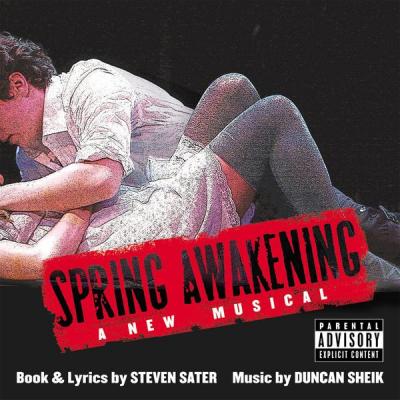
"Spring Awakening" Soundtrack Lyrics
Musical • 2006
Track Listing
Spring Awakening Cast
Lea Michele & Girls
Jonathan Groff
Spring Awakening Cast
Spring Awakening Cast
Jonathan Groff & Lea Michele
Lilli Cooper & Lauren Pritchard
Christine Estabrook, John Gallagher, Jr. & Boys
Jonathan Groff & Boys
Duncan Sheik
John Gallagher, Jr. & Lauren Pritchard
Lea Michele, Jonathan Groff & Company
Jonathan Groff & Company
Jonathan B. Wright, Gideon Glick & Company
Spring Awakening Cast
John Gallaghe, Jr., Lea Michele & Jonathan Groff
Lauren Pritchard
Duncan Sheik
Spring Awakening Cast
Spring Awakening Cast
"Spring Awakening (Original Broadway Cast Recording)" – Album Guide to Tracks and Key Scenes
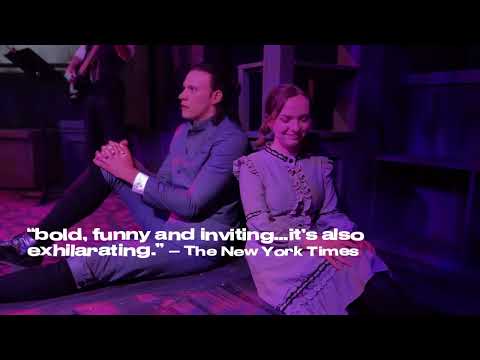
Review
Can a folk-rock album capture the sound of thoughts teenagers aren’t allowed to say? Spring Awakening answers with mic-in-hand confessions: private diaries sung out loud. Duncan Sheik’s tunes glide between hushed indie verses and detonating choruses; Steven Sater’s lyrics speak in fevered fragments — yearning, catechism, rumor. Onstage, the score functions like a truth serum. On record, it plays as a front-row bootleg of a revolution that happens inside.
The musical reshapes Frank Wedekind’s 1891 tragedy into a modern headrush: classroom tyranny, first desire, misinformation with consequences. The album mirrors the story’s arc — curiosity (“All That’s Known”), ignition (“The Bitch of Living”), discovery (“The Word of Your Body”), rupture (“Don’t Do Sadness/Blue Wind”), and a hard-won wideness (“Purple Summer”). What makes it distinct is intent: guitars and strings don’t “modernize” the period; they externalize it. Inner monologues become arena anthems — the secret diary scrawled in power chords.
Genres & themes, in phases: acoustic confessional — doubt and prayer (“Mama Who Bore Me”); alt-rock churn — libido and rebellion (“Bitch of Living,” “Totally F***ed”); chamber-folk — tenderness and clarity (“Word of Your Body,” “Left Behind”); ambient pop — dissociation and rumor (“Touch Me,” “Mirror-Blue Night”); hymn-pop — collective hope (“Song of Purple Summer”).
How It Was Made
The show premiered Off-Broadway at Atlantic Theater Company and opened on Broadway at the Eugene O’Neill Theatre on December 10, 2006, directed by Michael Mayer with choreography by Bill T. Jones. Decca Broadway issued the Original Broadway Cast Recording on December 12, 2006, capturing the seven-player pit’s lean texture (two guitars, strings, keyboard, percussion). The album went on to win the 2008 Grammy for Best Musical Show Album. In performance, handheld mics and concert lighting split the period world from the kids’ interior voices — a design choice baked into the recording’s close, breathy sound.
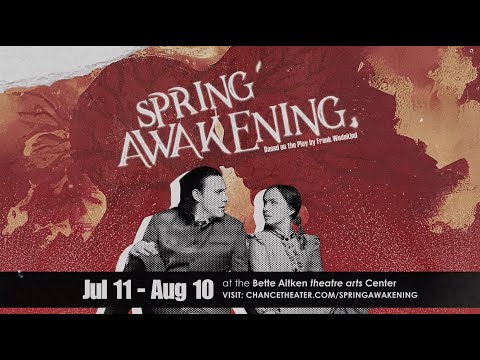
Tracks & Scenes
“Mama Who Bore Me” (Wendla)
- Where it plays:
- Opening prayer/plea. Wendla begs her mother for honest answers about where babies come from; she gets euphemism instead. The girls reprise it, harmonies sharpening the ache.
- Why it matters:
- States the thesis: ignorance is lethal. The gentle melody disguises a scream for knowledge.
“All That’s Known” (Melchior)
- Where it plays:
- After Latin class corporals, Melchior vows to think for himself. The staging strips to him and a mic — manifesto as indie ballad.
- Why it matters:
- Plants the rebel. He’ll pay for clarity later, but the seed’s here.
“The Bitch of Living” (Boys)
- Where it plays:
- Desks explode into pogo-rock. Moritz unloads nightmare logic; the boys vent hormones, boredom, and fear with comic hyper-specifics.
- Why it matters:
- Pressure valve. Humor keeps the darkness at bay — for now.
“My Junk” (Company)
- Where it plays:
- Girls and boys list the objects and crushes that hijack their attention. Overlapping vignettes make a small town feel crowded.
- Why it matters:
- Desire as static: the song is busy, buzzy, funny — exactly like their heads.
“Touch Me” (Company)
- Where it plays:
- A nocturne of whispered fantasies; bodies slow down onstage while the vocals float. Chaste blocking, fevered harmony.
- Why it matters:
- Internal cinema. The song’s weightless feel contrasts the discipline of daylight scenes.
“The Word of Your Body” (Wendla & Melchior)
- Where it plays:
- By a tree in the woods. They test language and proximity, neither ready to name what’s happening.
- Why it matters:
- Tentativeness as rhythm; the melody hesitates like their breath.
“The Dark I Know Well” (Martha, Ilse)
- Where it plays:
- Martha reveals abuse; Ilse recognizes herself. Harsh backlight, band punches, no easy comfort.
- Why it matters:
- Shifts the show from naughty to dangerous. The album preserves the rawest vocal timbres.
“And Then There Were None” (Moritz)
- Where it plays:
- Moritz pleads for a lifeline after failing exams; rejection follows. The groove keeps moving as he stalls out.
- Why it matters:
- Administrative cruelty rendered in pop form — chilling precisely because it’s catchy.
“The Mirror-Blue Night” (Melchior)
- Where it plays:
- Storm circling. He senses the boundary between child and adult cracking; the arrangement turns vaporous.
- Why it matters:
- Prelude to the hayloft — a dream before a decision.
“I Believe” (Company; Wendla & Melchior at the center)
- Where it plays:
- Hayloft in rain. A fragile first time, staged with stillness and vocal bloom; company vocals rise like conscience around them.
- Why it matters:
- Beautiful and dangerous — the score refuses to moralize, it empathizes.
“The Guilty Ones” (Wendla, Melchior, Company)
- Where it plays:
- Act II opens on consequences; whispers become accusations; the tune turns circular, trapped.
- Why it matters:
- Rumor as rhythm — you can hear society closing in.
“Don’t Do Sadness / Blue Wind” (Moritz & Ilse)
- Where it plays:
- Parallel tracks collide: his agitation, her drifting survival. For a second, rescue seems possible — then it isn’t.
- Why it matters:
- Counterpoint as tragedy. The album’s cross-fade feels like a door closing.
“Left Behind” (Melchior)
- Where it plays:
- Funeral elegy for Moritz. Strings step forward; the band hushes to pulse and breath.
- Why it matters:
- Grief without grandeur — just clean lines and a catch in the throat.
“Totally F***ed” (Company)
- Where it plays:
- Melchior, cornered at school, detonates. The chair-stomp pattern and call-and-response land like a mosh pit under house lights.
- Why it matters:
- The show’s cathartic explosion — rage, joy, and awful clarity in one chorus.
“The Word of Your Body (Reprise)” (Hänschen & Ernst)
- Where it plays:
- A tender boys’ duet in the shadows; flirtation as pedagogy.
- Why it matters:
- Queer intimacy, played without wink — the same melody becomes new meaning.
“Whispering” (Wendla)
- Where it plays:
- Wendla senses she’s pregnant without the vocabulary to name it. The orchestration thins to let her thought-voice lead.
- Why it matters:
- The album’s quietest devastation.
“Those You’ve Known” (Moritz, Wendla & Melchior)
- Where it plays:
- Visions steady Melchior at Wendla’s grave. Harmony becomes lifeline.
- Why it matters:
- Elegy and hand-off — the living receive the dead’s courage.
“The Song of Purple Summer” (Ilse & Company)
- Where it plays:
- Finale tableau: everyone gathers, meadow-wide. The band swells, then releases.
- Why it matters:
- Not closure, expansion — the promise that knowledge will outlive repression.
Notes & Trivia
- The OBCR was released December 12, 2006; it later won the 2008 Grammy for Best Musical Show Album.
- Original Broadway run: opened December 10, 2006; 28 previews, 859 performances; closed January 18, 2009.
- Orchestra was lean by design: seven players to keep the songs intimate and portable.
- The Act II opener on stage is “The Guilty Ones”; early off-Broadway used “There Once Was a Pirate” (it survives as a bonus track on digital editions).
- The show’s handheld-mic convention became a visual shorthand for “inner voice.”
Reception & Quotes
Critical and fan response blended awe and debate — about form, frankness, and the show’s impact on teen theater.
“Innovative, frequently brilliant… shines brightly on Broadway.” — TheaterMania
“Artful reinterpretation of Wedekind’s drama.” — Variety
“OBCR tops Billboard Cast Album chart after Tony wins.” — Playbill
Availability: The OBCR is widely streamable (20 tracks, 2006). Select pressings list minor ordering differences for Act II numbers.
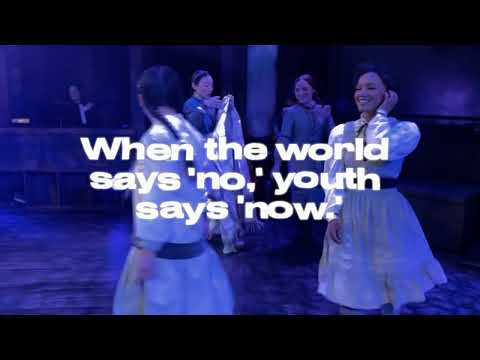
Interesting Facts
- The OBCR’s breathy vocal mix mirrors the staging’s “mic from the pocket” intimacy.
- “Totally F***ed” was a 2007 Tony Awards showstopper; the televised bleep didn’t blunt the impact.
- Deaf West’s 2015 revival reimagined songs in ASL/voice duets, reframing the “communication” theme for a new audience.
- The pit’s string writing (viola/cello) is unusually prominent for a rock score — chamber music inside alt-pop.
- “There Once Was a Pirate” reappeared in a later London run as an Act II opener swap.
Technical Info
- Title: Spring Awakening (Original Broadway Cast Recording)
- Year: 2006 (album released December 12, 2006)
- Type: Original Broadway Cast Recording (musical theater album)
- Composers/Lyricists: Music by Duncan Sheik; Book & Lyrics by Steven Sater
- Music direction/orchestrations: Seven-player pit (guitars, strings, keys, percussion)
- Label: Decca Broadway
- Release context: Broadway opened at the Eugene O’Neill Theatre, December 10, 2006 (after an Atlantic Theater Off-Broadway run)
- Awards & charts: 2008 Grammy — Best Musical Show Album; topped Billboard Cast Album chart post-Tonys
- Notable placements (stage moments): “Mama Who Bore Me” (opening plea); “Bitch of Living” (classroom breakout); “I Believe” (hayloft); “Don’t Do Sadness/Blue Wind” (near-miss rescue); “Totally F***ed” (discipline revolt); “Purple Summer” (finale)
Questions & Answers
- Is the album a full plot substitute?
- No — it captures inner monologues; key story turns land in dialogue between numbers.
- What’s different between stage order and album order?
- Some editions swap the first two Act II tracks (“Guilty Ones” and “Don’t Do Sadness/Blue Wind”); the stage runs “Guilty Ones” first.
- Why handheld microphones?
- They separate the kids’ “inside voice” (songs) from the period world (scenes) — a concept you can hear on the OBCR’s close-miked vocals.
- Which song best represents the show?
- “The Song of Purple Summer” — not triumph, but horizon. It’s why the album lingers after it ends.
- Did the recording win major awards?
- Yes — it won the 2008 Grammy for Best Musical Show Album.
Key Contributors
| Entity | Relation |
|---|---|
| Duncan Sheik | Composer — co-created score; co-produced OBCR. |
| Steven Sater | Book & Lyrics — co-created score/words. |
| Michael Mayer | Director — established concert-meets-period staging. |
| Bill T. Jones | Choreographer — kinetic language for interior songs. |
| Christine Jones | Scenic designer — chair/brick minimalism. |
| Kevin Adams | Lighting designer — concert palette that cues “inner voice.” |
| Atlantic Theater Company | Off-Broadway premiere (May–Aug 2006). |
| Eugene O’Neill Theatre | Broadway venue (opened Dec 10, 2006). |
| Original Broadway Cast (incl. Jonathan Groff, Lea Michele, John Gallagher Jr.) | Principal performers on the OBCR. |
| Decca Broadway | Record label — released OBCR (Dec 12, 2006). |
Sources: Wikipedia (musical overview & numbers); Playbill (Grammy win; cast-album chart note; OBCR release date); IBDB & Playbill vault (run/venue); AllMusic (album entry & release details); Variety/TheaterMania (contemporary reviews); StageAgent (song list verification); YouTube trailer uploads.
"Spring Awakening," a musical that swept onto the Broadway scene in 2006, introduced a raw, pulsating energy that bridged adolescent angst with the grace of musical theatre. It's a show that, through its powerful narrative and captivating songs, digs deep into the tumultuous journey of youth, love, and rebellion. Musical Landscape. Duncan Sheik, the genius behind the music, fused alternative rock with folk elements, crafting a soundtrack that's both timeless and deeply reflective of the show's late 19th-century German setting. This musical brilliance was released on November 21, 2006, showcasing genres from stage & screen, classical, to pop/rock, enveloped in styles ranging from show/musical to adult alternative pop/rock. The "Spring Awakening" Original Broadway Cast Recording not only captures the essence of its live performances but serves as a standalone masterpiece, inviting listeners to explore the depth of its characters' emotions through tracks that are as diverse in their musicality as they are in their storytelling. Storyline and Themes. The narrative weaves through the lives of teenagers grappling with the inner and outer tumult of adolescent sexuality, set against a backdrop of a repressive era. It boldly addresses themes of sexual awakening, the clash with authority, and the tragic consequences of ignorance and miscommunication. Characters like Moritz struggle with the societal pressures and personal turmoil of growing up, leading to poignant moments encapsulated in songs that range from the frustration and confusion of "The Bitch of Living" to the desperate plea of "Don't Do Sadness/Blue Wind". Cultural Impact. Since its debut, "Spring Awakening" has left an indelible mark on Broadway and its audience, winning eight Tony Awards, including Best Musical. Its ability to blend contemporary musical styles with a historical setting has resonated widely, appealing to not just traditional theatre-goers but also a younger, more diverse audience. This success speaks volumes about the universality of its themes and the timeless appeal of its music.November, 27th 2025
A-Z Lyrics Universe
Cynthia Erivo Popular
Ariana Grande Horsepower
Post Malone Ain't No Love in Oklahoma
Luke Combs Good Riddance (Time of Your Life)
Green Day Bye Bye Bye
*NSYNC You're the One That I Wan
John Travolta & Olivia Newton-John I Always Wanted a Brother
Braelyn Rankins, Theo Somolu, Kelvin Harrison Jr. and Aaron Pierre The Power of Love
Frankie Goes to Hollywood Beyond
Auli’i Cravalho feat. Rachel House MORE ›