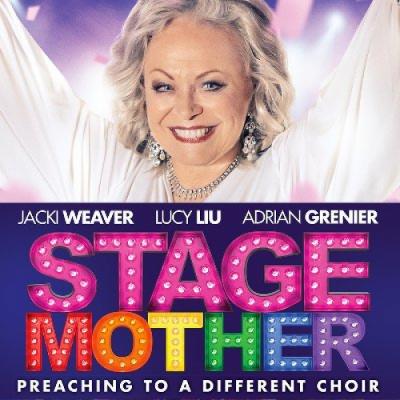
"Stage Mother" Soundtrack Lyrics
Movie • 2021
Track Listing
Repartee
Taylor Dayne
Ruth Wallis
Claire George
Homegrown
Jeff Meegan
Joan Jett
Sharon Azrieli
Beds and Beats
Scissor Sisters
Cynthia Curilla
CeCe Peniston
Billy Harvey
Bonnie Tyler
"Stage Mother (Original Motion Picture Soundtrack/Selections)" – Album Guide to Tracks and Key Scenes
Overview
What happens when a Southern Baptist choir mistress inherits a San Francisco drag club? A culture clash, sure — but in this film it’s also a jukebox of comfort, camp and reconciliation. Stage Mother plays like a mixtape made by a mom for her queer son, stitched together with hymns, diva ballads and glitter-floor bops.
The story follows Maybelline (Jacki Weaver) as she steps into her late son’s world and learns to run his club. The soundtrack keeps that journey grounded: church standards set the baseline of who she is; club songs and pop classics pull her toward who she’s becoming. It’s not a wall-to-wall commercial album, but a curated palette — familiar tunes used with intention, plus crate-digger gems that sound like they’ve lived on a bar’s playlist for years.
Genre-wise, the movie cycles through phases: gospel and hymnody — faith, ritual, safety; lounge and torch — grief, memory, confession; indie-electro and alt-pop — city pulse, chosen family; and a marquee 1990 power-ballad — forgiveness and forward motion. The arc is tidy: from pews to stage, from “performing tradition” to performing truth.
How It Was Made
The film is directed by Thom Fitzgerald, with original score contributions credited to Warren Robert, and music supervision steering the blend of hymns, drag-ready needle-drops and catalog songs. Supervisors coordinated licensed tracks (notably a Diane Warren/Taylor Dayne classic) alongside performances by the film’s cast in both church and club settings. Executive music production kept needle-drops cohesive with the small, heartfelt score cues so the setlists feel like one night in one venue — not a playlist shuffle.
Tracks & Scenes
“This Little Light of Mine” (Cast)
- Where it plays:
- Early in Texas, during a church service with Maybelline leading. The camera lingers on parishioners, hymnals, and the gentle routine she knows by heart. Diegetic choral performance; brief reprise under dialogue as the scene closes.
- Why it matters:
- Establishes her musical identity and community — the “light” she’s been taught to keep safely contained.
“Amazing Grace” (Cast)
- Where it plays:
- A mourning moment near the start, connected to her son’s death. Sung in simple harmony; minimal instrumentation; diegetic. The camera cuts between faces, programs, and Maybelline’s hands gripping a pew.
- Why it matters:
- Signals grief and the guilt/regret thread; frames later club numbers as a different kind of grace.
“Dukes” (Repartee)
- Where it plays:
- As Maybelline first immerses herself in the San Francisco drag club — a kinetic arrival/montage beat. Non-diegetic track bleeds into room tone and crowd chatter.
- Why it matters:
- Sets the club’s youthful, neon tempo; contrasts the hymnal cadence we’ve just left.
“Queer Things” (Ruth Wallis)
- Where it plays:
- A cheeky vintage needle-drop used with a performer’s bit onstage — comic timing, sly rhymes, the room laughing with the act. Partly diegetic (lip-sync motif), with the track mixed forward.
- Why it matters:
- Honors camp lineage; places the club in a tradition older than any one queen or playlist.
“Where Do You Go? (Yumi Zouma Remix)” (Claire George)
- Where it plays:
- Night-drive or makeover montage vibes as Maybelline starts to “produce” the show — stitching costumes, cueing lights, keeping books. Non-diegetic; plays over intercut prep and rehearsal beats.
- Why it matters:
- Dreamy, propulsive; sounds like stepping into possibility — a mother learning to let go while still guiding.
“Sweet Tooth” (Homegrown)
- Where it plays:
- Barback chatter and dressing-room bustle; the track sneaks in as source music from the floor before it fills the mix. Semi-diegetic.
- Why it matters:
- Texture cue — the everyday heartbeat between the big showpieces.
“Glimmer of Your Smile (feat. Donna Byrne)” (Jeff Meegan)
- Where it plays:
- Quieter, late-night scene — two characters confide near the end of a shift; the track sits low like a jazz standard on the club’s speakers. Diegetic background.
- Why it matters:
- Old-school warmth undercuts defenses; makes space for truth-telling.
“We Are Giants” (Billy Harvey)
- Where it plays:
- Show-night montage — entrances, wigs fixed, a performer steadies themselves in the wings; the beat hits as the curtain parts. Non-diegetic, then crossfades to crowd noise.
- Why it matters:
- Anthemic lift; the “found family” thesis in four minutes.
“Love Will Lead You Back” (Taylor Dayne)
- Where it plays:
- A late emotional passage, heard as source or over a reflective sequence. The power-ballad aura is unmistakable; vocals crest while the camera holds on faces and choices. Mostly non-diegetic, mixed for maximum catharsis.
- Why it matters:
- It’s the soundtrack’s heart-on-sleeve thesis — reconciliation as melody, forgiveness as hook.
Notes & Trivia
- The film premiered at Palm Springs International Film Festival before a wider 2020 release; some territories encountered it on digital platforms later.
- The song mix favors diegetic performances — hymns in church, lip-syncs and standards in the club — to keep character emotion physically onstage.
- A vintage novelty cut (“Queer Things”) nods to pre-Stonewall camp records that became drag staples.
- That 1990 Diane Warren ballad placement (“Love Will Lead You Back”) telegraphs the film’s reconciliation theme in one iconic chorus.
- There’s no widely released official soundtrack album; licensed tracks are available individually via artist catalogs and playlists.
Music–Story Links
When Maybelline first hears the club floor thump, the uptempo indie-pop disorients her — that’s the point. The cue changes her gait; she starts keeping time, not resisting it. Later, a smoky lounge cut under a heart-to-heart lets the conversation breathe: fewer drums, more room to confess. And when the ballad lands late, the lyrics do narrative work the characters can’t quite speak; the hook bridges the gap between the pew and the stage. Even the hymns matter — their return (or deliberate absence) tells us how far she’s traveled.
Reception & Quotes
Critics were mixed on the film overall but consistently singled out the performances and the feel-good musical throughline. A few snapshots:
“Genial if formulaic.” Variety
“Feelgood drag film… falls flat.” The Guardian
“Sweet but ineffective… salvaged by a few sparkling performances.” RogerEbert.com
Availability: the film saw theatrical/VOD in 2020, with streaming and home releases rolling out across regions subsequently; no official OST album has been issued.
Interesting Facts
- Choir-to-club mirror: early hymns are echoed by late-stage ensemble numbers — same leader, new congregation.
- Camp lineage: programming a Ruth Wallis cut roots the show in 1950s bawdy LP culture beloved by drag history keepers.
- Power-ballad logic: licensing a top-10 classic gives a small indie drama a big-pop emotional ceiling.
- Diegetic dominance: most songs are “in the room,” making the audience feel like patrons of the club.
- No OST bundle: without a commercial album, fan-made playlists have become the de facto “soundtrack.”
- Supervisor fingerprint: the needle-drops lean toward vocal-forward tracks to spotlight lip-sync and stage craft.
- Trailer palette: trailers circulate alternate cuts, but the film’s in-scene songs skew warmer and more intimate.
Technical Info
- Title: Stage Mother — soundtrack selections (film needle-drops & performances)
- Year: 2020 U.S. release (festival premiere January 4, 2020; subsequent regional/home rollouts followed)
- Type: Feature film — music-driven dramedy
- Director: Thom Fitzgerald
- Composer (score): Warren Robert
- Music Supervision / Production: Melany Mitchell; Valerie Biggin (music supervisor); Greg Richling (executive music producer); Jane Solomon (music advisor)
- Selected notable placements: “Love Will Lead You Back” (Taylor Dayne); “Queer Things” (Ruth Wallis); “Dukes” (Repartee); “Where Do You Go? (Yumi Zouma Remix)” (Claire George); “Glimmer of Your Smile” (Jeff Meegan feat. Donna Byrne); hymns performed by cast
- Label / album status: No official commercial OST album currently in market; songs available via artist releases/streaming
- Runtime: ~93 minutes
Questions & Answers
- Is there an official soundtrack album for Stage Mother?
- No. Tracks are licensed from artist catalogs; fans compile playlists from the film’s cues.
- Which well-known pop song anchors the film’s late emotional beat?
- “Love Will Lead You Back” by Taylor Dayne — a 1990 Diane Warren ballad.
- Are most songs diegetic (heard by the characters)?
- Yes. Church hymns and club performances largely play in-world, with some montages using non-diegetic cues.
- Who handled the music supervision?
- Credit listings include Melany Mitchell and Valerie Biggin (supervisors), with Greg Richling as executive music producer.
- Where did the film first premiere?
- Palm Springs International Film Festival, with wider release later in 2020.
Key Contributors
| Entity | Relation |
|---|---|
| Thom Fitzgerald | Director — leads creative vision of film |
| Brad Hennig | Writer — screenplay connecting songs to character beats |
| Jacki Weaver | Performer — plays Maybelline; anchors diegetic church music |
| Mya Taylor; Allister MacDonald; Jackie Beat | Performers — drag acts that carry in-club numbers |
| Warren Robert | Composer — original score cues |
| Melany Mitchell; Valerie Biggin | Music Supervisors — licensing, placements, clearances |
| Greg Richling | Executive Music Producer — oversees music production |
| Taylor Dayne | Artist — “Love Will Lead You Back” placement |
| Ruth Wallis | Artist — “Queer Things” vintage cut |
| Repartee | Artist — “Dukes” club-energy cue |
Sources: IMDb (soundtracks & credits); Wikipedia (film overview); WhatSong (song list); Metacritic (credits); Variety; The Guardian; RogerEbert.com; distributor/trailer pages.
November, 27th 2025
A-Z Lyrics Universe
Cynthia Erivo Popular
Ariana Grande Horsepower
Post Malone Ain't No Love in Oklahoma
Luke Combs Good Riddance (Time of Your Life)
Green Day Bye Bye Bye
*NSYNC You're the One That I Wan
John Travolta & Olivia Newton-John I Always Wanted a Brother
Braelyn Rankins, Theo Somolu, Kelvin Harrison Jr. and Aaron Pierre The Power of Love
Frankie Goes to Hollywood Beyond
Auli’i Cravalho feat. Rachel House MORE ›