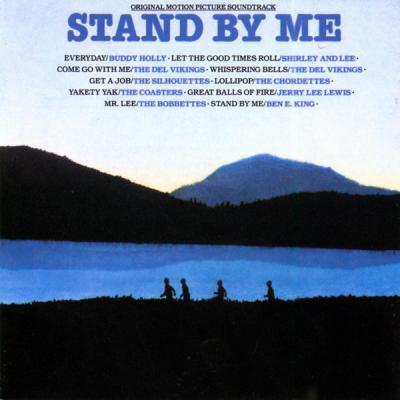
"Stand By Me" Soundtrack Lyrics
Movie • 1990
Track Listing
Holly Buddy
Shirley and Lee
Del Vikings
Del Vikings
Silhouettes
Chordettes
Coasters
Leis, Jerry Lee
Bobbettes
King, Ben E.
"Stand By Me (Original Motion Picture Soundtrack)" – Album Guide to Tracks and Key Scenes
Overview
How do you soundtrack childhood — not the facts, but the feeling? Rob Reiner’s Stand By Me answers with pre-Beatles 45s: doo-wop harmonies, handclaps, and basslines that walk like kids on railroad ties. Oldies become memory’s oxygen.
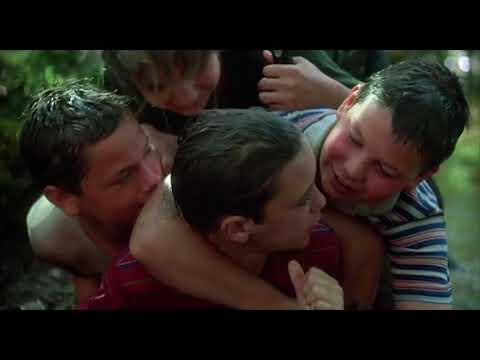
Set in 1959, the film follows Gordie, Chris, Teddy, and Vern on a two-day trek to find a dead body. The needle-drops aren’t nostalgic wallpaper; they’re the boys’ atmosphere. “Rockin’ Robin” turns a clubhouse into a world that’s theirs. “Lollipop” and “Yakety Yak” bounce over bickering and bravado. “Whispering Bells” floats through a junkyard hang, tender as the vulnerability they won’t say out loud. And at the end, Ben E. King’s “Stand by Me” closes the circle — a benediction over a friendship already slipping into myth.
Phases and meanings: doo-wop — innocence, group identity; rock-and-roll shouters — bravado, risk; country-tinged pop — small-town drift; R&B ballad — memory and promise. The arc is simple and devastating: the songs start as background noise to a summer, then resolve as the grammar of who they’ll become.
How It Was Made
Jack Nitzsche composed the score, a spare, amber glow between licensed tracks. The soundtrack album (Atlantic) gathered 1950s/early-’60s sides — Buddy Holly, The Del-Vikings, The Coasters — chosen to feel diegetic to 1959 Castle Rock. Reiner’s team leaned on well-known catalog without breaking period logic, letting the boys sometimes sing the world into being (“The Ballad of Paladin”). The title itself ultimately aligned with the end-credits song — King’s “Stand by Me” — which was re-released alongside the movie and charted again.

Tracks & Scenes
“Rockin’ Robin” (Bobby Day)
- Where it plays:
- Early on (~00:02), in the tree-house as the boys swap jokes and plans. It’s source-like — the vibe in the room — then lifts into non-diegetic energy as they set their mission.
- Why it matters:
- Instantly frames their world as kid-ruled and rhythm-drunk — a summer that chirps and chatters like the record.
“The Ballad of Paladin” (Johnny Western; sung by the boys)
- Where it plays:
- As they first hit the tracks (~00:14), the kids sing the TV-western theme a cappella. Purely diegetic: four voices, one bravado.
- Why it matters:
- Play-acting heroism. The show’s code becomes a shield as they walk toward something none of them is ready to see.
“Whispering Bells” (The Del-Vikings)
- Where it plays:
- Junkyard hang (~00:20). They kill time pitching rocks and roasting each other. The doo-wop glows under Gordie’s narration; semi-diegetic, then fully non-diegetic.
- Why it matters:
- A hush of teenage tenderness beneath macho noise — those bells are the sound of feelings they won’t name.
“Let the Good Times Roll” (Shirley & Lee)
- Where it plays:
- Still in the junkyard (~00:23), as the boys lounge and trash-talk. A second sunny cut that curdles when the junkman provokes Teddy.
- Why it matters:
- Fun as armor. When it drops out, you feel how thin the boys’ swagger really is.
“Lollipop” (The Chordettes)
- Where it plays:
- On the radio (~00:31) as they strut down the tracks, Teddy and Vern clowning, popping the “pop”s in time. Mix leans diegetic, then swells over their walk.
- Why it matters:
- Sugar-rush confidence before darker beats — a palate cleanser that sells the illusion of endless summer.
“Come Go With Me” (The Del-Vikings)
- Where it plays:
- Campfire after the near-miss with the train (~00:39). The mood softens; the harmony mirrors how the group re-knits after fear.
- Why it matters:
- Trust rebuilt. The lyric’s invitation doubles as an oath to keep walking together.
“Get a Job” (The Silhouettes)
- Where it plays:
- Cutaway (~00:59) to Billy and Charlie shooting pool, then heading to fish and gossip. A source-ish jukebox vibe at the dive bar before it rides the montage.
- Why it matters:
- Adult world, same small-town loop. The refrain underlines how stalled those older boys already are.
“Yakety Yak” (The Coasters)
- Where it plays:
- ~01:06, cars roaring and mailbox baseball with Ace’s gang. The song’s comic bark flips menacing when paired with those tailfins.
- Why it matters:
- Rules as taunt. The novelty track becomes a sneer — the older boys’ cruelty in three chords.
“Everyday” (Buddy Holly)
- Where it plays:
- Used early as a walking-tempo motif; the heartbeat pace paces their small rituals (packing, setting out, swapping stories).
- Why it matters:
- The metronome of boyhood — a tapping on fate’s window as they step toward the body.
“Mr. Lee” (The Bobbettes)
- Where it plays:
- Sprinkled as playful connective tissue around the mid-movie beats; a radio-ready cut that threads scenes in town.
- Why it matters:
- Giggle-energy and gossip — the town’s sing-song chorus to the boys’ private odyssey.
“Great Balls of Fire” (Jerry Lee Lewis)
- Where it plays:
- Used as a quick, brash punctuation around a mid-reel cutaway — a flash of grown-up heat that doesn’t belong to the kids yet.
- Why it matters:
- A flare of adult lust and danger, foreshadowing how quickly boyhood gives way.
“Stand by Me” (Ben E. King)
- Where it plays:
- End credits and final voiceover. After the goodbye that breaks you, the bassline walks in like a hand on the shoulder — non-diegetic and absolute.
- Why it matters:
- The thesis statement. Not just a title tune — a promise across decades.
Notes & Trivia
- The soundtrack album landed August 8, 1986, bundling period oldies rather than contemporary hits — a bold move for an ’80s release.
- Ben E. King’s 1961 single re-entered the Hot 100 after the film, peaking at No. 9 in December 1986.
- The kids sing a TV theme (“The Ballad of Paladin”), grounding the world in what 12-year-olds actually watched in 1959.
- Much of the music plays like radio in the air — often semi-diegetic, then lifting into score-like memory.
- Common misdate alert: the film is 1986, not 1990.
Music–Story Links
When Teddy snaps at the junkman, the sudden silence after “Let the Good Times Roll” lands like a slap — joy evaporates, trauma surfaces. Later, “Come Go With Me” patches the group’s rhythm after danger; its doo-wop call is literally the story’s call to keep moving. And in the last moments, “Stand by Me” reframes everything we’ve seen as a remembered pledge — adult Gordie’s memory is the song’s chorus.
Reception & Quotes
The film’s music is often credited with deepening its “wise, nostalgic” tone, and the album remains a cassette-era classic. Critics and audiences have kept its reputation high for decades.
“A wise, nostalgic movie with a weird streak.” Rotten Tomatoes consensus
“Universal in feeling, specific in detail — the kind of memory music was made for.” 30th-anniversary coverage
“The title song helped define the film — and vice versa.” Features and retrospectives
Interesting Facts
- Chart echo: “Stand by Me” hit the U.S. Top 10 again in 1986 off the movie’s success.
- All-oldies gamble: No ’80s hits on the album — just authentic 1950s/early ’60s cuts.
- Doo-wop as dialogue: Several cues function as unsaid feelings — doo-wop as emotional ADR.
- Kids as DJs: The boys literally curate their world by singing themes they love.
- Multiple editions: Reissues vary (vinyl, CD, digital) but keep the core 10 tracks.
- Trailer tie-in: The trailer push helped cement the Ben E. King re-release.
- Period-correct radio: Even novelty numbers (“Yakety Yak”) sharpen the tone of menace when matched to Ace’s gang.
- Score restraint: Nitzsche’s cues stay minimal so the songs feel like memory, not wallpaper.
Technical Info
- Title: Stand By Me (Original Motion Picture Soundtrack)
- Year: 1986 (film premiere and album release)
- Type: Feature film — period coming-of-age; soundtrack album of licensed oldies
- Director: Rob Reiner
- Composer (score): Jack Nitzsche
- Key licensed placements: “Everyday” (Buddy Holly); “Let the Good Times Roll” (Shirley & Lee); “Come Go With Me” & “Whispering Bells” (The Del-Vikings); “Get a Job” (The Silhouettes); “Lollipop” (The Chordettes); “Yakety Yak” (The Coasters); “Mr. Lee” (The Bobbettes); “Great Balls of Fire” (Jerry Lee Lewis); “Stand by Me” (Ben E. King)
- Label / album status: Atlantic Records; widely available on streaming and reissue formats
- Runtime (film): ~89 minutes
Questions & Answers
- Does the movie actually use the 1961 Ben E. King recording?
- Yes — the original “Stand by Me” closes the film and helped drive its 1986 chart return.
- Are the songs mostly diegetic?
- Often they begin as source (radio/singing) then lift into non-diegetic memory — a signature of the film’s feel.
- Is there score besides the oldies?
- Yes. Jack Nitzsche’s understated cues sit between the licensed tracks, framing narration and quiet transitions.
- Which scenes have timestamps for the big songs?
- Examples noted above: “Rockin’ Robin” (~00:02), “Paladin” sing-along (~00:14), “Whispering Bells” (~00:20), “Lollipop” (~00:31), “Come Go With Me” (~00:39), “Get a Job” (~00:59), “Yakety Yak” (~01:06).
- Was the film released in 1990?
- No — it opened in 1986. Later home-video/TV windows sometimes cause the misdate.
Key Contributors
| Entity | Relation |
|---|---|
| Rob Reiner | Director — oversaw music integration with period authenticity |
| Jack Nitzsche | Composer — original score |
| Ben E. King | Artist — “Stand by Me” (end credits/theme) |
| Buddy Holly | Artist — “Everyday” (opening-tempo motif) |
| The Del-Vikings | Artists — “Come Go With Me,” “Whispering Bells” |
| Shirley & Lee | Artists — “Let the Good Times Roll” |
| The Coasters | Artists — “Yakety Yak” |
| The Chordettes | Artists — “Lollipop” |
| The Bobbettes | Artists — “Mr. Lee” |
| Jerry Lee Lewis | Artist — “Great Balls of Fire” |
| Atlantic Records | Label — soundtrack release |
Sources: Wikipedia (film/music); Rotten Tomatoes (consensus & videos); WhatSong (scene timings); soundtrackradar (timestamps); Apple Music/Discogs (album details); contemporary features/retrospectives.
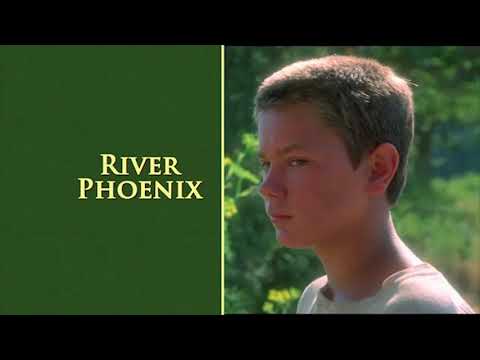
Corey Feldman, Wil Wheaton, Jerry O'Connell and Kiefer Sutherland were starring in this film. The first one was missing from the screens after he ceased to be a kid. Actually, his last noticeable coming-out was in the clip by Katy Perry in her super-famous clip Last Friday Night (T.G.I.F.) that has over 700+ million views on YouTube. The rest three people were mostly famous to their acting in the serial movies. Jerry O'Connell, for instance, had his best role yet in Sliders – fantastic serial of 1995-1999 and his most significant breakthrough was in Jerry Maguire. He produces only poor-quality videos since then, like Piranha 3-D. Gosh!… This guy was really promising and he acts well and most of all – he has so cute smile. Wil Wheaton periodically appears in The Big Bang Theory as himself, and his breakthrough was in Star Trek, which Sheldon Cooper of The Big Bang Theory constantly promotes. As for Kiefer Sutherland – this guy is a child of Donald Sutherland, who is still active and shoots for over 50 years now – what a tremendous record! His son Kiefer does it for 33 years now, which is pretty impressive also. Despite over 75 films that he starred in, he is actually more like a serial actor, which main job was in 10-years-long ‘24’ serial movie (2001-2010), and he starred in over 25 ones throughout his life! Very impressive for his 49, don’t you think so? This movie gained over USD 52 million in 1986, overcoming the budget in 6,5 times. Its soundtrack is full of silly names of the music bands, like Bobbettes, Chordettes and Silhouettes. The same light-weighted are the names and lyrics of the songs of it: Lollipop and Yakety Yak. And the song Stand by Me is not only the title song of this collection, but has been eventually became very famous, though it does not have outstanding lyrics.November, 27th 2025
A-Z Lyrics Universe
Cynthia Erivo Popular
Ariana Grande Horsepower
Post Malone Ain't No Love in Oklahoma
Luke Combs Good Riddance (Time of Your Life)
Green Day Bye Bye Bye
*NSYNC You're the One That I Wan
John Travolta & Olivia Newton-John I Always Wanted a Brother
Braelyn Rankins, Theo Somolu, Kelvin Harrison Jr. and Aaron Pierre The Power of Love
Frankie Goes to Hollywood Beyond
Auli’i Cravalho feat. Rachel House MORE ›