Soundtracks:  A B C D E F G H I J K L M N O P Q R S T U V W X Y Z #


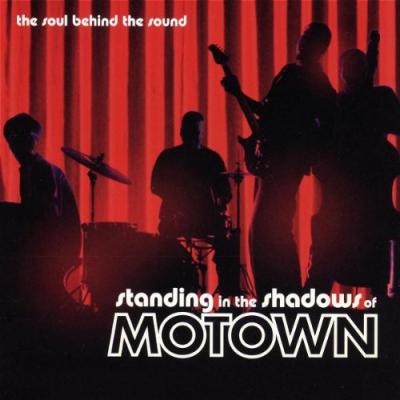
Standing in the Shadows of Motown Album Cover

"Standing in the Shadows of Motown" Soundtrack Lyrics

Movie • 2002

Track Listing


"Standing in the Shadows of Motown (Live/Original Motion Picture Soundtrack)" – Album Guide to Tracks and Key Scenes

Standing in the Shadows of Motown trailer thumbnail showing Funk Brothers archival and stage footage
Standing in the Shadows of Motown — documentary trailer still, 2002

Overview

Who made the hits you can hum in your sleep — but whose names you never learned? This documentary flips the spotlight onto Motown’s house band, the Funk Brothers, and lets the music answer. It’s part oral history, part reunion concert: interviews in the legendary “Snakepit” at Hitsville U.S.A., spliced with roof-lifting performances where today’s stars front yesterday’s secret weapons.

The soundtrack mirrors that design. It’s not merely a compilation of classics; it’s the Funk Brothers playing now, with guest vocalists channeling the spirit of 1959–1972. Joan Osborne turns torchbearer, Ben Harper and Gerald Levert testify, Bootsy Collins grins through the groove, Meshell Ndegeocello shape-shifts, and Chaka Khan just plain levitates. The effect is joyous — not museum glass, but living, breathing Motown.

Genres & themes in phases: gospel-R&B uplift — community and perseverance; psychedelic soul — reinvention and risk; deep-funk strut — pride reclaimed; string-swept pop-soul — romance and memory. Across the set, those session men — Jamerson’s school of bass, Van Dyke’s keys, Ashford’s percussion, and company — are the constant. The stars change; the pocket doesn’t.

How It Was Made

Directed by Paul Justman from a concept sparked by Allan “Dr. Licks” Slutsky’s book about bassist James Jamerson, the film gathers surviving Funk Brothers in Detroit for interviews inside Studio A and stages full-band performances with guest singers. Slutsky also handled music supervision/production with post-music duties, preserving original Motown arrangements while adapting keys and forms for contemporary voices. Much of the concert footage was captured at the Royal Oak Music Theater outside Detroit, with additional sessions at Hitsville’s Studio A to anchor the storytelling.

Trailer still: the Funk Brothers onstage with horns, rhythm section, and guest vocalist under spotlights
The Funk Brothers — back onstage, not in the shadows

Tracks & Scenes

“(Love Is Like a) Heat Wave” (Joan Osborne with The Funk Brothers)

Where it plays:
Early concert set at Royal Oak — the band hits the Motown stomp, tambourine bright, horns locked. Camera cuts between Osborne’s vocal and the rhythm section’s grin; live, onstage, diegetic.
Why it matters:
Opens the tap. A 1963 barn-burner reimagined without losing the snap — proof these arrangements still sprint.

“You’ve Really Got a Hold on Me” (Meshell Ndegeocello with The Funk Brothers)

Where it plays:
Mid-show cool-down. Meshell leans back into a smoky, elastic pocket; the keyboards feather the melody while bass and drums breathe. Royal Oak stage, diegetic, intimate close-ups.
Why it matters:
Shows the band’s jazz bones — same chords, new contours. Desire as a slow sway, not a shout.

“Do You Love Me” (Bootsy Collins with The Funk Brothers)

Where it plays:
High-comedy funk detour: Bootsy struts in star shades, call-and-response with the crowd, congas popping. Live and gleefully hammy; the groove never wobbles.
Why it matters:
Bridges Motown to P-Funk theatrics — same engine, flashier paint.

“Reach Out I’ll Be There” (Gerald Levert with The Funk Brothers)

Where it plays:
A centerpiece. Strings figure (on keys) and snare triplet feel set the table as Levert belts into the rafters. Multi-cam sweeps across the band; Royal Oak stage.
Why it matters:
Testimony time — the lyric becomes a love letter to the players behind the hits.

“Ain’t Too Proud to Beg” (Ben Harper with The Funk Brothers)

Where it plays:
Up-tempo tear; Harper attacks the phrasing, guitar slung low. The backline’s shuffle pushes him forward; diegetic performance.
Why it matters:
Shows how a rock timbre can ride a soul chassis — no friction, just lift.

“Shotgun” (Gerald Levert feat. Tom Scott with The Funk Brothers)

Where it plays:
Sax-forward rave-up; Tom Scott’s lines chatter over a tight two-and-four. Crowd on its feet; camera roams the horn section.
Why it matters:
Demonstrates the band’s humor and precision — party music played with a machinist’s pride.

“What Becomes of the Brokenhearted” (Joan Osborne with The Funk Brothers)

Where it plays:
Late-show peak. Spotlight isolates Osborne; the band swells on the pre-chorus, then leaves space for the title line. Cutaways to faces in the crowd.
Why it matters:
A singer-and-band masterclass — vulnerability riding a groove you could set your watch to.

“I Heard It Through the Grapevine” (Ben Harper with The Funk Brothers)

Where it plays:
Shadowy lighting, low toms, clav stabs. Harper bends notes against Jamerson/Babbitt-style bass movement; the song becomes a simmer.
Why it matters:
Recast without losing menace — arrangement as memory lane and fresh path.

“Cool Jerk” (Bootsy Collins with The Funk Brothers)

Where it plays:
Encore energy. Group choreography at the mic stands, tambourine rattling like it’s 1966 all over again.
Why it matters:
A wink that lands — the band’s pocket turns novelty into necessity.

“Cloud Nine” (Meshell Ndegeocello with The Funk Brothers)

Where it plays:
Psych-soul stretch. Backbeat loosens, wah hints in the guitars, B-3 throbs. The camera lingers on drums and congas; diegetic jam feel.
Why it matters:
Marks Motown’s late-’60s turn — socially aware lyrics over a newly elastic groove.

“What’s Going On” (Chaka Khan with The Funk Brothers)

Where it plays:
Finale-tier benediction. Chaka rides the pocket with feathered melisma; the crowd hushes, then roars — pure call-and-response catharsis.
Why it matters:
Earned a Grammy for Best Traditional R&B Vocal Performance — reverent and alive.

“Ain’t No Mountain High Enough” (Chaka Khan & Montell Jordan with The Funk Brothers)

Where it plays:
Band introductions flow into the closer; each section gets a cheer as the hook lands. Cast curtain call energy.
Why it matters:
Roll credits on a thesis: this music has always been a team sport.
Trailer still: inside Hitsville U.S.A. Studio A, 'the Snakepit', with vintage mics and baffles
Back to Studio A — the Snakepit where the sound was born

Notes & Trivia

  • The film’s live numbers were largely recorded at Royal Oak Music Theater (Detroit area), with story segments returning to Hitsville’s Studio A.
  • Allan “Dr. Licks” Slutsky — the Jamerson biographer whose book inspired the project — produced and supervised the music.
  • The soundtrack won the Grammy for Best Compilation Soundtrack Album; Chaka Khan’s “What’s Going On” won a separate Grammy.
  • The Funk Brothers collectively played on more No.1 hits than the Beatles, Stones, Beach Boys, and Elvis combined — the doc makes that case, then proves it live.
  • Release editions vary: standard album, deluxe expansion with “Snakepit” instrumental remixes, and later digital issues tagged “Live From Royal Oak Music Theater/2000.”

Music–Story Links

When cameras enter Studio A, the mix dries up — you hear boards and air, as if the room itself is another band member. Onstage, the same songs open like accordions: “Heat Wave” sprints, then “You’ve Really Got a Hold on Me” exhales. That push–pull mirrors the narrative arc: anonymity (basement room) to celebration (stage spotlight). By the time Khan sings “What’s Going On,” the question has two addressees: the world, and the industry that kept these musicians nameless.

Reception & Quotes

Acclaimed on release — multiple critics’ prizes, a Grammy haul, and a reputation as the movie that finally names the band behind the hits. A few capsule takes:

“The movie returns to Hitsville, USA for sessions… the very sound of the studio itself.” RogerEbert.com
“A joyous reclamation.” Variety
“You’ll leave humming — and reading credits more carefully.” Festival blurbs & retrospectives
Trailer still: ecstatic audience at Royal Oak as horns punch and rhythm section locks in
From shadows to spotlight — ovations where they were due

Interesting Facts

  • Snakepit science: some CD tracks note Live From Royal Oak Music Theater/2000 while film segments revisit Studio A for story and sound.
  • Deluxe detour: the expanded edition adds “In the Snakepit” instrumental remixes of core Motown hits — a mix engineer’s playground.
  • Credits canon: the lineup rollcall (Ashford, Babbitt, Van Dyke, White, Jones, Allen, Willis, and more) turns sidemen into headline names.
  • Title lineage: borrowed from Slutsky’s 1989 Jamerson book — an instructional text that doubled as a rescue mission for a legacy.
  • Afterlife: on the heels of the film, surviving Funk Brothers toured; the story finally traveled with the players.

Technical Info

  • Title: Standing in the Shadows of Motown — Live/Original Motion Picture Soundtrack
  • Year: 2002 (documentary feature; home media 2003)
  • Type: Documentary — music/heritage; concert + oral history
  • Director: Paul Justman
  • Narration: Andre Braugher
  • Music Supervision/Production: Allan Slutsky (with post music producer/mix roles alongside Ted Greenberg)
  • Key guest performances: Joan Osborne; Meshell Ndegeocello; Bootsy Collins; Gerald Levert; Ben Harper; Chaka Khan; Montell Jordan
  • Selected notable numbers: “Heat Wave”; “You’ve Really Got a Hold on Me”; “Do You Love Me”; “Reach Out I’ll Be There”; “Ain’t Too Proud to Beg”; “Shotgun”; “What Becomes of the Brokenhearted”; “I Heard It Through the Grapevine”; “Cool Jerk”; “Cloud Nine”; “What’s Going On”; “Ain’t No Mountain High Enough”
  • Label/album status: Released 2002; issued on CD & digital; later deluxe edition adds Snakepit instrumentals
  • Awards: Grammy — Best Compilation Soundtrack Album; Grammy — Best Traditional R&B Vocal Performance (“What’s Going On,” Chaka Khan & The Funk Brothers)
  • Where recorded (live set): Royal Oak Music Theater, Michigan; story sessions at Hitsville U.S.A. Studio A
  • Runtime (film): ~116 minutes

Questions & Answers

Is the album the original 1960s recordings?
No — it’s the Funk Brothers performing live (2000-era sessions) with guest vocalists, plus studio segments tied to the film.
Where were the live performances filmed/recorded?
At Royal Oak Music Theater near Detroit; interviews and musical memories also take place inside Hitsville’s Studio A (“the Snakepit”).
Which tracks earned the project Grammys?
The album won Best Compilation Soundtrack; Chaka Khan’s “What’s Going On” won Best Traditional R&B Vocal Performance.
Who supervised or produced the music?
Allan “Dr. Licks” Slutsky — Jamerson’s biographer — produced and supervised the music; Ted Greenberg handled post-music roles with him.
Is there a deluxe edition?
Yes. A later deluxe adds an extra disc of “Snakepit” instrumentals and remixes tied to classic Motown tunes.

Key Contributors

EntityRelation
Paul JustmanDirector — conceived concert/interview structure
Allan “Dr. Licks” SlutskyProducer & Music Supervisor — originated project via Jamerson book; post-music producer
Andre BraugherNarrator — frames archival and interview passages
The Funk BrothersBand — house rhythm section behind Motown’s 1959–1972 hits; reunited on camera
Royal Oak Music TheaterVenue — primary live recording location for film performances
Hitsville U.S.A. — Studio AVenue — interview/musical memory sessions (“the Snakepit”)
Joan Osborne; Ben Harper; Gerald Levert; Meshell Ndegeocello; Bootsy Collins; Chaka Khan; Montell JordanGuest Artists — lead vocals with the Funk Brothers
Artisan EntertainmentDistributor — U.S. theatrical/home media

Sources: Wikipedia (film overview/lineup/awards); official site; Variety review; RogerEbert.com review; IMDb (soundtracks & awards); Apple Music/Spotify (album credits, Royal Oak tags); Discogs (release/credits); MusicBrainz (deluxe data); IDFA note (Slutsky credit); community threads confirming Royal Oak sessions.

November, 27th 2025


A-Z Lyrics Universe

Lyrics / song texts are property and copyright of their owners and provided for educational purposes only.