"Star is Born, A" Soundtrack Lyrics
Musical • 1954
Track Listing
"A Star Is Born (Original Motion Picture Soundtrack — 1954)" – Album Guide to Tracks and Key Scenes
Overview
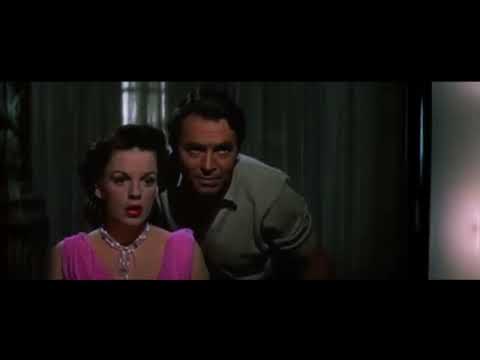
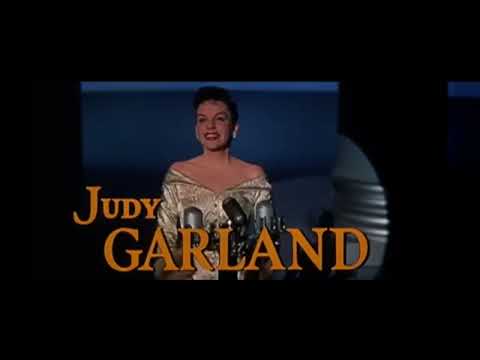
What if a love story is also a recording session — one voice rising as another fades? George Cukor’s 1954 A Star Is Born uses songs to chart that transfer of light, letting Judy Garland’s Esther/Vicki find a sound big enough to survive Hollywood’s storm.
The soundtrack pairs Harold Arlen melodies and Ira Gershwin lyrics with Warner Bros.’ plush studio orchestra under musical director Ray Heindorf. Showstoppers (“The Man That Got Away,” “Someone at Last”) sit beside backstage novelties and a mid-film tour-de-force, “Born in a Trunk,” that reframes the plot as an onstage autobiography. The album became a hit in multiple formats (78s, EPs, 10-inch, and a deluxe 12-inch LP), and it’s never really gone out of print.
Genres & themes in phases: torch jazz — desire and destiny; Broadway-bright show tunes — reinvention and work ethic; autobiographical revue — myth-making; intimate ballad — survival with scars. The arc moves from smoky club to spotlight, from promise to price.
How It Was Made
Arlen & Gershwin wrote the film’s core songs; Heindorf supervised, conducted, and appears briefly onscreen at the gala premiere. After principal photography, producer friends added the 15-minute “Born in a Trunk” sequence — conceived by Roger Edens with lyrics by Leonard Gershe — to give Garland a big solo suite. Studio cuts and roadshow trims later muddied the release, but restorations in the 1980s–2000s returned lost numbers and stereo elements to circulation.
Tracks & Scenes
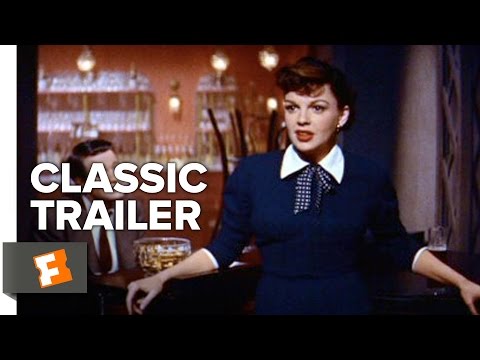
“Gotta Have Me Go with You” (Judy Garland)
- Where it plays:
- At the studio afterparty near the beginning. Esther, working cater-waiter duty with the band, is coaxed to the mic and romps through a brassy invitation number as Norman Maine (James Mason) drunkenly interrupts, then marvels. Diegetic performance; big-band color, quick cuts to guests.
- Why it matters:
- Introduces Esther’s show savvy and Norman’s eye for her — charm as calling card.
“The Man That Got Away” (Judy Garland)
- Where it plays:
- After-hours in the Downbeat Club: chairs on tables, smoke in the air, musicians noodling. Esther, seated at the piano, is urged to “take it from the top.” One sustained take blooms into an aria of regret while Norman watches, unseen. Diegetic; staged like a live capture.
- Why it matters:
- The film’s fulcrum — a star is heard being born. Arlen’s blues lines + Garland’s phrasing = lightning.
“Born in a Trunk” (Medley — music by Roger Edens; lyrics by Leonard Gershe)
- Where it plays:
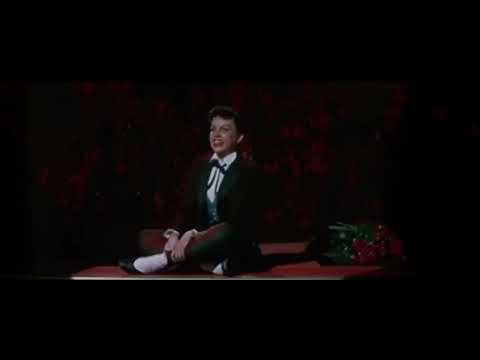
- Mid-film revue sequence as Vicki’s screen debut within the film. A 15-minute stitched biography: from vaudeville grind (“Swanee”) through club sets (“You Took Advantage of Me,” “The Peanut Vendor”) to torch interludes (“My Melancholy Baby”). Full diegetic stage performance with costume and set changes.
- Why it matters:
- Autobiography as production number — the industry packages her past while she belts her future.
“Someone at Last” (Judy Garland)
- Where it plays:
- At home with Norman — Vicki improvises a movie-musical spoof across the living room: a comic mini-operetta that turns domestic space into a set. Starts diegetic (she’s play-acting) then swells to full musical fantasy.
- Why it matters:
- Her creativity — not just her voice — sells the dream; it’s a love letter to collaboration.
“Lose That Long Face” (Judy Garland)
- Where it plays:
- On a studio soundstage as Vicki tapes a bright, pep-talk novelty after a brutal personal blow. The number’s smile strains against reality; post-take, she breaks. Diegetic to silence.
- Why it matters:
- Jolting contrast — happy-clappy veneer vs. the cost of keeping the machine fed.
“It’s a New World” (Judy Garland)
- Where it plays:
- Later, sung simply on a bare set and again as a hushed reprise. Minimal accompaniment, camera tight on her face; Norman listens from the wings.
- Why it matters:
- A soft vow in a loud town — hope that doesn’t erase pain.
“Here’s What I’m Here For” (Judy Garland)
- Where it plays:
- A studio rehearsal/recording setup with orchestra; bright brass and tap-your-foot swing. Frequently trimmed in earlier cuts, restored in later versions/editions.
- Why it matters:
- States her ethos plainly: she’s here to work — and she can turn on a dime.
Notes & Trivia
- The music team: songs by Harold Arlen & Ira Gershwin; musical direction by Ray Heindorf (who also cameos at the premiere).
- “Born in a Trunk” was conceived by Roger Edens (music) with Leonard Gershe (lyrics) and added after Cukor wrapped; it runs ~15 minutes.
- The 1954 soundtrack arrived in multiple formats, including a pricier “de luxe” 12-inch LP — unusual marketing for the time.
- Restorations in 1983 and the 2004/05 expanded releases reinstated missing numbers and stereo elements long thought lost.
- Garland filmed several visual versions of “The Man That Got Away” to the same audio take before Cukor settled on the smoky, low-key club staging.
Music–Story Links
Norman falls for sound first: the club take of “The Man That Got Away” makes him sober to her talent. “Born in a Trunk” reframes Vicki’s offscreen grind as a myth the studio can sell — love buoyed by labor. “Lose That Long Face” lands like a dare: perform joy while your private life buckles. And “It’s a New World” becomes the answer song — smaller, truer, sung for one person in the dark.
Reception & Quotes
Critics hailed Garland’s numbers as career-defining; awards-season drama and later restorations made the music’s legacy even louder. The album itself charted strongly, and modern reassessments routinely single out “The Man That Got Away.”
“A joyous reclamation — and the sound of a career reborn.” Modern retrospectives
“Garland’s after-hours torch becomes the fulcrum of the film.” Critical essays
“The restored numbers transform the emotional geometry.” Restoration coverage
Interesting Facts
- Format buffet: the 1954 album shipped as 78s, 45 EPs, 10-inch LP, and a premium-priced 12-inch.
- Permanent catalog: the soundtrack has cycled through LP, CD (1988), and expanded Legacy editions (2004/05).
- Studio archaeology: restorers located stereo film elements; some songs survive only in mono masters.
- Club smoke, same take: multiple filmed versions of “The Man That Got Away” use the same audio recording.
- Edens’ suite: the “Trunk” medley pulls standards and pastiche into one autobiographical showpiece.
- Heindorf on camera: he gets a wink in the premiere scene, receiving congrats for the score.
Technical Info
- Title: A Star Is Born — Original Motion Picture Soundtrack (1954)
- Year: 1954 (film & initial soundtrack release)
- Type: Musical drama — feature film soundtrack
- Director: George Cukor
- Songs: Harold Arlen (music), Ira Gershwin (lyrics)
- Musical Director / Conductor: Ray Heindorf
- Added sequence: “Born in a Trunk” — Roger Edens (music), Leonard Gershe (lyrics)
- Key numbers: “The Man That Got Away,” “Gotta Have Me Go with You,” “Born in a Trunk” (medley incl. “Swanee,” “You Took Advantage of Me,” “The Peanut Vendor,” “My Melancholy Baby”), “Someone at Last,” “Lose That Long Face,” “It’s a New World,” “Here’s What I’m Here For.”
- Label / album status: Columbia Records (original); ongoing reissues via Columbia/Legacy/Sony
Questions & Answers
- Who wrote the film’s songs?
- Harold Arlen composed the music; Ira Gershwin wrote the lyrics. Ray Heindorf served as musical director and conductor.
- What is “Born in a Trunk,” exactly?
- A 15-minute mid-film stage medley (music by Roger Edens, lyrics by Leonard Gershe) added after principal filming — a star-within-the-film showcase.
- Is there an official soundtrack album?
- Yes — Columbia issued it in 1954 across several formats; later CDs (1988 onward) and an expanded edition (2004/05) restored more material.
- Where does “The Man That Got Away” occur in the story?
- In the after-hours Downbeat Club scene, where Norman Maine first truly recognizes Esther’s talent.
- Were some musical numbers cut and later restored?
- Yes. Roadshow trims removed material; restorations brought back numbers like “Here’s What I’m Here For” and “Lose That Long Face.”
Key Contributors
| Entity | Relation |
|---|---|
| George Cukor | Director — staged musical numbers with dramatic intent |
| Harold Arlen | Composer — wrote new songs for the film |
| Ira Gershwin | Lyricist — wrote lyrics for the film’s songs |
| Ray Heindorf | Musical Director/Conductor — supervised and conducted the score; cameo at premiere |
| Roger Edens | Composer — created the “Born in a Trunk” medley |
| Leonard Gershe | Lyricist — wrote “Born in a Trunk” lyrics |
| Judy Garland | Performer — Esther Blodgett/Vicki Lester; principal vocalist on all feature numbers |
| James Mason | Performer — Norman Maine; dramatic counterpoint to Vicki’s ascent |
| Columbia Records | Label — issued the original 1954 soundtrack in multiple formats |
| Warner Bros. | Studio — produced and released the film |
Sources: Wikipedia (film & soundtrack overviews); The Judy Room (session/format notes); IMDb (soundtracks); Apple Music (album listing); Discogs (editions/credits); restoration coverage and critical essays; trailer channel listings.
November, 27th 2025
A-Z Lyrics Universe
Cynthia Erivo Popular
Ariana Grande Horsepower
Post Malone Ain't No Love in Oklahoma
Luke Combs Good Riddance (Time of Your Life)
Green Day Bye Bye Bye
*NSYNC You're the One That I Wan
John Travolta & Olivia Newton-John I Always Wanted a Brother
Braelyn Rankins, Theo Somolu, Kelvin Harrison Jr. and Aaron Pierre The Power of Love
Frankie Goes to Hollywood Beyond
Auli’i Cravalho feat. Rachel House MORE ›