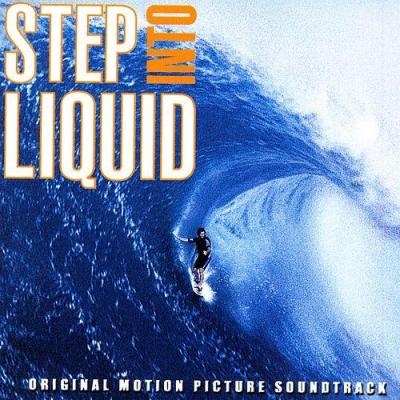
"Step Into Liquid" Soundtrack Lyrics
Movie • 2004
Track Listing
Richard Gibbs
Jeremy Kay
Butthole Surfers
Brian Setzer
Slightly Stoopid
Steve Stevens
Vast
Malibooz
Jackpot
Jeremy Kay
Pato Banton
Richard Gibbs
"Step Into Liquid (Original Motion Picture Soundtrack)" – Album Guide to Tracks and Key Scenes
Overview
How do you score a film where the protagonist is a wave? Dana Brown’s Step Into Liquid answers with a sun-faded mixtape: surf-culture gems, turn-of-the-millennium alt-rock, and Richard Gibbs’ buoyant orchestral cues, all stitched to swells that never quite repeat.
The soundtrack works like a travel log. Butthole Surfers’ “Dracula from Houston” adds mischievous swagger to board-bag banter; VAST’s “Touched” floats like sea mist over slow-motion foam; Steve Stevens’ “Cinecittà” glints like chrome in a board-shaping bay. Around them, Gibbs’ score keeps the film’s pulse steady — brass and strings cresting when the doc widens out to big-water sequences (Cortes Bank, Pipeline), then easing into lilting textures for interviews and shoreline interludes.
Stylistically, the album moves in phases: surf-adjacent alt/indie (Butthole Surfers, Ash) — attitude and road-movie momentum; rootsy beach pop and reggae inflections (Slightly Stoopid feat. G. Love, The Malibooz) — community and play; guitarist-driven instrumentals (Steve Stevens; Brian Setzer’s rockabilly charge) — craft and tradition; and orchestral score — awe, risk, and scale. The mix feels lived-in, like wax on rails.
How It Was Made
Composer Richard Gibbs (Oingo Boingo alum turned film/TV mainstay) wrote and produced the score, recorded with Hollywood session players. Music supervision came via Joe Fischer and George Acogny, clearing a batch of eclectic placements that lean surf-scene but avoid clichés. The commercial album arrived as a 36-track Surfdog Records compilation in 2004, pairing dialogue snippets with licensed songs and several of Gibbs’ cues.
Tracks & Scenes
Below are notable songs and cues with the moments they color. Time markers are approximate reference points within the 88-minute cut and common trailer/clip edits; descriptions reflect how the tracks function on screen.
“Dracula from Houston” (Butthole Surfers)
- Where it plays:
- A mid-film travel montage stitching together van-packed road miles, board shorts, and parking-lot laughter. The song’s loping groove rides over quick-cut B-roll of waxing, tail-pads, and groms threading a crowded lineup. Approx. first half, during a gear-and-friends passage; used non-diegetically.
- Why it matters:
- Gives the doc a wink — a left-of-center alt cut that frames surf culture as playful, weird, and unprecious between the high-consequence swells.
“Touched” (VAST)
- Where it plays:
- Over slow-motion wave studies and rapt faces watching sets feather, the airy choral sample and bowed-guitar textures extend the film’s meditative beats. Often synced to glide-heavy rides and water-level camera angles. Non-diegetic; used in one of the film’s dreamier montage sections.
- Why it matters:
- Mystifies the ocean. The cue suspends time, emphasizing glide and silence rather than danger — a tonal palette cleanser between adrenaline spikes.
“Mellow Mood” (Slightly Stoopid feat. G. Love)
- Where it plays:
- Laid-back shoreline sequences — friends on dunes, kids practicing pop-ups, late-day sun. Non-diegetic; places the viewer in that post-session, sandy-feet glow.
- Why it matters:
- Humanizes the athletes. It’s not all 50-foot faces; sometimes it’s barbecues, borrowed boards, and community.
“Cinecittà” (Steve Stevens)
- Where it plays:
- Intercut with craft-focused imagery — shaping bays, fin boxes, and close-lens board detail; the virtuosic guitar lines mirror artisanal precision. Non-diegetic; mid-film.
- Why it matters:
- Signals lineage. Surfboards are instruments; the cue spotlights builders as co-authors of every ride.
“(The Legend of) Johnny Kool (Part 2)” (Brian Setzer)
- Where it plays:
- Cut to car-park energy and classic longboard footwork reels — cross-steps, cheater fives, and nose rides. Non-diegetic; rhythmic editing lands on drum breaks and snare hits.
- Why it matters:
- Injects retro showmanship. The rockabilly snap fits the film’s respect for surf history and style.
“Back to You” (Jeremy Kay)
- Where it plays:
- An easy-breezy vocal passage during a personable interlude — interviews at the rail, shoreline hugs, home-movie intimacy between the big set-pieces. Non-diegetic; later reprised in home-release featurettes as a music montage.
- Why it matters:
- Softens the documentary’s edges, linking far-flung locales to a shared, homespun feeling.
“Windshield Wipers” (Jackpot)
- Where it plays:
- Paired with a car-bound travel beat — shots through rain-flecked glass, highway markers, and wax-stained dashboards. Non-diegetic; also appears in a dedicated music-montage extra on disc editions.
- Why it matters:
- Gives texture to the in-between: the miles, the waiting, the chase.
“Life Is a Miracle” (Pato Banton)
- Where it plays:
- Feel-good community footage — beach crowds, kids with soft-tops, elders telling stories. Non-diegetic; late-film lift.
- Why it matters:
- Caps the doc’s thesis: the stoke is communal.
“Call of the Wave” (The Malibooz)
- Where it plays:
- Classic-surf interlude with vintage aesthetics and sun-sparkle edits. Non-diegetic; an affectionate nod to surf-music roots and Malibu lineage.
- Why it matters:
- Bridges generations — yesterday’s twang backing today’s riders.
Score Cue: “Irish Waves” (Richard Gibbs)
- Where it plays:
- During the Ireland segment’s cold-water procession — slate skies, emerald cliffs, rubber-hood smiles. Tin-whistle-tinged orchestration swells under long takes of paddles through steely water. Non-diegetic; middle third.
- Why it matters:
- Coloring-book scoring done right: local flavor, no caricature, all heart.
Score Cue: “Rapa Nui” (Richard Gibbs)
- Where it plays:
- As boards slice by the Easter Island moai, low-tide percussion and airy strings keep the rhythm unhurried. Non-diegetic; a postcard turned moving picture.
- Why it matters:
- Lets setting lead — the music frames reverence more than risk.
Notes & Trivia
- The album dropped April 20, 2004 via Surfdog — a label with deep surf ties — and packs 36 cuts including dialogue tags.
- Music supervisors Joe Fischer and George Acogny wrangled a mix that ranges from Butthole Surfers to Brian Setzer — not your typical “surf rock only” crate.
- Jeremy Kay’s “Only One” and “Back to You” became small-screen regulars after the film’s exposure.
- Gibbs’ cue titles (“Irish Waves,” “Rapa Nui,” “Glassier & Glassier”) mirror the doc’s geographic chapters.
- Several home-video editions add dedicated “music montages,” spotlighting how songs were cut to imagery.
Music–Story Links
When the film pivots from talking-story to serious water, Gibbs’ orchestral writing widens the frame — longer notes, deeper brass — so big-wave sequences read as pilgrimage rather than stunt. Conversely, the cue-to-cut precision in “Windshield Wipers” and Setzer’s rocker lifts travel and parking-lot moments into rhythm pieces; we feel the miles. “Touched” deliberately de-clutters: Brown switches to long takes and water-level perspectives, the track’s choral glow encouraging awe over adrenaline. And when “Dracula from Houston” drops in, the tone loosens — a reminder that surf culture’s wit and weirdness are as central to its identity as hero shots at Cortes Bank.
Reception & Quotes
Critics largely embraced the film’s images — and by extension, its music’s role in pacing and mood. The soundtrack’s eclecticism mirrors the doc’s globe-hop energy.
“Absolutely unlike any documentary you’ve ever seen, Step Into Liquid nearly qualifies as a religious experience.” — Austin Chronicle
“All about the sights, which are glorious.” — Common Sense Media
“A perfect companion piece to The Endless Summer.” — Critics’ consensus
Availability today is robust: digital storefronts host the complete 36-track edition, with the Surfdog release acting as the canonical package.
Interesting Facts
- Label lineage: Surfdog also issued Butthole Surfers’ Weird Revolution, the parent album of “Dracula from Houston.”
- Composer pedigree: Gibbs has ranged from Say Anything… to Battlestar Galactica, bringing big-screen polish to a surf doc.
- Dialog as texture: the album sprinkles short speaker tags (Dana Brown, Gerry Lopez, Rabbit Kekai) between songs — like chapter cards for your ears.
- Legacy sync: VAST’s “Touched” picked up new listeners via the film and remains the band’s most widely recognized track.
- Physical to digital: original CDs have multiplied on Discogs in several variants; the go-to today is the digital “Original Motion Picture Soundtrack.”
- Malibu shout-out: The Malibooz’ “Call of the Wave” connects the film to SoCal surf-band lifers John Zambetti & Walter Egan.
- Bonus features love: certain Blu-ray/DVD releases carve out stand-alone “music montages” for featured songs.
Technical Info
- Title: Step Into Liquid (Original Motion Picture Soundtrack)
- Year: 2004 (album); film premiered 2003
- Type: Documentary Film Soundtrack (Compilation + Score)
- Composer: Richard Gibbs
- Music Supervision: Joe Fischer; George Acogny
- Notable Placements: “Dracula from Houston” (Butthole Surfers); “Touched” (VAST); “Cinecittà” (Steve Stevens); “(The Legend of) Johnny Kool (Part 2)” (Brian Setzer); “Mellow Mood” (Slightly Stoopid feat. G. Love); “Back to You” (Jeremy Kay); “Windshield Wipers” (Jackpot); “Life Is a Miracle” (Pato Banton); “Call of the Wave” (The Malibooz)
- Release Context: U.S. theatrical Aug 2003; home video early 2004; album release April 20, 2004
- Label / Album: Surfdog Records — 36-track digital/streaming edition (dialogue + songs + score)
- Availability: Widely available on major digital platforms; multiple physical variants documented by Discogs
Questions & Answers
- Who composed the score for Step Into Liquid?
- Richard Gibbs wrote and produced the orchestral score used throughout the film.
- Which song gives the film its mischievous, alt-rock edge?
- Butthole Surfers’ “Dracula from Houston,” also tied to the label that issued the soundtrack.
- Is the soundtrack just “surf rock”?
- No — it spans alt-rock, guitar instrumentals, roots/reggae touches, classic surf-pop, and orchestral score.
- Where can I find the complete edition?
- Surfdog’s 36-track release is the canonical version on major digital services.
- Who handled music supervision?
- Joe Fischer and George Acogny oversaw clearances and placements.
Key Contributors
| Entity | Relation |
|---|---|
| Richard Gibbs | Composer — scored the film; contributed multiple cues on album |
| Joe Fischer | Music Supervisor — licensed and coordinated songs |
| George Acogny | Music Supervisor — licensed and coordinated songs |
| Surfdog Records | Record Label — released the 2004 soundtrack |
| Butthole Surfers — “Dracula from Houston” | Artist — alt-rock placement featured in film & on album |
| VAST — “Touched” | Artist — atmospheric placement featured in film & on album |
| Steve Stevens — “Cinecittà” | Artist — guitar instrumental placement |
| Brian Setzer — “(The Legend of) Johnny Kool (Part 2)” | Artist — rockabilly placement |
| The Malibooz — “Call of the Wave” | Artists — classic surf-pop placement |
| Slightly Stoopid feat. G. Love — “Mellow Mood” | Artists — rootsy, sun-down groove |
| Jeremy Kay — “Only One”; “Back to You” | Artist — vocal placements; also featured in home-video music montages |
| Dana Brown | Director/Writer — documentary’s author and on-album dialogue voice |
Sources: IMDb; Variety; Rotten Tomatoes; Surfdog Records; Apple Music; Discogs; Spotify; The MovieMusic Company; Audeze Artist Profile; Wikipedia.
November, 27th 2025
A-Z Lyrics Universe
Cynthia Erivo Popular
Ariana Grande Horsepower
Post Malone Ain't No Love in Oklahoma
Luke Combs Good Riddance (Time of Your Life)
Green Day Bye Bye Bye
*NSYNC You're the One That I Wan
John Travolta & Olivia Newton-John I Always Wanted a Brother
Braelyn Rankins, Theo Somolu, Kelvin Harrison Jr. and Aaron Pierre The Power of Love
Frankie Goes to Hollywood Beyond
Auli’i Cravalho feat. Rachel House MORE ›