Soundtracks:  A B C D E F G H I J K L M N O P Q R S T U V W X Y Z #


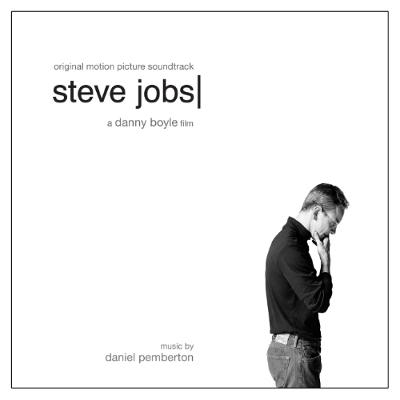
Steve Jobs Album Cover

"Steve Jobs" Soundtrack Lyrics

Movie • 2015

Track Listing


"Steve Jobs (Original Motion Picture Soundtrack)" – Album Guide to Tracks and Key Scenes

Steve Jobs 2015 official trailer still of Michael Fassbender backstage before a product launch
Steve Jobs — soundtrack, score concept, and scene placements, 2015

Overview

How do you score a biography that happens almost entirely offstage? Danny Boyle’s Steve Jobs uses Daniel Pemberton’s music like a switchboard — routing analog synths, live orchestra, and digital sound design to mirror three nervy backstage acts (1984, 1988, 1998). The needle-drops are sparing and pointed: Bob Dylan as Jobs’ north star; a Libertines jolt as a hard cut; an aching indie anthem to close the loop.

Pemberton’s concept is clean and bold: Act I — analog (period-correct synths) for the Macintosh launch; Act II — orchestral/operatic for the San Francisco Opera House and the Sculley showdown; Act III — digital (composed in-the-box) for the iMac. Around that spine, source songs — Dylan, Joni Mitchell, The Libertines — act like Jobs’ personal playlist surfacing in the chaos. The result feels engineered yet human: taut cues that raise the pulse, then a song that hits the heart.

Genres & themes in phases: analog synth minimalism — futurism and anxiety; grand orchestral set-pieces — ego, theatre, revenge; digital/glassy textures — legacy and introspection; 60s folk-rock — principles and myth; UK indie — hard cuts and cultural snap; modern indie-rock — reconciliation.

How It Was Made

Boyle asked for three discrete sound worlds. Pemberton answered with a ruleset: no synth newer than 1984 for Act I; an opera-house-scale symphonic build (the multi-minute cue many fans call “Revenge”) for Act II; and a digital Act III literally written on an Apple computer. Back Lot Music issued the album alongside the film’s release. The non-score cuts — Bob Dylan, The Libertines, The Maccabees — were cleared to punctuate specific transitions and the coda.

Trailer still: Jobs framed by cables and curtains — the score’s three-part concept mirrors the show-behind-the-show
How it was made — three scores for three acts (analog, orchestral, digital)

Tracks & Scenes

Selections below (album cues plus notable licensed songs). Time notes are relative to the three-act structure: 1984 (Macintosh, Flint Auditorium), 1988 (NeXT, San Francisco Opera House), 1998 (iMac, Davies Symphony Hall). Not a full tracklist.

“The Musicians Play Their Instruments… / It’s Not Working” (Daniel Pemberton)

Where it plays:
Act I pre-show scramble: a test tone misbehaves, the “voice demo” looms, everyone’s heartbeat ticks to sequenced pulses. Non-diegetic; 1984.
Why it matters:
Analog synths equal ambition under pressure — a sonic portrait of Jobs’ perfectionism.

“The Circus of Machines I (Overture)” (Daniel Pemberton)

Where it plays:
Curtain-time tension; backstage traffic becomes choreography — cables, gaffer’s tape, a product hidden by cloth. Non-diegetic; 1984.
Why it matters:
Turns launch prep into theatre; the ostinato is the keynote heartbeat.

“The Times They Are A-Changin’” (Bob Dylan)

Where it plays:
Invoked and excerpted around Jobs’ Dylan fixation and the 1984 launch context; a touchstone in dialogue and texture rather than a showy montage. Source/non-diegetic touches; 1984.
Why it matters:
Signals Jobs’ self-mythology — disruptors love a protest song.

“Revenge” (Symphonic sequence) (Daniel Pemberton)

Where it plays:
Act II centerpiece at the Opera House — the Jobs/Sculley cross-cut confrontation swells with operatic momentum as timelines interleave. Non-diegetic; 1988.
Why it matters:
Operatic scale equals ego and fallout; music argues as hard as the characters.

“Don’t Look Back Into the Sun” (The Libertines)

Where it plays:
Hard-cut transition between acts; an intentional anachronistic jolt in Boyle’s montage grammar. Non-diegetic; bridge moment.
Why it matters:
A punkish snap that re-frames the pace — taste over period literalism.

“Life Out of Balance / I Play the Orchestra” (Daniel Pemberton)

Where it plays:
Act III build at Davies: Jobs triangulates press, staff, and family; strings thin to glassy digital layers, then bloom. Non-diegetic; 1998.
Why it matters:
The score’s thesis: control-freak showmanship morphing into legacy.

“Grew Up at Midnight” (The Maccabees)

Where it plays:
Final scene and credits — Jobs brings Lisa backstage, promising “a thousand songs in your pocket.” The indie swell carries the reconciliation out the door. Non-diegetic; 1998/end.
Why it matters:
Earns warmth after two hours of voltage; the movie exhales.

Additional licensed cues (selected): Dylan cuts — “Rainy Day Women #12 & 35,” “Meet Me in the Morning”; Joni Mitchell — “Both Sides, Now.”

Where it plays:
Threaded as cultural mood and character tells between launches; brief diegetic/non-diegetic uses.
Why it matters:
Positions Jobs inside a 60s–90s canon he admired and quoted.
Trailer still: Sculley confrontation cross-cut with orchestral surge in the opera house
Tracks & scenes — analog tension, operatic confrontation, digital resolve

Notes & Trivia

  • Pemberton literally split the score into analog → orchestral → digital to mirror 1984/1988/1998.
  • Act I used period-correct synths (e.g., pre-1984 models) tracked by hand to keep the wobble of vintage circuits.
  • The Act II showpiece was constructed like a mini-symphony to ride Sorkin’s cross-cut dialogue.
  • Danny Boyle picked The Maccabees’ “Grew Up at Midnight” for the ending — a personal choice that trumped using score.
  • The album is on Back Lot Music; vinyl followed as a two-disc set.

Music–Story Links

When Jobs says, “I play the orchestra,” Act II proves it — the cue swells as he conducts people as parts. In 1984, brittle analog pulses match a product that might fail in public; the synths quiver like nerves. The Libertines needle-drop is a director’s cut — a time-jump slap that tells us we’re switching tempos, not just years. By 1998, the score turns digital and inward; it’s less ta-da, more reckoning. Then the Maccabees lift the curtain on a quieter resolution — not a product, a person.

Reception & Quotes

Critics singled out the three-part design and its nervy fit with Sorkin’s barrage of dialogue.

“For act three, [he] created the entire score on his Apple — experimental textures inside the computer.” Variety
“Starts synth-heavy, morphs orchestral, plateaus digital — a high-wire act.” PopMatters
“Opera and synthesizers — an unlikely, punchy blend.” USA Today
“Jitters each scene to a nerve-jangling climax.” The Guardian
Trailer image: Jobs facing the stage lights before the iMac launch as the score turns digital
Reception — a conceptual score that still hits the bloodstream

Interesting Facts

  • Golden Globes: Pemberton’s score was nominated for Best Original Score.
  • Period rule: The Act I synth palette excluded instruments newer than 1984.
  • The Dylan thread: Multiple Dylan songs appear — fitting Jobs’ oft-professed hero.
  • Hard cut on purpose: Boyle used The Libertines for a jolt, not strict period accuracy.
  • Digital act, literally: The iMac-era cues were composed entirely on a Mac.
  • Album variants: Streaming shows 22 tracks; vinyl adds sequencing/side breaks.
  • Song-as-closure: The Maccabees’ closer underscores Jobs and Lisa’s late peace.

Technical Info

  • Title: Steve Jobs (Original Motion Picture Soundtrack)
  • Year: 2015 (digital Oct 9; CD Oct 23; 2×LP Feb 2016)
  • Type: Feature Film Soundtrack (Score + selected songs)
  • Composer/Producer: Daniel Pemberton
  • Label: Back Lot Music
  • Concept: Three-part score — Analog (1984) / Orchestral (1988) / Digital (1998)
  • Selected licensed songs: Bob Dylan — “The Times They Are A-Changin’,” “Rainy Day Women #12 & 35,” “Meet Me in the Morning”; Joni Mitchell — “Both Sides, Now”; The Libertines — “Don’t Look Back Into the Sun”; The Maccabees — “Grew Up at Midnight”.
  • Awards: Golden Globe nominee — Best Original Score
  • Availability: Streaming (Spotify/Apple Music); CD and 2×LP

Questions & Answers

Why does the score sound different in each act?
It’s intentional: analog (1984), orchestral (1988), digital (1998) — mirroring tech, venue, and character arc.
What song plays over the ending?
“Grew Up at Midnight” by The Maccabees — chosen by Danny Boyle for the final scene and credits.
Are all the Bob Dylan songs on the album?
Not all. The album mixes Pemberton’s cues with select licensed tracks; some songs appear only in the film.
Where does the orchestra really take over?
In Act II’s Opera House section, especially the Jobs–Sculley confrontation built as a symphonic sequence.
Who released the soundtrack?
Back Lot Music — digital, CD, and later a two-disc vinyl set.

Key Contributors

EntityRelation
Danny BoyleDirector — commissioned three-part score concept
Aaron SorkinScreenwriter — three backstage acts structure
Daniel PembertonComposer/Producer — analog/orchestral/digital design
Back Lot MusicRecord label — soundtrack release (2015)
Bob DylanSource songs — “The Times They Are A-Changin’,” “Rainy Day Women #12 & 35,” “Meet Me in the Morning,” “Shelter from the Storm”
Joni MitchellSource song — “Both Sides, Now”
The LibertinesSource song — “Don’t Look Back Into the Sun”
The MaccabeesSource song — “Grew Up at Midnight” (end scene/credits)
Universal PicturesDistributor — film and marketing (trailers)

Sources: Back Lot/Apple Music & Spotify album pages; Wikipedia (film & soundtrack); Variety coverage of the score; PopMatters & Motion Picture Association interviews; IMDb soundtrack listing; Newsweek on the Dylan/Libertines choices; official Universal trailers.

The film is about a man-legend, which he was during his lifetime. About the ups and downs. About what he has created, and how he was moved from it. About what this person means for the society and through which dramatic negative points he had to pass before became apparent that Steve Jobs is the one, who is essential to the functioning of huge empire, which was called as Apple. Everyone knows the story of the name of the corporation, which is now the most expensive in the world. But not everyone knows that Pixar and many more offspring – is the work of the same person, Steve. It is about huge failures and greatest successes. It is about how to build a company # 1 and being fired from it. It is about how you re-launch the whole idea and win billions of minds and even more dollars. Very inspiring, very loud and very professional. It is about genies. It is about a man, in the end. About Steve Jobs. From Danny Boyle and by Michael Fassbender. You will learn how he created his company. But even more, you'll learn about his private life, and how he fought with himself in the last days of life. The film did not collect more than what has been spent on it, even during the two months of run, with a rather small budget of USD 30 million. The audience probably tired of stories about Apple, Jobs and all the things that any of it was due. This is not the first movie about Steve. Even during his life at least two films emerged and two more – after death. They did not have serious commercial successes, as if the Universe itself doesn’t want his name to be imprinted in the memory other way, but as IT-genius and the same brilliant marketer. In recreation of good memory about him Bob Dylan helps (Times They Are A-Changin, Shelter From The Storm or Meet Me in the Morning) with Joni Mitchell along.

November, 27th 2025

"Steve Jobs" on IMDb and Wikipedia, "Steve Jobs" movie review on MacWorld.co.uk
A-Z Lyrics Universe

Lyrics / song texts are property and copyright of their owners and provided for educational purposes only.