Soundtracks:  A B C D E F G H I J K L M N O P Q R S T U V W X Y Z #


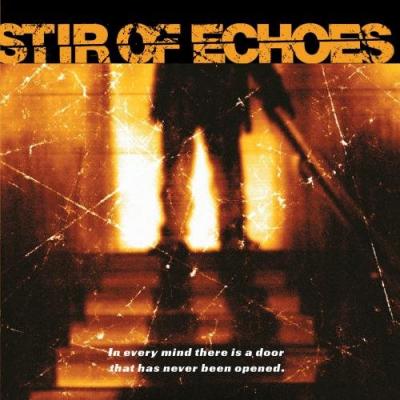
Stir of Echoes Album Cover

"Stir of Echoes" Soundtrack Lyrics

Movie • 1999

Track Listing


"Stir of Echoes (Original Motion Picture Soundtrack)" – Album Guide to Tracks and Key Scenes

Stir of Echoes 1999 trailer frame with Kevin Bacon backlit in a Chicago alley
Stir of Echoes — songs, score, and the hypnosis-to-haunting pipeline (1999)

Overview

What happens when a murder mystery keeps cueing the same riff in your head? Stir of Echoes answers with a soundtrack that lets a classic song become a clue, while James Newton Howard’s score keeps the walls breathing. Nettwerk America’s 1999 compilation folds alt-rock and trip-pop (Moist, Dishwalla, Wild Strawberries, Poe, Beth Orton, Gob) around a lean set of tense, nervy score cues.

Howard’s writing is economical — ticking motifs, guitar pulses, and low woodwinds that seem to whisper “dig.” The licensed cuts are equally purposeful: Gob’s punk cover of “Paint It Black” turns a Rolling Stones icon into a plot device; Poe’s “Hello” seals the credits with an eerie half-smile. Genres phase as Tom’s visions worsen: post-grunge grit for the neighborhood, nocturnal alt-pop for the after-hours, and needle-drops that double as breadcrumbs. It’s a street-level ghost story, scored tight.

Styles & phases: minimalist suspense score — compulsion, dread; alt/modern rock — Chicago blue-collar texture; punk cover of a 60s classic — memory as menace; dream-pop & folky ballad — brief human warmth and release.

How It Was Made

Writer–director David Koepp shot and cut sequences to musical ideas (notably the painted-black hypnosis vision); James Newton Howard supplied the original score cues that interleave with licensed tracks on the official album. Nettwerk America released the soundtrack on September 14, 1999, mixing eight score cues with seven songs; the film’s music credits also document clearances for the Gob cover and other alt-leaning cuts. DVD extras even include the “Breathe” music video by Moist — a very 1999 flourish.

Trailer still: the theater-in-hypnosis image that the score echoes with pulsing textures
How it was made — Howard’s terse score + late-90s alt cuts, assembled by Nettwerk for release

Tracks & Scenes

Selections below (album cuts + key moments). Time notes are relative (early/mid/late) to the 100-minute cut. Not a full tracklist.

“Breathe (TLA Mix)” (Moist)

Where it plays:
Used in the film’s home-video materials and as a promo tie-in; on disc, it helps establish the late-90s alt-rock bed the story sits on. Non-diegetic; compilation highlight.
Why it matters:
Sets the period texture — guitar haze and anxious vocals that mirror Tom’s oncoming insomnia.

“Stay Awake” (Dishwalla)

Where it plays:
Neighborhood life/montage energy — a recognizable radio cut that bleeds into domestic scenes. Non-diegetic; early-mid.
Why it matters:
Everyday rock as camouflage — normal sound for lives about to crack.

“Mirror Mirror” (Wild Strawberries)

Where it plays:
Between party and aftermath beats — a chilly corridor song while Tom’s new sensitivity starts hijacking quiet moments. Non-diegetic; mid.
Why it matters:
Title-as-theme: reflections he can’t trust anymore.

“Nothing But the Shell” (Steve Wynn)

Where it plays:
Blue-collar drift and late-night street cutaways. Non-diegetic; mid.
Why it matters:
The lyric concept — a body as a “shell” — speaks to possession and to what’s left after trauma.

“Paint It Black” (Gob — Rolling Stones cover)

Where it plays:
Woven through vision/flashback reveals and the suffocation reconstruction; the riff spikes during the truth-uncovering montage. Non-diegetic; late.
Why it matters:
A 1966 classic re-armed as a 1999 punk jolt — memory itself becomes the jump-scare and the clue.

“It’s Not the Spotlight” (Beth Orton)

Where it plays:
A breath after violence — a dark, cathartic ease-down as the neighborhood’s secret finally surfaces. Non-diegetic; late.
Why it matters:
Gentle, humane counterweight that lets the film exhale without forgetting the weight of what it found.

“Hello (Stir of Echoes Remix)” (Poe)

Where it plays:
End credits — the queasy, playful closer after the last vision fades. Non-diegetic; end.
Why it matters:
Perfect curtain: a catchy hello that arrives exactly when everyone wants to say goodbye.

Score highlights (James Newton Howard): “First Hypnotism” • “Deja Vu” • “Digging” • “Kidnapping Jake”

Where it plays:
“First Hypnotism” sketches the painted-black theater vision (early); “Deja Vu” and “Digging” tick and scrape as Tom’s compulsion literally breaks ground (mid-late); “Kidnapping Jake” tightens as the family’s danger spikes (mid).
Why it matters:
These cues are the film’s pulse — short, tactile, and always a half-step ahead of what Tom wants to admit.
Trailer still: the basement and shovel motif — Howard’s score cue 'Digging' in sound
Tracks & scenes — radio rock for the block, a punk 'Paint It Black' for the reveal, and lean score cues that whisper 'dig'

Notes & Trivia

  • The official album was released by Nettwerk America on September 14, 1999; it interleaves 8 score cues with 7 licensed songs.
  • James Newton Howard’s cues on the retail album include “First Hypnotism,” “Digging,” “Deja Vu,” “Kidnapping Jake,” and more.
  • Gob’s punk cover of “Paint It Black” is the version on the album; the Stones’ original is referenced in the film’s cultural footprint and “plot device” notes.
  • The DVD/Blu-ray bonus features include the “Breathe” music video by Moist and multiple making-of featurettes.

Music–Story Links

The soundtrack treats music as evidence. Gob’s “Paint It Black” isn’t just needle-drop cool — it’s a siren that drags Tom toward the right memory. Beth Orton’s ballad counters the violence with mercy; Poe’s “Hello” exits on a knowing smirk. Howard’s short cues are compulsion machines: the moment “Digging” starts, you know what Tom will do next. Songs annotate the city; score annotates Tom.

Reception & Quotes

Reviewers praised the film’s grounded scares; soundtrack watchers flagged the clever song/score blend.

“Quietly creepy… grounded in a believable reality.” Empire (via film retrospectives)
“Dishwalla’s ‘Stay Awake’ and a punk ‘Paint It Black’ are woven into the film’s fabric.” — home-video review notes
Trailer frame: Tom under streetlights as the soundtrack pivots from song to score
Reception — a solid 90s ghost story with a purposeful, compact soundtrack

Interesting Facts

  • Label & format: Nettwerk America handled the 1999 album release; common running time ~45 minutes.
  • Cover power: Gob’s version of “Paint It Black” is often the one viewers remember from the reveal sequence.
  • Promo DNA: The DVD features the Moist “Breathe” video; a tidy time capsule of the era’s cross-promo style.
  • Score ratio: The retail album is almost half Howard cues — unusually balanced for a late-90s thriller.
  • Source to score: The film’s hypnosis image — a theater with everything painted black — has a direct musical mirror in Howard’s minimal “First Hypnotism.”

Technical Info

  • Title: Stir of Echoes (Original Motion Picture Soundtrack)
  • Year: 1999 (album release September 14)
  • Type: Feature Film Soundtrack (Compilation + Original Score)
  • Composer: James Newton Howard
  • Label: Nettwerk America
  • Representative tracks (album era): Gob — “Paint It Black”; Poe — “Hello (Stir of Echoes Remix)”; Beth Orton — “It’s Not the Spotlight”; Moist — “Breathe (TLA Mix)”; Dishwalla — “Stay Awake”; Wild Strawberries — “Mirror Mirror”; Steve Wynn — “Nothing But the Shell”; James Newton Howard — “First Hypnotism,” “Digging,” “Deja Vu,” “Kidnapping Jake”.
  • Availability: CD/digital (various retailers/streaming); DVD extras include Moist’s “Breathe” video.

Questions & Answers

Who composed the score?
James Newton Howard — his short, percussive cues carry the film’s compulsive rhythm.
Which “Paint It Black” is in the movie album?
Gob’s punk cover appears on the official soundtrack; the Stones’ original is a noted cultural reference tied to the film.
What’s the song over the end credits?
Poe’s “Hello” (Stir of Echoes Remix).
Is there much score on the retail album?
Yes — roughly half the album is Howard’s score cues interleaved with licensed songs.
What label released the soundtrack?
Nettwerk America, September 14, 1999.

Key Contributors

EntityRelation
David KoeppDirector/Screenwriter — staged hypnosis and vision motifs with music in mind
James Newton HowardComposer — original score cues on album
Nettwerk AmericaRecord label — soundtrack release (1999)
GobPerformer — “Paint It Black” (cover) used in reveal sequence
PoePerformer — “Hello (Stir of Echoes Remix)” — end credits
Beth OrtonPerformer — “It’s Not the Spotlight” — late-film catharsis
MoistPerformer — “Breathe (TLA Mix)” — album/promotional tie-in
DishwallaPerformer — “Stay Awake” — in-film placement
Wild StrawberriesPerformer — “Mirror Mirror” — mid-film color
Steve WynnPerformer — “Nothing But the Shell” — mood piece

Sources: Wikipedia (film page & soundtrack section); AllMusic album entry; Discogs (album master/release pages); MovieMusic & SoundtrackCollector listings; IMDb Soundtracks; home-video notes and reviews referencing Dishwalla & Gob placements; DVD catalog listings (extras).

November, 27th 2025


A-Z Lyrics Universe

Lyrics / song texts are property and copyright of their owners and provided for educational purposes only.