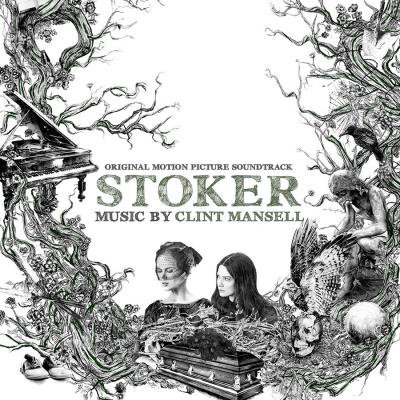
"Stoker"Soundtrack Lyrics
Movie • 2013
Track Listing
Mia Wasikowska
Emily Wells
Clint Mansell
Clint Mansell
Clint Mansell
Clint Mansell
Clint Mansell
Nancy Sinatra And Lee Hazlewood
Clint Mansell
Clint Mansell
Philip Glass
Clint Mansell
Viorica Cortez
Clint Mansell
Clint Mansell
Clint Mansell
Clint Mansell
Clint Mansell & Emily Wells
"Stoker (Original Motion Picture Soundtrack)" – Album Guide to Tracks and Key Scenes
Overview
How do you score a coming-of-age that’s also a coming-of-violence? Stoker answers with a cool, glassy palette from Clint Mansell — piano and strings held at a whisper — and a handful of pointed needle-drops that feel like fingerprints left on a glass. The album folds Mansell’s cues around songs by Emily Wells and Nancy Sinatra & Lee Hazlewood, plus a spotlight piano piece by Philip Glass. The effect is surgical: every sound suggests touch, blood, inheritance.
Mansell avoids synth bombast and goes tactile: damped piano, tremolo strings, staccato pulses that feel like breath in the throat. The world outside India’s head leaks in through curated songs — the gothic sweetness of “Summer Wine,” the sly menace of French pop, the charged hush of a piano duet that reads like a seduction. The soundtrack plays elegance against appetite; it’s beautiful, but it has teeth.
Genres & phases: chamber score (piano/strings) — tension, appetite, control; 60s pop duet — intoxication and complicity; opera excerpt — ritual and blaze; modern indie/alt — identity surfacing; concert-hall minimalism (Glass) — desire engineered as pattern.
How It Was Made
Philip Glass was initially attached before Clint Mansell took over the score; Park Chan-wook heard Mansell live and invited him aboard during the edit. Mansell wrote and recorded largely at AIR Studios in London with Matt Dunkley conducting and Metro Voices providing choral color. The album (Milan Records) combines Mansell’s cues with Emily Wells’ end-title single “Becomes the Color,” a Glass piano piece, and period-leaning source selections including Nancy Sinatra & Lee Hazlewood’s “Summer Wine.”
Tracks & Scenes
Selected placements and album cuts (not a full tracklist). Time cues are relative to the 99-minute cut (early / mid / late).
“Becomes the Color” (Emily Wells)
- Where it plays:
- End scene & credits. After India’s final act, the camera lingers as the beat blooms from a heartbeat to a strut. Non-diegetic; end.
- Why it matters:
- A mission statement disguised as a song — she’s chosen who she is, and the color is hers.
“Duet” (Philip Glass) — the piano bench scene
- Where it plays:
- Parlor, twilight: India sits at the piano; Uncle Charlie’s hands appear, and the two share a four-hand duet. The camera treats touch like language. Diegetic performance that shades into subjective scoring; mid.
- Why it matters:
- It’s not background — it’s courtship and contagion. The interlocking pattern maps desire and control in real time.
“Summer Wine” (Nancy Sinatra & Lee Hazlewood)
- Where it plays:
- Dining room/kitchen slow-dance: Evelyn (Nicole Kidman) and Charlie circle each other with glasses in hand; what starts as flirtation turns into a charged embrace. Source moves foreground; mid.
- Why it matters:
- The honeyed duet masks danger — intoxication as weapon, and a triangle snaps into focus.
“Stride la vampa” from Il trovatore (Verdi) — Viorica Cortez, mezzo-soprano
- Where it plays:
- As a ritual flash of heat in India’s soundscape — the aria’s blaze mirrors a memory catching fire. Brief source; mid.
- Why it matters:
- Operatic flame to match the film’s theme of inherited burn marks.
“Pile ou face” (Corynne Charby)
- Where it plays:
- Stylized interlude/wardrobe montage vibe — a French pop flip of the coin while India’s self-presentation sharpens. Source; mid-late.
- Why it matters:
- Heads or tails — the lyric’s gamble mirrors India’s moral toss.
Mansell score highlights
- Where it plays:
- “Happy Birthday (A Death in the Family)” under the wake — strings like a held breath (early). “Uncle Charlie” sketches charm curdling to threat (early-mid). “The Hunter Plays the Game” threads pursuit mechanics through India’s POV (mid-late). “We Are Not Responsible for Who We Come to Be (Free)” resolves with cool, righteous poise (late).
- Why it matters:
- The cues are scalpel-precise: each one pushes India from observation into authorship.
Additional source cues noted in-film
- Where it plays:
- “Into the Maze” (Zimpala/Benjamin Lebeau) and other boutique selections flicker through party and transit spaces; the house breathes pop the way a body breathes perfume.
- Why it matters:
- These pin the movie to a worldly, curated taste — the outside world sneaks into the mansion’s hush.
Notes & Trivia
- Glass was first attached to score; Mansell ultimately composed the film’s main score, while Glass’s “Duet” and other piano material remained in the film and album.
- The on-screen four-hand piano is performed by pianists Sugar Vendil and Trevor Gureckis (Glass designed it so one player’s arm must cross the other’s).
- Milan Records released the album on February 26, 2013, with vinyl limited to ~1000 copies.
- Album personnel include conductor/orchestrator Matt Dunkley, recording/mix engineer Geoff Foster, Metro Voices choir, and soprano Eloise Irving.
- Track 1 features Mia Wasikowska’s whispered narration (“I’m Not Formed by Things That Are of Myself Alone”) — a tone-setting prologue.
Music–Story Links
The duet isn’t accompaniment; it’s choreography for consent, power, and awakening. When “Summer Wine” slips from background to foreground, the camera tells you what India sees — a spell being cast that excludes her. Verdi’s aria blows hot air through the corridors like an omen. Mansell’s cues, spare and close-miked, carve India’s arc from hunted to hunter; by the time Wells’ end-title hits, she is the tempo.
Reception & Quotes
Critics called Mansell’s work “luscious and foreboding,” praising the marriage of elegant image and quietly predatory music. Fans and reviewers alike have singled out the Glass duet as a stealth “sex scene” staged with fingers instead of bodies.
“Eerily dynamic — piano exudes sadness; strings sharpen suspense.” — contemporary reviews roundup
“The four-hand piano duet is desire engineered.” — long-form essays on the film’s erotics
Interesting Facts
- Rejected/retained: Glass left the full-score job, but his “Duet” stayed — a rare hybrid.
- Voice on the album: Track 1 is India’s mantra read by Mia Wasikowska.
- Single first: Emily Wells released “Becomes the Color” ahead of the film as a lead single.
- Library session: Score was recorded at AIR Studios; Matt Dunkley conducted.
- Pop as poison: “Summer Wine” is used diegetically during a seduction feint — sweetness with an aftertaste.
- Opera spark: “Stride la vampa” nods to flame and memory — a thematic mirror for inherited violence.
Technical Info
- Title: Stoker (Original Motion Picture Soundtrack)
- Year: 2013 (album release Feb 26, 2013)
- Type: Feature Film Soundtrack (Score + selected songs)
- Composer/Producer: Clint Mansell
- Additional Composer: Philip Glass (“Duet” and retained piano material)
- Key Songs: Emily Wells — “Becomes the Color” (end titles); Nancy Sinatra & Lee Hazlewood — “Summer Wine”; Corynne Charby — “Pile ou face”; Verdi — “Stride la vampa” (Viorica Cortez); boutique additions incl. Zimpala/Benjamin Lebeau.
- Label: Milan Records (under license from Fox Film Music)
- Personnel (sel.): Matt Dunkley (orchestrator/conductor); Metro Voices; Geoff Foster (record/mix); Jenny O’Grady (concertmaster); Eloise Irving (soprano).
- Availability: Streaming (Apple Music/Spotify), CD, limited LP.
Questions & Answers
- Who composed the score for Stoker?
- Clint Mansell. Philip Glass’s “Duet” also appears prominently in the film and on the album.
- What’s the song over the end credits?
- “Becomes the Color” by Emily Wells.
- Which song plays during the slow-dance between Evelyn and Charlie?
- “Summer Wine” by Nancy Sinatra & Lee Hazlewood.
- Is the piano duet diegetic?
- Yes — it’s played on-screen as a four-hand piece; the scene is staged as an intimate, quasi-seductive exchange.
- Who released the album?
- Milan Records (2013), with digital, CD, and a limited vinyl run.
Key Contributors
| Entity | Relation |
|---|---|
| Park Chan-wook | Director — music placed for elegance vs. appetite |
| Clint Mansell | Composer/Producer — original score |
| Philip Glass | Composer — “Duet” (piano) retained in film & album |
| Emily Wells | Performer/Writer — “Becomes the Color” |
| Nancy Sinatra & Lee Hazlewood | Performers — “Summer Wine” (source cue) |
| Viorica Cortez | Mezzo-soprano — “Stride la vampa” (Verdi) |
| Matt Dunkley | Orchestrator/Conductor — score sessions |
| Geoff Foster | Recording & Mixing — score |
| Metro Voices • Eloise Irving | Choir • Soprano — select cues |
| Milan Records | Label — soundtrack release |
Sources: Milan Records (album page); Apple Music & Spotify (album listing & dates); Wikipedia (soundtrack & film pages); Discogs (credits/personnel); Film Music Reporter & IndieWire (album details); Emily Wells single notes; analyses describing the “Duet” scene and “Summer Wine” placement; Philip Glass site note on performers.
November, 27th 2025
'Stoker': IMDb, Rotten TomatoesA-Z Lyrics Universe
Cynthia Erivo Popular
Ariana Grande Horsepower
Post Malone Ain't No Love in Oklahoma
Luke Combs Good Riddance (Time of Your Life)
Green Day Bye Bye Bye
*NSYNC You're the One That I Wan
John Travolta & Olivia Newton-John I Always Wanted a Brother
Braelyn Rankins, Theo Somolu, Kelvin Harrison Jr. and Aaron Pierre The Power of Love
Frankie Goes to Hollywood Beyond
Auli’i Cravalho feat. Rachel House MORE ›