Soundtracks:  A B C D E F G H I J K L M N O P Q R S T U V W X Y Z #


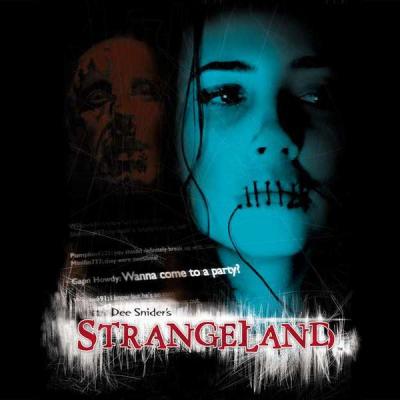
Strangeland Album Cover

"Strangeland" Soundtrack Lyrics

Movie • 1998

Track Listing


"Strangeland (Original Motion Picture Soundtrack)" – Album Guide to Tracks and Key Scenes

Strangeland 1998 trailer still with Captain Howdy in the club Xibalba
Strangeland — theatrical trailer imagery, 1998

Overview

What does a late–’90s industrial–nu-metal mix sound like when you pour it straight into a horror film about online predation and body-mod cults? Strangeland answers with a soundtrack that feels like the club you shouldn’t enter — serrated guitars, sub-bass, and a sheen of menace that never washes off. It’s songs-forward, then stitched to a cold, electronic score that chills the spaces between needle-drops.

Dee Snider (who wrote and stars) frames the movie’s villain, Captain Howdy, as a spiritual cousin to his 1984 Twisted Sister mini-opera “Horror-Teria”; the album extends that lineage. The compilation gathers then-current heavyweights (Pantera, Anthrax, Megadeth, Soulfly, Sevendust, Coal Chamber) alongside outliers (Marilyn Manson, Bile, Hed PE, Kid Rock) and Snider himself. Anton Sanko’s original score underpins the club Xibalba, chat-room dread, and after-hours autopsy light. The result: a time-capsule of ’98 heavy music that also works as character atmosphere — ritual, pain, trance.

Genres & themes in phases — groove-metal & industrial = domination and ritualized control; alt-metal/nu-metal = adolescent volatility and mob energy; shock-rock textures (Manson) = perverse intimacy; classic hard-rock coda (Twisted Sister’s reunion cut) = moral counterpoint at the end credits.

How It Was Made

Score composer Anton Sanko built an icy electronic bed for director John Pieplow’s neon-noir images, while Snider leveraged scene connections to pack the album with then-essential heavy bands. TVT Soundtrax released the CD in 1998; Barry Cole handled music supervision with Patricia Joseph producing for TVT and (on some editions) Jesse Blaze Snider credited as music consultant. The compilation runs ~72 minutes and was issued September 22, 1998, shortly before the film’s October release.

Trailer frame of club Xibalba where industrial cuts throb under fluorescent needles and steel
Behind the cues — Sanko’s electronic score plus a label-stacked metal sampler on TVT Soundtrax.

Tracks & Scenes

“Inconclusion” (Dee Snider)

Where it plays:
Plays as a thematic curtain-raiser around early sequences tied to Captain Howdy’s philosophy and the city’s late-night crawl — slow, ominous churn that sets the film’s pulse.
Why it matters:
Snider’s own piece, co-built with score architect Anton Sanko, bridges album and score — a mission statement for the film’s atmosphere.

“Breathe” (Sevendust)

Where it plays:
Cut into the club environment and driving interstitials — bodies shoulder through Xibalba’s crowd while the investigation tightens.
Why it matters:
Gives the film a living, sweating backbone; its hook functions like the city’s anxious inhale.

“A Secret Place” (Megadeth)

Where it plays:
Non-diegetic montage material during surveillance and dead-end leads; guitar lines simmer under police ritual and parental panic.
Why it matters:
The title winks at Howdy’s hidden lair — a tone-poem for obsession and stash-house dread.

“Where You Come From” (Pantera)

Where it plays:
Amplifies club-floor energy and the film’s roughest edges — the cut slams against images of ritual piercing and restraint rigs.
Why it matters:
Pantera’s heft equals Howdy’s coercive presence; the rhythm hits like a restraint snap.

“P & V” (Anthrax)

Where it plays:
Layered under mid-film hunt beats — car lights knifing through alleys, chat windows pinging like alarms.
Why it matters:
Old-guard thrash tightens the screws; tempo = rising vigilante pressure.

“Not Living” (Coal Chamber)

Where it plays:
Used to color captive-point-of-view passages and aftermath cuts; the track’s suffocated groove mirrors the victims’ reduced world.
Why it matters:
Sound as claustrophobia — it turns the warehouse into a beating metronome.

“Sweet Tooth” (Marilyn Manson)

Where it plays:
Non-diegetic during Howdy’s most predatory rhythms — a leering counterpoint to sterile gear and ritual talk.
Why it matters:
Manson’s imagery (“I will break you inside out…”) eerily mirrors Howdy’s rhetoric; it’s exploitation as mood board.

“Eye for an Eye” (Soulfly)

Where it plays:
Muscles into vigilante-mob sequences and the movie’s street-level fury.
Why it matters:
Names the film’s moral hazard — payback heat that curdles the town’s conscience.

“In League” (Bile)

Where it plays:
Industrial grind in Xibalba; quick cuts of dancefloor, hooks, and steel. Bile’s scene cameo ties the song straight to the club.
Why it matters:
Industrial texture as world-building — the movie’s underworld has a house band.

“Serpent Boy” (Hed PE)

Where it plays:
Underscores back-alley connective tissue and the film’s sleazier turns — swagger with a sneer.
Why it matters:
Tags the predator–prey game with funk-metal slither.

“Absent” (Snot)

Where it plays:
Non-diegetic over transitional beats after abductions; the riff feels like a bruise that won’t fade.
Why it matters:
Title equals theme — kids gone, town hollowed out.

“Captain Howdy” (Crisis)

Where it plays:
Credited at film’s end and included on certain editions; a tribute/cover framing the character’s origin in Twisted Sister lore.
Why it matters:
Connects the movie back to the 1984 “Horror-Teria” narrative thread that birthed Howdy.

“Heroes Are Hard to Find” (Twisted Sister)

Where it plays:
End-credits anthem — a clean, major-key release after 87 minutes of grime.
Why it matters:
Dee Snider’s band reunited to record it; the lyric pointedly counters the film’s violence with a call to step up.

Trailer / promos

Where they play:
Theatrical and home-video spots cut metal snippets to flashing text and vice lines; later ads promoted the soundtrack itself.
Why they matter:
They sold the movie through the album — very ’98.
Trailer shot inside Xibalba where the soundtrack’s industrial and metal cuts dominate
Key placements — club throb, hunt montages, vigilante rage, and an end-credits hard-rock reset.

Notes & Trivia

  • Label: TVT Soundtrax; U.S. CD street date: September 22, 1998; runtime ~72 minutes.
  • Music supervisor Barry Cole; soundtrack producer Patricia Joseph; score by Anton Sanko.
  • Twisted Sister reunited after a decade to cut the end-credits song “Heroes Are Hard to Find.”
  • The film’s villain grew from Twisted Sister’s 1984 “Horror-Teria: Captain Howdy / Street Justice.”
  • Additional songs are credited on film prints/end cards that aren’t on some retail CDs (e.g., Backyard Babies, Crisis).

Music–Story Links

  • Industrial and groove-metal cues in Xibalba align with Howdy’s rhetoric — pain as “enlightenment,” beat as trance.
  • Nu-metal swings hard when the vigilantes move — tracks like “Eye for an Eye” mirror the town’s slip from justice to revenge.
  • Shock-rock slither (“Sweet Tooth”) frames the predatory gaze; lyrics echo Howdy’s domination talk.
  • End credits flip the script — Twisted Sister’s melodic clarity offers a moral counter-blast after the fire.

Reception & Quotes

Critics split on the movie, but the album drew attention as a heavy-music sampler of 1998 — a who’s-who of then-current bands plus legacy acts.

“A damn good album … easily earns its four perplex skulls.” — Feo Amante, soundtrack review
“Think of this more as a sampler of today’s metal scene.” — The Daily Vault
“Twisted Sister reunited to record the end-credits theme.” — American Songwriter

Availability: The compilation CD is long out of print physically but widely referenced; tracks/live versions appear on major streamers via artist catalogs and fan playlists.

Trailer end card with burning light — rolling into Twisted Sister’s credit song
Credits roll on a reunion anthem — moral daylight after a night of steel and scars.

Interesting Facts

  • Some pressings credit a “music consultant” role to Jesse Blaze Snider — a family affair.
  • Snot’s “Absent” gained cult love after the band’s tragic story; the song later resurfaced in live releases.
  • Bile’s cameo ties a real industrial act to the on-screen club — world-building through booking.
  • Marketing even ran a dedicated “soundtrack trailer” to push the album as its own product.
  • Dee Snider has said the Twisted Sister track helped clear old label debts and reunite the band.

Technical Info

  • Title: Strangeland — Original Motion Picture Soundtrack
  • Year: 1998
  • Type: Film soundtrack (song compilation with original score elements)
  • Score composer: Anton Sanko
  • Music supervision: Barry Cole
  • Soundtrack production (label): Patricia Joseph for TVT Soundtrax
  • Additional credit: Music consultant — Jesse Blaze Snider (select listings)
  • Label: TVT Soundtrax (catalog # TVT 8270-2)
  • U.S. release date: September 22, 1998
  • Notable placements: “Heroes Are Hard to Find” (end credits); “In League” in club Xibalba; “Sweet Tooth,” “Breathe,” “A Secret Place,” “Where You Come From,” “P & V,” “Eye for an Eye,” “Not Living,” “Serpent Boy,” “Absent.”

Questions & Answers

Is this primarily a songs album or a score release?
Songs album. Anton Sanko’s score underpins scenes, but the retail disc is a label-stacked compilation.
Who released the soundtrack and when?
TVT Soundtrax, catalog TVT 8270-2 — U.S. street date September 22, 1998.
What plays over the end credits?
Twisted Sister’s reunion single “Heroes Are Hard to Find.”
How does the soundtrack connect to Twisted Sister’s “Horror-Teria”?
The Captain Howdy/Street Justice song cycle inspired the film; the album closes the loop with a new TS track and a “Captain Howdy” cut by Crisis.
Which track best represents the film’s club underworld?
“In League” (Bile) — industrial grind that feels ripped from Xibalba’s PA.

Key Contributors

EntityRelation
Dee SniderWriter/actor; album contributor (“Inconclusion”); originator of Captain Howdy mythos
John PieplowDirector — staged needle-drops within club and hunt sequences
Anton SankoComposer — original score and co-writer/producer on “Inconclusion”
Barry ColeMusic Supervisor — song clearances and placements
Patricia JosephSoundtrack producer for TVT Soundtrax
Jesse Blaze SniderMusic consultant (select editions)
Twisted SisterEnd-credits artists — “Heroes Are Hard to Find”
Sevendust / Megadeth / Pantera / Anthrax / Snot / Coal Chamber / Marilyn Manson / Soulfly / Hed PE / Bile / Kid Rock / The Clay PeopleAlbum artists — key placements across club/action/coda
TVT SoundtraxLabel — released the album

Sources: Discogs credits & full album metadata; MusicBrainz release page (date/label/catalog); Wikipedia (film page & soundtrack notes); AllMusic release info; The Daily Vault review; Feo Amante review; American Songwriter note on Twisted Sister’s reunion cut; trailer ID from YouTube.

November, 27th 2025


A-Z Lyrics Universe

Lyrics / song texts are property and copyright of their owners and provided for educational purposes only.