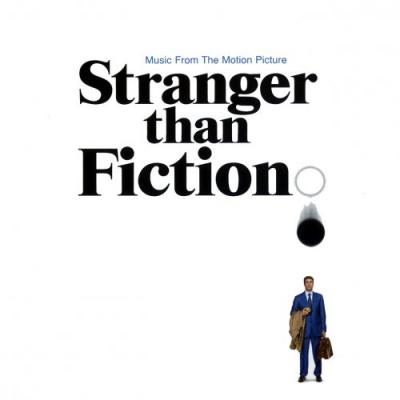
"Stranger Than Fiction" Soundtrack Lyrics
Movie • 2006
Track Listing
Spoon
Maximo Park
Wreckless Eric
Britt Daniel/Brian Reitzell
Spoon
Delta 5
Califone
Britt Daniel/Brian Reitzell
Spoon
Vangelis
The Jam
The Upsetters
Britt Daniels and Brian Reitzell
M83
"Stranger Than Fiction (Music From the Motion Picture)" – Album Guide to Tracks and Key Scenes
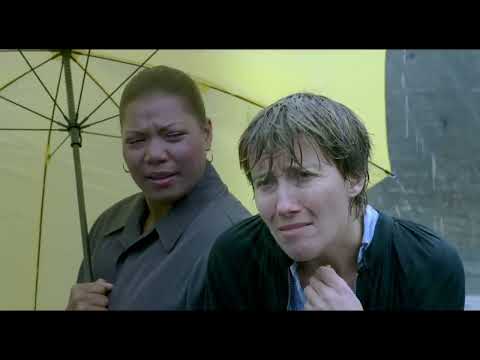
Overview
What if your life suddenly had a soundtrack — and the voiceover knew your next chord change? Stranger Than Fiction answers with a literate, indie-forward album that doubles as character study. It pairs jangly optimism with anxious minimalism, toggling between needle-drops and compact, scene-sculpted score cues.
The film leans on a collaboration between Spoon’s Britt Daniel and composer/music supervisor Brian Reitzell, who thread Spoon motifs through a suite of original pieces. Around them: post-punk and art-pop selections (Wreckless Eric, The Jam, Maxïmo Park, Delta 5, Vangelis, M83) that color Harold Crick’s transition from routine to risk. The album presents full vocal versions; in the film many Spoon cues slip in as instrumentals, keeping the narrative voice clean and the emotions precise.
Genres & themes in phases — wiry indie rock = routine cracking open; post-punk = systems and rules; tender ambient/classical (Max Richter, Vangelis/M83) = mortality and grace. When Harold acts, guitars strum forward; when he contemplates the ending he may deserve, the music thins to strings and air.
How It Was Made
Director Marc Forster wanted music that could behave like typewriter keys — percussive, precise, but warm. Brian Reitzell (also the film’s music supervisor) and Britt Daniel built a modular score from Spoon textures and new cues, then interlaced licensed tracks to mark tonal pivots. Columbia/Sony released the 15-track album on November 7, 2006, a few days before U.S. opening weekend; the disc mixes the Daniel/Reitzell score pieces with indie selections and a brand-new Spoon single.
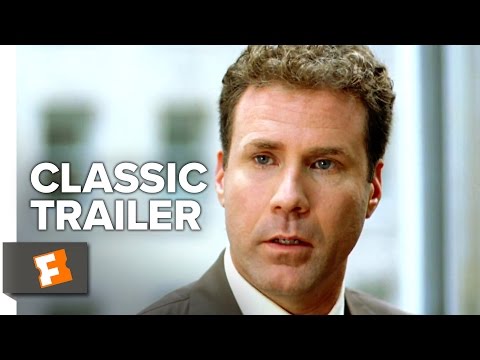
Tracks & Scenes
“Whole Wide World” (Wreckless Eric)
- Where it plays:
- After Harold’s awkwardly sincere “I brought you flours” peace offering, he picks up a guitar in Ana’s kitchen and softly sings while she does the dishes. It starts tentative, then blooms as she realizes he’s playing for her. Diegetic — room-mic intimacy, creak and breath included.
- Why it matters:
- It’s the film’s heartbeat cue — a turning point from obligation to love, and the moment Ana truly sees Harold.
“I Turn My Camera On” (Spoon) — in-film placement
- Where it plays:
- At the guitar shop, as Harold is drawn to a specific instrument; the track’s clipped beat sneaks in around his indecision. Often heard as an instrumental bed in the scene.
- Why it matters:
- Marks the first time Harold lets a desire (not a schedule) guide him — the groove mirrors his pulse kicking up.
“The Book I Write” (Spoon)
- Where it plays:
- First song over the end credits — a cheeky meta-button after the narrative finds its landing.
- Why it matters:
- Written for the film, the lyric flips authorship back to Harold; the hook hums with earned lightness.
“Going Missing” (Maxïmo Park)
- Where it plays:
- Rolls in the end-credits sequence after Spoon; some presentations use an instrumental version under the credit crawl.
- Why it matters:
- Title-as-wink — the old Harold “goes missing” as a braver version takes his place.
“The Way We Get By” (Spoon)
- Where it plays:
- Cropped across routine-breaking montage beats (heard as instrumental textures in-film). It’s the film’s informal motif for small rebellions.
- Why it matters:
- Turns everyday acts — skipping a bus stop, buying a guitar, baking with Ana — into little drumrolls of agency.
“Mind Your Own Business” (Delta 5)
- Where it plays:
- Slotted into the film’s urban movement and office texture — drums and chanty call-and-response punch through the clockwork.
- Why it matters:
- Snark and structure — a post-punk eye roll at Harold’s old rules.
“La Petite Fille de la Mer” (Vangelis) → into “In Church (Cyann & Ben Remix)” (M83)
- Where it plays:
- Late-film reflective passages and credits glide — synth-sadness to cathedral haze — as the story exhales.
- Why it matters:
- Gives the film its “afterglow” — gentleness after jeopardy.
Max Richter cues — “On the Nature of Daylight” & “Horizon Variations”
- Where it plays:
- Used in the score: “On the Nature of Daylight” underscores Harold absorbing the news of his likely death; “Horizon Variations” appears elsewhere as a spare, meditative counterpoint.
- Why it matters:
- These strings are the film’s conscience — slowing time so choice can enter.
Trailer / non-album cues
- Where they play:
- Marketing cuts lean on The Pretenders’ “Stop Your Sobbing” (Ray Davies song) and ELO’s “Don’t Bring Me Down.”
- Why it matters:
- Signals tone to a broad audience while the film itself keeps its indie palette.
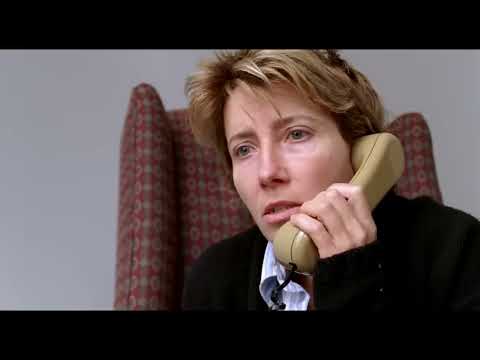
Notes & Trivia
- The album includes full vocal versions of several Spoon songs that play largely as instrumentals in the film.
- “The Book I Write” was recorded specifically for the movie and leads the credit roll.
- Maxïmo Park’s “Going Missing” appears during the end credits; some cuts use an instrumental.
- “Love You” by The Free Design is heard in the film’s end credits but is not on the retail soundtrack.
- Brian Reitzell served double duty: co-scorer and music supervisor shaping the film’s overall sound.
Music–Story Links
- When Harold chooses the guitar (with “I Turn My Camera On” pulsing), the soundtrack frames the act as rebellion — a tempo change for his life.
- “Whole Wide World” transforms a kitchen into a stage; diegetic music lets Ana witness the man behind the schedule.
- Instrumental Spoon cues treat mundane tasks like edits on a page — each riff a new sentence in Harold’s rewrite.
- Max Richter’s strings arrive with the prognosis — the sound of the page tightening around a character’s fate.
Reception & Quotes
Reviews consistently singled out the “Spoon-ified” sound and the smart weave of licensed songs with chamber-leaning score. Critics and fans still cite the kitchen performance of “Whole Wide World” as one of the film’s most affecting moments.
“Britt Daniel’s first foray into film scoring rides shotgun with Reitzell’s curation — a cohesive indie suite.” — Billboard report
“One of the best song cues of the decade — Wreckless Eric as rom-com lightning bolt.” — Movie Mezzanine essay
Availability: The 15-track album (Stranger Than Fiction: Music From the Motion Picture) released November 7, 2006 on Columbia/Sony; it’s available on major streaming services and digital stores.
Interesting Facts
- The album’s “Flours,” “Writer’s Block,” and “Auditor” are Daniel/Reitzell score miniatures named for plot beats.
- End credits often flow The Book I Write → (instrumental) “Going Missing” → “Love You” by The Free Design (film only).
- “That’s Entertainment” appears as a demo version by The Jam on the album — a sly nod to the story critiquing “everyday entertainment.”
- Vangelis’s “La Petite Fille de la Mer” and M83’s “In Church (Cyann & Ben Remix)” give the credits an ambient twilight.
- Trailer music leans pop-classic (Pretenders/ELO); it’s not representative of the quieter in-film sound.
Technical Info
- Title: Stranger Than Fiction — Music From the Motion Picture
- Year: 2006
- Type: Film soundtrack — songs + original score cues
- Score/composers: Britt Daniel (Spoon), Brian Reitzell
- Music supervision: Brian Reitzell
- Label & release: Columbia / Sony Music Soundtrax; released November 7, 2006 (U.S.)
- Notable placements (in film): “Whole Wide World” (Harold sings to Ana); “I Turn My Camera On” (guitar-store scene); “On the Nature of Daylight” (Harold learns his fate); “The Book I Write” and “Going Missing” (end credits).
- Album note: “Love You” (The Free Design) appears in the film’s credits but is not on the retail album.
Questions & Answers
- Who composed the score?
- Britt Daniel (of Spoon) and Brian Reitzell co-composed the original score cues; Reitzell also supervised the soundtrack.
- What song does Harold play in Ana’s kitchen?
- “Whole Wide World” by Wreckless Eric — performed diegetically by Harold on guitar.
- What’s the song in the guitar shop?
- Spoon’s “I Turn My Camera On,” used in the scene (often as an instrumental bed).
- Which songs start the end credits?
- First “The Book I Write” (Spoon), then “Going Missing” (Maxïmo Park). “Love You” by The Free Design also appears in the credits but isn’t on the album.
- What music underscores Harold’s realization about his possible death?
- Max Richter’s “On the Nature of Daylight.”
Key Contributors
| Entity | Relation |
|---|---|
| Marc Forster | Director — set the film’s measured, music-aware cadence |
| Britt Daniel | Co-composer; Spoon songwriter; contributed cues and songs |
| Brian Reitzell | Co-composer & Music Supervisor — curated and integrated source music |
| Spoon | Band — multiple songs incl. “The Book I Write,” “The Way We Get By” |
| Wreckless Eric | Artist — “Whole Wide World” (Harold’s kitchen scene) |
| Maxïmo Park | Artist — “Going Missing” (end credits) |
| Max Richter | Composer — “On the Nature of Daylight,” “Horizon Variations” (used in score) |
| Vangelis / M83 | Artists — closing atmosphere in credits |
| Columbia / Sony Music Soundtrax | Label — released the soundtrack album |
Sources: Columbia/Sony press release; Apple Music/Spotify album pages; Wikipedia (soundtrack & film); IMDb soundtrack index; SoundtrackINFO Q&A; Movie Mezzanine essay on “Whole Wide World”; Maxïmo Park single page; official trailers.
November, 27th 2025
A-Z Lyrics Universe
Cynthia Erivo Popular
Ariana Grande Horsepower
Post Malone Ain't No Love in Oklahoma
Luke Combs Good Riddance (Time of Your Life)
Green Day Bye Bye Bye
*NSYNC You're the One That I Wan
John Travolta & Olivia Newton-John I Always Wanted a Brother
Braelyn Rankins, Theo Somolu, Kelvin Harrison Jr. and Aaron Pierre The Power of Love
Frankie Goes to Hollywood Beyond
Auli’i Cravalho feat. Rachel House MORE ›