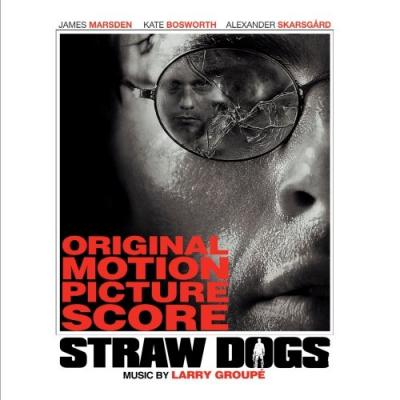
"Straw Dogs" Soundtrack Lyrics
Movie • 2011
Track Listing
The Monkees
The James Gang
Boots Ottestad
Molly Hatchet
Nancy Sinatra, Lee Hazlewood
Clifton Chenier
Wanda Jackson
Buckwheat Zydeco
Robbie Wyckoff
Lynyrd Skynyrd
The Noisettes
Blackfoot
Grayson Capps
Grayson Capps
Francis Scott Key
"Straw Dogs (Original Motion Picture Score)" – Album Guide to Tracks and Key Scenes
Overview
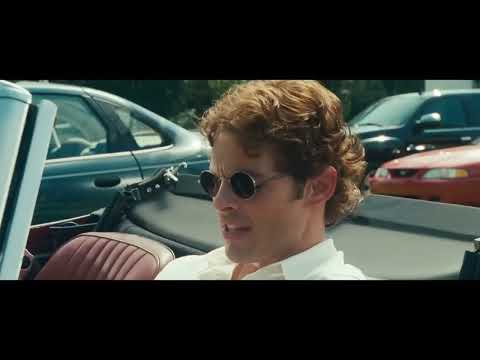
What happens when a siege thriller swaps bombast for pressure? Straw Dogs (2011) answers with a coiled, mostly orchestral score that tightens like a snare, plus a handful of jukebox and radio songs that paint in barroom sweat and Friday-night bravado. The music is not a wall; it’s a vise.
Composer Larry Groupé’s score favors low brass and strings, often without heavy percussion, to build dread and release in pulses. Around it, the film sprinkles Southern rock bar staples and a few classical cues — needle-drops that place us squarely in small-town Mississippi before the shutters come down. The official album is score-only; the movie itself contains additional licensed songs that never made the retail release.
Genres & themes in phases — orchestral suspense (muted brass/strings) = simmering threat and moral erosion; classic/Southern rock on radios and in bars = swagger, herd energy; concert-hall quotations (Beethoven; Tchaikovsky) = irony and ritual; anthemic ceremony = the town’s self-image, brittle under scrutiny.
How It Was Made
Rod Lurie’s remake relocates the story to Mississippi and leans on Groupé for a cool, tonal score that can turn claustrophobic without shouting. The soundtrack album — released by Madison Gate Records — presents 27 concise cues (≈52 minutes). In the film, music supervision clears period-appropriate rock and roots tracks for diegetic bars, trucks, and game-day atmospherics, while Groupé’s cues carry the psychological load through the stalking, the hunting day, and the farmhouse siege.

Tracks & Scenes
Score: “Main Title” / motif set (Larry Groupé)
- Where it plays:
- Opening movements establish the film’s four-note idea across low strings and horns as the couple arrives in Blackwater. Non-diegetic, unsentimental, and already tense.
- Why it matters:
- Plants the motive that will darken and harden as boundaries are crossed — the movie teaches you its danger chord on page one.
“Dogs of Straw” → “Hard Feelings” (Larry Groupé)
- Where it plays:
- Mid-film escalation: micro-surges under taunts, property trespass, and marital strain. The brass swells but never explodes — it presses.
- Why it matters:
- Shows Groupé’s approach: dread by increments. You feel the house tightening even when the frame is still.
“The Uninvited” / “Not On My Watch” / “Amy’s Revenge” (Larry Groupé)
- Where it plays:
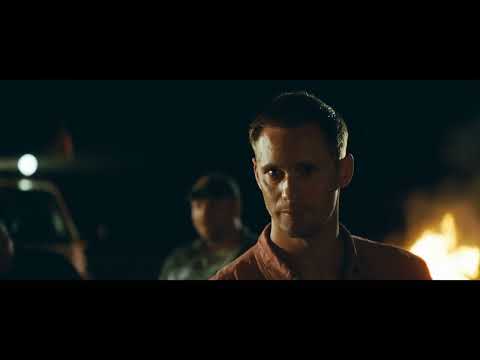
- Siege run: doors barricaded, floodlights, makeshift weapons. String ostinati and snarling trombones carry the sequence; tempo ratchets with each breach attempt.
- Why it matters:
- This is the album’s adrenaline vein — action writing that stays tonal and legible, never losing the through-line motif.
“End Credits” (Larry Groupé)
- Where it plays:
- Aftermath: a longer restatement of the main ideas over nearly six minutes; relief without catharsis.
- Why it matters:
- Confirms the film’s thesis — survival here is victory, not joy.
“Funk #49” (James Gang) — bar/garage diegesis
- Where it plays:
- In-world needle-drop in local hangouts — chugging riff under backslaps, beers, and side-eye. It’s the town’s groove, loud enough to crowd out thought.
- Why it matters:
- Maps masculine ritual to a famous riff. You hear bravado before you see it.
“Gimme Three Steps” (Lynyrd Skynyrd) — jukebox swagger
- Where it plays:
- On speakers during a rowdier bar stretch and in incidental radio use. Guitar-forward, story-song bravado as background to intimidation games.
- Why it matters:
- The lyric’s barroom dance-off irony frames the locals’ peacocking and foreshadows real violence.
“Train, Train” (Blackfoot) & “Flirtin’ with Disaster” (Molly Hatchet) — pickup-bed soundtrack
- Where it plays:
- Diegetic rock pulses through truck radios and bar transitions as tempers rise and the hunt day looms.
- Why it matters:
- These Southern-rock staples tag the town’s “let’s roll” energy — speed, noise, and zero reflection.
“Never Forget You” (Noisettes) — softer interlude
- Where it plays:
- Used in the film as a lighter, emotional counter-color during a breather section away from the bar noise.
- Why it matters:
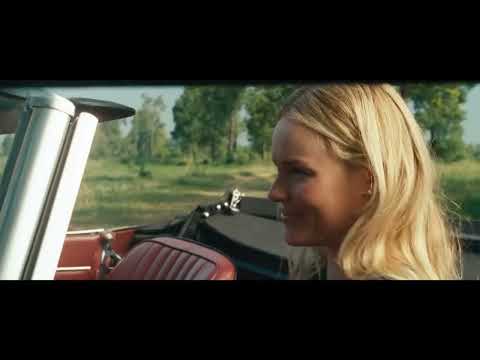
- A small mercy note — a reminder there was a marriage here before the siege swallowed it.
“Summer Wine” (Nancy Sinatra & Lee Hazlewood) — jukebox curio
- Where it plays:
- A vintage needle-drop in the film’s diegesis; silky duet set against rough edges.
- Why it matters:
- Irony at work: sweet intoxication as the plot heads for a hangover.
“Bad Reputation” (Boots Ottestad) / “There Goes My Girl” (Robbie Wyckoff) — local-radio texture
- Where it plays:
- Cues show up as source music in vehicles and town spaces, momentarily lightening tone before the clamp returns.
- Why it matters:
- Paints the aural wallpaper of Blackwater — ordinary tracks for an ordinary day heading somewhere terrible.
Classical cues: Beethoven (“Für Elise”; Romance No. 2; Violin Concerto — Larghetto), Tchaikovsky (“1812 Overture”), plus “The Star-Spangled Banner” — ceremony & sarcasm
- Where it plays:
- Quoted in ceremonial or cultural contexts (e.g., game-day, formal community moments), as well as ironic needle-drops under otherwise tense scenes.
- Why it matters:
- Signals a town that venerates tradition — exactly what the story squeezes until it cracks.
Notes & Trivia
- The official album is score-only — 27 cues released digitally; the bar/radio songs are film-only placements.
- Label is Madison Gate Records (Sony Pictures’ soundtrack imprint); release week matched the U.S. theatrical opening.
- Music supervision on the film handled clearances for Southern rock standbys and older pop — perfect for a rural Deep South setting.
- Groupé previously collaborated with director Rod Lurie; this score leans tonal but austere — more pressure than jump-scare.
Music–Story Links
- Bar jukebox rock (“Funk #49,” “Gimme Three Steps”) acts like group camouflage — noise that excuses bad behavior until it doesn’t.
- Classical/ceremonial cues set up public ritual (games, flags, speeches) that contrast with private cruelty.
- The score’s four-note idea reappears as the house closes — each recurrence like another board across a window.
- During the siege, rhythmic string figures synchronize with practical sounds (locks, nails, glass), blurring sound design and score.
Reception & Quotes
Reviews of the film were mixed, but score-heads noticed Groupé’s craft — tonal, intelligent, and relentless without getting noisy. Among soundtrack writers, the album earned quietly strong notices.
“A dark, difficult, challenging work… highly recommended.” — Movie Music UK
Availability: The score album is available on major platforms (digital). No separate commercial release exists for the film’s licensed bar/radio songs.
Interesting Facts
- The album contains compact cues with descriptive titles that mirror plot beats (“Dogs of Straw,” “The Uninvited,” “Not On My Watch”).
- Although some outlets once mentioned Screen Gems Records, the album’s retail metadata and liners credit Madison Gate Records.
- Several licensed songs appear in multiple guises (bar, car, background PA) — the town’s soundtrack is intentionally repetitive.
- Groupé’s orchestration keeps percussion minimal; dread comes from harmony and color, not drum hits.
- The remake’s shift to Mississippi gives the source music a distinctly Southern rock palette that the 1971 film didn’t lean on.
Technical Info
- Title: Straw Dogs (Original Motion Picture Score)
- Year: 2011
- Type: Film score (album) with additional in-film licensed songs
- Composer: Larry Groupé
- Music supervision: Spring Aspers (film credits)
- Label (album): Madison Gate Records — digital release September 13, 2011
- Notable in-film songs (not on album): “Funk #49” (James Gang), “Gimme Three Steps” (Lynyrd Skynyrd), “Train, Train” (Blackfoot), “Flirtin’ with Disaster” (Molly Hatchet), “Never Forget You” (Noisettes), “Summer Wine” (Nancy Sinatra & Lee Hazlewood), “Bad Reputation” (Boots Ottestad), Beethoven excerpts, Tchaikovsky “1812,” “The Star-Spangled Banner.”
Questions & Answers
- Who composed the score for the 2011 remake?
- Larry Groupé wrote and conducted the score.
- What label released the album?
- Madison Gate Records issued the digital score album (27 cues; ≈52 minutes).
- Are the bar and radio songs on the official album?
- No. The retail album is score-only. The film’s Southern-rock and pop placements were not compiled commercially.
- What’s the musical character of the score?
- Tonal, brass- and string-led suspense with an insistent four-note idea that grows harsher toward the siege.
- Which tracks underscore the climactic siege?
- Album cuts such as “The Uninvited,” “Not On My Watch,” “Amy’s Revenge,” and “Got ’Em All” carry the run-up and release.
Key Contributors
| Entity | Relation |
|---|---|
| Larry Groupé | Composer — score written & conducted; album producer |
| Rod Lurie | Director/Screenwriter — guided music placement & tone |
| Spring Aspers | Music Supervisor — licensed source songs for film |
| Madison Gate Records | Label — released the score album |
| Screen Gems | Distributor — U.S. theatrical release |
| James Gang / Lynyrd Skynyrd / Blackfoot / Molly Hatchet / Noisettes / Nancy Sinatra & Lee Hazlewood | Artists — licensed songs heard diegetically |
Sources: Apple Music album page; Spotify listing; Movie Music UK review (score analysis & track titles); UC San Diego/KPBS features with composer credit; film credits & music department listings; film page entries; song indices (Ringostrack; MoviesOST); official trailers for YouTube ID.
November, 27th 2025
'Straw Dogs': IMDb, WikipediaA-Z Lyrics Universe
Cynthia Erivo Popular
Ariana Grande Horsepower
Post Malone Ain't No Love in Oklahoma
Luke Combs Good Riddance (Time of Your Life)
Green Day Bye Bye Bye
*NSYNC You're the One That I Wan
John Travolta & Olivia Newton-John I Always Wanted a Brother
Braelyn Rankins, Theo Somolu, Kelvin Harrison Jr. and Aaron Pierre The Power of Love
Frankie Goes to Hollywood Beyond
Auli’i Cravalho feat. Rachel House MORE ›