
"Streets Of Fire: A Rock & Roll Fable" Soundtrack Lyrics
Movie • 1990
Track Listing
Fire Inc.
Marilyn Martin
The Fixx
Greg Philinganes
The Blasters
Fire Inc.
Maria McKee
Dan Hartman
Ry Cooder
The Blasters
"Streets of Fire (Music From the Original Motion Picture)" – Album Guide to Tracks and Key Scenes
Overview
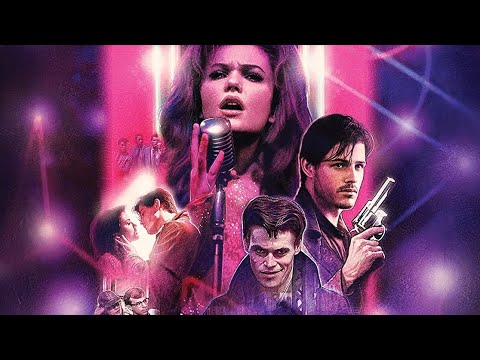
Neon, rain, chrome — and a rock show that detonates a kidnapping. That’s the energy of Walter Hill’s Streets of Fire (released in 1984, not 1990), a “rock & roll fable” whose soundtrack fuses Wagnerian pop thunder with bar-band grit and Ry Cooder’s slide-blues score. It’s a movie that thinks in songs: an opening banger, a midnight rescue, a dawn goodbye scored like a last encore. :contentReference[oaicite:0]{index=0}
The record is a time-capsule and a statement. Jim Steinman’s studio project Fire Inc. bookends the film with two originals — “Nowhere Fast” and “Tonight Is What It Means to Be Young.” Dan Hartman’s “I Can Dream About You” became the breakout chart hit (though the film performance is mimed on-screen by the Sorels to Winston Ford’s vocal). The Blasters crash a club with “One Bad Stud” (and “Blue Shadows”), while The Fixx and Marilyn Martin add sleek 80s textures; Ry Cooder underlines the alleys in between. :contentReference[oaicite:1]{index=1}
Genres & themes in phases — operatic pop (Steinman) = myth-size love and destiny; new wave sheen (The Fixx) = the city’s cool; barroom R&B (The Blasters) = street heat; roots-blues score (Ry Cooder) = the fable’s iron under the neon.
How It Was Made
Hill imagined a retro-future where 50s iconography meets 80s sound. Steinman wrote the showstoppers for Ellen Aim (performed on the soundtrack by Fire Inc.’s studio vocalists), while the fictional Attackers are played by real L.A. band Face to Face. Maria McKee cut “Never Be You” for the album (a Rosanne Cash version was recorded for the film but not used); Stevie Nicks’ “Sorcerer” appears here sung by Marilyn Martin. The Blasters appear on screen; Ry Cooder supplies instrumental cues. :contentReference[oaicite:2]{index=2}
Tracks & Scenes
“Nowhere Fast” (Fire Inc.)
- Where it plays:
- Opening performance by Ellen Aim & the Attackers — spotlights whirl, fans surge, and halfway through the number Raven Shaddock’s biker gang storms the stage. The cut smash-fuses concert euphoria with a kidnapping. Non-diegetic polish meets diegetic chaos.
- Why it matters:
- It announces the film’s grammar: music-video scale emotion colliding with pulp stakes. :contentReference[oaicite:3]{index=3}
“Deeper and Deeper” (The Fixx)
- Where it plays:
- City-on-the-move montage as Tom Cody returns and plans the snatch-back. Guitars flicker like wet streetlights; synth pulses underline surveillance and prep.
- Why it matters:
- New-wave cool as heist oxygen — it spaces out the melodrama so the next hit lands harder. :contentReference[oaicite:4]{index=4}
“One Bad Stud” (The Blasters)
- Where it plays:
- At Torchie’s club, The Blasters rip through the R&B stomper while Raven eyes his captive from the wings. Brass pops, dancers snap, and menace threads the groove. Diegetic to the bone.
- Why it matters:
- It’s worldbuilding by bandstand — a dangerous room dressed as a party. :contentReference[oaicite:5]{index=5}
“Blue Shadows” (The Blasters)
- Where it plays:
- Another Torchie’s sequence — slower, smokier, the camera prowls booths while deals and threats percolate.
- Why it matters:
- Same room, new temperature; the film uses bar music as a dimmer switch. :contentReference[oaicite:6]{index=6}
“I Can Dream About You” (Dan Hartman) / on-screen: The Sorels (vocal by Winston Ford)
- Where it plays:
- The Sorels step up with a silky, choreographed performance; in the film they lip-sync to Winston Ford’s studio vocal, while the album features Hartman’s hit single version. The moment lands as a joyous palate-cleanser after bruising action.
- Why it matters:
- Pop as reprieve — and a meta-hit that outlived the film on radio. :contentReference[oaicite:7]{index=7}
“Sorcerer” (Marilyn Martin)
- Where it plays:
- Used as a mood piece over transition; Stevie Nicks’ song becomes a nocturnal glide, a whisper in the city’s machinery.
- Why it matters:
- Softens the film’s edges without breaking its mythic tone. :contentReference[oaicite:8]{index=8}
Ry Cooder cues (“Rumble,” “Get Out of Denver,” and band instrumentals)
- Where it plays:
- Street-level connective tissue — engine-idle basslines, tremolo guitars, alley echoes — under scouting, riding, and regrouping.
- Why it matters:
- Cooder’s sound is the steel in the fairy tale — Americana grit beneath the big choruses. :contentReference[oaicite:9]{index=9}
“Tonight Is What It Means to Be Young” (Fire Inc.)
- Where it plays:
- Finale: Ellen returns to the stage; Tom watches from the crowd before slipping away. The song lifts into a cathartic, almost hymn-like chorus as the story lands on a bittersweet high.
- Why it matters:
- It’s the movie’s heart — a curtain-call credo that turns a pulp rescue into pop opera. :contentReference[oaicite:10]{index=10}
Notes & Trivia
- The soundtrack charted on the Billboard 200 (No. 32). :contentReference[oaicite:11]{index=11}
- Fire Inc. was a studio assemblage created for the film; the Attackers you see on screen were the real band Face to Face. :contentReference[oaicite:12]{index=12}
- “I Can Dream About You” hit big for Dan Hartman, but the film performance you hear is Winston Ford with the Sorels miming. :contentReference[oaicite:13]{index=13}
- Rosanne Cash recorded “Never Be You” for the film, but the Maria McKee version appears on the album. :contentReference[oaicite:14]{index=14}
- The Blasters’ Torchie’s scenes give the movie its sweaty, live-club texture. :contentReference[oaicite:15]{index=15}
Music–Story Links
- When Ellen belts “Nowhere Fast,” the sound is pure promise — cutting hard against the sudden violence that steals her off stage. :contentReference[oaicite:16]{index=16}
- Ry Cooder’s guitar draws the line between myth and muscle: whenever plans tighten, the vocals drop and the slide talks. :contentReference[oaicite:17]{index=17}
- The Blasters’ diegetic sets let Raven prowl under cover of crowd noise — music literally hides the threat. :contentReference[oaicite:18]{index=18}
- The ending flips the opening: a stage again, but this time the choice is to leave — the chorus swells as the hero exits. :contentReference[oaicite:19]{index=19}
Reception & Quotes
The movie became a cult object; the album, a beloved oddity — part Steinman opera, part roots-boogie club night. Later reissues and retrospectives keep the “rock & roll fable” alive for new ears. :contentReference[oaicite:20]{index=20}
“Original songs by Jim Steinman… performed by The Blasters and The Fixx — a rock & roll shotgun blast.” — promotional trailer copy
Availability: The original MCA album (various vinyl/CD pressings; now under UMG) remains on streaming; multiple videos and official uploads preserve the key numbers and trailer. :contentReference[oaicite:21]{index=21}
Interesting Facts
- The soundtrack’s Tonight Is What It Means to Be Young title was used on some marketing materials. :contentReference[oaicite:22]{index=22}
- Some songs heard in the film (e.g., Face to Face as the Attackers; Winston Ford’s Sorels vocals) differ from the album versions. :contentReference[oaicite:23]{index=23}
- Shout! Factory’s restoration and trailer pushes helped the cult audience rediscover the music-video DNA of the film. :contentReference[oaicite:24]{index=24}
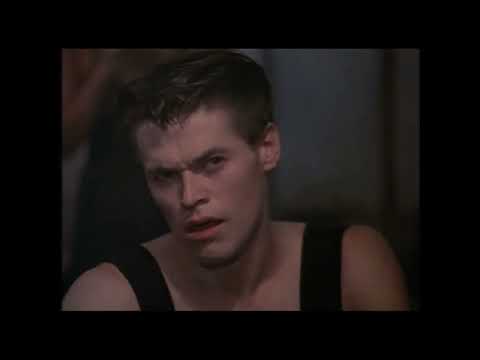
- Yes, that’s a very young Willem Dafoe as Raven, glowering in leather while The Blasters hammer away. :contentReference[oaicite:25]{index=25}
- Ry Cooder’s relationship with Hill spanned several films; his cues here are frequently sought by score collectors. :contentReference[oaicite:26]{index=26}
Technical Info
- Title: Streets of Fire — Music From the Original Motion Picture Soundtrack
- Year: 1984 (film & album)
- Type: Songs compilation with additional score by Ry Cooder
- Key writers/performers: Fire Inc. (Jim Steinman songs); Dan Hartman; The Blasters; The Fixx; Marilyn Martin; Face to Face (as the Attackers); Winston Ford (vocal for the Sorels in-film) :contentReference[oaicite:27]{index=27}
- Label: MCA/UMG — multiple pressings; streaming available (UMG) :contentReference[oaicite:28]{index=28}
- Chart note: U.S. Billboard 200 peak No. 32 :contentReference[oaicite:29]{index=29}
- Signature placements: “Nowhere Fast” (opening/abduction), “One Bad Stud” & “Blue Shadows” (Torchie’s), “I Can Dream About You” (Sorels performance), “Tonight Is What It Means to Be Young” (finale) :contentReference[oaicite:30]{index=30}
Questions & Answers
- Is the film from 1990?
- No — it premiered in 1984. The “Rock & Roll Fable” tag is right on the poster and credits. :contentReference[oaicite:31]{index=31}
- Who actually sings Ellen Aim’s big numbers?
- On the album they’re performed by Fire Inc. (a Steinman-led studio group). On screen, Diane Lane lip-syncs to those studio vocals. :contentReference[oaicite:32]{index=32}
- Why is “I Can Dream About You” different in the movie?
- The Sorels lip-sync to Winston Ford’s vocal in-film, but the soundtrack features Dan Hartman’s version (which became the hit single). :contentReference[oaicite:33]{index=33}
- Who’s the bar band tearing up Torchie’s?
- The Blasters — performing diegetically (“One Bad Stud,” “Blue Shadows”). :contentReference[oaicite:34]{index=34}
- What kind of score sits between the songs?
- Ry Cooder’s rootsy electric-guitar instrumentals — smoky slides and muscular grooves. :contentReference[oaicite:35]{index=35}
Key Contributors
| Entity | Relation |
|---|---|
| Walter Hill | Director — conceived the “rock & roll fable” tone |
| Jim Steinman | Songwriter/producer — Fire Inc. showpieces |
| Fire Inc. (Laurie Sargent, Holly Sherwood et al.) | Studio vocalists — “Nowhere Fast,” “Tonight Is What It Means to Be Young” |
| Dan Hartman | Artist — “I Can Dream About You” (album single) |
| Winston Ford / The Sorels | Vocal (in-film) / on-screen performers of “I Can Dream About You” |
| The Blasters | On-screen band — “One Bad Stud,” “Blue Shadows” |
| The Fixx | Artists — “Deeper and Deeper” |
| Marilyn Martin (song by Stevie Nicks) | Artist — “Sorcerer” |
| Ry Cooder | Composer/performer — instrumental cues |
| MCA Records / UMG | Label — original album & current catalog |
Sources: Wikipedia — film & soundtrack pages; Discogs master/release entries; IMDb soundtrack list; UMG/streaming listings for The Blasters; official/archival trailers and performance uploads.
November, 27th 2025
A-Z Lyrics Universe
Cynthia Erivo Popular
Ariana Grande Horsepower
Post Malone Ain't No Love in Oklahoma
Luke Combs Good Riddance (Time of Your Life)
Green Day Bye Bye Bye
*NSYNC You're the One That I Wan
John Travolta & Olivia Newton-John I Always Wanted a Brother
Braelyn Rankins, Theo Somolu, Kelvin Harrison Jr. and Aaron Pierre The Power of Love
Frankie Goes to Hollywood Beyond
Auli’i Cravalho feat. Rachel House MORE ›