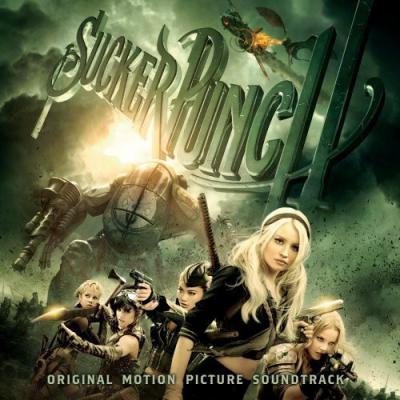
"Sucker Punch" Soundtrack Lyrics
Movie • 2011
Track Listing
Emily Browning
Bjork
Jefferson Airplane
Queen w
Skunk Anansie
Carla Azar
Yoav feat. Emily Browning
Emily Browning
Carla Gugino feat. Oscar Isaac
Cliff Lin
Silversun Pickups
Led Zeppelin
Lords of Acid
"Sucker Punch (Original Motion Picture Soundtrack)" – Album Guide to Tracks and Key Scenes
Overview
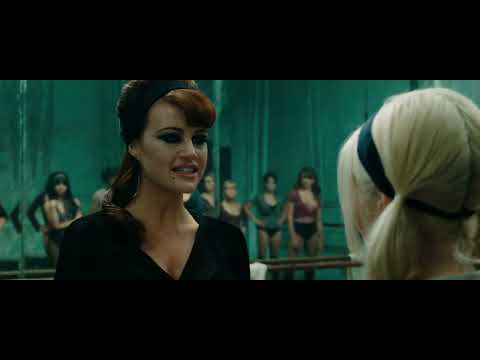
What if a soundtrack did the narrating — not dialogue? Sucker Punch answers with covers that talk back to their originals and a production that braids songs into the action like score. Every “mission” in Baby Doll’s layered imagination arrives with a stylized track: Björk remixed into war drums, Jefferson Airplane reimagined as a stealth op, Queen mashed into a swagger cue. The result is a concept-album-as-action-movie where lyrics and female voices carry plot and point of view.
The album (WaterTower Music, 2011) leans on new recordings: Emily Browning sings three tracks; Carla Gugino and Oscar Isaac duet on Roxy Music; Emilíana Torrini, Skunk Anansie, Alison Mosshart with Carla Azar, and Yoav round out the lineup. Producers Marius de Vries and Tyler Bates fuse orchestral heft with industrial pulse so cues can slam straight into slow-motion choreography and back out again. Phases, and what they mean: trip-hop & industrial weight — dissociation and fight-state focus; psychedelic ’60s rewritten — infiltration and misdirection; classic-rock bravado — enemy-within swagger; torch-song finale — the story’s tragic coda.
How It Was Made
Zack Snyder steered toward covers deliberately: familiar songs plus new voices = built-in “baggage” the film can redirect. Tyler Bates and Marius de Vries produced and integrated the songs with score textures so seamlessly that transitions blur — snares and brass from one set-piece bleed into the next needle-drop. The official album released March 22, 2011 on WaterTower, nine tracks curated to mirror the film’s key beats (with additional score material issued separately).
Vocals were cut close to set: Browning’s performances were tracked around production, then layered with de Vries/Bates’s maximalist arrangements. Elsewhere, Björk’s “Army of Me” was re-forged with Skunk Anansie; Queen’s mash-up invited Armageddon aka Geddy to rap over “We Will Rock You.”
Tracks & Scenes
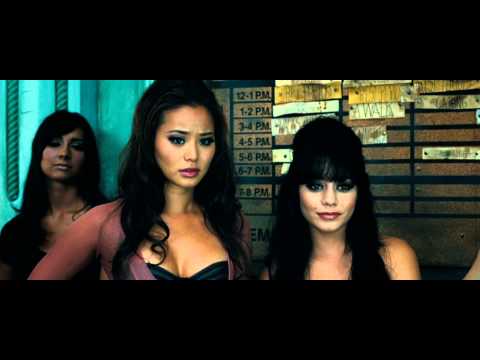
Major cues and where they land. (Diegetic = heard by characters.) Time cues are approximate, based on home-release timings.
“Sweet Dreams (Are Made of This)” (Emily Browning)
- Where it plays:
- Opening sequence through Baby Doll’s institutionalization. The cover starts over the prologue at home, follows the stepfather’s scheme, and carries into the asylum corridor — one continuous, stylized thread. Non-diegetic.
- Why it matters:
- States the film’s grammar: a famous song, slowed and re-voiced to speak Baby Doll’s POV — vulnerability over iron gears.
“Army of Me (Sucker Punch Remix)” (Björk feat. Skunk Anansie)
- Where it plays:
- Baby Doll’s first forced “dance” transitions to the snow-temple fantasy; she battles the three giant samurai and returns to the brothel stage. Non-diegetic in the fantasy; echoes again over credits.
- Why it matters:
- The album’s thesis of agency — female voice over siege-engine percussion; each drum hit equals a strike taken back.
“White Rabbit” (Emilíana Torrini)
- Where it plays:
- “Map mission”/World War set-piece: Baby Doll dances to distract Blue while Sweet Pea and the crew infiltrate the office; in the fantasy layer they storm a trenches-and-zeppelins battlefield. Non-diegetic in fantasy; diegetic dance in the brothel frame.
- Why it matters:
- Psychedelic command → covert op. Torrini’s hushed vocal and expanded orchestration turn the classic into stealth propulsion.
“Search and Destroy” (Skunk Anansie)
- Where it plays:
- “Fire mission”/dragon heist: Amber pilots the B-25 toward a fortress while the team dives into the lair to grab the fire — a glowing crystal. Non-diegetic, cut to battlefield choreography.
- Why it matters:
- The Stooges as war-anthem, re-voiced by Skin; chaos honed into purpose as the scale goes full fantasy.
“Tomorrow Never Knows” (Alison Mosshart & Carla Azar)
- Where it plays:
- “Knife mission”/train set-piece: a rolling assault where the team has to disarm a bomb while mechs close in. Non-diegetic; phased vocals match the plan’s unraveling.
- Why it matters:
- Lennon’s dissolve becomes tactical hypnosis — a mantra for staying calm as timelines fold.
“Where Is My Mind?” (Yoav feat. Emily Browning)
- Where it plays:
- Therapy-room montage that inventories the four items; intercut with Baby Doll and Sweet Pea’s negotiations. Non-diegetic.
- Why it matters:
- Pairs a male lead with Browning’s ghost harmony — a literal duet of fractured selves.
“I Want It All / We Will Rock You (Mash-Up)” (Queen with Armageddon aka Geddy)
- Where it plays:
- Entrance of the “Mob” boss client; Amber secures the lighter. In the club-frame it reads as swaggering source, then hard-cuts to the mission layer. Semi-diegetic → non-diegetic.
- Why it matters:
- Brings blunt bravado to the brothel stage and weaponizes the stomp-clap into a timing device for the heist.
“Asleep” (Emily Browning)
- Where it plays:
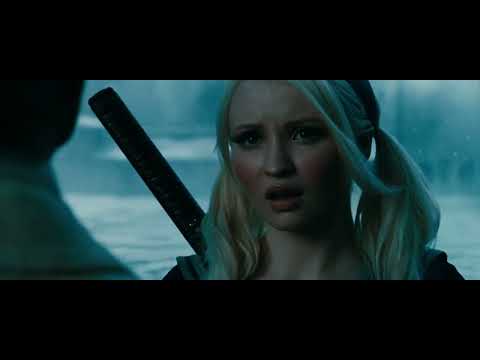
- Bathroom breakdown after a brutal setback; Baby Doll finally cries. Non-diegetic, intimate close-mic vocal.
- Why it matters:
- The Smiths through a whisper — grief without spectacle, the film’s smallest-scale release.
“Love Is the Drug” (Carla Gugino & Oscar Isaac)
- Where it plays:
- Stage-number duet in the Extended Cut and over the end credits coda: Blue and Gorski perform while the dancers flank them in full revue. Diegetic (stage) then non-diegetic (credits).
- Why it matters:
- Turns the villain’s grin into cabaret; the movie briefly becomes the musical its visuals always hinted at.
Classical source: “Requiem in D minor, K.626 — Introit” (Mozart)
- Where it plays:
- On the cook’s radio right before a violent attack on Rocket — the needle-drop everyone hears. Diegetic.
- Why it matters:
- Cold irony: sacred music over predation; one of the film’s starkest juxtapositions. (Not on the OST album.)
Notes & Trivia
- The official album (9 tracks) released March 22, 2011 on WaterTower Music and hit #1 on the U.S. Top Soundtracks chart; it peaked at #22 on the Billboard 200.
- Emily Browning performs three songs: “Sweet Dreams,” “Asleep,” and harmonies on “Where Is My Mind?”
- “White Rabbit” is sung by Emilíana Torrini; its arrangement swells with a large choir on the melody.
- “Army of Me (Sucker Punch Remix)” features Skunk Anansie and retools Björk’s track into a mission march.
- The Comic-Con teaser famously used Led Zeppelin’s “When the Levee Breaks” — a trailer-only choice, not on the album.
Music–Story Links
Each cover flips authorial power: women re-voice male-authored rock (“Search and Destroy,” “Tomorrow Never Knows”) during fights about bodily autonomy. In practice, the film treats a “dance” prompt as a portal cue — the downbeat is an edit. That’s why the Queen mash-up doesn’t just swagger; it keeps time for the lighter grab. And when the fantasy collapses, Browning’s “Asleep” lowers the ceiling so consequences can finally be felt at human scale.
Reception & Quotes
Critics were split on the film but often praised the album’s coherence and performances — especially Browning’s vocals and the Björk/Skunk Anansie rework. The soundtrack charted internationally and topped U.S. Soundtracks.
“Browning delivers the soundtrack’s most affecting performances… elaborate, sometimes overwrought, but true to the film’s aesthetic.” — AllMusic
“A rush of… female power” with “dark, eerie and violent soundscapes.” — Billboard
“Magnificently re-versions ‘Army of Me’; ‘Love Is The Drug’ is exuberant.” — Empire
Interesting Facts
- Two pillars: songs album + a separate (longer) score release complete the picture.
- Mash-up mechanics: “I Want It All / We Will Rock You” overlays rap verses by Armageddon aka Geddy on Queen’s stomp.
- Trailer lore: the early teaser’s Led Zeppelin cue never appears on the commercial release.
- Chart story: after debuting at #36 on the Billboard 200, the album climbed to #22 and hit #1 on Top Soundtracks in week two.
- Choir as riff: “White Rabbit” uses a 150-voice choir to mirror the verse melody.
- Diegetic switch: the Mozart Requiem moment is a rare scene where the music is literally on in-world — a pointed contrast to the stylized covers.
Technical Info
- Title: Sucker Punch (Original Motion Picture Soundtrack)
- Year: 2011 (album released March 22, 2011)
- Type: Feature film — action-fantasy
- Producers (album): Marius de Vries; Tyler Bates; Zack Snyder; Deborah Snyder
- Label: WaterTower Music (Warner Bros.)
- Music supervision (film): Tyler Bates (credited in music department; also theme composer/producer)
- Notable placements (selected): “Sweet Dreams (Are Made of This)” (Emily Browning); “Army of Me (Sucker Punch Remix)” (Björk feat. Skunk Anansie); “White Rabbit” (Emilíana Torrini); “I Want It All / We Will Rock You (Mash-Up)” (Queen with Armageddon aka Geddy); “Search and Destroy” (Skunk Anansie); “Tomorrow Never Knows” (Alison Mosshart & Carla Azar); “Where Is My Mind?” (Yoav feat. Emily Browning); “Asleep” (Emily Browning); “Love Is the Drug” (Carla Gugino & Oscar Isaac).
- Availability: Digital/streaming worldwide; physical editions (CD/vinyl) via WaterTower Music.
- Charts: US Top Soundtracks #1; US Billboard 200 peak #22; multiple international chart entries.
Questions & Answers
- Who sings on the album?
- Emily Browning appears on three tracks; other featured voices include Björk with Skunk Anansie, Emilíana Torrini, Alison Mosshart & Carla Azar, Yoav, and a Carla Gugino/Oscar Isaac duet.
- Which song plays over the opening?
- Emily Browning’s cover of “Sweet Dreams (Are Made of This).”
- What track scores the first samurai battle?
- Björk’s “Army of Me (Sucker Punch Remix)” with Skunk Anansie.
- Is the big musical number in the theatrical cut?
- No — the full “Love Is the Drug” stage sequence is in the Extended Cut and reprises over the credits.
- What’s the Queen mash-up used for?
- It introduces the Mob boss in the club frame and times the lighter grab, then slams into the mission layer.
Key Contributors
| Entity | Relation |
|---|---|
| Zack Snyder | directed the film; co-produced the album |
| Deborah Snyder | album co-producer |
| Marius de Vries | album producer; mash-up producer; arrangements |
| Tyler Bates | album producer; theme composer; music supervisor credit in music dept. |
| Emily Browning | lead vocal performances on multiple tracks |
| Björk & Skunk Anansie | “Army of Me (Sucker Punch Remix)” |
| Emilíana Torrini | “White Rabbit” lead vocal |
| Queen with Armageddon aka Geddy | “I Want It All / We Will Rock You (Mash-Up)” |
| Alison Mosshart & Carla Azar | “Tomorrow Never Knows” cover |
| Yoav feat. Emily Browning | “Where Is My Mind?” |
| Carla Gugino & Oscar Isaac | “Love Is the Drug” duet (Extended Cut/stage) |
| WaterTower Music | label/release |
| Warner Bros. Pictures | film studio/distributor |
Sources: Label/tracklist pages; soundtrack reviews; scene-by-scene song indexes; chart and release data; official trailers and artist pages.
November, 27th 2025
A-Z Lyrics Universe
Cynthia Erivo Popular
Ariana Grande Horsepower
Post Malone Ain't No Love in Oklahoma
Luke Combs Good Riddance (Time of Your Life)
Green Day Bye Bye Bye
*NSYNC You're the One That I Wan
John Travolta & Olivia Newton-John I Always Wanted a Brother
Braelyn Rankins, Theo Somolu, Kelvin Harrison Jr. and Aaron Pierre The Power of Love
Frankie Goes to Hollywood Beyond
Auli’i Cravalho feat. Rachel House MORE ›