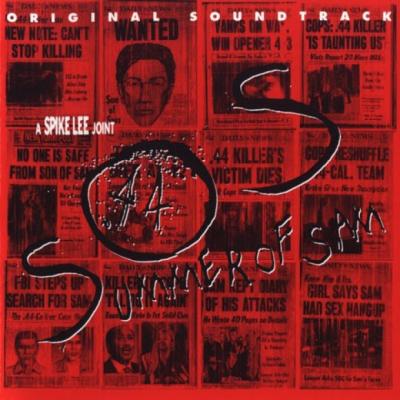
"Summer of Sam" Soundtrack Lyrics
Movie • 1999
Track Listing
Marvin Gaye
ABBA
The Who
Roy Ayers
Chic
Grace Jones
First Choice
Elvin Bishop
Machine
Emotions
Peter Brown f/ Betty Wright
Thelma Houston
"Summer of Sam (Original Motion Picture Soundtrack)" – Album Guide to Tracks and Key Scenes
Overview
How do you score a city sweating through fear, sex, and blackout? Spike Lee’s Summer of Sam (1999) answers with a jukebox of 1977 — disco floor-burners, AM-radio soul, and a punk pulse — plus Terence Blanchard’s tense, moody score. The soundtrack moves from Bronx stoops to CBGB in a blink: ABBA and The Emotions light up dance floors, while The Who’s “Baba O’Riley” detonates a generational howl over downtown scenes. It’s needle-drop realism — songs you’d actually hear in that summer’s cars, bars, and basements.
The album gathers era-defining cuts (“Got to Give It Up,” “Dancing Queen,” “Best of My Love”) alongside New York–specific textures (Machine’s “There But for the Grace of God Go I,” Grace Jones’ “La Vie en rose”). Style phases map to story: disco & Philly soul — desire, distraction, denial; arena/classic rock — the rush of identity and rage; punk textures — Ritchie’s reinvention; jazz-inflected score — the dread between headlines.
How It Was Made
Lee set the film in the Bronx summer of 1977 and built a needle-drop spine that plays like a neighborhood radio dial. Music clearances leaned on widely licensed hits — ABBA, Marvin Gaye, Chic, The Emotions — along with scene-anchoring choices like The Who and Grace Jones. The cast album arrived in late June 1999, just ahead of the U.S. release, while Blanchard’s score appears within the film rather than on a separate retail disc.
Location authenticity mattered: the production shot at CBGB and featured a contemporary NYC punk band onstage; the disco sequences were choreographed to specific songs to lock the camera and edit to period grooves.
Tracks & Scenes
Key placements with scene context. (Diegetic = heard by characters.)
“There But for the Grace of God Go I” (Machine)
- Where it plays:
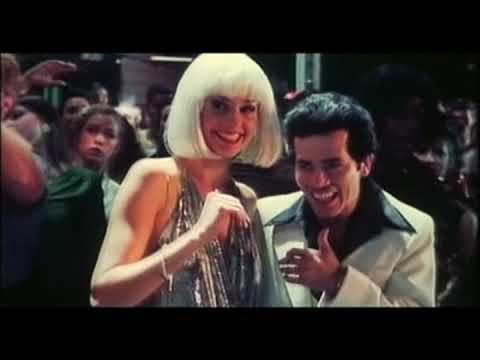
- First big dance-floor sequence early in the film — Vinny (John Leguizamo) and Dionna (Mira Sorvino) locked in a sweaty, flashing-lights grind; the club world feels invincible. Diegetic (club). Timestamp: early Act I.
- Why it matters:
- Disco as denial. The lyric’s class-and-morality bite hides inside a room trying not to think about the murders outside.
“Baba O’Riley” (The Who)
- Where it plays:
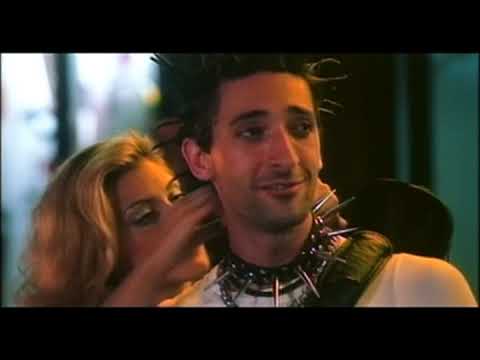
- A downtown release-valve sequence tied to Ritchie’s punk turn — a charged montage that flips from neighborhood claustrophobia to CBGB freedom. Non-diegetic leading into venue sound.
- Why it matters:
- Adolescent wasteland, literally. The track becomes a thesis for youth rage and reinvention in a city on edge.
“Got to Give It Up (Pt. 1)” (Marvin Gaye)
- Where it plays:
- Bar-to-house-party connective tissue; background chatter melts into falsetto and glass clinks. Diegetic bed drifting into non-diegetic cover.
- Why it matters:
- The year’s definitive groove — bodies sync even as headlines intrude.
“Dancing Queen” (ABBA)
- Where it plays:
- Bronx dance floor with friends turning fear into choreography; mirror ball, camera sweeps, happy hysteria. Diegetic.
- Why it matters:
- Joy as armor — the ultimate summer-of-’77 singalong buying 3 minutes of relief.
“Everybody Dance” (Chic)
- Where it plays:
- Club cutaway interludes interlaced with sex-and-sleaze montage energy. Diegetic.
- Why it matters:
- Precision rhythm section = irresistible momentum; Lee uses it like a camera dolly.
“Best of My Love” (The Emotions)
- Where it plays:
- Street-party and stoop moments; neighborhood women harmonize along. Diegetic bleed.
- Why it matters:
- Philly soul as community glue — warmth cut against citywide paranoia.
“La Vie en rose” (Grace Jones)
- Where it plays:
- Later-night club scene, a luxe mirage amid sweat-and-smoke rooms. Diegetic.
- Why it matters:
- Jones’ chic reinvention of Piaf reframes longing as pose — desire curdled into fashion.
“Don’t Leave Me This Way” (Thelma Houston)
- Where it plays:
- Break-up pivot: Dionna packs to leave Vinny; the lyric literalizes the wound as the scene cross-cuts to the neighborhood. Non-diegetic.
- Why it matters:
- On-the-nose by design — the movie lets a radio classic say what its characters can’t.
“Fooled Around and Fell in Love” (Elvin Bishop)
- Where it plays:
- Low-lit aftermath scene where bravado drops; radio-on-in-the-room intimacy. Diegetic.
- Why it matters:
- Soft-rock confession undercuts Vinny’s swagger — consequences hum in three chords.
“Running Away” (Roy Ayers)
- Where it plays:
- Transit/bridge montage between boroughs as rumors spread; city lights blur. Non-diegetic.
- Why it matters:
- Title as commentary: the neighborhood keeps trying; the terror doesn’t.
Notes & Trivia
- The retail soundtrack gathers era staples: Marvin Gaye, ABBA, The Who, Roy Ayers, Chic, Grace Jones, First Choice, Elvin Bishop, Machine, The Emotions, Peter Brown, Thelma Houston.
- The album’s street date landed the week of June 29, 1999; the film opened in the U.S. on July 2, 1999.
- Some inclusions are anachronistic to the summer of ’77 charts (notably Machine’s 1979 single) — Lee uses vibe over strict calendar fidelity.
- The production shot at the real CBGB; the club performance in the film uses an actual NYC punk band onstage.
- Terence Blanchard’s score underscores fear, blackout tension, and investigation beats between needle-drops.
Music–Story Links
Disco scenes aren’t throwaways; they’re survival rituals. When Machine or Chic hits, characters try to out-dance the killer’s shadow. Ritchie’s arc flips to downtown: “Baba O’Riley” widens the frame, turning punk posture into a moral choice about who he is when the neighborhood needs a scapegoat. Ballads (“Fooled Around…”) and soul classics (“Best of My Love”) expose the homes and friendships the panic threatens to break.
Reception & Quotes
Reviews of the album spotlighted the breadth — AM gold to punk-adjacent roar — and how cleanly it recreates the period vibe even when the cueing runs literal.
“From Elvin Bishop to The Who to Grace Jones, the set recreates the mood and still works as a compulsive, if scattershot, listen.” — Contemporary capsule review
“The ‘Baba O’Riley’ sequence shows how Lee fuses music and image to compress history into a single scene.” — Film analysis
Interesting Facts
- Real venues: CBGB appears on-screen; the production used the actual club.
- Album length: just under 57 minutes on the commercial CD.
- Label lineage: 1999 U.S. CD release with multiple later pressings; retail listings confirm broad, multi-label licensing.
- Dance-floor thesis: the Machine cue has become the go-to clip when fans share the movie’s disco energy online.
- Score credit: Terence Blanchard’s name sits alongside Lee’s in multiple 1990s collaborations; here he provides the suspense glue.
Technical Info
- Title: Summer of Sam — Original Soundtrack
- Year: 1999 (album release late June 1999; U.S. theatrical July 2, 1999)
- Type: Feature film — crime/thriller/drama
- Composer (score): Terence Blanchard
- Labels: Various (multi-licensor compilation; U.S. retail CD 1999)
- Selected notable placements: “There But for the Grace of God Go I” (Machine); “Baba O’Riley” (The Who); “Got to Give It Up” (Marvin Gaye); “Dancing Queen” (ABBA); “Everybody Dance” (Chic); “La Vie en rose” (Grace Jones); “Best of My Love” (The Emotions); “Don’t Leave Me This Way” (Thelma Houston); “Fooled Around and Fell in Love” (Elvin Bishop); “Running Away” (Roy Ayers).
- Availability: Original CD widely circulated; songs are available via artist catalogs on major streamers.
Questions & Answers
- Is there an official soundtrack album?
- Yes — a 1999 multi-artist compilation released the week of June 29, 1999.
- Who composed the score?
- Terence Blanchard; his cues sit between the many era songs.
- Which song drives the big early dance scene?
- Machine’s “There But for the Grace of God Go I.”
- What track underscores the punk/CBGB momentum?
- The Who’s “Baba O’Riley.”
- Does the movie use literal lyric cues?
- At times — for example, Thelma Houston’s “Don’t Leave Me This Way” plays as a breakup unfolds.
Key Contributors
| Entity | Relation |
|---|---|
| Spike Lee | director & co-writer; built a needle-drop heavy soundscape |
| Terence Blanchard | composer — original score |
| Marvin Gaye | “Got to Give It Up” — club/party source |
| ABBA | “Dancing Queen” — disco floor sequence |
| The Who | “Baba O’Riley” — youth/CBGB energy cue |
| Machine | “There But for the Grace of God Go I” — first major dance scene |
| Grace Jones | “La Vie en rose” — stylish club moment |
| The Emotions | “Best of My Love” — neighborhood warmth |
| First Choice; Chic; Elvin Bishop; Peter Brown; Thelma Houston | featured on the official soundtrack |
| 40 Acres and a Mule Filmworks / Touchstone Pictures | production & distribution |
Sources: official trailer archives; album listings (release date, runtime, track lineup); Discogs master/release pages; IMDb Soundtracks credits; Wikipedia film/soundtrack entries; contemporary capsule reviews; scene clips and analysis pieces highlighting specific placements.
November, 27th 2025
A-Z Lyrics Universe
Cynthia Erivo Popular
Ariana Grande Horsepower
Post Malone Ain't No Love in Oklahoma
Luke Combs Good Riddance (Time of Your Life)
Green Day Bye Bye Bye
*NSYNC You're the One That I Wan
John Travolta & Olivia Newton-John I Always Wanted a Brother
Braelyn Rankins, Theo Somolu, Kelvin Harrison Jr. and Aaron Pierre The Power of Love
Frankie Goes to Hollywood Beyond
Auli’i Cravalho feat. Rachel House MORE ›