
"Summer Stock" Soundtrack Lyrics
Musical • 2003
Track Listing
MGM Studio Orchestra
Gene Kelly
Barnyard Animals
Ray Collins
Judy Garland
Judy Garland
Gene Kelly
Gene Kelly
"Summer Stock (Original Motion Picture Soundtrack)" – Album Guide to Tracks and Key Scenes
Overview
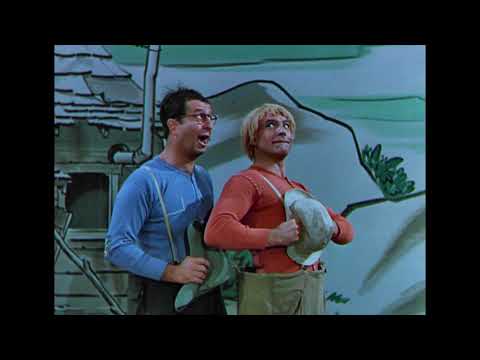
What happens when a Connecticut farm turns into a rehearsal hall? Summer Stock answers with pure MGM muscle — Judy Garland’s easy warmth, Gene Kelly’s athletic charm, and a sheaf of studio-crafted tunes that move from hoe-down to hot jazz without grinding the story’s gears. The soundtrack isn’t just nostalgia; it’s a how-to manual for folding songs into character beats and choreography inside a barn-turned-theatre.
On record, the album flows like a show within the show: radio-friendly ballads (“Friendly Star”), novelty gloss (“Dig-Dig-Dig Dig for Your Dinner”), a contra-dance sequence that flips to swing (“Portland Fancy” → “You Wonderful You”), and the iconic closer that lives beyond the film (“Get Happy”). Style phases map neatly to meaning — rural fiddle and pep for communal resolve, Broadway brass for backstage hustle, torch shimmer for Jane’s inner voice, and jazzy snap when the troupe finally finds its groove.
How It Was Made
MGM packaged the film’s numbers as a 1950 soundtrack, originally issued as a set of four 10-inch 78s and a 10-inch LP. Vocals by Garland, Kelly, Gloria DeHaven, and Phil Silvers sit atop plush studio orchestrations (Conrad Salinger; Skip Martin). The album earned an “excellent” review in Billboard on release — a rare case where a studio musical’s record stood tall on its own.
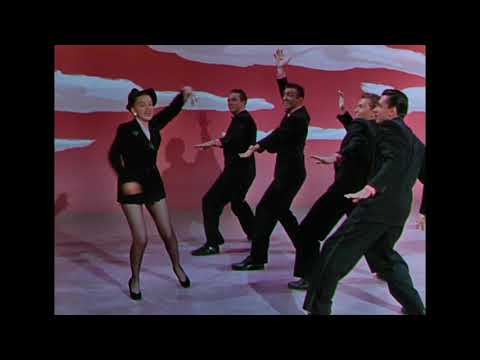
Production note fans love: the now-legendary “Get Happy” was staged and shot late in the schedule to give Garland a knockout payoff — a minimalist set, tux jacket, fedora, and that buoyant choir. On the page and on wax, it functions as a second curtain call.
Tracks & Scenes
Signature cues and where they land in the film. (Diegetic = heard by characters.)
“If You Feel Like Singing, Sing” (Judy Garland)
- Where it plays:
- Early sequence bridging chores to rehearsal jitters; Jane (Garland) gives herself permission to step into the troupe’s orbit. Non-diegetic leading into rehearsal ambience.
- Why it matters:
- It’s a mission statement — sing first, worry later — and a tonal key for Garland’s generous, no-fuss presence.
“(Howdy Neighbor) Happy Harvest” (Garland & company)
- Where it plays:
- Farm-to-stage montage that welds hay bales to dance rails. Diegetic within the “show they’re building,” then spills outward.
- Why it matters:
- Country-sunshine pep rebrands labor as choreography — the troupe earns its keep and its groove.
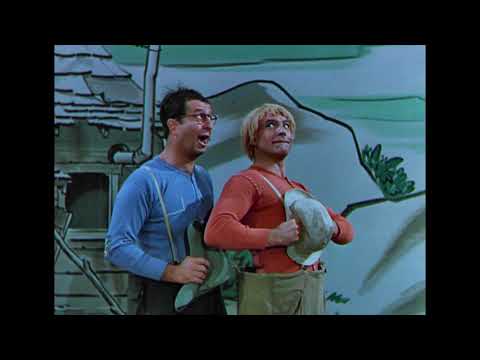
“Dig-Dig-Dig Dig for Your Dinner” (Gene Kelly, Phil Silvers & company)
- Where it plays:
- Comic work-song set piece; gags fly while rhythm sections punch the downbeat. Diegetic performance number.
- Why it matters:
- Nonsense lyric, razor timing — a reminder that MGM could make a meal out of patter and percussion.
“Portland Fancy” → “You Wonderful You (dance)” (Kelly, Garland & company)
- Where it plays:
- Historical-society dance that pivots from a square set to a jazz swirl when Kelly and Garland take the floor. Starts diegetic (fiddle/contra-dance), blooms into a stylized duet.
- Why it matters:
- The movie’s thesis in miniature: tradition bends into show-biz swing; chemistry becomes choreography.
“Friendly Star” (Judy Garland)
- Where it plays:
- Jane’s confidences as responsibilities crowd in. Non-diegetic ballad, staged like an inner monologue.
- Why it matters:
- Classic Garland — luminous, conversational phrasing, the orchestra breathing with her.
“You Wonderful You” (Kelly & Garland)
- Where it plays:
- Rehearsal-to-romance beats stitched by an easy, dancey refrain; reprises tie act threads together. Semi-diegetic rehearsal that becomes a full number.
- Why it matters:
- A Kelly specialty: charm without grandstanding, rhythm turning into story.
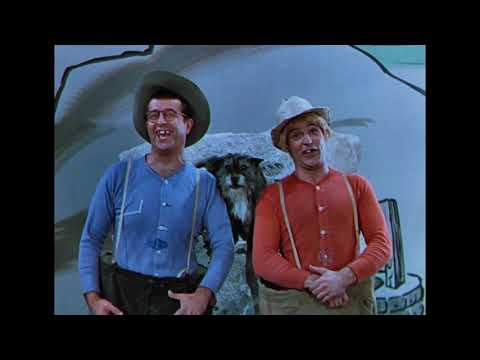
“Heavenly Music” (Kelly, Phil Silvers — with dogs!)
- Where it plays:
- Comic interlude where props and pups become percussion. Diegetic gag number.
- Why it matters:
- Shows the film’s appetite for play — sound effects as swing band.
“Get Happy” (Judy Garland & chorus)
- Where it plays:
- Penultimate/“11 o’clock” moment within the on-barnstage show; clean white cyc, tux jacket, fedora, and that choir. Diegetic performance that reads as a second finale.
- Why it matters:
- Capital-S Standard status. The arrangement’s snap and Garland’s buoyancy turn payoff into myth.
Notes & Trivia
- The original soundtrack shipped in 1950 as a 10-inch LP and as four 78-rpm discs on MGM Records; Billboard rated it “excellent.”
- Songwriting: most numbers by Harry Warren (music) and Mack Gordon (lyrics); “Get Happy” is Harold Arlen/Ted Koehler; “You Wonderful You” adds Saul Chaplin/Jack Brooks.
- Conrad Salinger’s orchestrations give the barn a Broadway-sized brass & string glow.
- The trailer’s barn-to-stage promise is literally fulfilled: the film’s finale reprises “Happy Harvest” with the troupe performing in the converted space.
- Collectors note multiple later reissues/compilations; some digital releases bundle alternates and score cues.
Music–Story Links
Rust meets razzmatazz: country-fiddle frames Jane’s duty-first world; swing flips that duty into joy. When Jane starts singing “If You Feel Like Singing, Sing,” the movie stops apologizing for its own premise. “Portland Fancy” lets community tradition hand the mic to show-biz sparkle, and “Friendly Star” pauses the machinery to let Garland breathe. By the time “Get Happy” lands, the farm is a theatre, the troupe a community, and the album a keepsake of that transformation.
Reception & Quotes
The movie drew warm period notices, and the record earned praise for star vocals and studio sheen. Decades later, “Get Happy” sits on AFI’s songs list and remains the album’s evergreen calling card.
“Garland… ‘Get Happy’ — looking and performing her best.” — Contemporary newspaper review excerpts
“Excellent… Garland and Kelly sell their numbers with show-wise timing.” — Billboard on the album, 1950
Interesting Facts
- Original formats: 10-inch LP (MGM E-519) and a 4-disc 78 set — both 1950.
- Reissue life: multiple CD/digital appearances; modern listings often group film takes plus alternates.
- Legacy: “Get Happy” became a pop-culture template — endlessly referenced and quoted.
- Dance authorship: Nick Castle staged several numbers; Kelly choreographed key duets and the contra-dance pivot.
- Goodspeed revival lineage: a stage adaptation (book by Cheri Steinkellner) premiered in 2023, retaining core songs from the film.
Technical Info
- Title: Summer Stock (Original Motion Picture Soundtrack)
- Year (record/original issue): 1950 (later reissues on CD/digital; wide catalog presence)
- Type: Film musical — soundtrack album
- Primary vocal artists: Judy Garland, Gene Kelly, Gloria DeHaven, Phil Silvers
- Key songs (selection): “If You Feel Like Singing, Sing”; “Happy Harvest”; “Dig-Dig-Dig Dig for Your Dinner”; “Portland Fancy”/ “You Wonderful You”; “Friendly Star”; “Heavenly Music”; “Get Happy.”
- Music/orchestrations: Songs by Harry Warren & Mack Gordon (plus noted exceptions); orchestrations by Conrad Salinger and Skip Martin
- Label (original): MGM Records (10-inch LP/78 set)
- Availability: Modern digital/streaming editions; archival LPs/78s and subsequent CD issues circulate among collectors.
- Context on “2003”: No official 2003 cast album exists; some home-video/compilation releases date from the early-2000s, but the canonical soundtrack traces to 1950.
Questions & Answers
- Is there a true “cast recording” of the musical?
- Yes — the 1950 film’s performers (Garland, Kelly, DeHaven, Silvers) appear on the MGM soundtrack. Later reissues expand or remaster the material.
- Which number is the album’s signature?
- “Get Happy” — historically and culturally the track most associated with the title.
- Who handled the orchestrations?
- Conrad Salinger and Skip Martin — MGM stalwarts whose brass/strings give the barn Broadway scale.
- Was there a stage musical version?
- Yes. A new stage adaptation premiered at Goodspeed Opera House in 2023, retaining core songs like “Get Happy.”
- Where can I stream the soundtrack today?
- Modern digital editions (often under “Original Motion Picture Soundtrack”) are available on major platforms; content varies by release.
Key Contributors
| Entity | Relation |
|---|---|
| Judy Garland | principal vocalist/actor — “Get Happy,” “Friendly Star,” more |
| Gene Kelly | principal vocalist/dancer — “You Wonderful You,” “Dig-Dig-Dig Dig for Your Dinner” |
| Gloria DeHaven | featured vocalist — “Mem’ry Island” |
| Phil Silvers | comic vocals — “Dig-Dig-Dig…,” “Heavenly Music” |
| Harry Warren / Mack Gordon | songwriters (majority of score) |
| Harold Arlen / Ted Koehler | songwriters — “Get Happy” |
| Conrad Salinger; Skip Martin | orchestrations |
| MGM Records | original soundtrack release (LP & 78 set, 1950) |
| Goodspeed Musicals | 2023 stage adaptation premiere (book by Cheri Steinkellner) |
Sources: Wikipedia film & soundtrack entries (songs, credits, release formats); MGM-era discography resources (Judy Garland Online Discography); contemporary Billboard review of the album; Goodspeed Musicals site and press (2023 stage adaptation); modern streaming album listings; official/archival trailers.
November, 27th 2025
A-Z Lyrics Universe
Cynthia Erivo Popular
Ariana Grande Horsepower
Post Malone Ain't No Love in Oklahoma
Luke Combs Good Riddance (Time of Your Life)
Green Day Bye Bye Bye
*NSYNC You're the One That I Wan
John Travolta & Olivia Newton-John I Always Wanted a Brother
Braelyn Rankins, Theo Somolu, Kelvin Harrison Jr. and Aaron Pierre The Power of Love
Frankie Goes to Hollywood Beyond
Auli’i Cravalho feat. Rachel House MORE ›