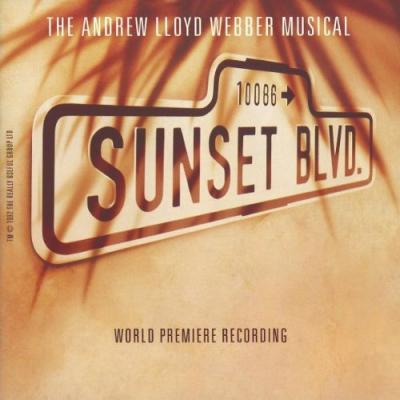
"Sunset Boulevard" Soundtrack Lyrics
Musical • 1996
Track Listing
“Sunset Boulevard (Musical) — 1996 Era Recordings & Productions” – Album Guide to Tracks and Key Scenes
Overview
What happens when a movie about ruined dreams becomes a musical about the seduction of make-believe? Sunset Boulevard answers with a score that sounds like champagne and breaks like glass.
Set in late-1940s Hollywood, the show follows Norma Desmond, a silent-era icon planning a “return” that only exists in her head, and Joe Gillis, the cash-strapped writer who drifts into her mansion and under her spell. In the theater, Andrew Lloyd Webber’s writing widens the film’s noir shadows into orchestral night — swelling strings, tart brass, and torch songs that carry the aftertaste of stardom gone sour.
Why focus on 1996? It’s the year the musical globalized: a German original cast album hit shelves; the Australian production opened in Melbourne with a young Hugh Jackman; and the Canadian cast recording — led by Diahann Carroll — was newly on sale in shops. Together they fixed the show’s sound in multiple languages and accents, proof that Norma’s mansion has many front doors.
Genres & themes in phases: golden-age pastiche for Hollywood hustle; lush late-Romantic sweep for delusion and nostalgia; jazzy bustle for studio politics; brittle cabaret edges for the social mask. Translation: surface polish versus inner mess — and the orchestrations keep telling on the characters.
How It Was Made
Music by Andrew Lloyd Webber; lyrics and book by Don Black and Christopher Hampton (with additional lyrics by Amy Powers). The score evolved from early Sydmonton tryouts to the London (1993) and Broadway (1994) versions, then spread internationally. In 1995–96 the Toronto company with Diahann Carroll recorded a highlights album released commercially; a German cast album also arrived in 1996; and the Australian production launched that October, starring Debra Byrne with Hugh Jackman as Joe.
On the Canadian recording, Paul Bogaev (music director) and Jeffrey Huard (music supervisor) stewarded the album, with orchestrations credited to David Cullen and Lloyd Webber — the sound that most listeners think of as “canonical” for this period.
Tracks & Scenes
“With One Look” (Norma)
- Where it plays:
- Inside Norma’s decaying mansion soon after Joe realizes who she is. She declares her power — and delusion — that she can command the screen again “with one look.” The number lands early in Act I during Joe’s first hours at the house; the staging typically isolates Norma in a tight follow-spot, heightening the gulf between past and present.
- Why it matters:
- It’s the thesis of Norma’s fantasy and the show’s dramatic engine: the voice is glorious, the claim isn’t. We’re hooked on her glamour and warned by her denial.
“Let’s Have Lunch” (Ensemble)
- Where it plays:
- Studio commissary bustle in Hollywood as Joe hustles a meeting. Producers, agents, extras — the number is a carousel of handshakes and dead ends before the repo men spot Joe’s car. It pushes him toward the fateful detour onto Sunset.
- Why it matters:
- The caffeinated chorus paints Hollywood’s merry-go-round; the satire makes Joe’s slide into Norma’s stillness feel inevitable.
“The Greatest Star of All” (Max)
- Where it plays:
- Max introduces Norma’s myth to Joe, practically as liturgy. The music darkens and warms at once; Joe becomes an acolyte, not a tenant.
- Why it matters:
- Max is both protector and high priest. This song shows the manipulation behind the illusion.
“Girl Meets Boy” / “The Lady’s Paying” (Joe, Betty, Ensemble)
- Where it plays:
- As Joe sneaks out to collaborate with Betty on a script, their scenes intercut with Norma’s makeover spree for Joe. In many productions, the cheerful work-montage with Betty smash-cuts against a boutique romp as Joe becomes Norma’s kept man.
- Why it matters:
- Back-to-back, they score Joe’s moral drift: genuine creativity on one side, gilded captivity on the other.
“The Perfect Year” / “This Time Next Year” (Norma, Joe, Partygoers)
- Where it plays:
- New Year’s Eve at Norma’s mansion (intimate, possessive) versus a lively party with Joe’s friends. The emotional whiplash culminates in Norma’s despair and suicide attempt; the reprise choices often sting.
- Why it matters:
- Two calendars, two futures — and Joe’s worst choice is comfort.
“Every Movie’s a Circus” (Betty)
- Where it plays:
- Betty punctures Joe’s cynicism during an early studio meeting and later doubles as a motif whenever their writing gains momentum. Productions stage it as playful combat and creative spark.
- Why it matters:
- It’s the antidote to Norma’s nostalgia — a song about cinema as possibility, not shrine.
“Sunset Boulevard” (Joe)
- Where it plays:
- Joe’s acid narration of the boulevard’s dreams-for-sale. Directors often stage it as a nocturnal drive or a walk beneath neon, underscoring his complicity.
- Why it matters:
- The noir pulse of the score — Joe finally admits the town is a mirror he can’t stop looking into.
“As If We Never Said Goodbye” (Norma)
- Where it plays:
- Norma’s return to Paramount — lights, cameras, worship. She floats through the soundstage like a ghost claiming the living. The ensemble freezes around her as if time obeyed her cue.
- Why it matters:
- The show’s most devastating alchemy: sincerity and delusion in the same breath. We cheer and flinch.
“Too Much in Love to Care” (Betty & Joe)
- Where it plays:
- Late in Act II, an old prop house or quiet backlot corner becomes sanctuary for Betty and Joe. It’s both confession and goodbye in disguise.
- Why it matters:
- A last honest chord before Norma’s final scene shatters everything.
Notes & Trivia
- The Canadian highlights recording with Diahann Carroll hit stores in early 1996 on Polydor; it preserved Toronto’s cast sound for posterity.
- Germany’s 1996 original cast album (Niedernhausen) documented Helen Schneider and Uwe Kröger leading a dark, operatic take in German.
- Australia’s 1996 Melbourne premiere featured Debra Byrne and a breakout Hugh Jackman as Joe — a pre–Wolverine time capsule.
- “Every Movie’s a Circus” was a later London addition that stayed; its snark sharpened the show’s studio satire.
- The show’s orchestral sheen comes from David Cullen’s orchestrations working in tandem with Lloyd Webber — lush strings, lurking brass.
Music–Story Links
When Joe first steps into the mansion, the harmonic language “tilts” minor — Max’s “The Greatest Star of All” turns the house into a temple. Later, “With One Look” reframes Norma’s staircase as a throne; the reprise of its gesture during “As If We Never Said Goodbye” invites the audience to share her hallucination. Cut to the studio satire: “Let’s Have Lunch” and “Every Movie’s a Circus” use rhythmic bustle and patter to flatten human stakes into transactions. Finally, the ballads — “Too Much in Love to Care” and the closing sequence — open the score’s heart right before it stops. That juxtaposition is the tragedy.
Reception & Quotes
1996-era coverage framed the albums and productions as part of the show’s worldwide saturation. Toronto’s cast disc put a new star turn on record; Germany’s album showed the score’s language-flexing resilience; Australia’s splashy Regent Theatre opening signaled a big-budget export.
“Carroll’s magnificent voice is one of the main draws in the Toronto production.” Variety
“The original Australian production opened at Melbourne’s Regent Theatre in October 1996… Hugh Jackman as Joe.” Production chronology
“German production… a cast recording was released in 1996.” Production chronology
“Seven Oliviers and a later Tony-winning revival prove Norma’s mansion still casts a spell.” Recent awards coverage
Interesting Facts
- Label check: The Canadian cast album was released by Polydor/Really Useful — typical for Lloyd Webber shows of the era.
- Credits snapshot: Executive producer on the disc: Andrew Lloyd Webber; conductor: Jeffrey Huard; orchestrations: David Cullen with ALW.
- German disc: The 1996 Deutsche Originalaufnahme captured Helen Schneider and Uwe Kröger — prized by collectors for its darker vocal color.
- Australian launch: Melbourne’s Regent Theatre reopening (Oct 1996) doubled as the show’s Aussie debut.
- Song surgery: The London company revamped in 1994 added “Every Movie’s a Circus,” locking the song list used on mid-’90s recordings.
- Awards ripple: The title keeps winning: a 2024 Olivier-sweeper and a 2025 Tony-winning revival reignited catalog listening.
- Availability: The Canadian album streams widely; German 1996 CD is physical-market friendly (Discogs, used shops) and a fan staple.
Technical Info
- Title: Sunset Boulevard — 1996 era recordings & productions
- Year focus: 1996 (Canadian cast album in shops; German cast album released; Australian premiere runs 1996–97)
- Type: Stage musical cast recordings / production sound
- Composers / Book & Lyrics: Andrew Lloyd Webber — music; Don Black & Christopher Hampton — lyrics & book; additional lyrics by Amy Powers
- Key 1996 album credits (Canada): Label: Polydor/Really Useful; Exec. Producer: Andrew Lloyd Webber; Conductor: Jeffrey Huard; Music Director: Paul Bogaev; Orchestrations: David Cullen & Andrew Lloyd Webber
- Selected notable placements (stage moments): “With One Look” — Norma’s manifesto; “As If We Never Said Goodbye” — Paramount return; “Sunset Boulevard” — Joe’s noir confession; “The Perfect Year” — New Year’s rupture
- Release context: Canadian recording in commercial release by Feb 1996; German cast album 1996; Australian production opened Oct 1996
- Availability: Canadian cast album widely streaming; German 1996 CD available via collectors’ markets
Questions & Answers
- Which 1996 recording is easiest to hear today?
- The Canadian cast album with Diahann Carroll — it streams on major platforms and represents the mid-’90s orchestral sound.
- What makes the German 1996 album different?
- German lyrics and a cooler, more operatic vocal style; it’s a distinct dramatic flavor even with the same orchestrations.
- Was Hugh Jackman really in Sunset Boulevard in 1996?
- Yes — he played Joe in the Australian premiere, which opened in Melbourne in October 1996.
- Do these albums include every cue from the show?
- No. The Canadian disc is a highlights-style cast recording; incidental underscoring and transitions are trimmed for album flow.
- Which song best captures Norma’s delusion?
- “As If We Never Said Goodbye” — the music invites you to believe right as the story shows why you shouldn’t.
Key Contributors
| Entity | Relation |
|---|---|
| Andrew Lloyd Webber | Composed score; executive produced 1996 Canadian album |
| Don Black; Christopher Hampton | Lyrics & book (additional lyrics: Amy Powers) |
| Diahann Carroll | Norma Desmond — Original Canadian Cast recording (1996 release window) |
| Rex Smith | Joe Gillis — Original Canadian Cast recording |
| Jeffrey Huard | Music supervisor/conductor — Canadian cast recording |
| Paul Bogaev | Music director — Canadian cast recording |
| David Cullen; Andrew Lloyd Webber | Orchestrations (1990s versions) |
| Helen Schneider; Uwe Kröger | Leads — German production and 1996 German cast album |
| Debra Byrne; Hugh Jackman | Leads — 1996 Australian premiere in Melbourne |
Sources: Wikipedia (musical synopsis & production chronology); Playbill (Canadian album release note & credits snapshot); CastAlbums.org (credits: music director/supervisor; orchestrations); Discogs (Canadian & German 1996 releases); Variety (Toronto review note); IBDB (Broadway timeline); AndrewLloydWebber.com (official show page); Reuters/AP (revival awards context); major press reviews (Australia 2024 season).
November, 27th 2025
A-Z Lyrics Universe
Cynthia Erivo Popular
Ariana Grande Horsepower
Post Malone Ain't No Love in Oklahoma
Luke Combs Good Riddance (Time of Your Life)
Green Day Bye Bye Bye
*NSYNC You're the One That I Wan
John Travolta & Olivia Newton-John I Always Wanted a Brother
Braelyn Rankins, Theo Somolu, Kelvin Harrison Jr. and Aaron Pierre The Power of Love
Frankie Goes to Hollywood Beyond
Auli’i Cravalho feat. Rachel House MORE ›