
"Taboo" Soundtrack Lyrics
Musical • 2003
Track Listing
"Taboo (Original Broadway Cast Recording / Original London Cast Recording)" – Album Guide to Tracks and Key Scenes
Overview
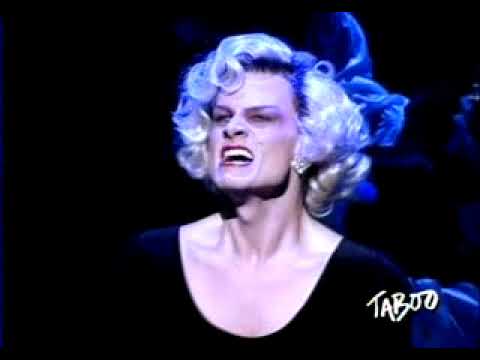
What happens when a pop icon writes a club-kid memory musical that refuses to behave? Taboo answers with eyeliner, confessionals, and hooks that shimmer like sequins under a mirrorball. Set amid London’s early-80s New Romantic swirl and reframed for Broadway in 2003, the show splices Boy George’s rise with the legend of performance artist Leigh Bowery — two meteors burning different colors but lighting the same night sky. The cast albums (London’s 2002 recording and Broadway’s 2004 set) bottle that energy: synth-slick anthems, bruised ballads, and Culture Club hits re-imagined for the stage.
As drama, the score does heavy lifting. “Stranger in This World” vocalizes the outsider ache; “Petrified” turns scene gossip into a raw self-reckoning; “Ich Bin Kunst” struts Bowery’s provocation; and “Il Adore” closes like a candlelit vigil. Between them, club bangers (“Everything Taboo”) and tabloid dazzle (“The Fame Game”) keep the pulse up even when the story dips into addiction, betrayal, and grief. You hear a time, a tribe, and a thesis: fame gives, fame takes, art survives.
Genre phases map cleanly to character beats: New Romantic synth-pop and glam — self-invention; torch balladry — vulnerability; punk-ish grit — defiance; glossy 80s chart-pop — public persona versus private cost. The cast recordings place those styles in dialogue, so the show never just “remembers” the era — it argues with it.
How It Was Made
Taboo began in London (2002) with a book by Mark Davies Markham and songs by Boy George with collaborators Kevan Frost, John Themis, and Richie Stevens. For Broadway (2003) the narrative was heavily reworked by Charles Busch, shifting focus more squarely onto Boy George and Leigh Bowery, with new sequencing and numbers. The Broadway pit team featured Jason Howland (music director), arrangements by John McDaniel, and orchestrations by Steve Margoshes. Producer Rosie O’Donnell backed the New York transfer, which opened at the Plymouth Theatre in November 2003.
Two principal recordings document those versions: First Night Records captured the London company (2002), while DRG Records issued the Original Broadway Cast Recording (2004). Both albums preserve different dramaturgical emphases — London’s club tapestry versus Broadway’s tighter biographical arc — making them complementary listens.
Tracks & Scenes
The entries below pair key songs with their dramatic moments. Descriptions follow the London and Broadway stagings; cast album performances referenced in brackets.
“Stranger in This World” (Boy George) [Euan Morton]
- Where it plays:
- Early Act I, as George frames himself against the city’s noise. The staging pares down to a confessional pose — George confronting family disapproval and the lure of reinvention. On Broadway the number also entwines with narrators, tightening its journal-entry feel.
- Why it matters:
- Establishes George’s inner weather — isolation pushing toward self-creation. It’s the show’s thesis in miniature: identity isn’t found, it’s made.
“Genocide Peroxide” (Marilyn)
- Where it plays:
- Act I club tableau. Marilyn saunters through a catwalk of gossip, shade, and peroxide bravado; the ensemble becomes paparazzi and punters. The number functions as a neon character intro — all tease, no apology.
- Why it matters:
- Defines the scene’s queendom and raises the stakes of performance-as-survival. Also prefigures rivalries that complicate George’s ascent.
“I’ll Have You All” (Leigh Bowery & Company) [Boy George with company]
- Where it plays:
- Act I power-grab. Bowery rolls in like a human installation: latex, lace, and menace. The lyric is part seduction, part manifesto. The club’s walls feel smaller after this — that’s the point.
- Why it matters:
- Boom of a second protagonist. The score switches from George’s introspection to Bowery’s provocation — two art philosophies colliding.
“Everything Taboo” (Company; Bowery leads in Broadway)
- Where it plays:
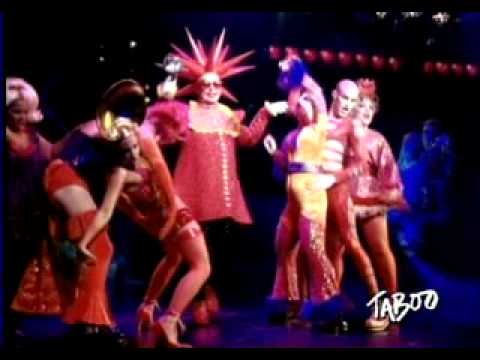
- Act II opener — the nightclub at full roar. Strobes, couture chaos, bodies in orbit. It plays like the brand’s anthem and a reset after intermission.
- Why it matters:
- Reasserts community. The club isn’t just a venue — it’s a character that loves, forgives, and occasionally bites.
“Petrified” (Philip Sallon) [Paul Baker/London; Raúl Esparza/Broadway]
- Where it plays:
- Mid–late show. Philip, usually the sardonic ringmaster, stops the room with a confession about fear, aging, and masks. Staging strips the glamour away: one mic, one truth.
- Why it matters:
- Heart-punch. The scene rebalances the show from spectacle to empathy, exposing the cost of fabulousness.
“Ich Bin Kunst” (Leigh Bowery)
- Where it plays:
- Act II performance-art set piece — Bowery weaponizes costume and shock. The number lands like a manifesto, daring the audience to separate person from persona (they can’t).
- Why it matters:
- Crystallizes Bowery’s ethos: the body is canvas; outrage is technique. It’s theatre about the politics of looking.
“Out of Fashion” (Ensemble)
- Where it plays:
- Late show crisis montage: fame curdles, addiction bites, friendships buckle under tabloid glare. The choreography fractures into magazine-spread poses that fail to hold.
- Why it matters:
- Turns theme into plot — the industry eats what it crowns. Sets the table for the elegy to come.
“Il Adore” (Nicola/Big Sue — company)
- Where it plays:
- Hospital vigil for Bowery. The stage dims to candle hues as the community sings a mourning that’s also gratitude. It resonates as a farewell to a friend and an era.
- Why it matters:
- One of Boy George’s most moving songs repurposed as a benediction. The show’s noisy heart goes quiet — devastating and cleansing.
“Do You Really Want to Hurt Me” / “Church of the Poison Mind” / “Karma Chameleon” (Medleys/Ensemble)
- Where it plays:
- Strategic drop-ins throughout, with a celebratory encore curtain call. The chart hits are reframed by the book scenes so they comment on fame rather than just parade it.
- Why it matters:
- Nostalgia with teeth. The familiar refrains gain new context — memory as dramaturgy.
Notes & Trivia
- The Broadway book reshuffled characters (e.g., Billy becomes Marcus; Nicola added) to sharpen the George/Bowery axis.
- London’s cast album leans into the club-mosaic storytelling; the Broadway disc foregrounds plot and star turns.
- Euan Morton’s Boy George became a breakout; Bowery on Broadway was played by Boy George himself.
- The encore “Karma Chameleon” works as a communal bow — camp, catharsis, and a wink.
- “Petrified” is the stealth showstopper; it’s the song fans quote back at you years later.
Reception & Quotes
Press reaction famously split: London critics warmed to the pop-musical spirit; New York’s were mixed to scathing, with notable defenders. The albums, however, are widely praised for performances and songwriting craft.
“A musical it’s impossible to dislike… back in touch with the world of pop.” The Guardian
“A disaster it isn’t. A mess? Yes.” Variety
“Surprisingly good… sensational performances and a very strong score.” NY1
“Well-meaning… underneath its shabby period glitz is a heart just longing to be revealed.” Talkin’ Broadway
Interesting Facts
- London to Broadway: Producer Rosie O’Donnell championed the transfer after seeing the London run.
- Two snapshots: The London and Broadway recordings document two different scripts — handy for comparison listening.
- Club as character: Numbers like “Everything Taboo” and “Guttersnipe” treat the nightclub as living ecosystem.
- Elegy engine: “Il Adore” predates the musical but becomes its emotional signature.
- Run stats: The Broadway production played 16 previews and 100 performances.
- Design as dramaturgy: Bowery’s looks function like scene changes — each costume is a plot point.
Technical Info
- Title: Taboo
- Year (focus): 2003 (Broadway production and context)
- Type: Stage musical — cast recordings (London 2002; Broadway 2004)
- Composers/Lyricist: Boy George (George O’Dowd) with Kevan Frost, John Themis, Richie Stevens
- Book: Mark Davies Markham (London); Charles Busch (Broadway)
- Music team (Broadway): Jason Howland (music director); John McDaniel (vocal/dance/incidental arrangements); Steve Margoshes (orchestrations)
- Labels: First Night Records — Original London Cast Recording (2002); DRG Records — Original Broadway Cast Recording (2004)
- Release context: Broadway opened Nov 13, 2003 at the Plymouth Theatre; closed Feb 8, 2004 after 100 performances (16 previews)
- Selected notable placements: “Stranger in This World,” “Petrified,” “Ich Bin Kunst,” “Everything Taboo,” “Il Adore” (finale function)
- Availability: Streaming/download widely (Apple Music, Spotify); physical CDs via First Night Records/DRG catalogs
Questions & Answers
- Which cast album should I start with?
- Broadway (2004) if you want a cleaner story arc; London (2002) if you want the club’s wider tapestry. Both are essential.
- Are the hit Culture Club songs in the show?
- Yes — “Do You Really Want to Hurt Me,” “Church of the Poison Mind,” and “Karma Chameleon” appear in dramatic contexts, not just as nostalgia.
- Who sings “Petrified,” and why is it a big deal?
- Philip Sallon — a scene commentator — drops the mask for a bruising confession. It’s the show’s unexpected emotional wallop.
- Is “Il Adore” from the musical or earlier?
- Earlier Boy George song, repurposed here as the production’s elegiac farewell to Leigh Bowery.
- Do the London and Broadway albums have different song orders?
- Yes. The Broadway reshuffle reflects its revised book and character focus; some songs shift function or placement.
Key Contributors
| Entity | Relation | Notes |
|---|---|---|
| Boy George (George O’Dowd) | wrote music & lyrics; played Leigh Bowery (Broadway) | Also original concept with Christopher Renshaw |
| Kevan Frost; John Themis; Richie Stevens | co-composers | Core songwriting collaborators |
| Mark Davies Markham | wrote original London book | 2002 West End |
| Charles Busch | rewrote book for Broadway | 2003 revision |
| Euan Morton | portrayed Boy George | London & Broadway star vocalist on key tracks |
| Raúl Esparza | portrayed Philip Sallon (Broadway) | Leads “Petrified” on the Broadway album |
| Jason Howland | music director (Broadway) | Conducted/led pit |
| John McDaniel | arrangements (vocal/dance/incidental) | Broadway charts |
| Steve Margoshes | orchestrations | Broadway |
| First Night Records | record label | Released Original London Cast Recording (2002) |
| DRG Records | record label | Released Original Broadway Cast Recording (2004) |
| Plymouth Theatre (Broadway) | venue | Opened Nov 13, 2003; closed Feb 8, 2004 |
Sources: IBDB; The Guardian; Variety; NY1; Talkin’ Broadway; BroadwayWorld; Playbill; CastAlbums.org; SecondHandSongs; Apple Music; First Night Records / DRG discography notes; Filmed Live Musicals.
November, 27th 2025
A-Z Lyrics Universe
Cynthia Erivo Popular
Ariana Grande Horsepower
Post Malone Ain't No Love in Oklahoma
Luke Combs Good Riddance (Time of Your Life)
Green Day Bye Bye Bye
*NSYNC You're the One That I Wan
John Travolta & Olivia Newton-John I Always Wanted a Brother
Braelyn Rankins, Theo Somolu, Kelvin Harrison Jr. and Aaron Pierre The Power of Love
Frankie Goes to Hollywood Beyond
Auli’i Cravalho feat. Rachel House MORE ›