
"Take Me Home Tonight" Soundtrack Lyrics
Movie • 2011
Track Listing
The Buggles
Matt & Tori
Duran Duran
Yaz
Kyle
Motley Crue
Matt & Barry
N.W.A.
Kim Carnes
Barry
Men Without Hats
Wendy & Kyle
Dexys Midnight Runners
That Loser That Always Shows Up At The Party With A Guitar
Wang Chung
Pete Townshend
Matt & Tori
Opus
Atomic Tom
"Take Me Home Tonight (Motion Picture Soundtrack)" – Album Guide to Tracks and Key Scenes
Overview
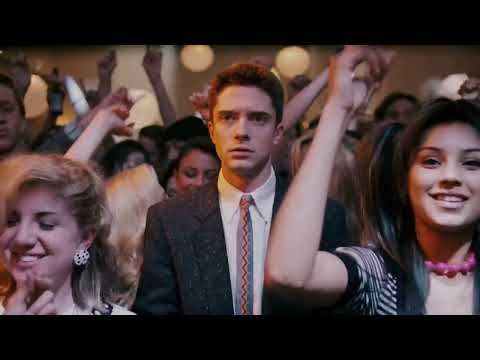
How do you soundtrack one wild night in 1988 without turning it into a jukebox blur? Take Me Home Tonight answers with needle-drops as story beats and a sly original score threading the chaos. Matt (Topher Grace) and friends ricochet through a suburban blowout where crushes, cocaine, and career panic collide — a perfect playground for precision-picked 80s cuts. The album corrals those moments into a front-to-back party, plus a few sly interludes recorded for the film.
The music’s job isn’t nostalgia for its own sake. It sketches character: the bravado of N.W.A. when two dweebs rap in a stolen Benz; the dream-glow of Kim Carnes when Tori floats into frame; the unironic togetherness of Wang Chung when the dance floor forgives everything. Producer-composer Trevor Horn underpins it with sleek, melodic score cues that keep the night moving without elbowing the classics out of the way.
Style phases double as theme map — synth-pop shimmer for reinvention; arena-rock voltage for risk-taking; left-of-center new wave for misfits trying on new skins; hip-hop for illicit confidence. Translation: glossy textures = performance; crunchy guitars = decision; elastic beats = borrowed bravado.
How It Was Made
Directed by Michael Dowse, the film leans on Trevor Horn’s pop-savvy instincts — a neat fit for an 80s-set comedy. Music supervision wrangled a rights thicket of hits (Duran Duran, Kim Carnes, Men Without Hats, N.W.A.) while slotting a few bespoke stingers and comedy interludes to stitch scenes together. Universal Republic issued the companion compilation, pairing marquee singles with short in-film bits and a new cover positioned as a promo single.
Because the film was shot in 2007 and released in 2011, clearances and sequencing became a long game. The final album preserves the party’s spine — open with a store-radio classic, escalate through party anthems, slip to romantic glow, then kick the doors with end-credit energy.

Tracks & Scenes
Below: signature placements, what’s on-screen, and why the cue sticks. Album titles in quotation marks.
“Video Killed the Radio Star” (The Buggles)
- Where it plays:
- Opener in the record/video store. Fluorescent lights, racks of VHS clamshells, and Matt hiding from adulthood behind the counter. Completely diegetic — it’s the room’s soundtrack.
- Why it matters:
- Signals the film’s lens: pop history as wallpaper for a generation between dreams and reality.
“Straight Outta Compton” (N.W.A.)
- Where it plays:
- Arrival run to the party — top down, confidence up. Matt and Barry rap along in the stolen Mercedes, the cut snapping into the first wide shots of the house as the night begins.
- Why it matters:
- Borrowed swagger. The song grants two anxious guys a mask — and foreshadows the trouble in that glove compartment.
“Bette Davis Eyes” (Kim Carnes)
- Where it plays:
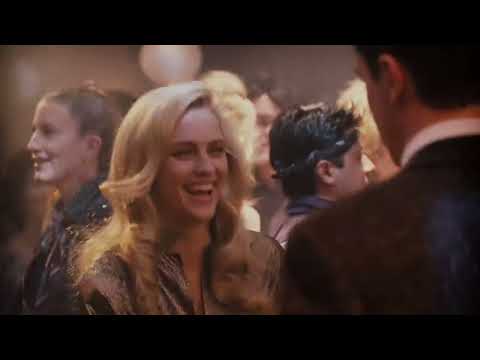
- Tori’s entrance, slowed into dreamtime as Matt locks on. The house noise dims; the mix gives the synth pads space while extras part like a catwalk.
- Why it matters:
- Turns a crush into cinema. One needle-drop, and a thousand high-school fantasies revive.
“Safety Dance” (Men Without Hats)
- Where it plays:
- Mid-party floor — Matt and Tori finally move in sync. The camera rides their orbit; the chorus hits on a spin and a too-long smile.
- Why it matters:
- A permission slip. The cue lets Matt stop pretending and actually have fun — a hinge toward honesty.
“Kickstart My Heart” (Mötley Crüe)
- Where it plays:
- High-octane intercut — late-night party stunts and escalating bad decisions. The riff lines up with smash cuts and the infamous steel-ball gag’s build-up.
- Why it matters:
- Full-throttle montage fuel — and a winking bit of 80s excess to match the characters’ recklessness.
“Come On Eileen” (Dexys Midnight Runners)
- Where it plays:
- A communal singalong moment, the party breathing as one for a chorus before splintering into smaller dramas again.
- Why it matters:
- Shows the house as a character — forgiving, loud, and briefly united.
“Everybody Have Fun Tonight” (Wang Chung)
- Where it plays:
- Late in the party as relationships reset and the vibe swells toward last-call euphoria. Lights flare; friends reconvene; the night refuses to die.
- Why it matters:
- Earned exuberance — the film’s thesis in four words and a key change.
“Let My Love Open the Door (E Cola Mix)” (Pete Townshend)
- Where it plays:
- Post-chaos tenderness. A breather cue over quieter porch talk and decisions made with the sun not far off.
- Why it matters:
- A sincere pulse after sarcasm — shifts the tone from performative cool to actual feeling.
“Live Is Life” (Opus)
- Where it plays:
- Pre-dawn montage: friendships intact, futures undecided. The track’s chanty lift reads as a wink and a promise.
- Why it matters:
- Outtro optimism that doesn’t cancel the mess, just accepts it.
“Don’t You Want Me” (Atomic Tom)
- Where it plays:
- Prominent on the album and in promotional materials; tied to the film’s marketing and often associated with credits-era listening for home releases.
- Why it matters:
- A contemporary cover that mirrors the film’s project: revisit, remix, and dance anyway.
“Oh Sherrie” (That Loser That Always Shows Up at the Party With a Guitar)
- Where it plays:
- Comic beat at the house — the party troubadour strikes up Steve Perry for exactly long enough to get a laugh and move on.
- Why it matters:
- Texture and satire — the kind of DIY soundtrack real parties supply.
“Walking in L.A.” (Missing Persons)
- Where it plays:
- City-mood insert, connecting Valley sprawl to the night’s aimless cruising. Neon, asphalt, and kids pretending to be older.
- Why it matters:
- Location as attitude — the lyric literally maps the movie.
Notes & Trivia
- The movie’s title comes from Eddie Money’s 1986 hit — used in marketing and menus but not in the finished film.
- Universal Republic’s album includes short comic interludes (“Barry’s Advice,” “Can I Call You?”) recorded by the cast to mirror on-screen beats.
- Atomic Tom’s cover of “Don’t You Want Me” doubled as a promotional music video featuring the cast and 80s film homages.
- Yes, that’s “Straight Outta Compton” blasting as our heroes head to the party — a gag that pays off when Barry finds what’s in the glove box.
- “Kickstart My Heart” revs up a late-film montage — era-perfect attitude even if the track released a bit after the story’s date.
Reception & Quotes
Critics were mixed on the movie, warmer on the wall-to-wall soundtrack. The compilation and placements are widely cited as the film’s not-so-secret weapon.
“Just enough heart and retro party spirit to hold the line.” Rolling Stone
“Amiable enough… and the party traffic is managed well.” The New Yorker
“Winning rag bag of gags… a time capsule from the heyday of John Hughes and Cameron Crowe.” Star Tribune
Album availability is broad on streaming, with a U.S. CD (Universal Republic) collecting core cues and several in-film interludes.
Interesting Facts
- Score DNA: Trevor Horn’s name in the credits isn’t random — his 80s studio wizardry informs the score’s sleek connective tissue.
- Two kinds of nostalgia: Diegetic bangers sell the party; non-diegetic drops sell the feelings between punchlines.
- Promo crossover: The “Don’t You Want Me” video acted like a second trailer and introduced younger listeners to the Human League classic.
- Party as mixtape: The album’s short spoken bits echo the film’s cutaway jokes, making the CD play like a narrated playlist.
- Location needle-drops: L.A. songs (“Walking in L.A.”) double as scene-setters — geography you can hum.
Technical Info
- Title: Take Me Home Tonight (Motion Picture Soundtrack)
- Year: 2011
- Type: Film soundtrack — compilation with original score interludes
- Composer (score): Trevor Horn
- Music supervision: Kathy Nelson (executive in charge of music); Happy Walters (music supervisor/exec)
- Label: Universal Republic Records (UMG)
- Release notes: U.S. CD and digital release; shipping listed late March 2011; streaming compilation available
- Selected notable placements: “Video Killed the Radio Star,” “Straight Outta Compton,” “Bette Davis Eyes,” “Safety Dance,” “Kickstart My Heart,” “Everybody Have Fun Tonight”
- Trailer: Official “iamROGUE” trailer (figures use first widely shared upload)
- Availability: Major DSPs; physical CD under Universal Republic catalog
Questions & Answers
- Is Eddie Money’s “Take Me Home Tonight” in the movie?
- No — it’s used in marketing/menu contexts, but not in the final cut; the title is a nod to the era.
- Who composed the film’s score?
- Trevor Horn. His connective cues sit between the big 80s songs and shape transitions.
- Which track scores Tori’s big entrance?
- Kim Carnes’ “Bette Davis Eyes,” slowed into a dreamy hallway walk that freezes Matt in place.
- What song blasts when Matt and Barry head to the party?
- N.W.A.’s “Straight Outta Compton” — a swaggering car-rap that sets the night’s tone.
- What’s the cover song tied to the film’s promotion?
- Atomic Tom’s “Don’t You Want Me,” released with a cast-studded music video.
Key Contributors
| Entity | Relation | Notes |
|---|---|---|
| Trevor Horn | composed original score | Pop producer turned film scorer; provides connective cues |
| Kathy Nelson | executive in charge of music | Oversaw clearances and album packaging |
| Happy Walters | music supervisor | On-the-ground licensing and placement |
| Michael Dowse | film director | Shaped music-first party pacing |
| Universal Republic Records | record label | Released the soundtrack compilation |
| Relativity Media / Rogue | studio/distributor | U.S. release and marketing |
| Atomic Tom | artist | Recorded “Don’t You Want Me” cover tied to film promotion |
| N.W.A.; Kim Carnes; Men Without Hats; Wang Chung | artists | Key featured tracks central to scenes |
Sources: Variety review/credits; IMDb (soundtracks & full credits); Wikipedia (film entry); MovieMusic store listing; SoundtrackCollector; ScreenRant feature; The National News review; Soundtrakd scene notes; Spotify/Universal Republic pages; YouTube trailer (iamROGUE); Atomic Tom official video posts.
November, 27th 2025
A-Z Lyrics Universe
Cynthia Erivo Popular
Ariana Grande Horsepower
Post Malone Ain't No Love in Oklahoma
Luke Combs Good Riddance (Time of Your Life)
Green Day Bye Bye Bye
*NSYNC You're the One That I Wan
John Travolta & Olivia Newton-John I Always Wanted a Brother
Braelyn Rankins, Theo Somolu, Kelvin Harrison Jr. and Aaron Pierre The Power of Love
Frankie Goes to Hollywood Beyond
Auli’i Cravalho feat. Rachel House MORE ›