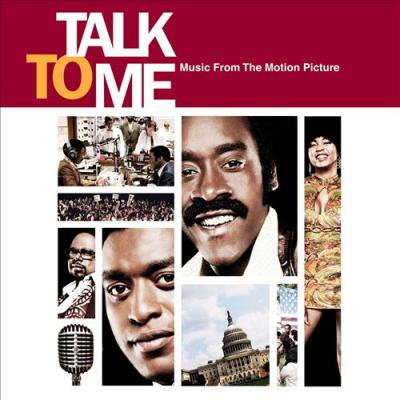
"Talk To Me" Soundtrack Lyrics
Movie • 2007
Track Listing
Eddie Floyd
Arthur Conley
Otis Redding & Carla Thomas
Sam & Dave
The Capitols
Archie Bell & The Drells
Clarence Carter
Booker T & The MG's
Barbara Lewis
Otis Redding
James Brown
The Dramatics
Meshell NdegeOcello
"Talk to Me (Music From the Motion Picture)" – Album Guide to Tracks and Key Scenes
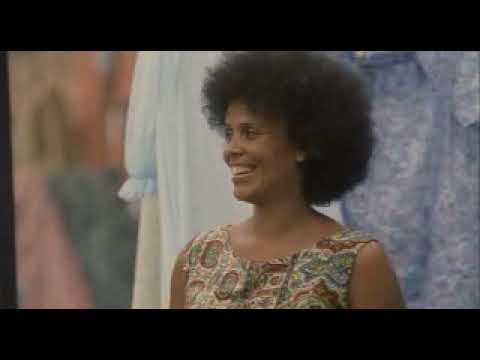
Overview
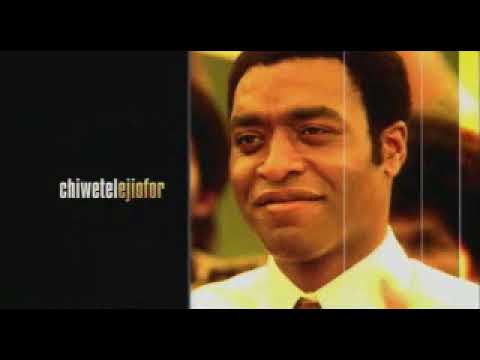
What happens when a city in crisis finds its voice — and that voice belongs to a jailhouse DJ? Talk to Me answers with Petey Greene’s blunt truth and a wall-to-wall crate of 1960s soul. As Greene (Don Cheadle) and producer/manager Dewey Hughes (Chiwetel Ejiofor) climb from late-night chaos to local legend, the soundtrack does the heavy lifting: Stax/Atlantic burners, James Brown anthems, and a small but crucial bed of original score power every pivot.
Listening front-to-back feels like spinning a WOL-AM shift: Eddie Floyd’s snap, Sam & Dave’s stomp, The Capitols’ strut, Booker T. & the M.G.’s muscle — pocket grooves that let Petey’s on-air sermons hit. The compilation album leans classic and concise, while Terence Blanchard’s score threads funk-and-brass cues under big emotional beats. Meshell Ndegeocello curates, produces, and even steps to the mic for a new jazz-soul version of “Compared to What,” with Blanchard’s horn cutting through like a headline.
Styles map to meaning in phases — Stax/Atlantic soul for Petey’s swagger and the callers’ community; James Brown funk for protest and pride; slow-burn R&B for Vernell–Petey tenderness; and jazz-inflected score for resolve and aftermath. Translation: grooves = solidarity; funk = fire; torch tones = private cost; trumpet and low-end = spine.
How It Was Made
The film pulls from period masters and fresh studio work: Atlantic Records issued the compilation album; Meshell Ndegeocello produced the set and contributes a cover/collab. Terence Blanchard scored the film — a Lemmons regular — mixing horns, rhythm section, and period-fluent textures. On the production side, music supervision wrangled a who’s-who of 60s cuts while keeping needle-drops purposeful rather than wall decor.
Editorially, the movie uses songs as talk radio grammar. Cues crash in like callers, ride an argument, then hand the floor back to Petey. When history intrudes — the night after Dr. King’s assassination — the score and source tracks meet grief head-on, letting silence take a verse before the city hum returns.
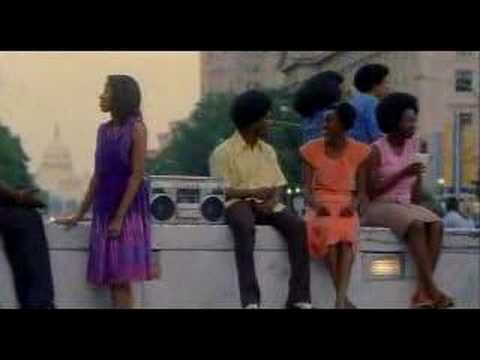
Tracks & Scenes
Below — the standout songs and cues, how they’re used, and why they land. (Album titles in quotes; some songs heard on screen don’t appear on the retail album.)
“Compared to What” (LP by Les McCann & Eddie Harris) / “Compared to What” (Meshell Ndegeocello feat. Terence Blanchard)
- Where it plays:
- On screen: Petey’s first on-air test run — he drops the needle on the Les McCann/Eddie Harris live LP and lets the groove light a fuse while he talks DC straight. The record’s crackle bleeds with his attitude, turning the booth into a bandstand. Album: Meshell cuts a new version featuring Blanchard on trumpet, carrying the same protest snap into the compilation.
- Why it matters:
- It’s Petey as conductor, not just DJ — the music becomes argument, the turntable a soapbox.
“Knock on Wood” (Eddie Floyd) / “Hold On, I’m Comin’” (Sam & Dave)
- Where it plays:
- Early radio hustle and station montage — DJs trading barbs, phones lighting up, Vernell bursting into rooms like a chorus on two legs. Cuts work like segues, slipping between Petey’s riffs and caller eruptions.
- Why it matters:
- Stax horns + Petey’s patter = momentum machine. The soul classics sell his credibility faster than any résumé.
“Cool Jerk” (The Capitols) → “Hip Hug-Her” (Booker T. & the M.G.’s)
- Where it plays:
- Club/lobby energy as Petey’s fame spikes — quick dolly shots through crowded floors, flashbulbs, autographs. Non-diegetic, but mixed like the room owns the beat.
- Why it matters:
- Turns success into choreography — groove as glidepath before the next hard turn.
“Say It Loud – I’m Black and I’m Proud” (James Brown)
- Where it plays:
- Concert sequence tied to the post–MLK assassination stretch. The cue surfaces with footage of Brown firing up a crowd — a visceral jolt in a city on edge.
- Why it matters:
- It’s the era’s rallying cry dropped into the film’s darkest hour — a sonic spine for grief and resolve.
“A Change Is Gonna Come” (Sam Cooke) — film-only
- Where it plays:
- In dialogue and memory: the first record young Petey ever spun, a hymn he carries like a pocket truth. Echoes through scenes that reckon with his calling.
- Why it matters:
- The film’s conscience in four minutes — quiet prophecy inside a loud world.
“Whatcha See Is Whatcha Get” (The Dramatics)
- Where it plays:
- Studio swagger after Petey’s ratings pop — a cut that feels like his mission statement as listeners crowd the phone lines.
- Why it matters:
- Truth-in-advertising anthem; the title is Petey’s entire brand.
“Hello Stranger” (Barbara Lewis)
- Where it plays:
- A softer pocket around Petey and Vernell — the room gets smaller, the light warmer; the song floats like a promise neither one can quite keep.
- Why it matters:
- Lets the movie breathe — and reminds you there’s a cost to all that bravado.
Score cues (Terence Blanchard)
- Where it plays:
- Short, funk-tinged cells under transitions; brass and rhythm section during the MLK-night broadcast; restrained, elegiac lines in the film’s final passages and memorial frame.
- Why it matters:
- Blanchard writes the space between the hits — the thinking time, the breath before the mic opens.
Notes & Trivia
- The compilation was released by Atlantic; Meshell Ndegeocello produced and appears on a newly cut “Compared to What.”
- Terence Blanchard composed the original score — part of his ongoing collaboration with director Kasi Lemmons.
- Some period songs heard in the film aren’t on the retail album (e.g., Sam Cooke’s “A Change Is Gonna Come”).
- The film includes a James Brown concert sequence set immediately after the King assassination; one cut used there (“Say It Loud…”) is historically just-after-the-moment — a tiny timeline quirk fans love to debate.
- Radio-nerd delight: Petey’s on-air “test” spins the Les McCann/Eddie Harris Swiss Movement version of “Compared to What.”
Reception & Quotes
Critics praised the performances and the film’s snap; music writers singled out how the soundtrack makes the city feel present — not just pictured.
“A riveting look at… Petey Greene… explosive performances.” Rotten Tomatoes consensus
“Greene’s voice helps to calm the city during some of the capitol’s grimmest hours.” Paste
“That marathon broadcast after King’s assassination — it had to be him.” Contemporary review
Album availability is strong (digital stores/streaming). Regional editions may label a “U.S. Version,” but the core 13-track program is consistent.
Interesting Facts
- Single-session vibe: The album plays like a Petey shift — quick fades, no dead air.
- Cover vs. source: Meshell’s “Compared to What” headlines the album, while the film nods to the Les McCann/Eddie Harris classic on vinyl in the booth.
- Protest in the playlist: James Brown’s “Say It Loud…” and other empowerment anthems anchor the film’s civil-rights context.
- Score threads: Blanchard’s horn lines quietly sew scenes together; you feel them more than you notice them.
- Radio as character: The soundboard clicks, phone rings, and vinyl crackle become a kind of percussion section.
Technical Info
- Title: Talk to Me (Music From the Motion Picture)
- Year: 2007
- Type: Film soundtrack — compilation + original score
- Composer (score): Terence Blanchard
- Music supervision: Barry Cole
- Album production: Meshell Ndegeocello (producer); additional soundtrack producers credited
- Label: Atlantic Recording Corporation
- Notable placements: “Compared to What,” “Knock on Wood,” “Cool Jerk,” “Hip Hug-Her,” “Say It Loud – I’m Black and I’m Proud,” “Whatcha See Is Whatcha Get,” “Hello Stranger”
- Release: 13-track commercial album (mid–2007); streaming versions labeled “U.S. Version” available
- Context: Biographical drama directed by Kasi Lemmons; set in Washington, D.C., 1966–1984
Questions & Answers
- Who composed the original score?
- Terence Blanchard, blending funk-and-brass colors with lyrical, reflective cues.
- Who produced the compilation album?
- Meshell Ndegeocello — she also performs a new version of “Compared to What” featuring Terence Blanchard.
- Is every song heard in the film on the retail album?
- No. A few on-screen tracks (e.g., Sam Cooke’s “A Change Is Gonna Come”) don’t appear on the 13-track release.
- What song powers Petey’s first on-air test?
- He drops the needle on the Les McCann/Eddie Harris live “Compared to What” — the film recreates the LP in the booth.
- Where can I stream the album?
- Major DSPs — look for the Atlantic-released 13-track set, often labeled “U.S. Version.”
Key Contributors
| Entity | Relation | Notes |
|---|---|---|
| Kasi Lemmons | directed film | Biopic of D.C. radio icon Ralph “Petey” Greene |
| Terence Blanchard | composed original score | Longtime Lemmons collaborator |
| Meshell Ndegeocello | produced soundtrack; artist | Performs “Compared to What” (album version) with Terence Blanchard |
| Barry Cole | music supervisor | Cleared and coordinated 60s soul/ funk needle-drops |
| Atlantic Recording Corporation | record label | Released the 13-track compilation |
| WOL-AM (Washington, D.C.) | setting / real station | Petey Greene’s radio home, dramatized in the film |
| Don Cheadle; Chiwetel Ejiofor; Taraji P. Henson | principal cast | Greene; Hughes; Vernell |
Sources: Apple Music album page; Spotify “U.S. Version” album page; Discogs release & credits; IMDb Soundtracks/Full Credits; Wikipedia film overview; Focus Features/press on Blanchard’s Lemmons collaborations; JazzTimes profile; Paste review; City Paper review; PopMatters feature; Atlantic/Tower product listings; Vanity Fair round-up; official trailers (YouTube).
November, 27th 2025
A-Z Lyrics Universe
Cynthia Erivo Popular
Ariana Grande Horsepower
Post Malone Ain't No Love in Oklahoma
Luke Combs Good Riddance (Time of Your Life)
Green Day Bye Bye Bye
*NSYNC You're the One That I Wan
John Travolta & Olivia Newton-John I Always Wanted a Brother
Braelyn Rankins, Theo Somolu, Kelvin Harrison Jr. and Aaron Pierre The Power of Love
Frankie Goes to Hollywood Beyond
Auli’i Cravalho feat. Rachel House MORE ›