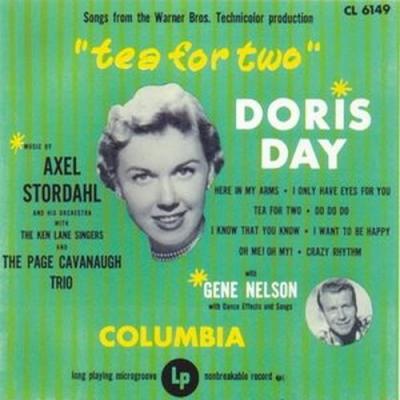
"Tea for Two" Soundtrack Lyrics
Musical • 2001
Track Listing
"Tea for Two (1950 Original Motion Picture Soundtrack) — 2001 CD Reissue" – Album Guide to Tracks and Key Scenes
Overview
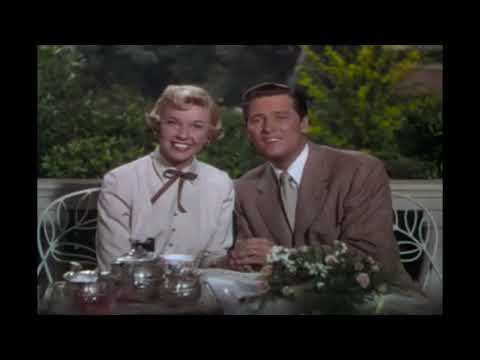
What happens when a Jazz Age stage hit gets reimagined on film — then rediscovered half a century later on CD? The Tea for Two soundtrack answers with fizzy swing, graceful ballads, and the brightest of Doris Day vocals. The 2001 compact disc pairs music from the 1950 Warner Bros. musical with its sister title Lullaby of Broadway, letting listeners time-travel straight to Technicolor.
The film riffs on the 1925 stage musical No, No, Nanette, shuffling plot beats but keeping the core Youmans/Caesar tunebook while sprinkling in standards by the Gershwins, Warren & Dubin, and Rodgers & Hart. In the studio, Day recorded film-featured numbers with Axel Stordahl’s lush orchestra and, on others, the nimble Page Cavanaugh Trio — a split that gives the album two complementary textures: ballroom sheen and club swing.
Genres & themes in phases: Tin Pan Alley charm — courtship and optimism. Tap-propelled show tunes — ambition and big-city hustle. Torch-tinged ballads — longing under the gloss. Ballroom pop — fantasy of elegance. Together they sketch a heroine chasing Broadway dreams while the band keeps the bubbles rising.
How It Was Made
David Butler directs on screen; in the pit, the score leans on Vincent Youmans’s melodies (from No, No, Nanette) with lyrics by Irving Caesar and collaborators, then folds in period favorites. The studio album sessions (July 14–25, 1950) split duties: Stordahl conducts the orchestral sides; the Page Cavanaugh Trio backs Day and duet partner Gene Nelson on the lighter, rhythm-forward cuts. In 2001, the material was reissued on CD alongside Lullaby of Broadway, extending access to these compact 78/10-inch LP-era takes.
Tracks & Scenes
Below: key numbers as staged in the 1950 film, with context for how the 2001 CD presents them. (We avoid listing the full tracklist.)
“Tea for Two” (Vincent Youmans / Irving Caesar)
- Where it plays:
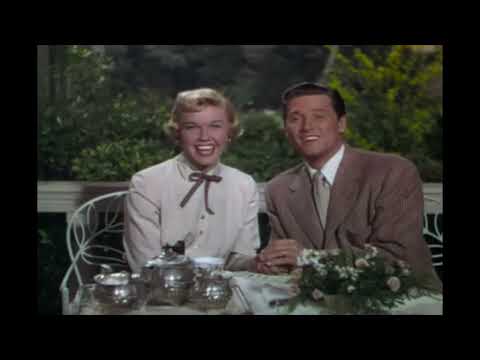
- Signature duet motif and reprise. On screen, Day’s Nanette turns a rehearsal-space fantasy into a polished proscenium moment; the camera lingers on soft-shoe footwork and smile-to-smile blocking before the final crowd-pleasing swell. (~Finale placement on film prints.)
- Why it matters:
- The title tune ties the show-biz dream to domestic bliss — the whole plot in three minutes of melody.
“I Want to Be Happy” (Youmans / Caesar)
- Where it plays:
- A kinetic showpiece. Day and partner burst from dialogue into a tap-driven routine; cuts ping-pong between wide ensemble figures and tight exchanges, amplifying the cheerleader lyric into pure motion. Brass hits punctuate turns; the number lands like a curtain-raiser inside the film.
- Why it matters:
- Character thesis — Nanette’s can-do bounce, rendered as precision dance and buoyant swing. On the 2001 disc, the take is lean, bright, and radio-ready.
“I Know That You Know” (Youmans / Anne Caldwell)
- Where it plays:
- Flirt-and-snap duet with Gene Nelson. The scene builds from banter to quick-footed choreography; the camera tracks a playful chase through wings and props, then resolves in a synchronized break that cues laughter from the onstage “audience.”
- Why it matters:
- Turns a lovers’ quarrel into rhythmic agreement; the album version preserves the breezy, Trio-driven, dance-tempo feel.
“Crazy Rhythm” (Joseph Meyer / Roger Wolfe Kahn / Irving Caesar)
- Where it plays:
- Jazz-club vignette inside the film-within-the-film. A small combo groove anchors Day and Nelson as they volley scats and steps; the sequence blends seated swing with a fast midsection that pops when the horns kick.
- Why it matters:
- Signals the movie’s willingness to roam beyond the original stage score; the 2001 CD keeps the brisk two-and-a-half-minute cut that snaps to the button.
“Here in My Arms” (Richard Rodgers / Lorenz Hart)
- Where it plays:
- Romantic breath-catcher — soft lights, slow dolly, and Day holding a long line on the release. The blocking stays nearly still, letting phrasing do the acting.
- Why it matters:
- Lends the album an elegant, string-limned oasis amid tap and patter.
“Do Do Do” (George Gershwin / Ira Gershwin)
- Where it plays:
- Rehearsal-floor charm-offensive. Patter turns to patter-song; props become percussion as the ensemble answers Day’s cues, with a wink toward backstage chaos.
- Why it matters:
- Meta-musical fun and a tour of the film’s show-within-a-show mechanics.
“I Only Have Eyes for You” (Harry Warren / Al Dubin)
- Where it plays:
- Spotlight ballad. Day on a small island of light; the arrangement favors strings and woodwinds, with a late harmonic lift that lands on a contented smile and audience hush.
- Why it matters:
- Classic Hollywood romance — even the microphones seem to lean closer.
“Oh Me! Oh My! Oh You!” (Youmans / Ira Gershwin)
- Where it plays:
- Quick-change ensemble with jokey interjections and hat-tricks. Camera rides a traveling master as dancers hand off props in time with internal rhymes.
- Why it matters:
- Old-school show-tune wit; on disc it’s a breezy duet snapshot with tight band punches.
Trailer & non-album cues
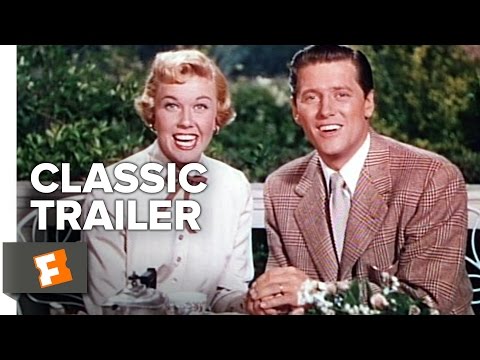
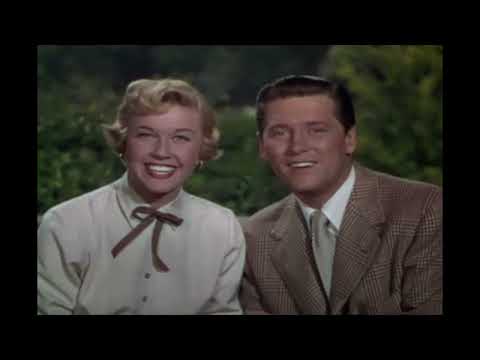
- The official trailer teases “Tea for Two” and the high-velocity tap showcase, cutting between close-ups and Charleston-era staging.
- Film choreography occasionally quotes “Charleston” and other era steps; some cues appear only as brief diegetic stingers in the picture, not on the compact disc reissue.
Notes & Trivia
- Tea for Two (film) is inspired by the 1925 Broadway hit No, No, Nanette but reshapes the plot while keeping key Youmans/Caesar tunes.
- The original 10-inch Columbia LP drew from studio recordings made July 14–25, 1950; orchestra cuts and Trio cuts alternate for texture.
- In 2001, Collectables/Columbia reissued Tea for Two together with Lullaby of Broadway on a single CD, reintroducing the program to new listeners.
- The title song’s century-spanning fame includes Shostakovich’s speed-orchestration wager and countless jazz covers — proof of indelible melody.
Reception & Quotes
As a film, Tea for Two sits in the cheerful middle of 1950s studio musicals — buoyed by Day’s tone and nimble dance set-pieces. The 2001 CD reissue drew interest from collectors for restoring the concise, original album sequence.
“Day’s top note is sunshine itself; the arrangements glide.” — AllMusic (capsule, paraphrased)
“A Technicolor tonic with tunes you can hum on first pass.” — TCM write-ups (summarized)
Interesting Facts
- Songbook remix: The film mixes No, No, Nanette hits with ringers by Gershwin and Warren & Dubin.
- Two textures: Stordahl’s strings vs. the Page Cavanaugh Trio’s club swing — the album’s defining contrast.
- Compact cuts: Many tracks hover around the 2–3 minute 78-rpm sweet spot — crisp and replayable.
- Trailer tease: The official trailer already sells the tap sprints that anchor the movie’s midsection.
- Legacy loop: The title tune keeps resurfacing — from big-band books to virtuoso piano encores.
Technical Info
- Title: Tea for Two (Original Motion Picture Soundtrack) — 2001 CD Reissue
- Year: 2001 (CD reissue of 1950 recordings)
- Type: Musical film soundtrack
- Film director: David Butler
- Primary composers/lyricists (film score songs): Vincent Youmans; lyrics by Irving Caesar & collaborators; additional songs by George & Ira Gershwin; Harry Warren & Al Dubin; Richard Rodgers & Lorenz Hart
- Studio album personnel (select): Doris Day (vocals); Gene Nelson (vocals); Axel Stordahl (orchestra conductor/arranger); The Page Cavanaugh Trio (backing)
- Label/album status: Originally Columbia (10-inch LP, 1950); reissued on CD in 2001 alongside Lullaby of Broadway (Collectables/Columbia)
- Notable placements: “Tea for Two,” “I Want to Be Happy,” “I Know That You Know,” “Crazy Rhythm,” “I Only Have Eyes for You,” “Do Do Do,” “Here in My Arms,” “Oh Me! Oh My! Oh You!”
- Film runtime: ~98 minutes (1950 release)
- Availability: 2001 CD issue widely cataloged by retailers/archives; original tracks also appear on later digital compilations.
Questions & Answers
- Is the 2001 release a brand-new recording?
- No — it’s a CD reissue of the 1950 studio soundtrack recordings tied to the film.
- Which orchestrations appear on this album?
- Axel Stordahl conducts the string-led sides; the Page Cavanaugh Trio backs the swing-oriented cuts.
- Does the album include every song heard in the movie?
- No. It focuses on the principal performed numbers, sequenced for the album format of the era.
- What’s the connection to No, No, Nanette?
- The film adapts that 1925 musical’s tunes (not its exact plot), with Youmans/Caesar songs like “Tea for Two.”
- Where can I preview the vibe?
- Watch the official trailer — you’ll hear the title number’s bounce and glimpse the tap showcases.
Key Contributors
| Subject | Relation | Object |
|---|---|---|
| Doris Day | Vocalist / Star | Tea for Two (1950 film & soundtrack) |
| David Butler | Directed | Tea for Two (1950 film) |
| Vincent Youmans | Composed melodies for | core numbers adapted from No, No, Nanette |
| Irving Caesar | Lyricist for | “Tea for Two,” “I Want to Be Happy,” others |
| Axel Stordahl | Conducted | orchestra on 1950 soundtrack sessions |
| Page Cavanaugh Trio | Backed | Doris Day & Gene Nelson on swing cuts |
| Warner Bros. | Produced/Distributed | the 1950 film |
| Columbia Records | Issued | original LP (1950) |
| Collectables/Columbia | Reissued | 2001 CD (paired with Lullaby of Broadway) |
Sources: AllMusic (release entry); Columbia/Collectables reissue listings; Wikipedia (film & album overviews); TCM/IMDb film notes; Financial Times feature on the song’s history.
November, 27th 2025
A-Z Lyrics Universe
Cynthia Erivo Popular
Ariana Grande Horsepower
Post Malone Ain't No Love in Oklahoma
Luke Combs Good Riddance (Time of Your Life)
Green Day Bye Bye Bye
*NSYNC You're the One That I Wan
John Travolta & Olivia Newton-John I Always Wanted a Brother
Braelyn Rankins, Theo Somolu, Kelvin Harrison Jr. and Aaron Pierre The Power of Love
Frankie Goes to Hollywood Beyond
Auli’i Cravalho feat. Rachel House MORE ›