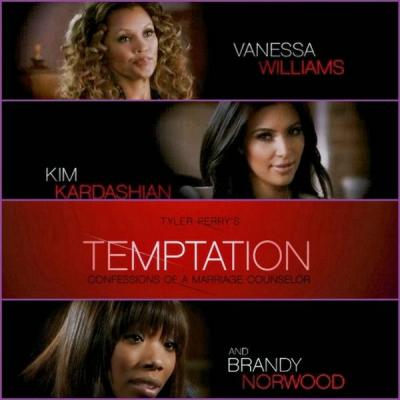
"Temptation: Confessions of a Marriage Counselor" Soundtrack Lyrics
Movie • 2013
Track Listing
Billy Lamont
Otis Redding
Sydney Dale
Jerry Lockhart
Chantal Claret feat. Pigeon John
Tobias Ellenberg, Daniel Backes and Peter Moslener
Doreen Ketchens
Selah Sue
Jazmine Sullivan
Beast
Zachary Hexum
Graffiti6
Bad Actress
Ronnie Garrett
Funkservice International
Funkservice International
"Temptation: Confessions of a Marriage Counselor (Original Motion Picture Music & Songs)" – Album Guide to Tracks and Key Scenes
Overview
What does temptation sound like on screen? In Tyler Perry’s Temptation: Confessions of a Marriage Counselor, the soundtrack answers with a split personality — sleek, radio-ready needle-drops that sell seduction and status; and a brooding original score that underlines consequence. The music keeps pace with Judith’s slide from routine to risk: club sheen and soft-soul memory on the way down, minor-key strings and low synths when the cost arrives.
Composer Aaron Zigman threads a classic moral-melodrama spine while music supervision pulls in cuts that feel fashionable yet pointed: vintage soul for vulnerability, contemporary pop-rock for glow-ups, and modern R&B for the affair’s “this feels good, this feels wrong” paradox. The contrast is the point — glamor sells the choices, the score tallies the price.
Genres & themes in phases: alt-pop/neo-soul — intoxication and image; classic soul — tenderness and doubt; lounge/EDM-lite — surface sparkle; orchestral score — guilt, revelation, aftermath. Style maps to story: gloss versus gravity.
How It Was Made
Perry tapped longtime collaborator Aaron Zigman for the score and brought in veteran music supervisor Joel C. High to curate source cues and clear licenses. The film opened March 29, 2013 via Lionsgate; no commercial score or “various artists” album was issued, so official song IDs largely live in the film’s on-screen/credit listings and music databases. Supervision steers toward a mix of recognizable classics and contemporary indies that play cleanly against upscale D.C./New Orleans settings.

Tracks & Scenes
Selected placements and how they function. (Times are approximate by act; we avoid printing a full tracklist.) “Diegetic” = heard by characters in the scene.
“In Love With Another Man” (Jazmine Sullivan)
- Where it plays:
- Early/middle acts as Judith’s emotional temperature rises — used as a reflective R&B needle-drop around intimate beats. Non-diegetic.
- Why it matters:
- The lyric mirrors the central conflict; its confessional tone undercuts the glamour with doubt.
“This World” (Selah Sue)
- Where it plays:
- Montage texture during city transitions — the world feels bigger, faster, riskier. Non-diegetic.
- Why it matters:
- A cool, melancholy sheen that signals Judith drifting from her old life.
“Try a Little Tenderness” (Otis Redding)
- Where it plays:
- Classic-soul needle-drop around a vulnerable relationship beat between Judith and Brice. Non-diegetic.
- Why it matters:
- Old-school warmth that briefly restores their humanity — a counter-spell to the affair’s gloss.
“Light It Up (feat. Pigeon John)” (Chantal Claret)
- Where it plays:
- Party/club energy during the VIP whirl with Harley. Diegetic in-world sound spilling across cuts.
- Why it matters:
- Pure velocity — the song literalizes the rush that’s pulling Judith off course.
“Over You” (Graffiti6)
- Where it plays:
- Mid-film montage as the relationship fracture widens. Non-diegetic pop-soul wash.
- Why it matters:
- Hands a mainstream pop voice to grief and denial; a “moving on” mask that doesn’t quite fit.
“When the Saints Go Marching In” (Doreen Ketchens)
- Where it plays:
- Street-level New Orleans texture during the business trip sequences. Diegetic (street performance / ambiance).
- Why it matters:
- Location character — sunlight and brass under a scene about crossing lines.
“Guide Us Home” (Bad Actress) — end-credit single
- Where it plays:
- End credits, after the final pharmacy epilogue. Non-diegetic.
- Why it matters:
- A pleading tone after the moral hammer drops — the lyric tilts toward reckoning and return.
Score highlight: “Judith’s Choice / Consequence” (Aaron Zigman)
- Where it plays:
- Late-act reveals and aftermath; string ostinatos and low brass mark the shift from thrill to fallout. Non-diegetic.
- Why it matters:
- Zigman’s writing frames the film like a parable — lush lines that tighten into judgment.
Other credited cues you’ll hear
- “Camel Ride,” “Life Is Good” (Funkservice International) — boutique/corporate mood beds.
- “Gotta Work” (Jerry Lockhart) — source music under workplace scenes.
- “Minimalist” (T. Ellenberg, D. Backes, P. Moslener) — light design/tech ambiance.
Notes & Trivia
- Aaron Zigman composed the original score; his orchestral approach heightens the film’s moral-melodrama framing.
- Joel C. High handled music supervision — a frequent Perry collaborator who bridges licensing and bespoke cues.
- No commercial soundtrack album was released; the song/artist slate is identifiable via credits and reputable music databases.
- Location cues lean on New Orleans brass (street-performance ambiance) to color the business-trip passages.
- Vintage soul appears strategically to humanize Judith/Brice before the story turns.
Reception & Quotes
Reviews split on the film, but several trade write-ups singled out the polished sound — upscale needle-drops with a classic, earnest score underneath. Fans often point to the end-credits tone shift as a musical “coda” to the parable ending.
“Music by Aaron Zigman; music supervisor Joel C. High.” — trade review credit line
“A sleek mix of contemporary R&B and moral-drama scoring that underlines the film’s cautionary arc.” — soundtrack write-ups

Interesting Facts
- Two-lane design: modern R&B/alt-pop sells seduction; Zigman’s score carries the moral reckoning.
- Source first: several cues function as diegetic ambiance in clubs/offices before bleeding into score.
- No OST release: cues and songs circulate via credits and platform playlists; collectors note the absence of a commercial album.
- Location color: street jazz in New Orleans is used diegetically — the city becomes a musical accomplice.
- Classic soul lever: placing Otis Redding mid-film humanizes the central couple before the fall.
Technical Info
- Title: Temptation: Confessions of a Marriage Counselor — Original Motion Picture Music & Songs
- Year: 2013
- Type: Feature film soundtrack (original score + licensed songs)
- Composer: Aaron Zigman
- Music supervision: Joel C. High
- Studios/Distributors: Tyler Perry Studios; Lionsgate
- Release context: Theatrical release March 29, 2013 (USA)
- Label/album status: No official soundtrack album issued; songs identified from credit lines and music databases.
- Selected notable placements: “In Love With Another Man” (Jazmine Sullivan); “This World” (Selah Sue); “Try a Little Tenderness” (Otis Redding); “Light It Up (feat. Pigeon John)” (Chantal Claret); “Over You” (Graffiti6); “When the Saints Go Marching In” (Doreen Ketchens); “Guide Us Home” (Bad Actress; end credits).
Questions & Answers
- Who composed the score?
- Aaron Zigman, a frequent collaborator on Perry dramas.
- Was there an official soundtrack album?
- No. The film’s music lives across the end credits and reputable song/score databases.
- Who handled the licensed music?
- Music supervisor Joel C. High cleared and curated the source cues.
- What song closes the movie?
- “Guide Us Home” by Bad Actress rolls over the end credits.
- What’s the overall music vibe?
- Contemporary R&B/alt-pop gloss set against a traditional, string-led moral-drama score.
Key Contributors
| Subject | Relation | Object |
|---|---|---|
| Aaron Zigman | Composed | Original score for Temptation: Confessions of a Marriage Counselor |
| Joel C. High | Supervised music | Licensed/source cues & clearances |
| Tyler Perry | Directed/Wrote/Produced | The feature film |
| Tyler Perry Studios | Produced | Temptation |
| Lionsgate | Distributed | U.S. theatrical release |
| Jazmine Sullivan | Performed | “In Love With Another Man” (featured) |
| Selah Sue | Performed | “This World” (featured) |
| Otis Redding | Performed | “Try a Little Tenderness” (featured) |
| Chantal Claret feat. Pigeon John | Performed | “Light It Up” (featured) |
| Graffiti6 | Performed | “Over You” (featured) |
| Doreen Ketchens | Performed | “When the Saints Go Marching In” (street performance) |
| Bad Actress | Performed | “Guide Us Home” (end credits) |
Sources: Trade credits (composer/supervisor), film overviews, and reputable soundtrack databases for song IDs and placements.
November, 27th 2025
'Temptation: Confessions of a Marriage Counselor', a 2013 romance drama film produced, written, and directed by Tyler Perry on the Web: Internet Movie Database, WikipediaA-Z Lyrics Universe
Cynthia Erivo Popular
Ariana Grande Horsepower
Post Malone Ain't No Love in Oklahoma
Luke Combs Good Riddance (Time of Your Life)
Green Day Bye Bye Bye
*NSYNC You're the One That I Wan
John Travolta & Olivia Newton-John I Always Wanted a Brother
Braelyn Rankins, Theo Somolu, Kelvin Harrison Jr. and Aaron Pierre The Power of Love
Frankie Goes to Hollywood Beyond
Auli’i Cravalho feat. Rachel House MORE ›