
"Tenet (Original Motion Picture Soundtrack)" – Album Guide to Tracks and Key Scenes
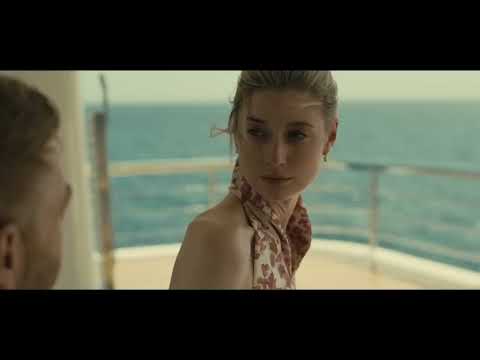
Overview
How do you score a story that runs forward and backward at once? Tenet answers with a soundtrack that bends time without breaking groove — a dense, industrial-tinged score that seems to inhale and exhale in reverse, yet still slams like action music should.
Ludwig Göransson’s music is the film’s second language. It primes the opening siege with serrated strings and jet-engine synths, hard-shifts to glassy textures for espionage tradecraft, then detonates in the highway heist and the Stalsk-12 battle. A late-breaking end-credits single — Travis Scott’s “The Plan” — stitches hip-hop vocal timbres into the score’s DNA, echoing fragments of the Protagonist’s motif. The result is both puzzle and propulsion: a rhythm-first thriller built from palindromic gestures, distorted bass, and cleverly “impossible” performance techniques.
Stylistically, the score moves in phases. Industrial techno & sound design — threat, logistics, machinery. Asymmetric orchestral ostinati — forward time and its illusions. Reversed-performance cues — inversion as feeling, not just plot. Hip-hop adjacency — an end-credits release valve that also seeds motif particles into earlier cues. These choices map cleanly onto the narrative arc: initiation → expertise → inversion shock → pincer mastery.
How It Was Made
Christopher Nolan’s longtime collaborator Hans Zimmer was unavailable — he chose to score Dune — so Nolan tapped Oscar-winner Ludwig Göransson. Working through COVID constraints, Göransson recorded players remotely, then manipulated performances so parts could feel “played backward” while retaining human attack and phrasing. Director and composer also wove elements of Travis Scott’s voice into several cues after landing “The Plan” for the end titles.
The album dropped via WaterTower Music in early September 2020 (a standard edition and a later deluxe edition with bonus cues like “Turnstile”). Track titles double as scene markers — handy signposts in a film designed like a Moebius strip.
Tracks & Scenes
Timestamps are approximate to the ~150-minute cut. Most music is original score; the sole featured single is “The Plan.”
“RAINY NIGHT IN TALLINN” (Ludwig Göransson)
- Where it plays:
- Prologue — the Kyiv/Tallinn opera siege (~00:00–00:08). Strings scrape into engine-like synth growls as agents stage an extraction under fire; the pulse accelerates when gas hits the audience and the Protagonist sprints for the VIP box. Non-diegetic but cut to action.
- Why it matters:
- States the score’s mission: human ensemble + machine pressure. The cue’s “orchestra tune-up” motif is weaponized into panic.
“WINDMILLS”
- Where it plays:
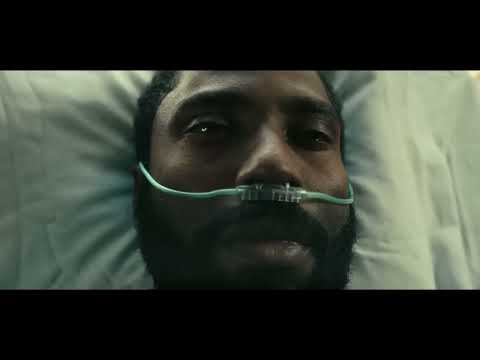
- Recovery and onboarding (~00:10–00:14). On a North Sea wind-farm, the Protagonist wakes, is briefed on Tenet’s sign and physics. Static bass and granular textures create a medicated haze.
- Why it matters:
- Bridges initiation and first field steps; the grinding pulse quiets enough for exposition to land.
“MEETING NEIL”
- Where it plays:
- First meet in the restaurant (~00:23). Light, chiming arpeggios and off-kilter percussion score the instant familiarity between Neil and the Protagonist.
- Why it matters:
- Plants a motif that will boomerang in meaning by the finale; its timbre later bleeds into the end-credits single.
“PRIYA”
- Where it plays:
- Mumbai/London arm’s-dealer conversations (~00:26; reprise ~01:44). Airy pads, tabla-nudged rhythm; polite danger.
- Why it matters:
- Colors the film’s diplomacy and doubles as connective tissue for late-act payoffs.
“FREEPORT” & “747”
- Where they play:
- Oslo operation (~00:35–00:55). “747” muscles in as the team taxis and crashes a cargo jet into the Freeport to trigger the fire-suppression lock. “Freeport” underlines the rolling-gurney corridors and the first brush with a masked, “inverted” assailant.
- Why they matter:
- The sound turns architecture into a drum — metallic hits, pressurized bass, and rhythm that seems to stagger between frames.
“RED ROOM BLUE ROOM” & “INVERSION”
- Where they play:
- Temporal interrogation and the turnstile reveal (~00:56–01:05). Two mirrored chambers, two tempos; the music flips directionality as Sator questions and the timeline fractures.
- Why they matter:
- Signature “palindrome” writing — forward and backward energies layered so the same motif feels hostile from one side, pleading from the other.
“FOILS”
- Where it plays:
- Amalfi/sea sequences and catamaran maneuvers (~01:06). Saw-tooth motion and breathy pads ride the boat’s speed; a rare sunlight cue that stays tense.
- Why it matters:
- Sator and Kat’s power dynamic gets a sleek, slippery rhythm — glamour with malice under it.
“TRUCKS IN PLACE”
- Where it plays:
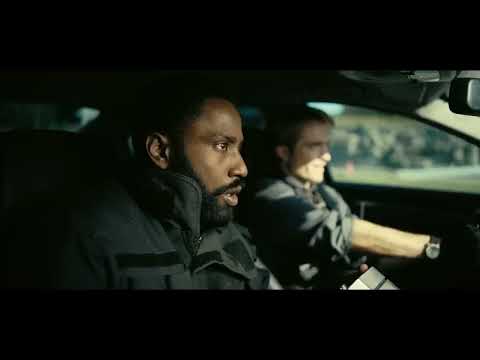
- Highway heist in Tallinn (~01:35–01:52). Syncopated bass and jackhammer percussion lock to precision driving, lock-boxes, and the inverted Audi entry. The mix chews air like a turbine.
- Why it matters:
- Peak “Nolan heist engine.” The cue’s groove also seeds the beat behind the end-titles single.
“POSTERITY”
- Where it plays:
- Stalsk-12 temporal pincer battle (~02:05–02:20). Long-form build that surges, folds back on itself, and detonates in waves as red and blue teams run opposite directions across the same terrain.
- Why it matters:
- Grand thesis statement — the cue’s evolving shape narrates how knowledge travels backward to save the forward team.
“THE PROTAGONIST” & End Titles: “The Plan” (Travis Scott)
- Where they play:
- Aftermath and credits (~02:23–end). “The Protagonist” sums the identity twist; Travis Scott’s “The Plan” hits as credits roll, with his processed vocal blended into the score’s palette.
- Why they matter:
- The score resolves the character arc; the single reframes it — a modern voice closing a retro-styled spy epic.
Notes & Trivia
- Zimmer declined Tenet to score Dune; Göransson stepped in, marking Nolan’s first non-Zimmer feature since 2006.
- Musicians recorded parts at home during the pandemic; many lines were performed “forwards like backwards” to mimic inversion without simple reversal.
- Travis Scott’s voice is sampled inside several cues — not just in the credits — after Nolan and Göransson fell for the intro texture.
- “Turnstile” appears as a bonus track on the deluxe edition and underscores inverted Freeport material.
- The official label playlist mirrors the album flow and helps casual listeners map scenes to cue titles.
Reception & Quotes
Critics split on the film’s density but largely agreed the soundtrack is audacious and integral — a mechanical heart that never stops pumping.
“A wild exercise in experimentation… melodies that feel the same forwards and in reverse.” — GQ
“‘Posterity’ is the sampler — fluid, high-energy, the score’s best long form.” — Movie-Wave
“Five highlights: ‘Windmills,’ ‘Foils,’ ‘Inversion,’ ‘Posterity,’ and ‘The Plan.’” — Cineworld
Availability: standard soundtrack (18 tracks) and a deluxe edition (adds bonuses) via WaterTower; “The Plan” released as a single.
Interesting Facts
- Beat recycling: “The Plan” rides a beat sourced from “Trucks in Place,” then its vocal grains are echoed across the score.
- Deluxe breadcrumbs: Bonus track titles (“Turnstile,” etc.) act as scene labels for fans mapping the timeline.
- Reverse performance: Several parts were practiced to sound reversed when played forward — a subtler effect than flipping the audio.
- Playlist aid: WaterTower’s official playlist presents the score in film order, useful for scene-by-scene listening.
- Awards note: The score earned a Golden Globe nomination for Best Original Score.
Technical Info
- Title: Tenet (Original Motion Picture Soundtrack)
- Year: 2020 (album released September 2, 2020)
- Type: Original score + end-credits single
- Composer/Producer: Ludwig Göransson (with WondaGurl co-producing the single)
- Label: WaterTower Music (standard & deluxe editions)
- Featured artist: Travis Scott — “The Plan” (end credits)
- Notable placements: “Rainy Night in Tallinn” (prologue), “747”/“Freeport” (Oslo heist), “Trucks in Place” (highway chase), “Posterity” (Stalsk-12), “The Protagonist”→“The Plan” (end)
Questions & Answers
- Why didn’t Hans Zimmer score Tenet?
- He chose to score Dune; Ludwig Göransson took over and built a new sonic world for Nolan.
- What is that song over the end credits?
- “The Plan” by Travis Scott — produced with Göransson, using textures that also appear inside the score.
- Is there a retail album?
- Yes: WaterTower’s standard and deluxe editions. Deluxe adds cues like “Turnstile.”
- Which cue scores the final battle?
- “Posterity” — a long, shape-shifting piece designed for the temporal pincer at Stalsk-12.
- Where can I hear the music in film order?
- WaterTower’s official playlist mirrors the on-screen flow closely.
Key Contributors
| Subject | Relation | Object |
|---|---|---|
| Christopher Nolan | writes/directs | Tenet (feature film) |
| Ludwig Göransson | composes/produces | Tenet (Original Motion Picture Soundtrack) |
| Travis Scott | performs | End-credits single “The Plan” |
| WondaGurl | co-produces | “The Plan” |
| WaterTower Music | releases | Soundtrack album(s) |
| Hoyte van Hoytema | shoots | Images that the score rhythmically mirrors |
| Jennifer Lame | edits | Picture; music is cut tight to action dynamics |
Sources: WaterTower Music (official playlist & videos), Wikipedia (album page), GQ interview with Ludwig Göransson, IndieWire & The Playlist (Zimmer’s decision), Los Angeles Times (car-chase feature), Cineworld blog (score highlights), Apple Music/Spotify listings, IMDb soundtrack credits.
November, 27th 2025
A-Z Lyrics Universe
Cynthia Erivo Popular
Ariana Grande Horsepower
Post Malone Ain't No Love in Oklahoma
Luke Combs Good Riddance (Time of Your Life)
Green Day Bye Bye Bye
*NSYNC You're the One That I Wan
John Travolta & Olivia Newton-John I Always Wanted a Brother
Braelyn Rankins, Theo Somolu, Kelvin Harrison Jr. and Aaron Pierre The Power of Love
Frankie Goes to Hollywood Beyond
Auli’i Cravalho feat. Rachel House MORE ›