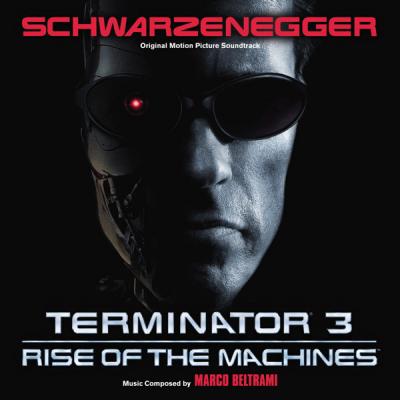
"Terminator 3: Rise of the Machines" Soundtrack Lyrics
Movie • 2003
Track Listing
Dillon Dixon
Mia Julia
Guns N' Roses
"Terminator 3: Rise of the Machines (Original Motion Picture Soundtrack)" – Album Guide to Tracks and Key Scenes
Overview
How do you follow an electronic classic without copying it? Terminator 3 answers with a muscular orchestral score that pushes the saga into new sonics while nodding — carefully — to Brad Fiedel’s legacy. Marco Beltrami’s writing trades cold synth-machinery for a live, percussive orchestra that still punches like steel-on-steel, giving the movie’s bruiser set pieces (crane rampage, graveyard firefight, hangar finale) a relentless spine.
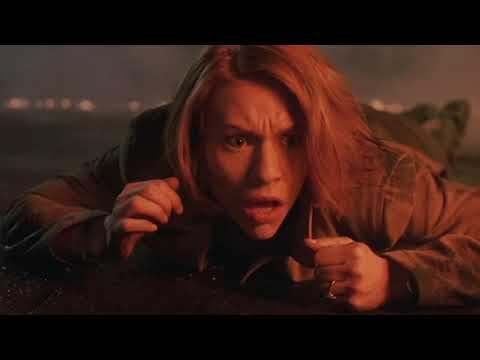
The film’s story resets the chessboard: John Connor is off-grid, Kate Brewster is pulled into the fight, and a T-X upgrades the threat level. Beltrami’s cues mirror that shift: big drum batteries and low brass for machine inevitability; string clusters and choir for human panic and resolve. Source songs are sparse but surgical — a strip-club needle-drop for comedy whiplash and a modern-rock end-credits single to usher you out of the blast radius.
Phases and meanings: Orchestral war-drums & brass — inevitability, chase. Angular strings — tactical fear. Choir & sustained pads — fate closing in. Source tracks — world texture and tone flips (“Macho Man” as a gag; Blue Man Group as post-blast catharsis). The palette reads “apocalypse logistics,” not neon club — a deliberate contrast with the first two films.
How It Was Made
Jonathan Mostow recruited Marco Beltrami after temping the cut with Beltrami cues; the composer built a largely orchestral score recorded at Sony’s scoring stage with Hollywood Studio Symphony forces (plus electronics used as support, not drivers). The famous Fiedel motif is barely quoted in-film and saved for the end credit sting — a conscious choice to keep audiences in T3’s present, not in T2 nostalgia. Varèse Sarabande released the album on July 1, 2003, with 19 orchestral tracks plus two bonus songs.
Outside the score, the production cleared a few diegetic tracks for the Desert Star club sequence (including the Village People’s “Macho Man”), and licensed Blue Man Group’s “The Current” (feat. Gavin Rossdale) for the end credits — notable because it’s not on the score album.
Tracks & Scenes
Timestamps are approximate to the 109-minute cut; placements focus on clear, on-screen moments. Score cues are non-diegetic unless noted; songs are diegetic unless noted.
“A Day in the Life” (Marco Beltrami)
- Where it plays:
- Opening passages (~00:00–00:04). John Connor’s narration and early “life on the run” setup. Low strings rumble into pounding pulses; the world already sounds unstable.
- Why it matters:
- Establishes the new, orchestral grammar — apocalyptic weight without Fiedel’s synth chassis.
“TX’s Hot Tail” / “Dual Terminator”
- Where they play:
- Early pursuit and first clashes (~00:20–00:35). The T-X hunts; the T-850 intervenes; alleyway and storefront impacts accelerate into all-out pursuit.
- Why they matter:
- Introduces the score’s machine-rhythm idea: battery-driven ostinati that feel like pistons.
“Kicked in the Can”
- Where it plays:
- Restroom fight beat (~00:36). Close-quarters grappling; metallic hits and percussion clusters punctuate thrown bodies and shattered tile.
- Why it matters:
- One of the score’s most tactile sequences — you can “hear” concrete and chrome.
“Graveyard Shootout” & “What Do You Want On Your Tombstone?”
- Where they play:
- Sarah Connor’s cemetery scene (~00:45–00:55). The team raids a coffin full of weapons; police swarm; the T-850 shouldering the casket becomes an image-riff the brass hammers home.
- Why they matter:
- Leans on brassy clusters and snare drive — grief colliding with logistics.
“Hearse Rent A Car”
- Where it plays:
- Immediate getaway (~00:55). The hearse screeches out; drum ostinati turn the road into a metronome.
- Why it matters:
- Classic Beltrami momentum cue — concise, kinetic, modular.
“Magnetic Personality”
- Where it plays:
- CRS facility — magnet trap (~01:20). A giant electromagnet pins the T-850; the texture thins, then surges as the fight flips.
- Why it matters:
- Title-as-spotting note; the cue telegraphs the gag and then grinds into it.
“Flying Lessons”
- Where it plays:
- Hangar/helicopter impact near the climax (~01:28). The T-850 makes a spectacular entrance through glass and steel.
- Why it matters:
- Heavy percussion + brass clusters mirror debris plumes — action as drumline.
“Radio”
- Where it plays:
- Final bunker scene (~01:35–end). John and Kate realize Judgment Day is now; the radio becomes a post-blast lifeline.
- Why it matters:
- A somber descent into inevitability — the film’s thesis in music.
“Macho Man” (Village People) — Desert Star club
- Where it plays:
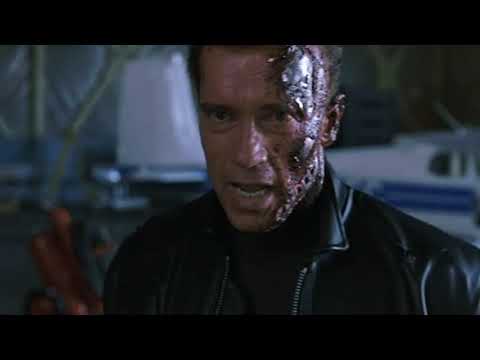
- Early strip-club sequence (~00:10). Arnold’s T-850 enters the Desert Star; a male stripper works the stage to “Macho Man” before the T-850 acquires clothes and attitude-glasses.
- Why it matters:
- Comic needle-drop that defuses and then amplifies the franchise’s costume ritual.
“Party” (Peter Beckett) — bar interior lead-in
- Where it plays:
- Same club, moments before “Macho Man.” Upbeat bar-rock on the house system as patrons mingle and the T-850 sizes up the room.
- Why it matters:
- Sets the diegetic texture of the venue and tees up the gag-turn to Village People.
Other source cues
- Where they surface:
- Additional in-world tracks sprinkled through interiors: “Dat Funky Man” (William Randolph III), “Sugar” (Peter Beckett), “Can’t Hide This” (Mega Jeff). Used briefly as bar/venue ambience.
- Why they matter:
- They’re scene dressing — credible period/venue color rather than set-piece songs.
End credits — “The Current” (Blue Man Group feat. Gavin Rossdale)
- Where it plays:
- Credits, following the bunker ending. Processed percussion and Rossdale’s vocal ride out the fallout.
- Why it matters:
- Marketing tie-in that fits: modern rock timbres over machine-age imagery.
Notes & Trivia
- The Fiedel main theme is held back and used only in the end credits; Beltrami otherwise avoids direct quotations.
- Varèse Sarabande’s album carries two bonus songs (“Open to Me” and “I Told You”) alongside 19 score cues.
- Blue Man Group’s “The Current” plays over the credits but is not on the score album; it appeared on Blue Man Group releases and promos.
- Large forces: ~90-piece orchestra, expanded percussion, and choir tracked at Sony Pictures Scoring Stage.
- The club sequence uses multiple cleared cues; “Macho Man” is the memorable punchline track.
Reception & Quotes
Critical reaction to the score was mixed-positive: some applauded the orchestral heft; others missed Fiedel’s synth grit. Fans generally agree it plays the film hard.
“More accessible for orchestral fans than Fiedel — but rarely electrifying.” — Filmtracks
“Best new action score since last summer — commanding and effective.” — MusicWeb International
“A curiosity: quiet and organic at times, loud and abrasive at others.” — IGN
Availability: the score album (Varèse Sarabande) is on major streamers; the Blue Man Group single is separate; trailers used standard library cues plus Beltrami excerpts.
Interesting Facts
- Theme restraint: Saving the classic motif for the credits was a deliberate story-first call.
- End-credits outlier: “The Current” doubled as a promo music video during release.
- Heard, not seen: Several bar/venue songs were custom or low-profile tracks written/cleared for in-world texture.
- Orch + electronics: Synths are present but underpin the live band — the inverse of the Cameron films’ approach.
- Big drum language: Multiple percussionists tracked simultaneously to give chase cues a physical shove.
Technical Info
- Title: Terminator 3: Rise of the Machines (Original Motion Picture Soundtrack)
- Year: 2003 (album issued July 1, 2003)
- Type: Original score + bonus songs; separate end-credits single by Blue Man Group
- Composer/Producer: Marco Beltrami
- Scoring: Hollywood Studio Symphony; recorded at Sony Pictures Scoring Stage
- Label: Varèse Sarabande
- Notable placements: “Graveyard Shootout,” “Hearse Rent A Car,” “Magnetic Personality,” “Flying Lessons,” “Radio”; songs: “Macho Man,” “Party,” “The Current” (end credits)
- Runtime: 51:22 (album)
- Availability: Streaming (album); Blue Man Group track available separately
Questions & Answers
- Why doesn’t the classic Terminator theme dominate the film?
- Beltrami and Mostow kept it out of the body of the film to avoid pulling viewers back into T2; it’s saved for the end credits.
- Is the soundtrack album the same as the music in the movie?
- Mostly — it’s the score. Some diegetic songs (e.g., “Macho Man,” “The Current”) aren’t on the Varèse album.
- What’s the song over the end credits?
- “The Current” by Blue Man Group featuring Gavin Rossdale — released separately from the score album.
- What music plays in the strip-club scene?
- “Macho Man” by Village People, preceded by bar-rock source music (including Peter Beckett’s “Party”) on the house system.
- Where can I stream the score?
- On major platforms under Terminator 3: Rise of the Machines (Original Motion Picture Soundtrack) by Marco Beltrami.
Key Contributors
| Subject | Relation | Object |
|---|---|---|
| Marco Beltrami | composes/produces | Terminator 3: Rise of the Machines score |
| Brad Fiedel | originates | Series leitmotif referenced in end credits |
| Varèse Sarabande | releases | Original soundtrack album (2003) |
| Jonathan Mostow | directs | Feature film; guided the “less theme, more now” approach |
| Hollywood Studio Symphony | performs | Orchestral score sessions at Sony |
| Blue Man Group feat. Gavin Rossdale | performs | End-credits single “The Current” |
| Village People | perform | “Macho Man” (club sequence) |
| Peter Beckett | writes/performs | Source songs including “Party” used in bar interiors |
Sources: Wikipedia (film & soundtrack entries), Discogs (album credits), MusicWeb International, Filmtracks review, Maintitles review, Varèse Sarabande/streaming listings, Blue Man Group/press notes, Terminator Files retrospective, licensing/synch notes for “Macho Man,” official trailers on YouTube.
November, 27th 2025
A-Z Lyrics Universe
Cynthia Erivo Popular
Ariana Grande Horsepower
Post Malone Ain't No Love in Oklahoma
Luke Combs Good Riddance (Time of Your Life)
Green Day Bye Bye Bye
*NSYNC You're the One That I Wan
John Travolta & Olivia Newton-John I Always Wanted a Brother
Braelyn Rankins, Theo Somolu, Kelvin Harrison Jr. and Aaron Pierre The Power of Love
Frankie Goes to Hollywood Beyond
Auli’i Cravalho feat. Rachel House MORE ›